Dogs that changed history and captured our hearts
Throughout the annals of human civilization, countless dogs have served as faithful companions, working partners, and beloved family members. Yet some canines transcended their traditional roles to become genuine legends whose extraordinary stories continue to resonate across generations. These remarkable animals demonstrated courage, loyalty, and intelligence that elevated them far beyond the typical status of a pet, transforming them into cultural icons, scientific pioneers, and enduring symbols of devotion that still inspire us today.
From the smoky battlefields of World War I to the infinite darkness of outer space, from the frozen wilderness of Alaska to the bustling streets of major cities, these dogs faced challenges that would test the mettle of any creature. Their responses to adversity, their unwavering dedication to duty, and their profound bonds with human companions created stories that have become woven into the very fabric of our collective memory. These tales remind us that heroism comes in all forms, sometimes on four legs with a wagging tail.
This article explores ten extraordinary dogs whose remarkable lives left indelible marks on history, popular culture, and human hearts worldwide. Each story reveals how simple acts of loyalty, courage, and love can transcend species barriers to become timeless lessons about the very best qualities that define both animals and humans alike.

Greyfriars Bobby: Edinburgh’s symbol of eternal loyalty
The cobblestone streets of Edinburgh have witnessed centuries of Scottish history, but few stories capture the city’s heart quite like that of a small Skye Terrier whose devotion became legendary. Greyfriars Bobby’s tale represents the very essence of canine loyalty, transforming an ordinary working dog into Scotland’s most beloved symbol of eternal faithfulness.
When night watchman John Gray died of tuberculosis in 1858, his faithful companion Bobby faced a choice that would define both their legacies forever. Rather than seeking a new home or master, this determined terrier made his way to Greyfriars Kirkyard, where Gray had been laid to rest, and began a vigil that would last fourteen years until his own death in 1872. Through Edinburgh’s harsh winters, scorching summers, and everything in between, Bobby maintained his post with unwavering dedication.
Residents initially tried to coax the grieving dog away from the cemetery, but Bobby’s resolve proved unshakeable. The community gradually embraced his presence, with nearby restaurant owner John Traill providing daily meals and the Lord Provost of Edinburgh even paying for Bobby’s license when regulations required it. Today, visitors to Edinburgh can visit Bobby’s own grave near his master’s, marked by a red granite headstone, and see the bronze statue erected in his honor, a testament to how simple loyalty can become legendary and inspire generations long after the original act of devotion has ended.
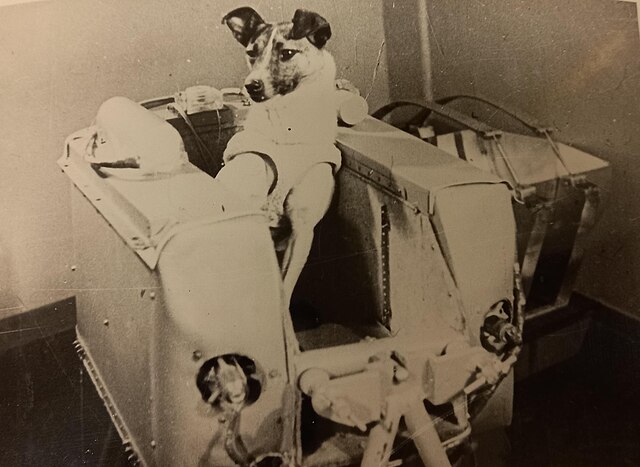
Laika: The space pioneer who opened the cosmos
The Space Race between superpowers captured global imagination during the 1950s, but few participants faced stakes as ultimate as a small mixed-breed dog from Moscow’s streets. Laika’s journey represents one of history’s most poignant sacrifices, as this stray became the first Earth creature to orbit our planet, opening the door for human space exploration while paying the ultimate price for scientific progress.
Soviet scientists selected Laika from among several street dogs, choosing her for her calm temperament and size, which was suitable for the cramped Sputnik 2 capsule. Born around 1954 and initially named Kudryavka, she was later renamed Laika (meaning “Barker”) for her mission. Training involved confinement in progressively smaller spaces, centrifuge testing, and exposure to launch noise, preparing her for conditions no living creature had ever experienced. On November 3, 1957, Sputnik 2 launched with Laika secured inside, equipped with food, water, and monitoring equipment to track her vital signs.
The mission successfully achieved its primary objective of demonstrating that living organisms can survive a rocket launch and weightlessness, providing crucial data for future human spaceflight. However, the technology to return Laika safely to Earth did not exist, making her journey a one-way trip from the beginning. She survived several hours in orbit before succumbing to overheating, though Soviet officials initially claimed she lived for days. Laika’s sacrifice contributed invaluable biological data that enabled Yuri Gagarin’s historic flight just four years later, proving that her ultimate sacrifice helped unlock the cosmos for all humanity.

Balto: Alaska’s life-saving hero
When diphtheria threatened to devastate Nome, Alaska, in January 1925, the isolated town faced a race against time that would become one of the most celebrated rescue missions in American history. Balto’s role in the “Great Race of Mercy” transformed this Siberian Husky from working dog to national hero, demonstrating how courage and determination could overcome seemingly impossible odds to save human lives.
The diphtheria outbreak struck during Alaska’s brutal winter, with temperatures dropping to minus 50 degrees Fahrenheit and howling winds creating whiteout conditions. The nearest antitoxin supply sat 674 miles away in Anchorage, and Nome’s harbor remained frozen solid, making ship transport impossible. A relay of dog sled teams represented the only viable option for delivering the life-saving serum. Gunnar Kaasen and his lead dog, Balto, drew the final, most dangerous leg of the journey, navigating through a blinding blizzard that made following the trail nearly impossible.
Balto’s extraordinary senses and intelligence proved crucial when Kaasen became disoriented in the storm. The determined husky took charge, following his instincts and remarkable navigation abilities to keep the team on course through the treacherous conditions. They arrived in Nome on February 2, 1925, completing the 674-mile relay in just five and a half days and delivering the antitoxin that saved the town from catastrophe. Balto’s statue in New York’s Central Park immortalizes his heroism, bearing the inscription “Endurance, Fidelity, Intelligence.” At the same time, his preserved body can be viewed at the Cleveland Museum of Natural History, ensuring his legacy of courage continues inspiring future generations.

Sergeant Stubby: World War I’s canine soldier
The trenches of World War I witnessed horrors that tested human endurance to its limits, but amid the chaos, an unlikely hero emerged whose courage and intelligence earned him recognition equal to that of any human soldier. Sergeant Stubby’s service with the 102nd Infantry Regiment transformed this Boston stray into the most decorated war dog in American military history, demonstrating that heroism transcends species boundaries.
Private Robert Conroy discovered the brindle bull terrier mix on the Yale University campus where his unit trained before deployment to France in 1917. Despite regulations against mascots, Conroy smuggled Stubby aboard the transport ship, marking the beginning of a partnership that would span eighteen months of frontline combat. The intelligent dog quickly learned military routines, mastering a modified salute that charmed officers and earned him unofficial acceptance within the regiment. Stubby’s battlefield contributions proved invaluable almost immediately upon reaching the Western Front.
His acute senses detected incoming artillery shells before human soldiers, providing early warnings that saved countless lives. Stubby could identify poison gas attacks by scent alone, barking frantically to alert troops who then donned their protective masks. He located wounded soldiers in no-man’s land, leading medics to men who might otherwise have died alone. Perhaps most remarkably, Stubby single-handedly captured a German spy by grabbing the man’s leg and holding him until American soldiers arrived. The grateful French government awarded Stubby a medal, while the American military promoted him to sergeant, making him the first dog to receive a military rank. The Smithsonian Institution now houses his uniform, medals, and other artifacts, preserving the legacy of a true four-legged American hero.

Rin Tin Tin: From battlefield rescue to Hollywood royalty
The devastated battlefields of World War I seemed an unlikely birthplace for a Hollywood legend, yet among the rubble and tragedy, an American soldier’s compassion toward an abandoned German Shepherd puppy created one of entertainment history’s most enduring dynasties. Rin Tin Tin’s journey from war zone refugee to silent film superstar represents the ultimate rags-to-riches tale, proving that talent and charisma can emerge from the most unexpected circumstances.
Corporal Lee Duncan discovered the week-old puppies in a bombed German facility in September 1918, naming the male pup after a French good luck charm popular among American soldiers. Duncan brought Rinty back to California, where the dog’s intelligence and natural athleticism caught the attention of Hollywood scouts. Warner Bros. Studios took a chance on the canine actor in 1923, launching a film career that would span a decade and establish the template for all future animal stars in entertainment.
Rin Tin Tin’s films generated enormous box office success during the 1920s, reportedly earning more fan mail than many human stars of the era. His natural ability to convey emotion through body language and facial expressions translated beautifully to silent cinema, while his impressive physical feats and trained behaviors created thrilling action sequences. The dog’s popularity saved Warner Bros. from financial ruin, providing the studio with reliable revenue that funded its expansion into talking pictures. Multiple generations of German Shepherds carried on the Rin Tin Tin legacy through radio shows, television series, and additional films, creating a multimedia empire that influenced how Americans viewed both dogs and entertainment for decades.
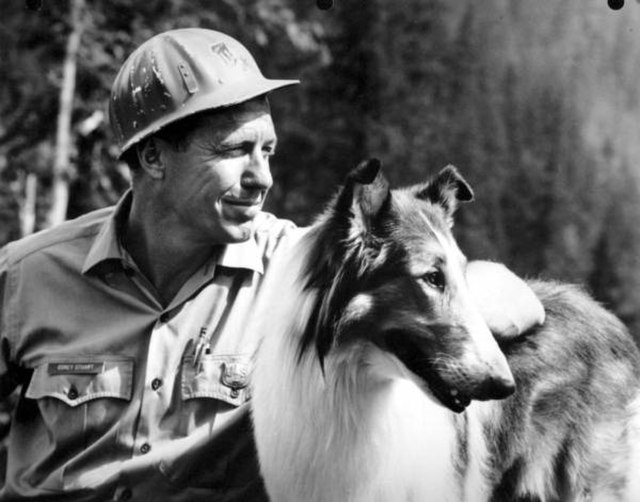
Lassie: Fiction’s most famous collie
While many heroic dogs achieved fame through real-life exploits, one of the most influential canines in history emerged from the imagination of author Eric Knight, whose 1938 short story “Lassie Come Home” created a fictional character whose impact on popular culture rivals any flesh-and-blood celebrity. Lassie’s enduring appeal lies in the perfect embodiment of every quality humans most admire in dogs: unwavering loyalty, protective instincts, and an almost supernatural ability to sense danger and provide help when needed most.
Knight’s original story, inspired by his childhood memories of Yorkshire and his affection for Rough Collies, captured the imagination of readers worldwide when it was expanded into a 1940 novel. MGM Studios recognized the commercial potential and produced the 1943 film “Lassie Come Home,” starring a male Collie named Pal, whose performance launched one of entertainment’s most successful franchises. The film’s success spawned sequels, radio programs, comic books, and eventually the long-running television series that made Lassie a household name across multiple generations.
The genius of Lassie lay in the character’s consistency across different media platforms, as it adapted to changing times and social values. Whether rescuing Timmy from a well, alerting authorities to forest fires, or helping lost children find their way home, Lassie represented the idealized version of canine companionship that millions of families aspired to see in their own pets. Several different dogs portrayed the character over the decades, with trainers maintaining strict bloodlines to preserve the distinctive Lassie appearance and temperament, ensuring that the fictional character’s legacy continues inspiring new generations of dog lovers worldwide.

Bo: The presidential pup
The White House has hosted many famous residents throughout American history. Still, few captured public attention quite like a Portuguese Water Dog whose presence symbolized the modern American family’s love for their four-legged companions. Bo Obama’s time as First Dog represented more than just presidential pet ownership; his carefully considered selection and public role demonstrated how thoughtful decision-making and responsible pet ownership could serve as examples for millions of American families.
The Obama family’s search for a White House dog involved considerations far beyond typical pet adoption, as Malia Obama’s allergies necessitated a hypoallergenic breed, while the high-profile nature of presidential pet ownership required an animal with an appropriate temperament for constant public attention. Senator Edward Kennedy’s gift of Bo, a six-month-old Portuguese Water Dog, perfectly addressed both practical and symbolic needs. The breed’s hypoallergenic coat addressed health concerns, while their intelligence, trainability, and calm demeanor made Bo ideal for life in the political spotlight.
Bo’s White House years showcased responsible pet ownership on a national stage, from his regular exercise routines on the South Lawn to his participation in official ceremonies and photo opportunities. The Obama administration frequently featured Bo in social media posts and public events, demonstrating the positive impact that pets can have on family life while encouraging Americans to consider adoption from shelters and rescue organizations. Bo’s legacy extends beyond his time in Washington, as his example helped promote awareness about pet allergies, the importance of matching dog breeds to family lifestyles, and the joy that comes from welcoming a furry family member into the home.

Jofi: Freud’s therapeutic companion
The development of modern psychoanalysis owes much to Sigmund Freud’s revolutionary insights into human consciousness. Still, few people realize that one of his most valuable therapeutic assistants walked on four legs and possessed an innate understanding of human emotions that complemented the doctor’s clinical expertise. Jofi, Freud’s Chow Chow, pioneered what we now recognize as animal-assisted therapy, demonstrating how dogs’ natural empathy and calming presence could enhance the healing process for patients struggling with psychological difficulties.
Freud initially welcomed Jofi into his practice somewhat accidentally, but quickly noticed how the dog’s presence affected his patients’ behavior and emotional openness. Children, who often felt intimidated by the formal clinical setting and the bearded analyst, relaxed considerably when Jofi entered the room. The dog seemed to possess an uncanny ability to sense patients’ emotional states, often positioning herself closer to individuals experiencing distress and maintaining a respectful distance from those who needed space to process their thoughts and feelings.
Freud himself became fascinated by Jofi’s intuitive responses to human emotions, incorporating observations about her behavior into his theoretical work and patient notes. The dog’s consistent presence during sessions created a sense of continuity and comfort that helped patients develop trust in the therapeutic process. Modern animal-assisted therapy programs continue to build upon the foundation that Freud and Jofi established, proving that this Chow Chow’s contributions to mental health treatment were far ahead of their time and continue to benefit patients worldwide today.

Hachiko: Japan’s symbol of unwavering devotion
In the bustling heart of Tokyo’s Shibuya district stands a bronze statue that has become one of Japan’s most beloved landmarks, commemorating a dog whose daily vigil transformed him into a national symbol of loyalty that transcends cultural boundaries and continues touching hearts worldwide. Hachiko’s story embodies the Japanese concept of “chugi” (loyalty and devotion), demonstrating how one dog’s unwavering faith in his master’s return created a legend that has inspired countless adaptations, tributes, and pilgrimages to his memorial site.
Professor Hidesaburo Ueno adopted the golden-brown Akita puppy in 1924, establishing a daily routine where Hachiko would accompany his master to Shibuya Station each morning and return each evening to greet him upon arrival from Tokyo Imperial University. This peaceful pattern continued for over a year until May 21, 1925, when Professor Ueno suffered a fatal stroke at work and never returned home. Hachiko’s response to his master’s absence revealed the depth of canine devotion that would make him internationally famous.
Rather than accepting his master’s disappearance, Hachiko continued his daily journey to Shibuya Station, waiting patiently through the afternoon and evening for a reunion that would never come. Local commuters initially viewed the dog as a nuisance. Still, gradually his story spread throughout Tokyo and eventually across Japan, touching the hearts of a nation that deeply values loyalty and perseverance. Newspaper articles about the faithful dog’s vigil made him a celebrity, leading to the creation of his statue in 1934, one year before his death. Today, the phrase “meet me at Hachiko” has become synonymous with the Shibuya Station meeting point, while his story continues inspiring films, books, and countless tales of devotion worldwide.

Trakr: Ground Zero’s search and rescue hero
The terrorist attacks of September 11, 2001, tested America’s resilience and revealed heroes in every profession, including the courageous search and rescue dogs who worked tirelessly in the rubble of the World Trade Center to locate survivors and bring closure to grieving families. Trakr’s heroic service at Ground Zero exemplified the extraordinary dedication of working dogs who risked their lives alongside human first responders, demonstrating how the bond between handler and dog could provide hope in humanity’s darkest hours.
Canadian police officer James Symington and his German Shepherd partner Trakr drove from Nova Scotia to New York City immediately after the attacks, joining the massive search and rescue operation without official authorization but with an unwavering commitment to help locate survivors trapped beneath tons of concrete and steel. Trakr’s specialized training in locating human scent among debris proved invaluable in the chaotic environment of Ground Zero, where traditional search methods faced enormous challenges due to the scale of destruction and ongoing safety hazards.
On September 12, Trakr successfully located Genelle Guzman-McMillan, the last human survivor pulled alive from the World Trade Center rubble, after she had been trapped for 27 hours following the towers’ collapse. The discovery represented a crucial moment of hope amid overwhelming tragedy, demonstrating that rescue efforts could still save lives even as the situation grew increasingly desperate. Trakr continued working at Ground Zero until he collapsed from exhaustion and smoke inhalation, requiring immediate medical treatment for his exposure to toxic dust and debris. His heroism led to international recognition and ultimately to a cloning project that produced five puppies carrying his genetic legacy, ensuring that his courage and dedication would continue inspiring future generations of search and rescue dogs worldwide.
Conclusion
These ten remarkable dogs transcended their roles as pets, working animals, or entertainers to become enduring symbols of qualities that humans most admire: unwavering loyalty, selfless courage, and the willingness to sacrifice for others. Their stories span continents and decades, yet each tale resonates with timeless themes that speak to our deepest values and aspirations. From Bobby’s faithful vigil in an Edinburgh cemetery to Trakr’s heroic search through the rubble of Ground Zero, these animals demonstrated that heroism knows no species boundaries and that the bonds between humans and dogs can inspire extraordinary acts of devotion.
The lasting impact of these canine heroes extends far beyond their individual lifetimes, influencing popular culture, scientific advancement, and our understanding of the human-animal bond. Their stories continue teaching new generations about dedication, service, and the profound connections that can develop between species. Whether through statues, films, books, or simple word-of-mouth retellings, these dogs’ legacies persist because they embody universal truths about loyalty, courage, and love that transcend time and cultural differences.
These tales remind us that some of history’s most important lessons come from the simplest acts of devotion and that the qualities we most value in both animals and people remain constant across generations. Explore our other inspiring animal stories here at MediaFeed, where we continue to celebrate the extraordinary bonds that make life richer and more meaningful for everyone.
Related:
- America’s 10 Favorite Large Dog Breeds & Their Most Common Health Risks
- Every state that’ll let your dog be your wedding witness
Like MediaFeed’s content? Be sure to follow us.
This article was syndicated by MediaFeed.org.