
This article was reviewed by Brian Tanzer, nutritionist and Director of Scientific and Regulatory Affairs at The Vitamin Shoppe.
Creatine is one of the most popular supplements in sports nutrition. A fan favorite since Olympic athletes started using it in the early 1990s, it’s a naturally-occurring compound in the body that’s found primarily in our muscles (though smaller amounts are also stored in the brain, kidneys, and liver), and helps our cells produce energy.
Image Credit: The Vitamin Shoppe.
How creatine works

Our cells store a form of creatine called creatine phosphate, which helps those cells churn out chemical energy called ATP (adenosine triphosphate). It keeps ATP levels high during quick, high-intensity exercise like powerlifting or sprints. It also helps replenish our cells’ ATP stores during rest periods and after workouts.
Creatine’s long history in the supplement world also makes it one of the most studied supplements out there. According to The International Society of Sports Nutrition (ISSN), it is highly effective for improving athletic performance and recovery, and safe for long-term use. In fact, supplementing with creatine—specifically a popular form called creatine monohydrate—can lead to an eight percent increase in strength and 14 percent improvement in muscle endurance on average, says Marie Spano, M.S., R.D., C.S.C.S., C.S.S.D., sports nutritionist for the Atlanta Hawks, Braves, and Falcons.
Creatine doesn’t just benefit athletes and gymgoers, though. It also acts as an antioxidant, supports healthy cholesterol and bone health, and boosts brain function. “It’s recommended that everyone consume a diet with at least two to three grams of creatine per day, just for the general health benefits,” says Richard Kreider, Ph.D., author of the ISSN’s position paper on creatine and executive director of the Human Clinical Research Facility at Texas A&M University.
Image Credit: dolgachov / iStock.
Creatine timing

When creatine first hit the performance supplement scene, many athletes used it as a part of their pre-workout regimen. Just drop a scoop in a protein shake or pre-workout supp, hit the gym, and let the magic happen. Recent insights, however, suggest it may be more effective when taken post-workout.
Though the research on creatine timing is still developing, one 2013 study published in the International Journal of Sports Nutrition found that recreational bodybuilders who took creatine after their workouts experienced superior gains in lean body mass and strength than those who took it before.
Researchers and experts agree that creatine gets to the muscle stores more efficiently when taken with carbohydrates as a part of a post-workout meal, when our body is primed to shuttle nutrients to our recovering muscles, says Spano. A spike in blood glucose (the sugar our body turns carbs into) signals our body to produce insulin, the hormone that then shuttles that glucose to our cells. As the glucose gets shuttled into our cells, so does the creatine.
Adding protein to the equation only increases this effect: “Simple sugars ingested with protein increase glucose and insulin to a greater degree,” says Kreider. This carb-protein combo also replenishes muscle glycogen (stored energy from sugar) and stimulates protein synthesis (the process through which muscles repair and grow).
This means that creatine may be most effective when taken alongside a carb- and protein-filled snack or meal after you work out instead of alongside your pre-workout on your way into the gym.
Image Credit: millann / iStock.
How much creatine you need

Kreider recommends eating one to 1.5 grams of carbohydrates and 0.25 to half a gram of protein per kilogram of bodyweight to promote recovery after exercising. (That’s something like a chicken breast, a large banana, and a cup of brown rice for a 170-pound man, and half a chicken breast, a large banana, and half a cup of brown rice for a 130-pound woman.)
Then, pair that post-workout fuel with between three and five grams of creatine.
Image Credit: Edgar BJ / iStock.
To load or not to load?
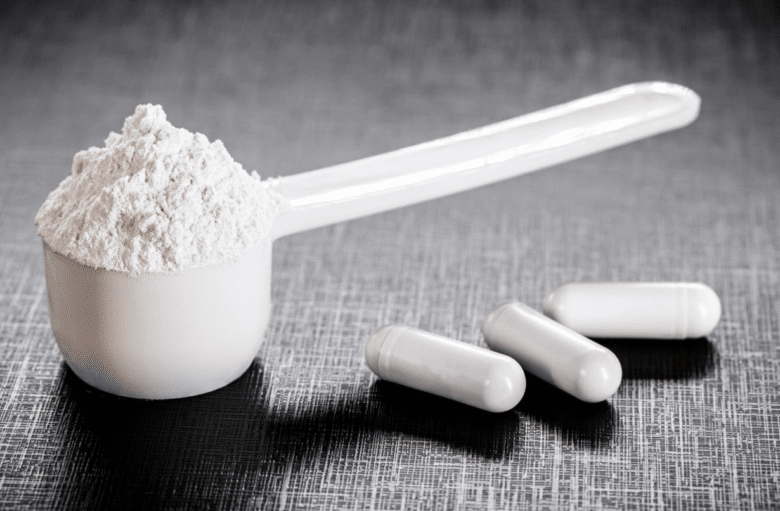
The OG information on creatine suggests beginning supplementation with a ‘loading period,’ during which you take a higher dose to quickly build up the levels in your muscles. A typical loading period looks something like five grams four times a day for five to seven days.
Recently, though, the importance of creatine loading has become a point of contention among experts.
When supplementing to boost your performance, a loading phase can help you start seeing positive effects sooner. “If you only take three to five grams a day, it will take you four to six weeks to increase muscle levels and see significant effects on training,” says Kreider.
When supplementing to reap creatine’s general health benefits, though, a loading phase won’t be the end-all-be-all. “According to some of the top creatine researchers, you don’t have to load,” says Spano. “It will build up the creatine stores in your body faster, but it isn’t necessary.”
Ultimately, whether you load or not depends on how quickly you want to see results.
Image Credit: RHJ / iStock.
Takeaway

While it can be convenient to take your creatine with your pre-workout, recent studies show that supplementing with it after exercise—paired with carbs and protein in a post-workout snack or meal—may lead to superior gains.
- Read more: How creatine takes your fitness to the next level
- Read more: The perfect post-workout snack for your fitness goals
- Read more: Should you skip the creatine loading phase?
This The Vitamin Shoppe article originally appeared on WhatsGoodbyV.com and was syndicated by MediaFeed.org.
Like MediaFeed’s content? Be sure to follow us.
Image Credit: millann / iStock.