What Is Wage Garnishment?
Creditors may use a method called wage garnishment when you fail to pay off your debts. It’s a legal procedure that allows them to get a court order requiring your employer to withhold a percentage of your earnings to pay off your debt. The employer is required to send the garnished wages to the creditor.
Common causes for wage garnishment include outstanding court fees, medical bills, child support, unpaid taxes, defaulted student loans, and in some cases, car repossession or voluntary repossession.
Can Car Loan Companies Garnish Wages?
If your car has been repossessed, a car loan company can garnish wages in particular circumstances and in certain states. Not all states allow wage garnishment, so check to see if yours does.
Here’s how wage garnishment works:
If you default on your loan, your lender may repossess your car. To recoup the money you still owe on your loan, the lender will typically sell the car at auction. In the meantime, they may also foot the bill to clean the car and make any minor repairs.
If the lender doesn’t make enough money through the sale of the vehicle to cover the outstanding loan plus any other costs they’ve incurred, you’ll owe what is known as a deficiency. You’re responsible for paying off this amount. If you don’t, your lender may take you to court to obtain a judgment against you that allows them to garnish your wages.
If this happens, the court will send an order to your employer to withhold a certain amount from your paychecks. Your wages will continue to be garnished until the debt is repaid in full.
It’s important to note that federal law prohibits an employer from terminating you if your wages are garnished — up to a point. You can’t be dismissed if you have one wage garnishment order, but that’s where the federal protection ends. State laws may offer further protection. You can check with your state’s labor department.
How Much of Your Wages Can Car Loan Companies Garnish?
If your state allows lenders to garnish your wages after a car repossession, federal law limits the amount they can take to 25% of your disposable earnings or the amount of disposable earnings you have that exceed 30 times the federal hourly minimum wage — whichever is the lesser of those two.
Some states have a lower limit for wage garnishment. For example, California limits the amount of wages that can be garnished to 25% of disposable income, or 50% of 40 times the state’s hourly minimum wage — whichever is less.
Can You Stop Wage Garnishment for a Car Loan?
You’ll want to avoid having car loan companies garnish wages if you can. For one thing, wage garnishment can be stressful for you and your employer. Even more important, if a lender has resorted to garnishing your wages, it’s likely that some serious damage has been done to your credit score, which can make it more difficult to get credit in the future. Here’s how to stop wage garnishment for a car loan.
Pay Your Bills On Time
The best way to avoid car repossession and possible wage garnishment is to regularly make on-time bill payments. This will also help you maintain a good credit score.
If you encounter financial problems that will make it difficult to repay your car loan, contact your lender immediately. They’d rather not have you default on the loan, so they may work with you to come up with a new payment program to help you get back on track. They could lengthen the term of your loan or break your payments into smaller sums that you pay twice a month, for instance.
If you’re experiencing a more severe financial hardship, you may be able to request a grace period or a deferral on the loan, which allows you to skip a small number of payments. The lender will tack the deferred payments onto the end of your loan.
Refinance Your Loan
If you’re having trouble making your loan payments on time, consider an auto loan refinance, especially if interest rates have dropped. When you refinance a loan, you pay off your old loan with a new one, ideally at a lower interest rate or more favorable terms. A lower interest rate or lengthening your loan term could reduce the size of your monthly payment, which may help your budget.
Refinancing might be tricky in certain situations, such as with upside down auto loans, for example. If your auto loan is upside down, talk to your lender to see what your options might be. The same is true if you end up having to declare bankruptcy. While it might be possible to get an auto loan after bankruptcy, it will likely be challenging.
Pay Off Your Deficiency
To prevent wage garnishment, pay the deficient amount, which is what you owe on the loan, if you can. Once you pay the deficiency, the debt is wiped out.
Reinstate or Redeem Your Loan
If your car has been repossessed, it’s still not the end of the road. There are steps you can take to get your car back, if you have the money and you can act quickly.
Depending on the state you live in, you may be allowed to reinstate your loan. You’ll have to make all past due payments and pay all costs associated with repossession, such as towing fees. Generally, this needs to happen 10 to 20 days after the car is repossessed. Your lender can give you the specific payment amount and time frame information.
You might also be able to redeem your loan. In this case, you’ll need to pay off the entire balance of the loan plus any costs associated with the repossession. At this point you’ll own the car outright. Again, you need to act quickly in order to do this.
Buy Back Your Car
If reinstating or redeeming your loan isn’t possible, you may be able to buy back your car when your lender sells it at auction. Not every state allows this option, however, so find out if yours does.
The Takeaway
Wage garnishment is a situation you want to avoid if possible. To prevent your wages from being garnished, make your car payments on time if you can. If you’re experiencing financial distress, reach out to your lender right away to see if they will work with you on a payment plan.
Learn More:
This article originally appeared on SoFi.com and was syndicated by MediaFeed.org.
Please understand that this information provided is general in nature and shouldn’t be construed as a recommendation or solicitation of any products offered by SoFi’s affiliates and subsidiaries. In addition, this information is by no means meant to provide investment or financial advice, nor is it intended to serve as the basis for any investment decision or recommendation to buy or sell any asset. Keep in mind that investing involves risk, and past performance of an asset never guarantees future results or returns. It’s important for investors to consider their specific financial needs, goals, and risk profile before making an investment decision.
The information and analysis provided through hyperlinks to third party websites, while believed to be accurate, cannot be guaranteed by SoFi. These links are provided for informational purposes and should not be viewed as an endorsement. No brands or products mentioned are affiliated with SoFi, nor do they endorse or sponsor this content.
Communication of SoFi Wealth LLC an SEC Registered Investment Advisor
SoFi isn’t recommending and is not affiliated with the brands or companies displayed. Brands displayed neither endorse or sponsor this article. Third party trademarks and service marks referenced are property of their respective owners.
Communication of SoFi Wealth LLC an SEC Registered Investment Adviser. Information about SoFi Wealth’s advisory operations, services, and fees is set forth in SoFi Wealth’s current Form ADV Part 2 (Brochure), a copy of which is available upon request and at www.adviserinfo.sec.gov. Liz Young is a Registered Representative of SoFi Securities and Investment Advisor Representative of SoFi Wealth. Her ADV 2B is available at www.sofi.com/legal/adv.
More from MediaFeed:
The considerable hidden costs of owning an electric car

At first, electric vehicles were marketed as luxury cars with price tags that put them out of reach for most people. However, as interest in eco-friendly cars rises, more automakers are releasing electric vehicles aimed at the masses. By the end of 2022, there may be over 100 different electric vehicle models for sale in the United States.
These cars promise to be environmentally friendly and save you money at the gas pump. However, the price of gas isn’t the only cost to consider. Read on to learn the factors that can affect the cost of an electric car, as well as look at whether electric cars are more cost effective.
Related: Does loan purpose matter?
vichie81/ istockphoto

As of November 2021, the average price of an electric car hovered around $56,000, up nearly 6.2% from the year before, according to data from Kelley Blue Book. The price of an electric car is about $10,000 more than the industry average of $46,329.
That said, the price of an electric vehicle will depend on the make and model that you choose. For example, a 2022 Nissan Leaf has a starting price of about $28,000. Meanwhile, a Tesla Model S could cost more than $100,000.
In addition to the price you’ll pay to drive an electric car off the lot, there will be other costs you’ll have to account for over the life of the vehicle, from charging to maintenance to insurance.
Scharfsinn86/istockphoto

When you charge your electric vehicle, you’ll pay per kilowatt-hour. The national average is around $0.12 per kilowatt-hour, according to data from electricity marketplace Electric Choice, though price tends to vary by state. And as a rule of thumb, the faster you charge your vehicle, the more expensive charging will be.
That said, the price of a kilowatt-hour is much more stable than the price of gas. The nationwide average cost today is only a couple cents more than it was a decade ago.
Czgur/ istockphoto
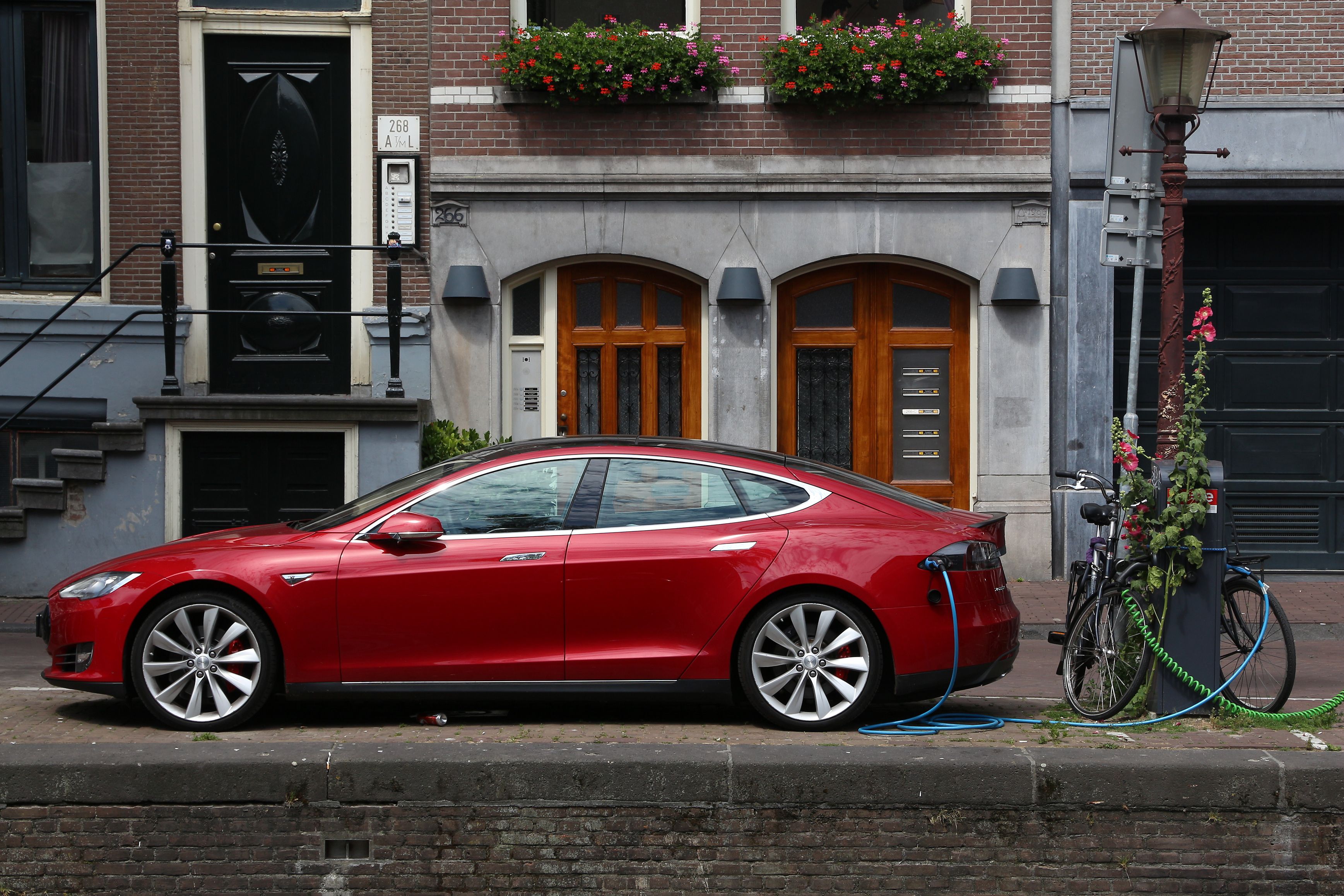
Charging your electric vehicle at home is the most cost-effective method of charging. In fact, one Consumer Reports study found that individuals could save $800 to $1,000 on fuel costs if they charged their electric vehicles at home. Plus, at-home rates will vary in price much less than public charging stations, as each network has its own rates.
You will have to install some sort of charging station in order to charge your EV at home though. Depending on how your house is wired and what type of station you want or need, installation costs can vary widely, ranging up to about $2,500. Equipment costs tend to be anywhere from $200 to $1,000, while the cost of installation can range from $800 to $1,300 or more, according to data from Edmunds, an online automotive resource. Higher prices tend to correspond with the need to do a lot of electrical work to prepare the charging site.
tupungato/ istockphoto

Electric vehicles have fewer moving parts than their gas-powered counterparts. Consider one of Tesla’s claims to fame: Their cars have only 17 moving parts, compared with the 200 or so in a traditional vehicle. As a result, there are fewer parts subject to wear and tear and therefore in need of regular maintenance.
Research shows that individuals who buy an electric vehicle can expect to save about $4,600 in maintenance and repair costs over the life of the car, per data from Consumer Reports. If you take a look at a mile-for-mile breakdown of maintenance costs, electric vehicles typically cost about $0.03 per mile to maintain, compared to $0.06 per mile to maintain a car with an internal combustion engine.
Sjo/ istockphoto

You’ll also need to take into account the cost to insure an electric vehicle. In general, owners of electric vehicles can face higher insurance premiums compared to those of gas-only vehicles.
This is due in part to the fact that vehicles that are more expensive tend to cost more to insure. Additionally, repairs for electric vehicles may be more costly due to the price of their parts as well as the more limited options in technicians who know how to repair electric vehicles.
Of course, as electric vehicles grow more popular, their sticker price and the cost of repairs will likely go down, which will likely also push down insurance rates for EVs.
ViktorCap/istockphoto

If you’re choosing between an electric vehicle and a traditional gas-powered option, it’s important to weigh out the pros and cons.
Lantern Credit / SoFi

While the average up-front cost of purchasing a new electric vehicle may be more than the average gas-powered car, they are cheaper to operate and maintain, and you could ultimately save thousands of dollars over the life of the car.
What’s more, government incentive programs may reduce your out-of-pocket costs by a significant amount, making an electric car a more feasible option for those with smaller budgets. Still, there is some give and take with the costs of owning an electric vehicle to keep in mind. For one, insurance premiums tend to be higher. And while there is less maintenance needed overall, some repairs like battery replacement can be costly.
You’ll also want to keep in mind the cost of charging, including if you want to install an at-home charger, the most cost-effective option. All told, however, the average cost per year of charging an electric car is about half that of gas vehicles, according to the U.S. Department of Energy.
Nicholas77/ istockphoto

When it comes to purchasing an electric vehicle, your options are the same as buying a traditional car. Here’s a look at the ways you can pay for an electric car.
Corinna71/ istockphoto

If you have enough savings on hand, you can buy a vehicle in cash. Doing so may give you some leverage as you negotiate a purchase price. It will also mean you don’t have to pay any extra costs in the form of loan fees and interest.
DepositPhotos.com

You may also choose to finance your car, taking out a loan through a bank or other financial institution. Or you may consider dealership financing. When you take out an auto loan, you usually make a down payment and then pay off the rest of the cost of the vehicle, also known as your car loan principal, over a series of monthly payments. In return for allowing you to borrow the funds, your lender will charge interest, adding to the cost of your loan.
The amount of interest they charge will depend on a number of factors, including your credit score, income, and whether you’re using a co-borrower.
gpointstudio / istockphoto

Another option you have when it comes to getting an electric car is leasing. There are a number of benefits to leasing an electric car as opposed to buying it outright, including being able to avoid the steep depreciation that comes with electric vehicles, steering clear of dealing with eventual battery degradation, and getting access to newer, evolving technology when you trade in your car at regular intervals.
However, you’ll lose out on potential federal and state tax credits when you lease instead of buy — though sometimes the leasing company may pass on their savings to the consumer. Plus, with leasing, you won’t actually own the vehicle.
depositphotos.com

In the future, you may consider refinancing your auto loan. When you refinance, you take out a new loan with better terms or interest rates and pay off your old loan.
You may be wondering, when should you consider refinancing a car? If your financial situation improves, interest rates drop, or your electric car payments become unmanageable, looking into refinancing may be worthwhile. It’s important to consider the benefits and disadvantages of refinancing, though.
On the plus side, you may be able to settle on more manageable monthly payments, save money on interest, and free up cash to put toward other financial goals. On the other hand, you may also find yourself dealing with prepayment penalties and fees to originate a new loan.
Here’s a rundown of what to ask when refinancing your car to help you make a decision for your financial situation.

While you’ll skip costs at the gas station with an electric vehicle, there are still costs of an electric car to keep in mind if you’re considering getting one. Added costs can include charging — both at public stations and at home — as well as maintenance and insurance. Still, overall, the average cost of an electric car does tend to be cheaper in terms of operation and maintenance than its gas-powered counterparts, even if their sticker price is currently higher.
Learn More:
This article originally appeared on LanternCredit.com and was syndicated by MediaFeed.org.
The tips provided on this website are of a general nature and do not take into account your specific objectives, financial situation, and needs. You should always consider their appropriateness given your own circumstances.Third-Party Brand Mentions: No brands or products mentioned are affiliated with SoFi, nor do they endorse or sponsor this article. Third-party trademarks referenced herein are property of their respective owners.This article provides general background information only and is not intended to serve as legal or tax advice or as a substitute for legal counsel. You should consult your own attorney and/or tax advisor if you have a question requiring legal or tax advice.
Lantern by SoFi:
This Lantern website is owned by SoFi Lending Corp., a lender licensed by the Department of Financial Protection and Innovation under the California Financing Law, license number 6054612; NMLS number 1121636. (www.nmlsconsumeraccess.org)
All rates, fees, and terms are presented without guarantee and are subject to change pursuant to each provider’s discretion. There is no guarantee you will be approved or qualify for the advertised rates, fees, or terms presented. The actual terms you may receive depends on the things like benefits requested, your credit score, usage, history and other factors.
*Check your rate: To check the rates and terms you qualify for, Lantern and/or its network lenders conducts a soft credit pull that will not affect your credit score. However, if you choose a product and continue your application, the lender(s) you choose will request your full credit report from one or more consumer reporting agencies, which is considered a hard credit pull and may affect your credit.
All loan terms, including interest rate, and Annual Percentage Rate (APR), and monthly payments shown on this website are from lenders and are estimates based upon the limited information you provided and are for information purposes only. Estimated APR includes all applicable fees as required under the Truth in Lending Act. The actual loan terms you receive, including APR, will depend on the lender you select, their underwriting criteria, and your personal financial factors. The loan terms and rates presented are provided by the lenders and not by SoFi Lending Corp. or Lantern. Please review each lender’s Terms and Conditions for additional details.
Many factors affect your credit scores and the interest rates you may receive. SoFi is not a Credit Repair Organization as defined under federal or state law, including the Credit Repair Organizations Act. SoFi does not provide “credit repair” services or advice or assistance regarding “rebuilding” or “improving” your credit record, credit history, or credit rating. For details, see the FTC’s website on credit (https://www.consumer.ftc.gov/topics/credit-and-loans)
Financial Tips & Strategies: The tips provided on this website are of a general nature and do not take into account your specific objectives, financial situation, and needs. You should always consider their appropriateness given your own circumstances.
Personal Loan:
SoFi Lending Corp. (“SoFi”) operates this Personal Loan product in cooperation with Even Financial Corp. (“Even”). If you submit a loan inquiry, SoFi will deliver your information to Even, and Even will deliver to its network of lenders/partners to review to determine if you are eligible for pre-qualified or pre-approved offers. The lenders/partners receiving your information will also obtain your credit information from a credit reporting agency. If you meet one or more lender’s and/or partner’s conditions for eligibility, pre-qualified and pre-approved offers from one or more lenders/partners will be presented to you here on the Lantern website. More information about Even, the process, and its lenders/partners is described on the loan inquiry form you will reach by visiting our Personal Loans page as well as our Student Loan Refinance page. Click to learn more about Even’s Licenses and Disclosures, Terms of Service, and Privacy Policy.
Personal loan offers provided to customers on Lantern do not exceed 35.99% APR. An example of total amount paid on a personal loan of $10,000 for a term of 36 months at a rate of 10% would be equivalent to $11,616.12 over the 36 month life of the loan.
Student Loan Refinance:
SoFi Lending Corp. (“SoFi”) operates this Student Loan Refinance product in cooperation with Even Financial Corp. (“Even”). If you submit a loan inquiry, SoFi will deliver your information to Even, and Even will deliver to its network of lenders/partners to review to determine if you are eligible for pre-qualified or pre-approved offers. The lender’s receiving your information will also obtain your credit information from a credit reporting agency. If you meet one or more lender’s and/or partner’s conditions for eligibility, pre-qualified and pre-approved offers from one or more lenders/partners will be presented to you here on the Lantern website. More information about Even, the process, and its lenders/partners is described on the loan inquiry form you will reach by visiting our Personal Loans page as well as our Student Loan Refinance page. Click to learn more about Even’s Licenses and Disclosures, Terms of Service, and Privacy Policy.
Student loan refinance loans offered through Lantern are private loans and do not have the debt forgiveness or repayment options that the federal loan program offers, or that may become available, including Income Based Repayment or Income Contingent Repayment or Pay as you Earn (PAYE).
Notice: Recent legislative changes have suspended all federal student loan payments and waived interest charges on federally held loans until 05/01/22. Please carefully consider these changes before refinancing federally held loans, as in doing so you will no longer qualify for these changes or other future benefits applicable to federally held loans.
Auto Loan Refinance:
Automobile refinancing loan information presented on this Lantern website is from Caribou. Auto loan refinance information presented on this Lantern site is indicative and subject to you fulfilling the lender’s requirements, including: you must meet the lender’s credit standards, the loan amount must be at least $10,000, and the vehicle is no more than 10 years old with odometer reading of no more than 125,000 miles. Loan rates and terms as presented on this Lantern site are subject to change when you reach the lender and may depend on your creditworthiness. Additional terms and conditions may apply and all terms may vary by your state of residence.
Secured Lending Disclosure:
Terms, conditions, state restrictions, and minimum loan amounts apply. Before you apply for a secured loan, we encourage you to carefully consider whether this loan type is the right choice for you. If you can’t make your payments on a secured personal loan, you could end up losing the assets you provided for collateral. Not all applicants will qualify for larger loan amounts or most favorable loan terms. Loan approval and actual loan terms depend on the ability to meet underwriting requirements (including, but not limited to, a responsible credit history, sufficient income after monthly expenses, and availability of collateral) that will vary by lender.
Life Insurance:
Information about insurance is provided on Lantern by SoFi Life Insurance Agency, LLC. Click here to view our licenses.
depositphotos.com

DepositPhotos.com
Featured Image Credit: Damir Khabirov / iStock.