How to Lose Fat and Gain Muscle
Losing weight can be tricky. Gaining muscle isn’t exactly a walk in the park, either. So, losing weight and gaining muscle at the same time? Impossible, right? Not necessarily.
Key Takeaways:
- Body recomposition is when you lose fat and gain muscle at the same time.
- You can do this by eating more protein, strength training, and getting enough sleep.
- The number on the scale may not change as you lose fat and gain muscle, but you might visibly see the difference and experience many health benefits.
Losing weight can be tricky. Gaining muscle isn’t exactly a walk in the park, either. So, losing weight and gaining muscle at the same time? Impossible, right? Not necessarily.
Body recomposition, or losing fat and gaining muscle at the same time, is possible. The key steps to follow include strength training, eating plenty of protein, and getting enough sleep.

What Is Body Recomposition?
Body recomposition is when you lose body fat and gain muscle mass (lean mass) at the same time. The cool kids call it “body recomp.”
Let’s wind it back.
Body composition is the proportion of fat and fat-free mass (like muscle and bone) in your body. You can get an idea of your body composition by working out your body fat percentage, which is a measure of how much body fat you have compared to overall body weight.
Changing your body composition — by adding muscle and losing fat — can improve your health in many ways.
If you have overweight or obesity, losing body fat can reduce your risk of health conditions like:
- High blood pressure (hypertension)
- Type 2 diabetes
- Heart disease
- Stroke
Losing body fat could also improve your energy, mood, sleep, and overall quality of life.
Muscle also comes with health benefits. More muscle means a reduced risk of falls and injuries and a higher resting metabolic rate (how many calories your body burns at rest), which makes weight maintenance easier.

How Does Body Recomposition Work?
Body recomposition works by making lifestyle changes that simultaneously promote fat loss and muscle gain.
You don’t have to achieve one goal before working on the other. In fact, many lifestyle interventions — like eating more protein and strength training — contribute to both weight loss and muscle growth.
There’s no single best way to work on body recomposition. You can tweak the lifestyle changes you make to suit your exact goals.
For example, someone looking to lose more body fat and maintain or build muscle may eat fewer calories — while still getting all the nutrients they need, of course.
Someone looking to lose a smaller amount of body fat and gain a greater amount of muscle may eat more calories and strength train more often.

How to Lose Fat and Gain Muscle: 3 Key Steps
To lose fat and gain muscle, eat more protein, strength train, and get enough sleep. Easier said than done, we know.
Here’s our step-by-step guide to body recomposition.

1. Eat More Protein
Protein is a vital part of any body recomposition diet. The nutrient can help you feel fuller, curb food cravings, and build and repair muscle.
If you’re looking to lose body fat, go for lean sources of protein, like:
- Chicken
- Turkey
- Fish
- Tofu
- Tempeh
- Lentils
- Eggs
- Lean beef
Research on older women shows that a higher protein intake can lead to more muscle gain when strength training.
How much protein should you eat exactly?
Craig Primack, MD, a physician specializing in obesity medicine and senior vice president of weight management at Hims & Hers, recommends aiming for 100 grams of protein a day to support weight loss.
Beyond protein, prioritize whole foods, including fruits, veggies, complex carbs, and healthy fats.
2. Strength Train
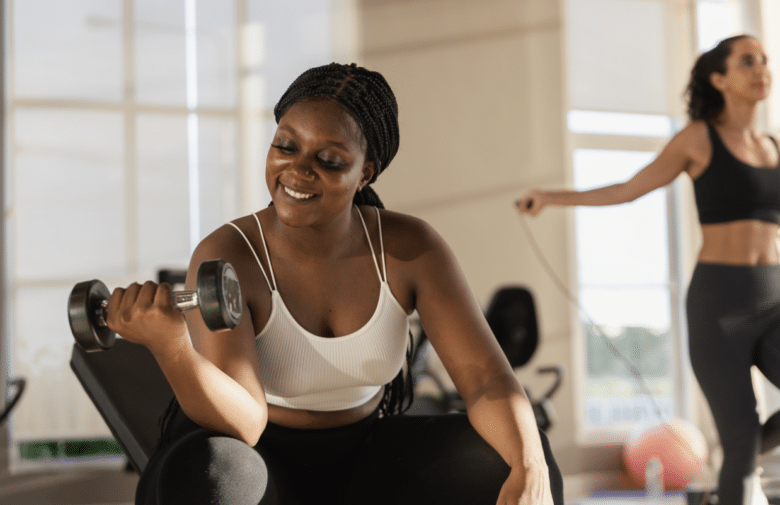
Strength training is a key muscle-building activity. But it can also help with fat loss because you’re increasing your energy expenditure through physical activity and boosting your resting metabolic rate.
Strength training exercises include:
- Doing bodyweight exercises
- Using dumbbells and resistance bands
- Using resistance machines
Higher-load resistance training — i.e., lifting more weight, such as with a bench press — could result in greater body recomposition.
A 2024 study looked at women after menopause who did either single sets of high-load exercises, single sets of low-load exercises, or multiple sets of high-load exercises. After 24 weeks, all groups:
- Lost visceral fat (fat that sits deep within the abdomen)
- Lost overall body fat
- Gained muscle mass and strength
But the two groups who did higher-load exercises had significantly greater body recomposition than the lower-load group.
So, when strength training, gradually increase how much weight you’re lifting. This is known as progressive overload — it can help you build muscle while promoting fat loss.
General guidelines say you should aim for at least two strength training sessions per week (in addition to cardio), focusing on all major muscle groups. Research on body recomposition suggests a minimum of three sessions a week.
Start with what’s doable for you, and gradually increase how many sessions you do.

3. Get Enough Sleep
Sleep loss can increase your appetite and decrease your performance in the gym, your recovery after the gym, and your motivation to get to the gym in the first place.
It can also have an impact on how much fat vs. muscle you lose when you lose weight.
A small study looked at people with overweight or obesity who were in a caloric restriction (eating fewer calories than their bodies needed) and either got enough sleep or slept about an hour less five nights each week. The group sleeping less was allowed to catch up on sleep on the other two days.
After eight weeks, both groups lost weight, but the group that got enough sleep nightly lost more fat as part of their weight loss than the sleep-deprived group.
Other research shows that a decline in sleep quality is linked to fat gain and muscle loss — not the combination you’re looking for.
To maximize body recomposition, aim for 7 to 9 hours of sleep a night. These sleep tips can help you get enough good-quality sleep:
- Use your bed for sleep and intimacy only.
- Keep your bedroom cool and dark.
- Wind down an hour or so before bed, ideally without screens.
- Avoid large meals before bed.
- If you can’t sleep, get up and do a relaxing activity until you feel sleepy.

Body Recomposition: Final Takeaways
Gaining muscle while losing fat is possible. It just takes a little dedication and patience. Here are the key things to keep in mind:
- You might not see weight loss on the scale. If you lose fat and gain muscle, the number on the scale might stay the same — or even go up. Consider tracking metrics like body fat percentage, waist circumference, or the weight you can lift in the gym to monitor your progress.
- Weight loss and muscle gain take time. You can’t rush the good things in life. Build healthy habits that promote fat loss and muscle gain, and stick with them week after week. Progress will come.
- Celebrate the wins. Reaching a lower cholesterol level, feeling less breathless when playing with your kids, hitting a deadlift personal best — celebrate those body recomposition wins, big and small.
Finally, don’t forget to reach out for expert help. Dietitians, personal trainers, or weight loss specialists can give you personal advice to help you reach your goals safely.
FAQs
Get answers to frequently asked questions about body recomposition below.
Is body recomposition safe?
Body recomposition is safe, as long as you do it in a safe way. That means gradually increasing your strength training, taking rest days, and losing weight steadily. The Centers for Disease Control and Prevention (CDC) recommends losing 1 to 2 pounds a week.
How long does body recomposition take?
How long body recomposition takes depends on your goals, genetics, lifestyle, and whether you have any medical conditions that make weight loss harder. In general, it can take a few months to see significant changes in your body composition. Losing weight too fast can result in muscle loss, so slow and steady is best.
What are the best exercises for body recomposition?
The best exercises for body recomposition are strength training exercises, including:
- Bodyweight exercises
- Using dumbbells and resistance bands
- Using resistance machines in the gym
Some research suggests that in women after menopause, a higher-load strength training routine leads to greater body recomposition compared to a lower-load routine.
How many calories should I eat for body recomposition?
How many calories you need to eat for body recomposition depends on your goals, lifestyle, and what your body needs. In general, losing fat requires lowering your calorie intake. Research suggests you can gain muscle and lose fat in a calorie deficit and, for some, when you’re not in a deficit if you’re eating a high-protein diet and strength training.
Related:
- Switching from tirzepatide to semaglutide for weight loss? Here’s what to expect
- 16 tips to keep going on your weight loss journey (even during the holidays)
Like MediaFeed’s content? Be sure to follow us.
This article originally appeared on Forhers.com and was syndicated by MediaFeed.org