
These people certainly aren’t worrying about the cost of living. The United States remains the country with the most billionaires in the world. And according to Forbes, there are already more than 60 new additions to their 2023 Billionaires List.
The website SuperCasinoSites decided to take a look at the birthplaces of the richest people to see if there was any pattern to who ends up a billionaire … and who doesn’t. They calculated the quoted billionaire rates based on 100,000 residents, and only focused on self-made billionaires, not those with family money.
These are the top ten states for becoming a billionaire, and the number one state probably won’t surprise you.
Oklahoma
Billionaires per capita: .17
Noteworthy billionaires:
Harold Hamm & family
oil and gas
Net worth: $18.5 billion
George Kaiser
oil & gas, banking
Net worth: $12.9 billion
Illinois
Billionaires per capita: .17
Noteworthy billionaires:
David Siegel
hedgefunds
Net worth: $6.8 billion
David Shaw
hedgefunds
Net worth: $7.9 billion
Montana
Billionaires per capita: .18
Noteworthy billionaires:
Frank VanderSloot
nutrition and wellness products
Net worth: $3.2 billion
New Mexico
Billionaires per capita: .19
Noteworthy billionaires:
Jeff Bezos
Amazon
Net worth: $147 billion
Dan Kurzius
email marketing
Net worth: $4.2 billion
Maryland
Billionaires per capita: .19
Noteworthy billionaires:
Steven Rales
manufacturing and investments
Net worth: $7.2 billion
John Overdeck
hedge funds
Net worth: $6.8 billion
Nebraska
Billionaires per capita: .25
Noteworthy billionaires:
J. Joe Ricketts & family
TD Ameritrade
Net worth: $3.2 billion
Missouri
Billionaires per capita: .26
Noteworthy billionaires:
Stanley Kroenke
sports and real estate
Net worth: $12.9 billion
Rhode Island
Billionaires per capita: .27
Noteworthy billionaires:
Brad Jacobs
logistics
Net worth: $3.8 billion
Jay Paul
real estate
Net Worth: $4 billion
Massachusetts
Billionaires per capita: .29
Noteworthy billionaires:
Michael Bloomberg
Bloomberg LP
Net worth: $94.5 billion
Robert Kraft
manufacturing, New England Patriots
Net worth: $10.6 billion
New York
Billionaires per capita: .39
Noteworthy billionaires:
Larry Ellison
Oracle
Net worth: $132.6 billion
Mark Zuckerberg
Facebook
Net worth: $93.1 billion
This article was produced and syndicated by MediaFeed.
- Classic rock albums that Boomers love & the kids should, too
- Men over 60: These hobbies will keep you entertained & active
Like MediaFeed’s content? Be sure to follow us.
How millionaires & billionaires are taxed across the world

Taxing the wealthy in the United States at a higher rate is an idea that has become popular among many progressives, especially when it comes to high marginal tax rates on personal income. In fact, it was an idea that was at the center of Sen. Bernie Sanders’ presidential run, both in 2016 and 2020.
But what does it look like in other countries that have significantly higher marginal tax rates than the United States? A recent report from The Tax Foundation, a non-profit tax policy research group, compared the rate at which 41 countries tax their top earners.
The findings concluded, perhaps not surprisingly, that Nordic and Western European countries have the highest effective tax rates of all the countries reviewed.
According to the report’s authors, “the political discussion around taxing high-earners usually revolves around the income tax, but in order to get a complete picture of the tax burden high-income earners face, it is important to consider effective marginal tax rates.”
Vasyl Dolmatov / istockphoto

Effective marginal tax rate refers to the graduated levels of taxation as taxpayers have greater amounts of income. So, in the United States, for example, the highest tax bracket is 37%. That doesn’t mean all income would be taxed at 37%, though. It’s only the amount over that tax bracket threshold.
The authors go on to say that “effective marginal tax rate answers the question, ‘If a worker gets a raise such that the total cost to the employer increases by one dollar, how much of that is appropriated by the government in the form of income tax, social security contributions, and consumption taxes?’ In principle, it does not matter how the tax burden is distributed among the various taxes—all taxes that affect the return to work should be taken into account.”
nathanaparise / istockphoto

The report’s authors conclude that may not be in a country’s best interest, however.
“Countries should be cautious about placing excessive tax burdens on high-income earners, for several reasons. In the short run, high marginal tax rates induce tax avoidance and tax evasion, and can cause high-income earners to reduce their work effort or hours. Under reasonable assumptions about behavioural responses to taxation, the Laffer curve—which shows the relationship between the tax rate and tax revenues—peaks around 60-75 percent for high incomes. This implies that many OECD countries are close to the tax revenue peak or have surpassed it. In the long run, high marginal tax rates can affect career choices and migration decisions. They also lower the return to education and entrepreneurship.”
Among the countries with the highest effective tax rates, the top six all have high payroll taxes, the study found. And countries vary significantly when it comes to where the top marginal tax rate starts to apply. As the study authors note, “mapping this would be very complicated, as taxes may have different thresholds. For example, the threshold for solidarity taxes may be different than for the top income tax bracket. It should also be noted that the top marginal tax rate is by no means always the highest tax rate, since social security contributions often only apply up to a ceiling.”
12963734 / istockphoto
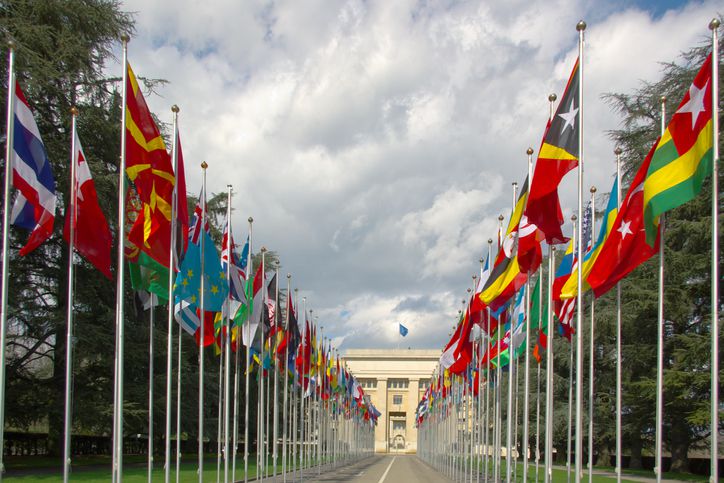
For each country and tax, the authors identified the tax rate in the highest tax bracket.
“Often, social security contributions are only payable up to a ceiling. In this case, the marginal tax rate for high-income earners is zero. We use the national average of local and regional taxes, unless otherwise specified.”
For full methodology, see page 17 of the complete report. Each rate is made up of income tax, payroll tax, social contributions and consumption tax.
Here are the effective marginal tax rates in 41 countries with some of the highest tax rates in the world:
x-drew / istockphoto

sfabisuk / istockphoto

Emmanuel Flores / istockphoto

Jack Austin Photography / istockphoto

proslgn / istockphoto

RossHelen / istockphoto

tifonimages / istockphoto

Photosensia / istockphoto

Xantana / istockphoto

DedMityay / istockphoto

ronnybas / istockphoto

nantonov / istockphoto

Cristian Mircea Balate / istockphoto

PumpizoldA / istockphoto

Adrian Catalin Lazar / istockphoto

roman_slavik / istockphoto

SeanPavonePhoto / istockphoto

Tony_Irving / istockphoto

Xantana / istockphoto

basiczto / istockphoto

SeanPavonePhoto / istockphoto

sj0509 / istockphoto

diegograndi/istockphoto
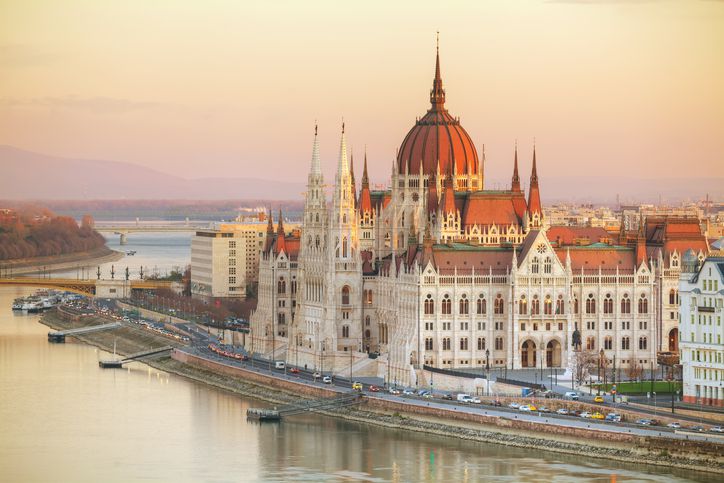
AndreyKrav / istockphoto

WangAnQi / istockphoto

martinhosmart / istockphoto

SHansche / istockphoto

Xantana / istockphoto

Yasonya / istockphoto

tawatchaiprakobkit / istockphoto

Cristian Mircea Balate / istockphoto

olegmj / istockphoto

Stojanoski / istockphoto

Shawn Williams / istockphoto

bluejayphoto / istockphoto

CHUNYIP WONG / istockphoto

manjik

LuCaAr / istockphoto

PauloZimmermann / istockphoto

RudyBalasko / istockphoto

Remedios / istockphoto
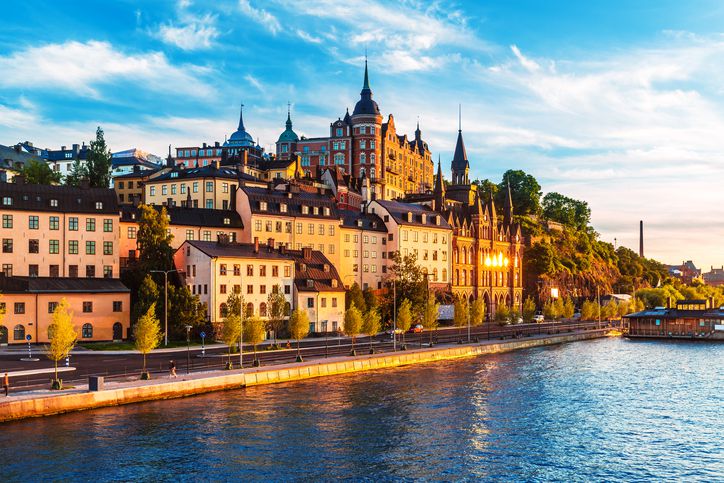
More from MediaFeed.org:
This article was produced and syndicated by MediaFeed.org.
scanrail / istockphoto
Featured Image Credit: Deposit Photos.