French cars are making a comeback among classic car collectors.
Of course, few vehicles have been more cherished by collectors than those bodied by such Paris coachbuilders as Figoni et Falachi, Saoutchik, Franay, Pourtout and even by a couple of Americans in Paris: Tom Hibbard and Howard “Dutch” Darrin. Additionally, who could forget Jean Bugatti, the Italian designer who produced the swooping Atlantic in southeastern France?
Whether they were natives, immigrants or temporary visitors, these coachbuilders created true sculptures in motion. No wonder these artisans’ designs helped pioneer the term “French curves.”
Of course, World War II changed Europe’s automotive landscape, and the post-war wave of French designs tended to be small and practical. Post-war Germany had its Volkswagen, Italy its updated version of Fiat’s Topolino and France its Citroen 2CV.
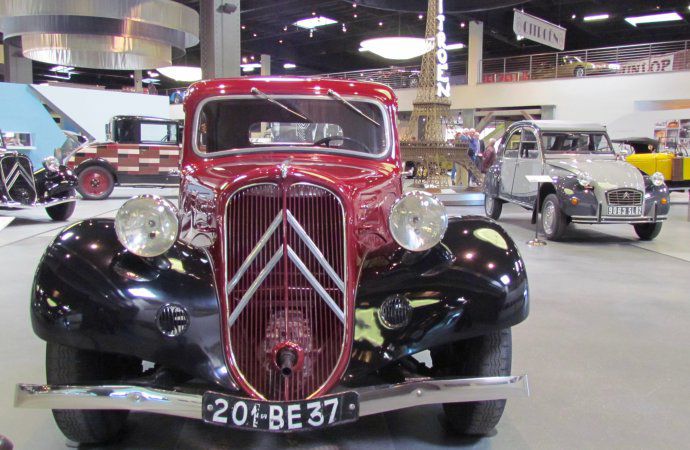
Pictured: Citroen Traction Avant
Image Credit: ClassicCars.com.
Life-saving innovations
Suddenly, an automotive goddess descended from the heavens. In 1955, Citroen launched the DS19, the Derivation Special sculpted by Flaminio Bertoni and Pierre Franchiset (they literally used clay rather than drafting equipment).
While the car’s shape might have been shocking, it was no more unusual than the car’s mechanical technology, which replaced metal springs with height-adjustable hydro-pneumatic suspension. Additionally, the car rode on newly developed Michelin radial tires.
Such technology likely saved the life of French president Charles de Gaulle, whose driver was able to spirit him away from an assassination attempt even though the vehicle suffered two flat tires and numerous bullet holes.
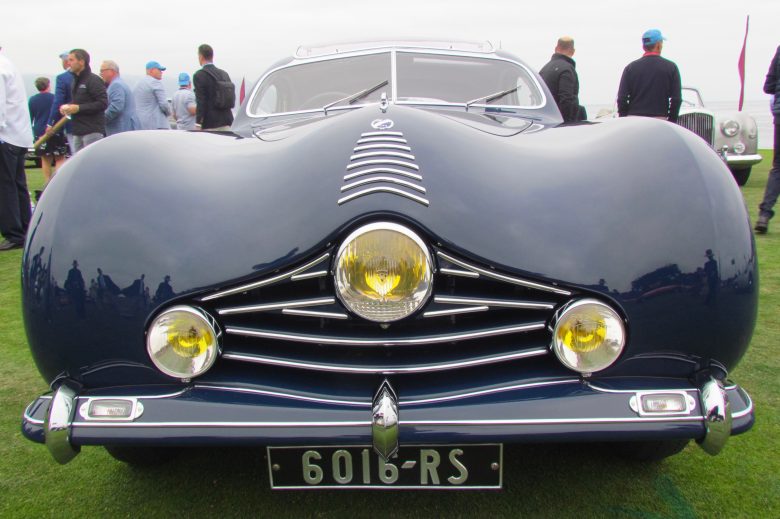
Pictured: 1948 Talbot-Lago T26 Grand Sport featuring Figoni bodywork
Image Credit: ClassicCars.com.
Fall of the Citroen
The DS19 also had front and rear crumple zones, as well as so many other new features that the authors of the 700-page, three-volume Cars 1930-2000: The Birth of the Modern Car called this new Citroen, the “next phase in innovation.”
Philosopher Roland Barthes simply called it Deesse, the goddess. This new Citroen was both auto and art and was displayed in London, Milan and New York.
While it was remarkable, the Citroen was not widely sought after by collectors, whose interests remained tethered to the flamboyant pre-war classics.
Each car was different and dramatic and so evocative of the era, noted Dave Kinney, publisher of the Hagerty Price Guide.
“People realized that to be competitive in a concours, having something that is so different from the other cars gives it the potential to do well,” he said.
There were some “incredibly voluptuous” French cars coachbuilt soon after World War II, Kinney said. But, he added, much of that work was done with pre-war chassis that had become outdated (car-building materials were very expensive in post-war Europe).
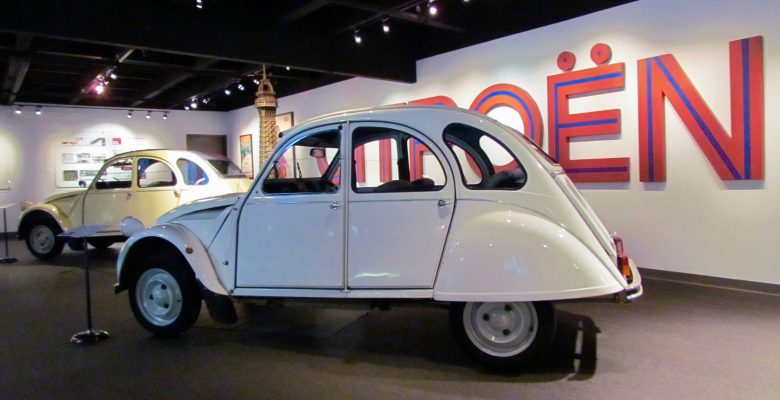
Pictured: 2CV Models
Image Credit: ClassicCars.com.
The French Henry Ford
Peter Mullin has been championing French cars for about 40 years. His Mullin Automotive Museum in Oxnard, California has become a showcase for the great French coachbuilt cars. However, in 2017, the Voisins, Bugattis, Delages and such gave way to an exhibit titled “Citroen: The Man, The Marque, The Mystique.”
“I walked by Citroens for 35 years without stopping to learn about the history of one of the great marques of France,” Mullin said as he opened that 46-vehicle exhibit.
Mullin contends that Andre Citroen was to Europe what Henry Ford was to America: Not only its first mass automaker, but also a marketing genius. Citroen’s company was innovative in other ways as well, developing and promoting front-wheel drive in the 1930s, decades ahead of the rest of the industry.
“Every modern car owes something to Citroen,” Mullin said.
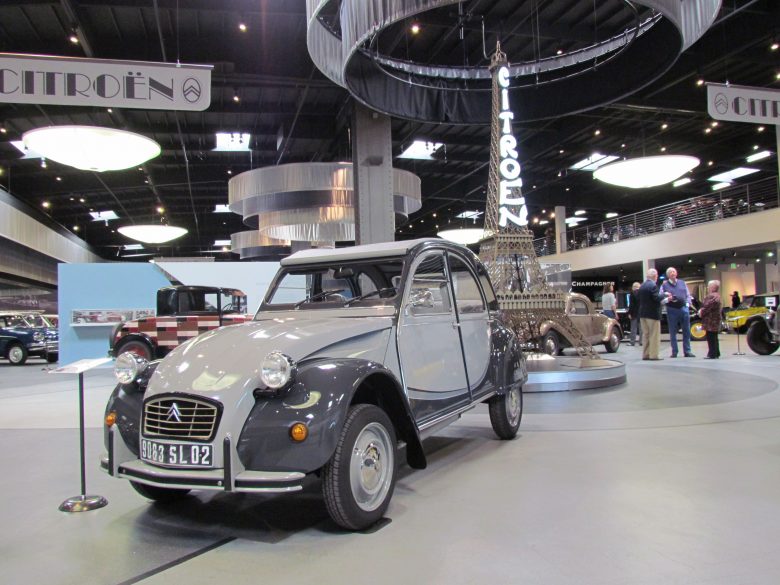
Pictured: Mullin Museum Exhibition
Image Credit: ClassicCars.com.
Rise of the Citroen?
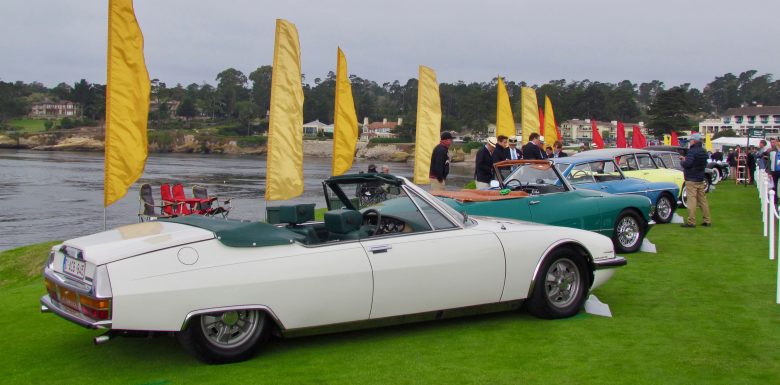
Mullin hasn’t been alone in his push to promote French cars. For the first time in its 68-year-history, the Pebble Beach Concours d’Elegance featured a special class of postwar custom Citroens just this year. Of the seven custom-bodied cars, two were Mullin’s, but three — including the class winner — came from the Fisher collection in Palm Beach, Florida. Another was owned by one of the McCaw brothers, while the final example came from Belgium.
Kinney said that the Mullin and Pebble Beach Citroen displays have sparked interest in French vehicles, “but it’s more the interest in them that’s growing right now. Prices are stable, and possibly heading upward for some of them.”
Mullin added that the coachbuilt pre-war cars still draw the most interest.
Nonetheless, Brass-era Renault racing cars are popular with collectors, as are such post-war French cars as the Alpine A110, the Facel-Vega and the Maserati-powered Citroen SM.
Perhaps all it will take to reignite interest in collectible French cars is another concours featuring Deux Chevaux vehicles, or a remake of television’s Colombo and his Peugeot 403 cabriolet.
Pictured: Custom-bodied Citroen cars at the 2018 Pebble Beach Concours d’Elegance
This article originally appeared on ClassicCars.com and was syndicated by MediaFeed.org.
Image Credit: ClassicCars.com.