Expanding Medicaid coverage may have led to better cancer survival rates among young adults, according to new research published in the Journal of Clinical Oncology.
The study finds that states that expanded Medicaid to cover most adults making up to 138% of the Federal Poverty Level saw increased two-year cancer survival rates compared with states that did not expand Medicaid. Forty states, including the District of Columbia, have expanded Medicaid.
Cancer is a leading cause of death among 18- to 39-year-olds. More than 80,000 people in this age group were newly diagnosed in 2020.
“Historically, young adults have not experienced the same survival improvements as pediatric or older cancer patients,” says Xu Ji, a researcher at Winship Cancer Institute of Emory University, assistant professor of pediatrics, and lead author of the study.
One reason for the disparity is a lack of health insurance coverage, says Ji, who is also a professor at the Emory University School of Medicine. That’s why expanding Medicaid has the potential to improve outcomes for cancer patients.
Most young adults aren’t regularly screened for most cancers. For example, doctors don’t recommend regular colonoscopies until you turn 45.
“This population doesn’t have any kind of screening regularity,” says Dr. Sharon Castellino, a pediatric hematologist/oncologist, professor of pediatrics, and researcher at Winship. “They also are young and mobile and working or early in parenthood years and transient, and may not seek regular health coverage, because in general, they should be a healthy population.”
Because of this, when young adults are diagnosed with cancer, it tends to be at a more advanced stage. More advanced cancers have lower survival rates.
Expanding Medicaid had particularly strong benefits for minorities, especially Black and Hispanic patients. These groups were more likely to not have health insurance coverage before expansion and had worse cancer outcomes, to begin with.
“Because of the disparities among minority patients, there’s more opportunity for them to improve when a policy like this comes into effect,” Ji says.
Aside from giving people access to cancer treatment, expanding Medicaid also gives young adults better access to regular preventive care, which may lead to cancers being detected earlier, Castellino says. The study is evidence that young adults and their families should make every effort to enroll in health insurance, even if they don’t currently have health problems, the authors say.
“Our study provides more data showing that Medicaid expansion is effective in saving lives and improving overall survival among these young patient populations with cancer,” Ji says.
Expanding Medicaid has also been linked to reduced hospitalizations among pregnant women, according to a study published in Health Affairs.
“Our findings indicate that expanding Medicaid coverage led to improved postpartum health for low-income birthing people,” said Maria Steenland, an assistant professor at Brown University and a co-author of the study.
Each state runs its own Medicaid program, so eligibility varies, especially in the 11 states that haven’t expanded Medicaid to cover all adults making below a certain income threshold. Your age, disability status, pregnancy status, household size, and other factors can also qualify you for Medicaid.
As of September, more than 90 million Americans were enrolled in Medicaid or Children’s Health Insurance Programs, thanks in part to loosened eligibility rules during the COVID-19 pandemic. But millions of people could lose coverage in April when pre-pandemic enrollment rules return.
More from MediaFeed:
- The surprising last meals of notorious death row inmates
- The most craveable hot dogs in America
- The hilarious & sometimes tragic real names of celebrities
Like MediaFeed’s content? Be sure to follow us.
This article originally appeared on Policygenius.com and was syndicated by MediaFeed.org.
6 cancer warning signs you should never ignore

Weight loss. Bleeding. Bloating. Cough. When are symptoms like these a temporary bother, and when are they early signs of something much worse — like cancer?
“The vast majority of the time, these issues aren’t that serious,” says James Hamrick, M.D. M.P.H., senior medical director at Flatiron Health, “but it’s good to get them checked out.”
You’re less likely to get a shock if you are getting timely cancer tests — a colonoscopy at 50 and every 10 years thereafter, yearly skin checks with a dermatologist, and an annual mammogram if you’re are a woman. “Often cancer gets missed or is advanced when patients don’t get recommended screenings,” says Sandy Kotiah, M.D., a medical oncologist and director of the Neuroendocrine Tumor Center at Mercy Medical Center in Baltimore. Her advice: “Don’t ignore things that aren’t going away.”
Here are symptoms that merit a trip to the doctor.
SPONSORED: Find a Qualified Financial Advisor
1. Finding a qualified financial advisor doesn’t have to be hard. SmartAsset’s free tool matches you with up to 3 fiduciary financial advisors in your area in 5 minutes.
2. Each advisor has been vetted by SmartAsset and is held to a fiduciary standard to act in your best interests. If you’re ready to be matched with local advisors that can help you achieve your financial goals, get started now.
Prostock-Studio/istockphoto

If you’re exercising and eating less in order to drop a few pounds, you expect to see results. “But if your clothes aren’t fitting anymore and you haven’t limited your food consumption, that’s a red flag,” says Dr. Hamrick.
Cancers can cause you to lose weight unintentionally, especially if it is a malignancy that has spread from one organ to another. If you have lost more than five to 10% of your body weight without trying, talk to your doctor.
LightFieldStudios/istockphoto

Many people see blood on the toilet paper from time to time, usually the result of an irritated hemorrhoid. But if there is a large amount of blood or stools are dark and tarry (the sign of old blood), make an appointment to get it checked.
“Dark, tarry stool can indicate bleeding from the stomach or esophagus,” signaling possible cancer there, says Dr. Hamrick. “Continual bright red could indicate trouble lower down in the GI tract in the colon or rectum.” Vaginal bleeding after menopause also warrants a mention to your doctor.
Manuel-F-O/istockphoto

A lot of people experience bloating — or uncomfortable fullness — due to hormone shifts or common GI issues like irritable bowel syndrome.
“But if women are noting an increase in their abdominal girth along with a continual feeling of bloating, we might suspect ovarian cancer,” Dr. Hamrick says. That’s particularly true for women after menopause.
dragana991/istockphoto

Despite widespread campaigns advocating breast self-exam, some lumps still go overlooked. “Many women will notice a lump up in the upper underarm and think nothing of it,” says Dr. Kotiah. Waste no time in reaching out to your doctor and scheduling a mammogram. Good news: As women age, the breast tissue becomes more fatty and less dense, making abnormal growths easier to spot on x-rays. So “you get more bang for your mammogram buck,” says Dr. Hamrick.
pondsaksit/istockphoto

During cold and flu season, it’s common to get a cough that lingers for up to six weeks. “The airways are irritated and it takes time to heal up,” says Dr. Hamrick. But if the rattle in your chest is still there after a month and half, it’s reasonable to ask for a chest x-ray to rule out lung cancer.
Moha El-Jaw/istockphoto

You may have had that mole for decades, but if it suddenly starts growing or bleeding in the absence of a trauma, see a physician. “Variation in color, say, from brown to tan, irregular borders or rapid growth are also cause for concern,” says Dr. Hamrick. “You need to seek out a dermatologist.”
See Also:A new blood test can detect 8 different cancers in their early stages
Zinkevych/istockphoto
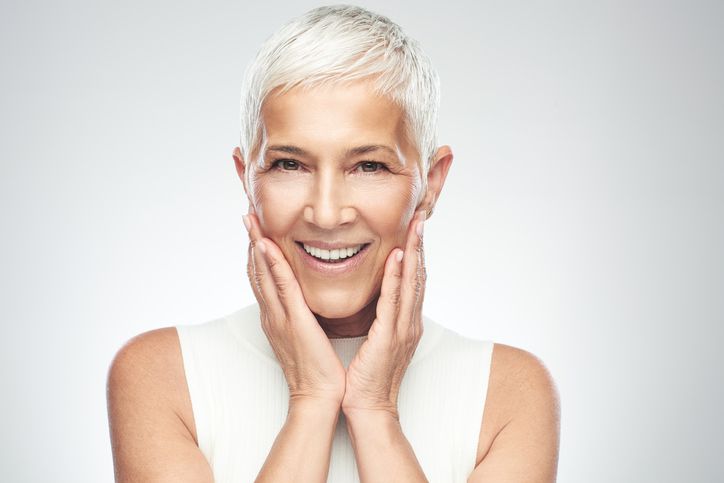
While aging is considered one of the bigger risk factors for cancer, new research shows that aging could be hindering cancer development as well. The research looked at the process of cell division and at senescent or “sleeping” cells that lose their ability to divide.
As people age, their senescent cells increase, driving many age-related processes and diseases.
“While mutations accumulate with age and are the main driver of cancer, aging tissues may hinder cell proliferation and consequently cancer. So you have these two opposite forces, mutations driving cancer and tissue degeneration hindering it,” said Dr. Joao Pedro De Magalhaes of the University of Liverpool, one of the study’s authors.
The phenomenon may explain why the incidence of cancer levels off and even may decline in very advanced ages, he said, adding that more studies are needed to verify the phenomenon.
This article originally appeared on Considerable.com and was syndicated by MediaFeed.org.
millann/istockphoto

Deposit Photos
Featured Image Credit: Frantab / iStock.