Editor’s note: Lantern by SoFi seeks to provide content that is objective, independent and accurate. Writers are separate from our business operation and do not receive direct compensation from advertisers or partners. Read more about our Editorial Guidelines and How We Make Money. The tips provided on this website are of a general nature and do not take into account your specific objectives, financial situation, and needs. You should always consider their appropriateness given your own circumstances.
Traditionally, you might think of a car loan as one that uses the vehicle as collateral — in other words, a secured loan. Another option exists, however: an unsecured loan where the vehicle isn’t put up as collateral, which is a significantly different type of loan structure. So, what exactly are the differences between an auto loan that’s secured or unsecured, and which is better? This post walks you through both processes and the pros and cons of a secured vs. unsecured auto loan so you can make the right decision for your situation.
Related: What does liability auto insurance typically cover?
What Is a Secured Auto Loan?
An auto loan that uses the vehicle as collateral for the loan is considered a secured auto loan. The borrower pays back the loan by making a predetermined principal and interest payment over a certain period of time. If the loan is not paid back according to the agreement, the lender may be able to repossess the vehicle.
What Is an Unsecured Auto Loan?
An unsecured auto loan, meanwhile, does not use the vehicle (or anything else, for that matter) as collateral. Instead, the financial institution looks at the credit history and financial record of the borrower when making lending decisions. If the borrower defaults on an unsecured auto loan, the vehicle is not directly at risk of being seized.
Are Auto Loans Secured or Unsecured?
As the descriptions of secured and unsecured loans demonstrate, auto loans can require collateral (secured), or they can be based on the borrower’s credit and financial status without an asset being collateralized (unsecured). What’s important is to weigh the pros and cons of each before making an informed decision. Most commonly, auto loans require collateral.
Secured vs. Unsecured Car Loans
When deciding between secured vs. unsecured auto loans, it’s important to consider the pros and cons of each.
1. Secured Loan
Pros:
- Because there’s collateral involved, it may be easier to get loan approval due to reduced risk for the lender.
- Because of the lender’s reduced risk, your interest rate will likely be lower than with an unsecured loan.
- Lower interest rates can mean lower principal and interest payments.
Cons:
- If you default on payments, you may lose the vehicle.
- You’ll need to have your credit checked, and your score must meet lender guidelines. Late payments can negatively affect your score.
- The value of the vehicle must be verified as high enough to support the loan amount.
2. Unsecured Loan
Pros:
- No vehicle assessment is needed and, if you default on payments, the car is not directly at risk.
- You can get lower interest rates with a good credit score (in contrast to when someone has a lower score).
- The application/approval process is typically more streamlined.
Cons:
- If your credit score doesn’t meet the lender’s standards, the loan may get denied or you may receive a higher interest rate.
- Overall, unsecured loans come with higher interest rates than secured loans.
- Even though the vehicle wouldn’t be at direct risk if payments aren’t made, it will still negatively impact credit score.
You can explore a lender’s requirements for auto loans that use the vehicle as collateral. They will likely include your:
- Income
- Credit history
- Credit check results
- Debt-to-income ratio
Read on for more about each along with additional information about what is needed for a car loan.
Income
Lenders will check to make sure you have enough income to afford a car loan, and what “enough” means can vary by financial institution. Ways that lenders may verify your income can include asking for pay stubs, bank statements and/or tax returns.
Credit History
Because past payment history can predict a person’s future actions, lenders want to see that borrowers have a pattern of meeting their financial obligations. As such, a review of your credit history is typically part of the loan approval process for a vehicle.
Credit Check Results
Results of your credit check can play a key role in determining what interest rate you’re offered. Gathering information ahead of time about what rate you qualify for can help you to decide what kind of car you can afford and budget for its purchase.
Debt-to-Income Ratio
Your debt-to-income ratio (DTI) calculates the percentage of your pre-tax income that goes toward your monthly debt payments. Lenders like to see a lower DTI because this reduces their levels of risk, while a higher one can indicate that a borrower is carrying too much debt for their gross income.
How Can I Get an Unsecured Auto Loan?
With an unsecured loan, seek out lenders that will loan on a car without requiring collateral. They will likely look at factors such as your:
- Income
- Credit history
- Credit check results
- Debt-to-income ratio
Here’s more about what lenders may be looking for with each.
Credit
Good credit scores are especially important for unsecured loans because the lender makes approval decisions based on that person’s financial record and situation. The interest rate may also depend upon the individual’s credit score.
Income
Just like with unsecured loans, a lender will want to make sure that you have enough income to make the payments. They’ll likely ask to see the same sorts of proof, such as pay stubs, bank statements and/or tax returns.
Assets
Because the vehicle is not put up as collateral for an unsecured loan, the asset (the car) does not need to be assessed as part of the loan process and can’t be directly taken if payments aren’t made. That said, defaulting can still hurt your credit score and remain on credit reports for seven years.
Car Financing Options
When shopping for an auto loan, it’s important to assess your options. You’ll want to set your budget before you head out shopping, and it’s also a good idea to check your credit in advance so you have a good sense of where you stand and what your odds of qualification are. This could give you a sense of whether you may need a cosigner.
Shop for car loans from multiple sources, and consider getting prequalified or preapproved. Once you have the auto loan offer in hand, it is critical to read the fine print before you commit. Specifically, keep an eye out for your interest rate, the length of a car loan, any fees and penalties, and other key aspects of the agreement before moving forward. If you already have a car loan and are looking to reduce your payments or otherwise get a better deal, consider refinancing. If you’ve got a more challenging situation, such as upside-down auto loans where the loan amount is higher than the value of the car, it can take more research to find the right lender.
The Takeaway
Auto loans can be divided into two broad types: secured, where the vehicle is put up as collateral, and unsecured, where a borrower’s credit history and financial situation is primarily considered when a lender makes an approval decision. Although the borrowing processes are similar in many ways, there are key differences between secured vs. unsecured auto loans. It’s important to be clear about which type of loan you’re applying for and what will be right for you.
Learn more:
This article originally appeared on LanternCredit.com and was syndicated by MediaFeed.org.
Lantern by SoFi:
This Lantern website is owned by SoFi Lending Corp., a lender licensed by the Department of Financial Protection and Innovation under the California Financing Law, license number 6054612; NMLS number 1121636. (www.nmlsconsumeraccess.org)
All rates, fees, and terms are presented without guarantee and are subject to change pursuant to each provider’s discretion. There is no guarantee you will be approved or qualify for the advertised rates, fees, or terms presented. The actual terms you may receive depends on the things like benefits requested, your credit score, usage, history and other factors.
*Check your rate: To check the rates and terms you qualify for, Lantern conducts a soft credit pull that will not affect your credit score. However, if you choose a product and continue your application, the lender(s) you choose will request your full credit report from one or more consumer reporting agencies, which is considered a hard credit pull and may affect your credit.
All loan terms, including interest rate, and Annual Percentage Rate (APR), and monthly payments shown on this website are from lenders and are estimates based upon the limited information you provided and are for information purposes only. Estimated APR includes all applicable fees as required under the Truth in Lending Act. The actual loan terms you receive, including APR, will depend on the lender you select, their underwriting criteria, and your personal financial factors. The loan terms and rates presented are provided by the lenders and not by SoFi Lending Corp. or Lantern. Please review each lender’s Terms and Conditions for additional details.
Personal Loan:
SoFi Lending Corp. (“SoFi”) operates this Personal Loan product in cooperation with Even Financial Corp. (“Even”). If you submit a loan inquiry, SoFi will deliver your information to Even, and Even will deliver to its network of lenders/partners to review to determine if you are eligible for pre-qualified or pre-approved offers. The lenders/partners receiving your information will also obtain your credit information from a credit reporting agency. If you meet one or more lender’s and/or partner’s conditions for eligibility, pre-qualified and pre-approved offers from one or more lenders/partners will be presented to you here on the Lantern website. More information about Even, the process, and its lenders/partners is described on the loan inquiry form you will reach by visiting our Personal Loans page as well as our Student Loan Refinance page. Click to learn more about Even’s Licenses and Disclosures, Terms of Service, and Privacy Policy.
Student Loan Refinance:
SoFi Lending Corp. (“SoFi”) operates this Student Loan Refinance product in cooperation with Even Financial Corp. (“Even”). If you submit a loan inquiry, SoFi will deliver your information to Even, and Even will deliver to its network of lenders/partners to review to determine if you are eligible for pre-qualified or pre-approved offers. The lender’s receiving your information will also obtain your credit information from a credit reporting agency. If you meet one or more lender’s and/or partner’s conditions for eligibility, pre-qualified and pre-approved offers from one or more lenders/partners will be presented to you here on the Lantern website. More information about Even, the process, and its lenders/partners is described on the loan inquiry form you will reach by visiting our Personal Loans page as well as our Student Loan Refinance page. Click to learn more about Even’s Licenses and Disclosures, Terms of Service, and Privacy Policy.
Student loan refinance loans offered through Lantern are private loans and do not have the debt forgiveness or repayment options that the federal loan program offers, or that may become available, including Income Based Repayment or Income Contingent Repayment or Pay as you Earn (PAYE).
Notice: Recent legislative changes have suspended all federal student loan payments and waived interest charges on federally held loans until 01/31/22. Please carefully consider these changes before refinancing federally held loans, as in doing so you will no longer qualify for these changes or other future benefits applicable to federally held loans.
Auto Loan Refinance:
Automobile refinancing loan information presented on this Lantern website is from Caribou. Auto loan refinance information presented on this Lantern site is indicative and subject to you fulfilling the lender’s requirements, including: you must meet the lender’s credit standards, the loan amount must be at least $10,000, and the vehicle is no more than 10 years old with odometer reading of no more than 125,000 miles. Loan rates and terms as presented on this Lantern site are subject to change when you reach the lender and may depend on your creditworthiness. Additional terms and conditions may apply and all terms may vary by your state of residence.
Secured Lending Disclosure:
Terms, conditions, state restrictions, and minimum loan amounts apply. Before you apply for a secured loan, we encourage you to carefully consider whether this loan type is the right choice for you. If you can’t make your payments on a secured personal loan, you could end up losing the assets you provided for collateral. Not all applicants will qualify for larger loan amounts or most favorable loan terms. Loan approval and actual loan terms depend on the ability to meet underwriting requirements (including, but not limited to, a responsible credit history, sufficient income after monthly expenses, and availability of collateral) that will vary by lender.
Life Insurance:
Information about insurance is provided on Lantern by SoFi Life Insurance Agency, LLC. Click here to view our licenses.
More from MediaFeed:
5 ways to pay for car repairs
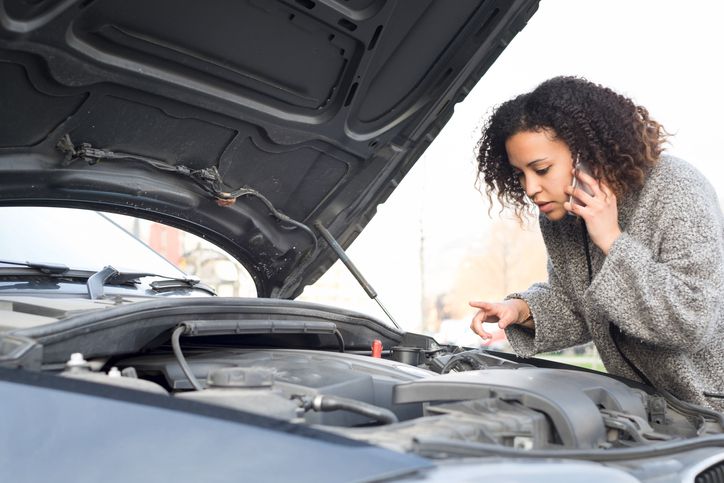
Car breakdowns and accidents happen without warning. But what if your car breaks down or your check engine light comes on with a week until payday? You may be left wondering how to pay for car repairs with no cash. Here are a few strategies that could help.
Related: What is a flexible spending account?
tommaso79 / istockphoto

You may have heard it said that you should keep an emergency fund easily accessible for precisely this situation — an unexpected expense. But should you really use your emergency fund to pay for car repairs? Dipping into your emergency fund might be a solution if you don’t have other cash available to pay for repairs.
Using your emergency savings instead of reaching for your credit card could save money on interest and other applicable costs.
Of course, if you dip into your emergency fund, you may need to spend time building it back up so you’re prepared for any other emergencies.
What if you don’t have an emergency fund? Dipping into an emergency fund is just one way people may pay for unexpected car repairs — let’s look at some other common options.
designer491 / istockphoto

Car insurance is designed to protect you if you get in an accident by covering some of the damage repair costs for the vehicles involved and the medical bills for someone hurt in the crash. This means that if your car trouble was caused by a crash, you might be able to turn to your insurance for help.
The type of coverage and circumstances can vary. For example, comprehensive insurance may help with some costs even if the accident didn’t involve another car, or if the damage was caused by an unexpected event, like a tree falling on your hood.
Collision insurance doesn’t typically cover damage caused by normal wear and tear. This means that your coverage may not include things like theft, vandalism, or weather damage.
There is one type of insurance — mechanical breakdown insurance (MBI) — that covers some types of repairs. Therefore, if you have damage caused by routine use of the vehicle and you have an MBI policy, you may want to check to see if the repair is covered.
Before going this route, consider whether using your insurance will actually be cheaper than paying out of pocket and if making an insurance claim will cause your insurance rates to rise.
The specific instances your insurance will cover should be laid out in your insurance policy. The amount of your policy deductible as well as the repair and type of coverage will likely be some factors you review with your insurance carrier.
kadmy / istockphoto

Whether you have to replace multiple tires after driving over road debris or you have to install new brakes due to normal wear and tear, you may be looking at a hefty repair bill.
The good news is that car dealerships aren’t the only places where you can haggle over your car. Local car repair shops might be willing to cut you a deal to win your business.
Consider asking the repair shop for a written quote explaining precisely what is wrong with your vehicle, how the mechanic plans to fix it and what the cost will be. Once you have this written estimate in hand, you may wish to get a second opinion. Sometimes auto mechanics will offer you a discount on a quote from another shop to get your business.
You could also ask the mechanic to limit their quote to only the essential repairs to ensure that they don’t try to upsell you on prematurely replacing all your tires when the problem you need addressed is your power steering.
Car repairs can also be a great time to reconnect with that great uncle or cousin who loves to tinker with cars. For simple maintenance, you may be able to barter with a friend or family member you trust — just make sure your vehicle is safe to drive before zooming off into the sunset.
DepositPhotos.com

It can be important to protect yourself against excessive credit card debt, but if you need to shell out hundreds, or even thousands of dollars for a quick car repair, you may find yourself reaching for that plastic lifeline.
However, using a credit card may come at a high price. Credit cards can carry high-interest rates that, if not paid off in a timely manner, can drive up the original cost of the car repair. If you can’t pay off your credit card right away, you may end up spending much more for your repairs by the time you make your final payment.
gpointstudio / istockphoto

One good option for how to pay for car repairs when you have no cash on hand may be taking out a personal loan. Personal loans are sometimes overlooked as a way to come up with cash fast, but in the right circumstances, a personal loan can come in handy.
A personal loan may offer better interest rates or better loan terms, which might help you save money when facing unexpected car repairs.
A personal loan is an unsecured installment loan, which means that you borrow a set amount and pay it back in equal monthly installments over a fixed period. “Unsecured” means that the loan is not tied to any physical piece of property through a lien, but instead offered to borrowers based on factors like creditworthiness.
Using a personal loan instead of a credit card to pay for car repairs means that you may be able to borrow enough to cover the full cost of the repair upfront and then pay it off with a fixed payment option over a set period of months or years, potentially without the high costs involved when keeping a balance on your credit card.
Another benefit of using a personal loan to pay for car repairs is the relatively quick application process.
While you’ll need to meet certain qualifications set by your chosen lender in order to secure financing on a personal loan, the process is pretty straightforward, and some lenders disburse loan funds within a few days, which means you can pay for repairs quickly.
Depending on your situation, a personal loan might be the right option when it comes to helping you get back behind the wheel and onto the road.
Learn more:
This article originally appeared on SoFi.com and was syndicated by MediaFeed.org.
External Websites: The information and analysis provided through hyperlinks to third party websites, while believed to be accurate, cannot be guaranteed by SoFi. Links are provided for informational purposes and should not be viewed as an endorsement.
Financial Tips & Strategies: The tips provided on this website are of a general nature and do not take into account your specific objectives, financial situation, and needs. You should always consider their appropriateness given your own circumstances.
SoFi Loan Products
SoFi loans are originated by SoFi Lending Corp (dba SoFi), a lender licensed by the Department of Business Oversight under the California Financing Law, license # 6054612; NMLS # 1121636. For additional product-specific legal and licensing information, see SoFi.com/legal.
fizkes/istockphoto
Featured Image Credit: DepositPhotos.com.