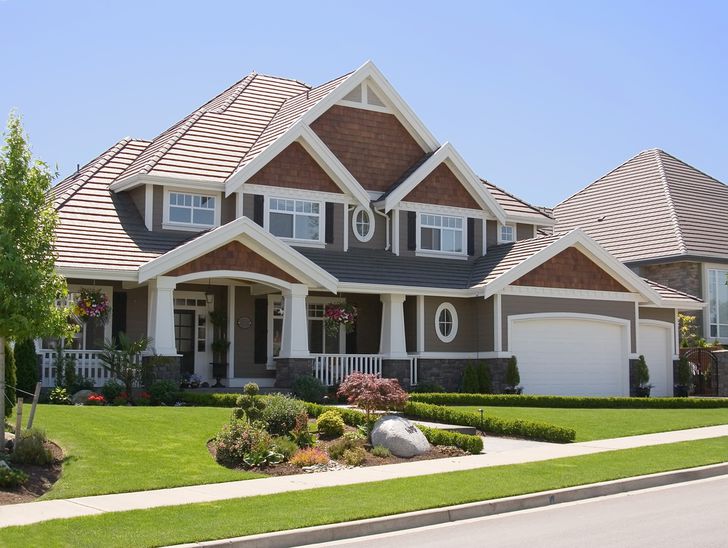
There are a number of factors that affect house prices, from the age, condition, location and size of your home, to broader factors like the economy and current interest rates. If you’re thinking about putting your house on the market, it’s important to know what determines property value so you can ensure you get the most out of what’s likely your largest asset.
Read on to learn more about the main factors that make property value increase and how you can figure out how much your home is worth.
Related: Buying a home with cash vs a mortgage
Factors that Affect Home and Real Estate Value
Factor #1: Location
There’s a reason everyone will tell you that real estate is about location, location, location — it’s true. When it comes to factors that affect property value, location is one of the biggest determinants. Keep in mind that while your home’s location works for you, others will have their own criteria. For example, how good are the schools in the area? Are shopping and entertainment accessible? What are property taxes like in the neighborhood? Is it a long commute to downtown or wherever many jobs may be?
Factor #2: Size
Size often isn’t the be-all-and-end-all, but it’s nearly so when it comes to what determines property value. Square footage plays a big role when it comes to house prices. For example, if the median price per square foot in the U.S. is $123, you’ll be getting more for a house that’s 4,000 square feet than one that’s 2,000 square feet.
It also matters how much of the space in your house is actually usable. Spaces like unfinished garages and basements as well as attics typically won’t boost your home’s value even if they do tack a lot onto the total square footage. What will matter in terms of square footage are areas like bedrooms and bathrooms.
Factor #3: Real Estate Comparables
You’re supposed to love thy neighbor, but you might give them the side-eye if their home is not well-maintained and becomes a drag on the desirability of your street as well as on home prices. When it comes to home values, your neighbors are critical. If their homes are being highly sought by buyers, you’ll likely benefit from the popularity of the area.
The word to know here is comps, or comparable homes in your area that have sold in the last 12 months. These are part of what realtors and home appraisers rely on when estimating how much your home is worth.
Factor #4: Age
While it may be frowned upon to ask someone their age, it’s an essential detail when it comes to home buying. If you’re dealing with a home that has a few decades in the rear-view mirror, you’ll have to do some math. How soon might the roof and other major systems need to be replaced or upgraded? That can affect the price someone is willing to pay, as they might want to pay less if they’re anticipating needing to shell out money for those repairs.
A house that is less than 10 years old — and even better if it’s less than five — can command more money because the buyer has a certain amount of confidence that repair bills shouldn’t be on the immediate horizon. They expect they’ll have time to sock away cash for when that day eventually arrives.
Factor #5: Condition
If your home isn’t in tiptop shape, don’t expect to bring in the big bucks. In fact, if you have the luxury of time, it might behoove you to make any necessary repairs and do any upgrades and updates before you put your house on the market so you can maximize the chances it will get set at a higher price. Consider the cost of home improvements an investment.
At the same time, you don’t want to get too carried away here, as it is possible that you won’t be able to recoup all that you spent. Do just enough so that you might be able to squeak out some profit when you sell. While it varies by region of the country and other factors, a 2021 survey by Remodeling Magazine found that projects that can pay off include a garage door replacement, manufactured stone veneer and a minor kitchen remodel. Some of the less profitable projects included an upscale bathroom addition and an upscale master suite addition.
Factor #6: The Economy
You could have crossed all your t’s and dotted all your i’s — your home is attractive inside and out and you’re in a great location. Trouble is, if the economy is less than stellar, you could be stuck until it swings back into positive territory. If people are uncertain and feel insecure due to the economy, they may decide to delay major life changes, such as buying a home. Or if they do move forward, they may be looking for bargains, which is a downer for you.
Your local economy and market also figure into the equation. It’s about supply and demand. If there is a shortage of available housing in your area and tons of potential buyers on the hunt, you could capitalize big time on a hot market — think bidding wars and selling your home faster than you could have imagined.
Factor #7: Interest Rates
When interest rates are at the historic lows, as they have been in recent times, it’s an incentive to buy. This is because doing so can be dramatically less expensive. On the flip side, when interest rates tick upward, fewer people may be able to home shop because it’s more costly. If demand slows, the price you can command may dip as well.
How to Check What Your Home Is Worth
Get an appraiser: One way to check how much your home is worth is to get an appraiser, someone who is licensed or certified by the state, to conduct a home appraisal. The appraiser will review your home from top to bottom and compare it to other homes in the area and beyond to determine its fair market value.
Make a list of comparables: You could also go dig up property comparables on your own. For example, you can call real estate agents with homes in escrow to learn the sales prices. There are also several websites that could give you valuable insight into your home’s value, including Zillow, Trulia, Redfin, Realtor.com and Eppraisal, among others.
Use an HPI calculator: Another option is to use a house price index (HPI) calculator, which uses data from mortgage transactions over time to estimate a home’s value. The calculator makes projections based on the purchase price of the home and the changing value of other homes nearby. This tool is ideal for seeing how much a house has appreciated over time and any estimated future changes in mortgage rates.
The Takeaway
Knowing what factors impact your home’s value is like knowing how much money you have in the bank. Determine where you may have weaknesses so you can make the necessary adjustments to get the maximum value for your home when you go to sell.
Learn more:
This article originally appeared on SoFi.com and was syndicated by MediaFeed.org.
External Websites: The information and analysis provided through hyperlinks to third party websites, while believed to be accurate, cannot be guaranteed by SoFi. Links are provided for informational purposes and should not be viewed as an endorsement.
Third Party Brand Mentions: No brands or products mentioned are affiliated with SoFi, nor do they endorse or sponsor this article. Third party trademarks referenced herein are property of their respective owners.
Financial Tips & Strategies: The tips provided on this website are of a general nature and do not take into account your specific objectives, financial situation, and needs. You should always consider their appropriateness given your own circumstances.
SoFi’s Relay tool offers users the ability to connect both in-house accounts and external accounts using Plaid, Inc’s service. When you use the service to connect an account, you authorize SoFi to obtain account information from any external accounts as set forth in SoFi’s Terms of Use. SoFi assumes no responsibility for the timeliness, accuracy, deletion, non-delivery or failure to store any user data, loss of user data, communications, or personalization settings. You shall confirm the accuracy of Plaid data through sources independent of SoFi. The credit score provided to you is a Vantage Score based on TransUnion™ (the “Processing Agent”) data.
More from MediaFeed:
Renovation vs remodel: What’s the difference?

If you’re a homeowner considering a range of home improvements, you may not know if what you’re planning is a renovation or a remodel. Does it matter? Yes, because there are key differences.
A renovation is an update of an existing room or structure, while a remodel affects the design and purpose of an area. The more extensive work in a remodel will influence the cost and length of your project.
Related: Home equity
loans vs personal loans for home improvement
Feverpitched/istockphoto

During a renovation, one or more rooms are updated and repaired. This might include new cabinets, flooring, and paint.
The bones of the room are typically left intact, though some structural issues may be fixed in a renovation, such as replacing rotting wood or swapping out window frames suffering from water damage.
A kitchen renovation might include replacing appliances, faucets and knobs, while a bedroom reno might call for paint, new rugs or new lighting.
Bathroom renovations often involve installing new tile, towel racks and faucets.
DragonImages / Getty

Renovations are typically less costly than remodels, thanks to several factors.
Depositphotos

If you’re handy, you can slash some of the cost of hiring someone to undertake your renovation by doing some of the work yourself.
Because most renovations don’t require structural changes, you likely won’t be on the hook to hire licensed professionals to get it done. That means anything that you’re capable of—painting, wallpapering, floor sanding—you can do and pocket what it would have cost to hire help.
Just make sure you are skilled enough; hiring a professional to redo what you couldn’t complete may cost you money you didn’t plan on spending.
DepositPhotos.com

Since a renovation doesn’t call for major expenses like hiring licensed professionals or other construction-related outlays, in some cases the project offers more bang for the buck than a renovation does.
Renovation-related tweaks will still improve the look and feel of your home, and thus increase the value of your home, without the major expense a renovation entails.
You might want to try this handy home improvement ROI estimator.

When you’re renovating a room, your action plan is pretty cut and dry, and there aren’t likely to be surprises that require you to spend more than you planned.
Not so with a remodel, which, due to its scope, may result in additional costs to fix unforeseen problems such as hidden water damage, termites or asbestos.
These surprises can also lengthen the time of your project.
cerro_photography / istockphoto

Remodels are typically more extensive than renovations. They include altering the function and sometimes the structure of an area of the house.
If your project calls for tearing down or adding walls or changing the layout of a room, you’re planning a remodel.
Some examples of remodels: changing a powder room into a laundry room, knocking down a wall between a dining room and kitchen to create a great room, building an addition to your existing home or expanding a closet into a dressing room.
Even if you’re not tearing down or adding walls, your project may be a remodel. This might include moving kitchen appliances around to improve room flow, tearing out a tub and installing a walk-in shower in a bathroom or turning a small guest bedroom into a home office.
DepositPhotos.com

Many homeowners find there are pluses to a remodel as opposed to a renovation.
Feverpitched/istockphoto

As homeowners grow with their home, they may find that their needs change.
Some may want an addition to accommodate an aging parent, while others may have expanded their families and need to convert a home office into a nursery.
Empty-nesters may want to use one of their bedrooms as a study or gym.
A remodel affords them more options than a renovation does because they can make the necessary changes—however major—to achieve their needs.
LightFieldStudios/istockphoto

Adding an island to a kitchen and removing a wall to create a larger space might mean more than increased room to prepare meals. You may find your family spends more time together in rooms that are spacious and inviting.
Similarly, retrofitting your heating and cooling system, adding under-floor heating and replacing insulation might result in lower utility bills, freeing up money for hobbies or vacations.
PC Photography/istockphoto

All of that means remodels are costlier than renovations. Here’s why.
DepositPhotos.com

Thanks to the extensive nature of most remodels, many cities require homeowners to secure a permit before they begin work, especially if the project involves creating an addition to the home, or if new walls or new roofs are being installed. This is to ensure that building codes are followed.
If you need permits, you will want to factor the time it takes to secure them into your timeline. Once the permits are approved, the project may begin. And once it is completed, it will likely need to be approved by a local inspector.
AndreyPopov/istockphoto

If your remodel requires electrical, duct, or plumbing work, you will likely need to hire a licensed professional to complete it.
You may also need to hire a general contractor to hire and oversee these workers and others for larger remodels like adding a guest suite to the home or converting an attic to a home office with an en-suite bathroom.
These vendors, while necessary, can be costly since you are paying for their time in addition to any materials.
Rawpixel / istockphoto

While it can be exciting to imagine what your home will look like after a remodel, getting there can be taxing. That’s because you may be living in a construction zone as the project is underway.
It can be difficult to have to eat multiple takeout meals because your kitchen is being worked on, or deal with dust from work being done in the next room over.
If their remodel is especially extensive, some homeowners find they need to rent a home nearby until the remodel has been completed.
Imgorthand

Whether you’re undertaking a renovation or remodel, you’ll want to have a budget and a payment plan. Some renovations are small enough that homeowners can pay upfront.
Those tackling remodels and larger renovations might tap a home equity loan or home equity line of credit, when the home is used as collateral.
An unsecured, fixed-rate home improvement loan is another option.
A cash-out refinance also can free up part of the difference between the mortgage balance and the home’s value.
Recommended: Home Equity Loans vs Personal Loans for Home Improvement
hikesterson/istockphoto

Undertaking home improvements can be exciting for homeowners. But before you embark on a project, know whether you’re looking at a renovation or a remodel, how much inconvenience you’re willing to put up with, and what you are willing to pay.
Learn More:
This article
originally appeared on SoFi.comand was
syndicated by MediaFeed.org.
SoFi Loan Products
SoFi loans are originated by SoFi Lending Corp (dba SoFi), a lender licensed by the Department of Financial Protection and Innovation under the California Financing Law, license # 6054612; NMLS # 1121636 . For additional product-specific legal and licensing information, see SoFi.com/legal.
SoFi Home Loans
Terms, conditions, and state restrictions apply. SoFi Home Loans are not available in all states. See SoFi.com/eligibility for more information.
Financial Tips & Strategies: The tips provided on this website are of a general nature and do not take into account your specific objectives, financial situation, and needs. You should always consider their appropriateness given your own circumstances.
Vera Livchak /istockphoto
Featured Image Credit: DepositPhotos.com.