

Editor’s note: At Lantern, we strive to help you make financial decisions with confidence. To do this, we occasionally feature content that includes information about our partners and their products or services. We do not provide, endorse, or guarantee any third-party product, service, information or recommendations—and our opinions are our own.
Businesses across the country have faced serious challenges since 2020, from the COVID-19 pandemic to natural disasters from coast to coast. The federal government has implemented multiple funding programs to help companies access the capital they need to survive major uncertainties. The Economic Injury Disaster Loan (EIDL) has programs available for both COVID and non-COVID-related disasters. The Paycheck Protection Program (PPP) offered two rounds of forgivable loans to help companies in the wake of the pandemic.
Related: Different types of personal loans
What Is an EIDL Loan?
An Economic Injury Disaster Loan (or EIDL) is a type of relief reserved for small businesses located in a declared disaster area. Eligible companies may apply for an EIDL of up to $2 million. The funds must be used to pay for financial obligations and expenses that arose directly from the disaster. An EIDL does not, however, cover property damage. Separate assistance is available in the form of a Business Physical Disaster Loan.
Currently, the Small Business Administration (SBA) offers COVID-19 EIDL Loans and non-COVID EIDL relief loans. Unlike standard SBA loans that go through private lenders, EIDL loans can be applied for directly through the SBA website. If your business has been impacted by a disaster, you can search the declarations page to find out if your area has been declared a disaster by the president or SBA.
How Do EIDL Loans Work?
Like other types of SBA loans, EIDL loans are available to small businesses that can’t get business financing elsewhere. While the maximum loan amount is $2 million, a business’s actual loan depends on the severity of the disaster’s financial impact. If you previously applied for a COVID-19 EIDL, you might also have been told you were eligible for a Targeted Advance and/or Supplemental Targeted Advance. The maximum you could get for both Advances, combined, is $15,000.
Unlike the EIDL itself, the Advances did not need to be paid back. Collateral is required for loans over $25,000, with a preference for real estate to secure the loan. However, if the loan is under $200,000 then other assets may be used in place of the owner’s primary residence. The funds may be used for working capital and normal expenses. The repayment term can last up to 30 years and the maximum interest rate is 4%. Additionally, EIDL loans don’t come with any prepayment penalties or fees. Most successful borrowers receive EIDL funds within 21 days of approval.
How Do I Qualify for an EIDL?
You can apply for an EIDL loan online. Then the SBA will send an inspector to assess the cost of damage. To qualify, a business must demonstrate that it cannot meet its financial obligations or pay operating expenses. In addition to submitting an online application, you must also complete IRS Form 4506-T. This gives the SBA clearance to access and review your company’s past federal tax returns. There were additional requirements for Targeted Advances that included operating in a low-income area and meeting standards for company size.
What Is a PPP Loan?
The first round of the Paycheck Protection Program (PPP) began in April 2020 as a way to inject capital into businesses suffering from the economic impact of COVID-19. Qualification requirements were lax. Additionally, borrowers that used at least 60% of the funds for payroll could qualify to have the funds completely forgiven.
In 2021, a second round of PPP funding opened up through the end of May, this time with stricter requirements. Businesses had to demonstrate a 25% decrease in gross receipts between comparable quarters in 2019 and 2020. Again, funds may be forgiven when at least 60% is used on payroll expenses.
How Do PPP Loans Work?
In order to qualify for the second draw of PPP loans, businesses must have used any funds acquired from the first round, and only for authorized purposes. In addition to meeting the gross receipts requirements, eligible businesses could have no more than 300 employees. Eligible loan amounts were determined as 2.5X average monthly payroll costs. First-round loans were limited to $10 million while second-round loans were limited to $2 million. Businesses in either the accommodations or food services industries could qualify for 3.5X payroll costs (but still with a $2 million maximum).
Rather than going through the SBA, PPP loans are serviced by private lenders offering online business loans for small businesses. Once they are approved and the funds have been used, borrowers can apply for loan forgiveness. This must be done no later than 10 months after the covered period ends. If you neglect to apply for forgiveness within this timeframe, you have to start making loan payments.
EIDL vs. PPP
To understand the similarities and differences of the two loan programs, it may help to see them side by side:
EIDL
- Maximum loan amount: $2 million
- Interest rate: 0.0375
- Forgivable?: No (except for Advances)
- Collateral required?: Yes (for loans above $25,000)
- How to apply: SBA.gov
- Still available?: Yes, except for Advances (as of 7/21/2021)
PPP
- Maximum loan amount: $2 million to $10 million (depending on which round)
- Interest rate: 0.01
- Forgivable?: Yes
- Collateral required?: No
- How to apply: Through private lenders
- Still available?: No
How to Apply for an EIDL
The SBA outlines three steps to apply for an EIDL loan.
- Check if there has been a disaster issued in your area.
- If so, you can apply online directly through SBA.gov.
- Then log onto your account and check your email for updates on your loan status.
There is a separate application process for COVID-19 EIDL loans. Also, there is a two-year deferment period before you have to start paying back a COVID-19 EIDL loan, though you may incur interest during that period. Businesses may apply for up to $2 million in these loans to help with economic injury over a 24-month period. The fixed interest rate is 3.75%. An EIDL loan requires collateral for amounts over $25,000.
The Takeaway
Not every business is eligible for a COVID-19 EIDL, and PPP funds are no longer being disbursed. If you don’t think these loans are right for your small business, there are more possibilities out there.
Learn More:
This article
originally appeared on LanternCredit.com and was
syndicated by MediaFeed.org.
The tips provided on this website are of a general nature and do not take into account your specific objectives, financial situation, and needs. You should always consider their appropriateness given your own circumstances.
Lantern by SoFi:
This Lantern website is owned by SoFi Lending Corp., a lender licensed by the Department of Financial Protection and Innovation under the California Financing Law, license number 6054612; NMLS number 1121636. (www.nmlsconsumeraccess.org)
All rates, fees, and terms are presented without guarantee and are subject to change pursuant to each provider’s discretion. There is no guarantee you will be approved or qualify for the advertised rates, fees, or terms presented. The actual terms you may receive depends on the things like benefits requested, your credit score, usage, history and other factors.
*Check your rate: To check the rates and terms you qualify for, Lantern conducts a soft credit pull that will not affect your credit score. However, if you choose a product and continue your application, the lender(s) you choose will request your full credit report from one or more consumer reporting agencies, which is considered a hard credit pull and may affect your credit.
All loan terms, including interest rate, and Annual Percentage Rate (APR), and monthly payments shown on this website are from lenders and are estimates based upon the limited information you provided and are for information purposes only. Estimated APR includes all applicable fees as required under the Truth in Lending Act. The actual loan terms you receive, including APR, will depend on the lender you select, their underwriting criteria, and your personal financial factors. The loan terms and rates presented are provided by the lenders and not by SoFi Lending Corp. or Lantern. Please review each lender’s Terms and Conditions for additional details.
Personal Loan:
SoFi Lending Corp. (“SoFi”) operates this Personal Loan product in cooperation with Even Financial Corp. (“Even”). If you submit a loan inquiry, SoFi will deliver your information to Even, and Even will deliver to its network of lenders/partners to review to determine if you are eligible for pre-qualified or pre-approved offers. The lenders/partners receiving your information will also obtain your credit information from a credit reporting agency. If you meet one or more lender’s and/or partner’s conditions for eligibility, pre-qualified and pre-approved offers from one or more lenders/partners will be presented to you here on the Lantern website. More information about Even, the process, and its lenders/partners is described on the loan inquiry form you will reach by visiting our Personal Loans page as well as our Student Loan Refinance page. Click to learn more about Even’s Licenses and Disclosures, Terms of Service, and Privacy Policy.
Student Loan Refinance:
SoFi Lending Corp. (“SoFi”) operates this Student Loan Refinance product in cooperation with Even Financial Corp. (“Even”). If you submit a loan inquiry, SoFi will deliver your information to Even, and Even will deliver to its network of lenders/partners to review to determine if you are eligible for pre-qualified or pre-approved offers. The lender’s receiving your information will also obtain your credit information from a credit reporting agency. If you meet one or more lender’s and/or partner’s conditions for eligibility, pre-qualified and pre-approved offers from one or more lenders/partners will be presented to you here on the Lantern website. More information about Even, the process, and its lenders/partners is described on the loan inquiry form you will reach by visiting our Personal Loans page as well as our Student Loan Refinance page. Click to learn more about Even’s Licenses and Disclosures, Terms of Service, and Privacy Policy.
Student loan refinance loans offered through Lantern are private loans and do not have the debt forgiveness or repayment options that the federal loan program offers, or that may become available, including Income Based Repayment or Income Contingent Repayment or Pay as you Earn (PAYE).
Notice: Recent legislative changes have suspended all federal student loan payments and waived interest charges on federally held loans until 01/31/22. Please carefully consider these changes before refinancing federally held loans, as in doing so you will no longer qualify for these changes or other future benefits applicable to federally held loans.
Auto Loan Refinance:
Automobile refinancing loan information presented on this Lantern website is from MotoRefi. Auto loan refinance information presented on this Lantern site is indicative and subject to you fulfilling the lender’s requirements, including: you must meet the lender’s credit standards, the loan amount must be at least $10,000, and the vehicle is no more than 10 years old with odometer reading of no more than 125,000 miles. Loan rates and terms as presented on this Lantern site are subject to change when you reach the lender and may depend on your creditworthiness. Additional terms and conditions may apply and all terms may vary by your state of residence.
Secured Lending Disclosure:
Terms, conditions, state restrictions, and minimum loan amounts apply. Before you apply for a secured loan, we encourage you to carefully consider whether this loan type is the right choice for you. If you can’t make your payments on a secured personal loan, you could end up losing the assets you provided for collateral. Not all applicants will qualify for larger loan amounts or most favorable loan terms. Loan approval and actual loan terms depend on the ability to meet underwriting requirements (including, but not limited to, a responsible credit history, sufficient income after monthly expenses, and availability of collateral) that will vary by lender.
Life Insurance:
Information about insurance is provided on Lantern by SoFi Life Insurance Agency, LLC. Click here to view our licenses.
More from MediaFeed:
How do you get a small business loan without collateral?

When your small business takes out a loan, how does the lender know you’re going to pay it back? There are a number of ways. In certain situations, when you apply for small business loans, you’re required to provide what’s called collateral. This helps ensure that the bank or lender you’re working with sees you as less of a risk when it comes to paying back the loan.
We’ll get into why that is, what situations might require you to provide collateral and how to get a small business loan without collateral if you qualify.
Related: 10 personal finance basics
DepositPhotos.com

No matter where you apply for a small business loan, the lender will look at how much risk you present.
One indicator of that level of risk is your credit score. If your business or personal scores are low, this may indicate that you may not always have been financially responsible in the past. Maybe you’ve taken on more debt than you could afford. Maybe you’ve missed credit card bills. Maybe you have a bankruptcy on your record. All of these may concern a lender since it is primarily focused on the likelihood that you will repay the loan.
Because of that concern, some loans may be secured, meaning that they require collateral. Unsecured loans, by way of contrast, don’t require collateral. Collateral is typically an asset that you possess. When you put it up as collateral, you are agreeing that the lender can seize it if you are unable to pay your loan. The lender can then sell this asset to cover what you owe. Some examples of collateral that small businesses may have include the following:
- Heavy machinery
- Equipment
- Real estate
So, let’s say that you’re applying for a $50,000 secured loan. You might put up your office space, if you own it, as collateral. If you weren’t able to pay the loan, your lender has the right to seize that property to cover the balance of what you owe.
Collateral is not a commitment to take lightly. Putting up collateral like the real estate you’ve worked hard to get could jeopardize your business. That’s why you might want to learn how to get a small business loan without collateral when it’s possible so that you don’t put your business at risk.

Some lenders require collateral because they offer low interest rates. A collateralized loan presents less risk for the lender that it will not recuperate its investment in you, so it’s able to be competitive and get your business with a low interest rate.
Other lenders require collateral because they cater to people who might not qualify for other financing by offering bad credit business loans. For businesses with bad credit, loans through a bank might not be an option, so they may feel the need to go with lenders that have more collateral requirements in terms of collateral.
There are also specific loan types that require collateral, such as invoice financing and equipment loans. Invoice financing (and the related invoice factoring) uses the value of the business’s unpaid invoices as collateral, and equipment loans use the equipment you’re purchasing as that asset.
Ridofranz

Small business loans without collateral can have both benefits and drawbacks.
Pros:
- May have a shorter loan application process. since the lender doesn’t have to assess the asset.
- You won’t jeopardize your business as you would if you couldn’t pay the loan and your assets were seized.
- You can build your credit history.
Cons:
- May have a higher interest rate than secured loans that require collateral.
- You may not be able to borrow as much as with a collateralized loan.
- You are still liable for the loan.
Let’s dig a little deeper into the details.
fizkes/istockphoto

These loans have a number of benefits. There’s more paperwork with a loan that requires collateral and the asset must be assessed and valued, so it can take longer to process. A small business loan without collateral would typically take less time to process and give you your money faster. Because you aren’t putting up your commercial real estate or equipment for the loan, there’s no risk that you will jeopardize your business by allowing those assets to be seized if you can’t pay the loan. (Of course, you will still have to figure out a way to pay back the loan.)
And one of the best benefits of any small business loan is that you can build your credit by paying on time each month.
Depositphotos

In researching how to get a small business loan without collateral, you’ll find that it isn’t all roses and sunshine. There are definitely some possible downsides
First, these loans tend to have higher interest rates, since you aren’t putting up collateral to lower the lender’s risk. Also, the value of the collateral you put up often determines how much you’re eligible for. So without that collateral, you may not be eligible to borrow as much.
And while, no, you won’t have your assets seized, you are still liable for the loan. If you don’t pay it back, the lender could take you to court.
DepositPhotos.com

When you want to get a small business loan without collateral, it’s important to first determine whether you would qualify for an unsecured loan. Researching small business loan terms before applying can be helpful.
As already mentioned, getting a small business loan without collateral is often based on your risk level, though some loans simply require collateral from all applicants.
Here are some business loans and whether they require collateral or not.
DepositPhotos.com

Small Business Administration (SBA) loans are the gold standard for business loans because they offer the lowest rates and may be easier to qualify for than bank loans. Some SBA loans require collateral, others do not. It’s often left to the discretion of the SBA lender to determine whether collateral is required, based on all qualifications.
However, with the 7(a) program, no collateral is required for loans up to $25,000. For 7(a) loans over $350,000, according to the SBA, the loan must be collateralized “to the maximum extent possible up to the loan amount.”
DepositPhotos.com

Banks and credit unions may choose to require collateral for business loans at their discretion. Bank of America, for example, offers both secured and unsecured business loans and lines of credit. With its lines of credit, collateral may not be required for lines of $100,000 or less. PNC Bank also has both secured and unsecured small business loans available.
Companies that offer online business loans may also offer both secured and unsecured loans. With the unsecured loans, however, you may need to provide a personal guarantee, which means that if your business can’t pay back the loan, you personally will have to.
DepositPhotos.com

Another of your no-collateral business loan options is the merchant cash advance. It’s not technically a loan; rather, you’re borrowing against future credit card sales. You pay back the advance by automatic withdrawals from your debit and credit card sales daily or weekly.
jat306 / istockphoto
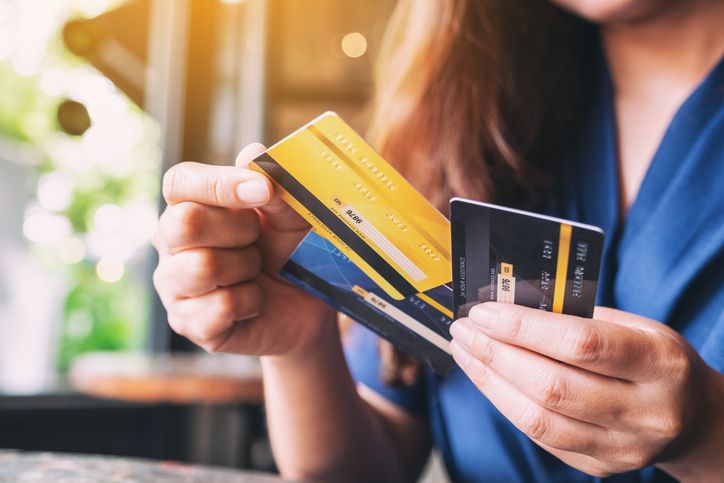
If you don’t qualify for one of the no-collateral loan options we’ve discussed, it may be time to consider how to improve your creditworthiness, because that’s likely what’s keeping you from getting an unsecured loan. Start by checking what both your personal and business credit scores are.
You may not have a business credit score if you haven’t been in business long or haven’t taken out credit under your business’s name. If that’s the case, you may want to learn how to build business credit so you’ll qualify for more types of financing.
See where your personal score is and consider how you could work on it if you need to. Here are a few strategies to help rebuild your credit history:
- Pay your credit cards and loan payments on time.
- Reduce your debt to income ratio by paying down debt.
- Keep credit accounts long-term.
Farknot_Architect / istockphoto

Getting a small business loan without collateral isn’t difficult, but it may take some legwork on your part, especially if you aren’t able to qualify for unsecured loans right now. But rest assured: There are options that don’t require collateral, though you may pay more in interest for them.
Learn more:
This article originally appeared on LanternCredit.comand was syndicated by MediaFeed.org.
Lantern by SoFi:
This Lantern website is owned by SoFi Lending Corp., a lender licensed by the Department of Financial Protection and Innovation under the California Financing Law, license number 6054612; NMLS number 1121636. (www.nmlsconsumeraccess.org)
All rates, fees, and terms are presented without guarantee and are subject to change pursuant to each provider’s discretion.
There is no guarantee you will be approved or qualify for the advertised rates, fees, or terms presented. The actual terms you may receive depends on the things like benefits requested, your credit score, usage, history and other factors.
*Check your rate: To check the rates and terms you qualify for, Lantern conducts a soft credit pull that will not affect your credit score. However, if you choose a product and continue your application, the lender(s) you choose will request your full credit report from one or more consumer reporting agencies, which is considered a hard credit pull and may affect your credit.
All loan terms, including interest rate, and Annual Percentage Rate (APR), and monthly payments shown on this website are from lenders and are estimates based upon the limited information you provided and are for information purposes only. Estimated APR includes all applicable fees as required under the Truth in Lending Act. The actual loan terms you receive, including APR, will depend on the lender you select, their underwriting criteria, and your personal financial factors. The loan terms and rates presented are provided by the lenders and not by SoFi Lending Corp. or Lantern. Please review each lender’s Terms and Conditions for additional details.
Personal Loan:
SoFi Lending Corp. (“SoFi”) operates this Personal Loan product in cooperation with Even Financial Corp. (“Even”). If you submit a loan inquiry, SoFi will deliver your information to Even, and Even will deliver to its network of lenders/partners to review to determine if you are eligible for pre-qualified or pre-approved offers.
The lenders/partners receiving your information will also obtain your credit information from a credit reporting agency. If you meet one or more lender’s and/or partner’s conditions for eligibility, pre-qualified and pre-approved offers from one or more lenders/partners will be presented to you here on the Lantern website.
More information about Even, the process, and its lenders/partners is described on the loan inquiry form you will reach by visiting our Personal Loans page as well as our Student Loan Refinance page. Click to learn more about Even’s Licenses and Disclosures, Terms of Service, and Privacy Policy.
Student Loan Refinance:
SoFi Lending Corp. (“SoFi”) operates this Student Loan Refinance product in cooperation with Even Financial Corp. (“Even”). If you submit a loan inquiry, SoFi will deliver your information to Even, and Even will deliver to its network of lenders/partners to review to determine if you are eligible for pre-qualified or pre-approved offers.
The lender’s receiving your information will also obtain your credit information from a credit reporting agency. If you meet one or more lender’s and/or partner’s conditions for eligibility, pre-qualified and pre-approved offers from one or more lenders/partners will be presented to you here on the Lantern website. More information about Even, the process, and its lenders/partners is described on the loan inquiry form you will reach by visiting our Personal Loans page as well as our Student Loan Refinance page. Click to learn more about Even’s Licenses and Disclosures, Terms of Service, and Privacy Policy.
Student loan refinance loans offered through Lantern are private loans and do not have the debt forgiveness or repayment options that the federal loan program offers, or that may become available, including Income Based Repayment or Income Contingent Repayment or Pay as you Earn (PAYE).
Notice: Recent legislative changes have suspended all federal student loan payments and waived interest charges on federally held loans until 09/30/21. Please carefully consider these changes before refinancing federally held loans, as in doing so you will no longer qualify for these changes or other future benefits applicable to federally held loans.
Auto Loan Refinance:
Automobile refinancing loan information presented on this Lantern website is from MotoRefi. Auto loan refinance information presented on this Lantern site is indicative and subject to you fulfilling the lender’s requirements, including: you must meet the lender’s credit standards, the loan amount must be at least $10,000, and the vehicle is no more than 10 years old with odometer reading of no more than 125,000 miles. Loan rates and terms as presented on this Lantern site are subject to change when you reach the lender and may depend on your creditworthiness. Additional terms and conditions may apply and all terms may vary by your state of residence.
Secured Lending Disclosure:
Terms, conditions, state restrictions, and minimum loan amounts apply. Before you apply for a secured loan, we encourage you to carefully consider whether this loan type is the right choice for you. If you can’t make your payments on a secured personal loan, you could end up losing the assets you provided for collateral. Not all applicants will qualify for larger loan amounts or most favorable loan terms. Loan approval and actual loan terms depend on the ability to meet underwriting requirements (including, but not limited to, a responsible credit history, sufficient income after monthly expenses, and availability of collateral) that will vary by lender.
Life Insurance:
Information about insurance is provided on Lantern by SoFi Life Insurance Agency, LLC.
DepositPhotos.com
Featured Image Credit: DepositPhotos.com.



