
Forgotten historical tragedies that nobody talks about anymore
For most of us, tragedies occupy a place of oblivion where we send memories we avoid reviewing, putting them to rest. Some people call it a defense mechanism. It could actually be something broader and more sociological, one that helps our communal survival.
The unconscious, however, sometimes resurfaces in memories we thought were gone or forgotten, and it revives even our worst nightmares.
Six of them follow, and in each case the country moved on for a reason that had little to do with the scale of the loss.
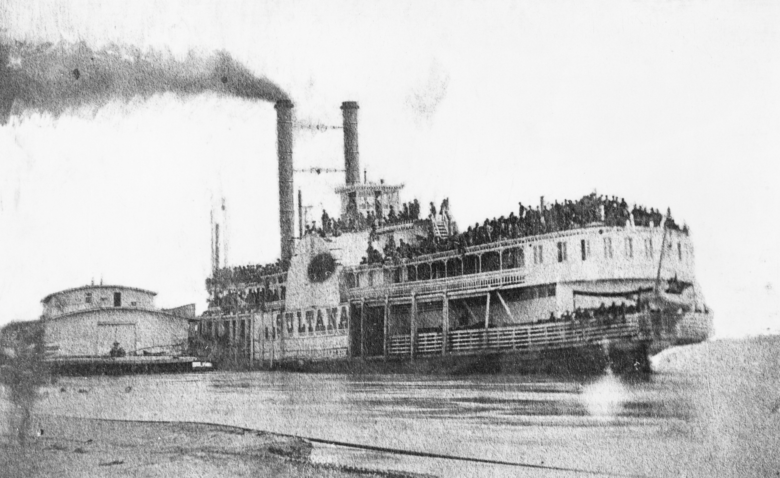
The Sultana, 1865
A steamboat packed with newly released Union prisoners of war, heading north up the Mississippi. A boiler gave way near Marion, Arkansas, in the early hours of April 27. Estimates of the loss run from about 1,169 to more than 1,800, which makes it worse than the Titanic in American lives.
The timing explains the silence. John Wilkes Booth had been cornered and killed the day before. Joseph Johnston had just surrendered the largest Confederate force of the war. Lincoln’s funeral train was still crossing the country.
A scholar at the University of Mississippi has written about how the public “largely forgot the disaster” almost immediately, and how anxiety about that forgetting shaped every later attempt to commemorate it. No single city made the loss local memory. The men were from everywhere.
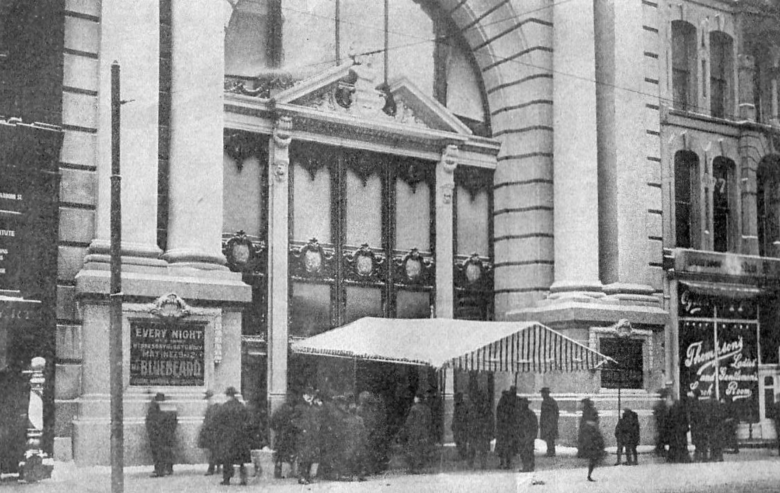
The Iroquois Theatre fire, 1903
Chicago: a brand-new theater advertised as fireproof, packed for a holiday matinee. 602 people were lost, making it the worst theater fire and the worst single-building fire in American history.
It produced sweeping changes to exit requirements and building codes across the country. The codes outlived the memory.
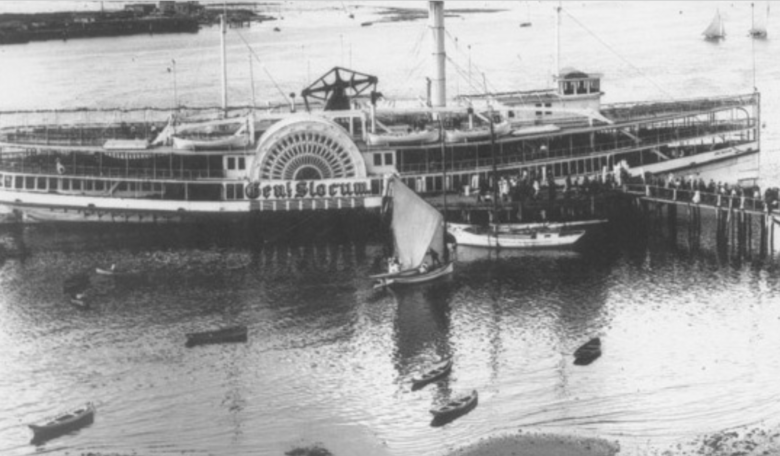
The General Slocum, 1904
An excursion steamer carrying a church outing from Manhattan’s Lower East Side up the East River, mostly German-American women and children. A fire broke out. 1,021 people were lost, and it remained the deadliest disaster in New York City history until 2001.
The neighborhood it emptied was called Little Germany, and it never recovered. Families moved away rather than live among the reminders.
The Sympathy Society of German Ladies installed a small monument in Tompkins Square Park, the Slocum Memorial Fountain, in 1906. It has faded badly. Most people walk past it without looking.
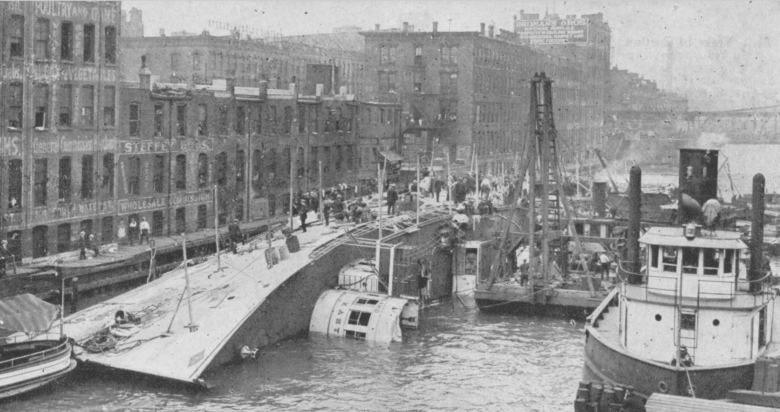
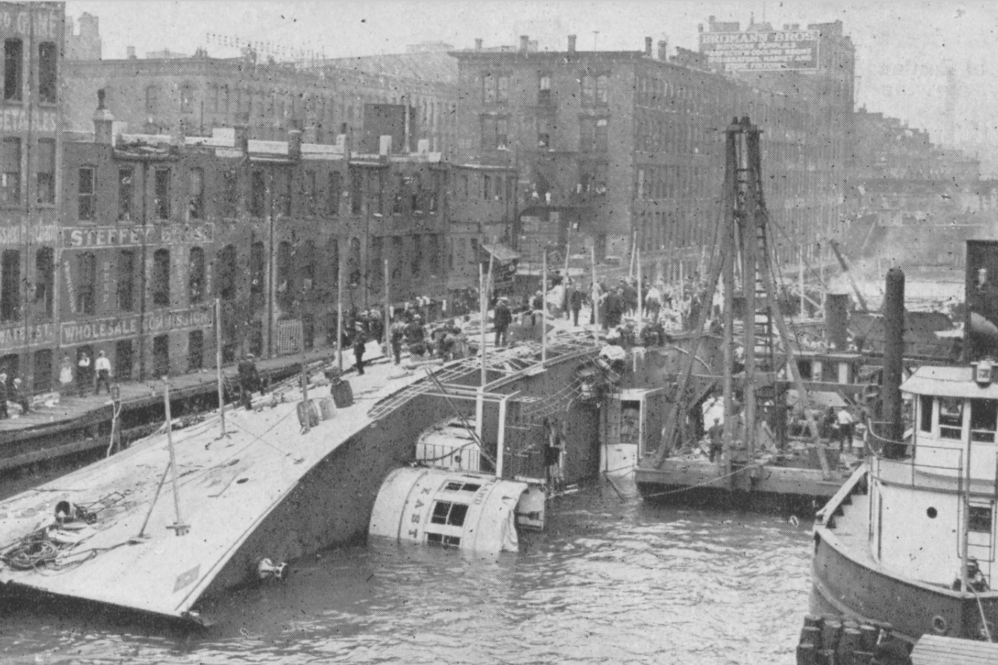
The Eastland, 1915
This one is hard to picture correctly. The ship never left the dock. It rolled over in the Chicago River on July 24 while Western Electric employees were boarding for a company picnic; about 2,500 people were aboard.
844 were lost, within feet of dry land. About 70 percent were under 25.
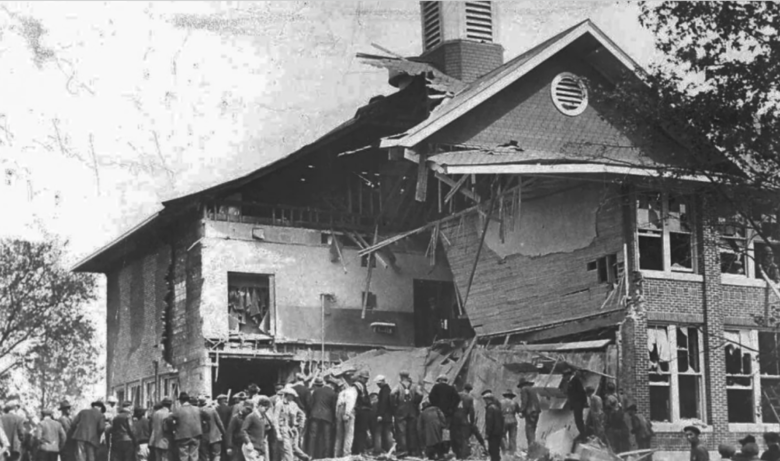
The Bath School disaster, 1927
On May 18, a man set off explosives at the school in Bath Township, Michigan. Most of those lost were children.
Two days later, Charles Lindbergh took off from New York for Paris. The front pages belonged to him for weeks, and the town of Bath was left to itself.
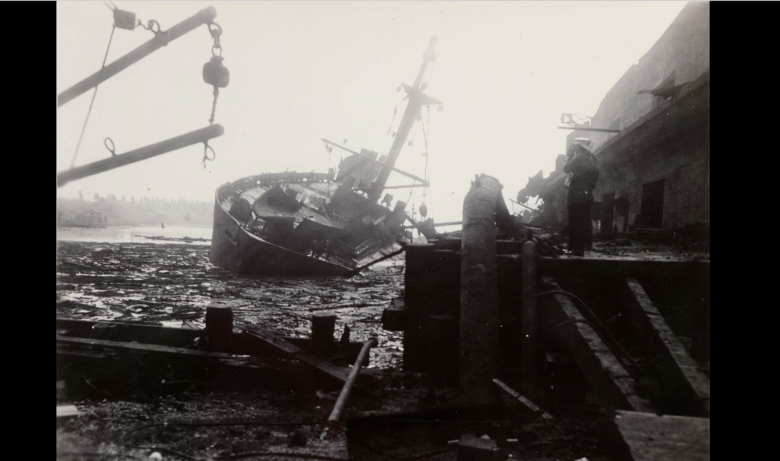
The Texas City disaster, 1947
A ship loaded with ammonium nitrate caught fire at the port of Texas City on Galveston Bay on April 16. The explosion and the fires that followed took 581 lives, including most of the town’s volunteer fire department.
It is generally reckoned the worst industrial accident in American history, and it is the one on this list that people in the industry still study.

The bottom line
The Sultana explosion killed more Americans than the Titanic and shared a news cycle with the end of the Civil War. The General Slocum remained New York City’s deadliest day for 97 years.
Ask us! What questions do you have about content, strategy, pop culture, lifestyle, wellness, history or more? We may use your question in an upcoming article!
Related:
- Household rules from the ’40s that sound unbelievable now
- 8 places and discoveries where exploration has limits
Like MediaFeed’s content? Be sure to follow us.
This article was syndicated by MediaFeed.co.