
Unusual historical events that happened in November
It was November 30, 1954, in Sylacauga, Alabama. Ann Hodges was napping on the couch under a quilt when a grapefruit-sized rock came through the roof, bounced off a console radio, and landed on her, the Alabama Museum of Natural History notes. She’s the only person known to have been injured by a meteorite.
November seems to specialize in days like that. Eight more follow, in order.

Two men, one balloon, no rope
On November 21, 1783, Pilâtre de Rozier and the Marquis d’Arlandes climbed into a Montgolfier hot-air balloon at the Château de la Muette. They drifted over Paris for about 25 minutes and covered some 5.5 miles, Britannica notes.
Nobody had flown free like that before. The king wanted condemned criminals to go first, Wikipedia notes. The two men talked him out of it. Balloonists still mark the day as Montgolfier Day, the Anderson-Abruzzo International Balloon Museum says.

What happens when noon comes twice?
Ask anyone in a railroad town on Sunday, November 18, 1883.
That day, railroad clocks were reset to a new standard time. In several cities, the clock struck noon, and then struck it again, the Library of Congress notes. No law required it. The railroads did it themselves, following a plan from William F. Allen, who edited a railway guide. A telegraph signal from the Allegheny Observatory in Pittsburgh kept the clocks together, Mystic Stamp reports.
Congress didn’t make it official until 1918.
One season left
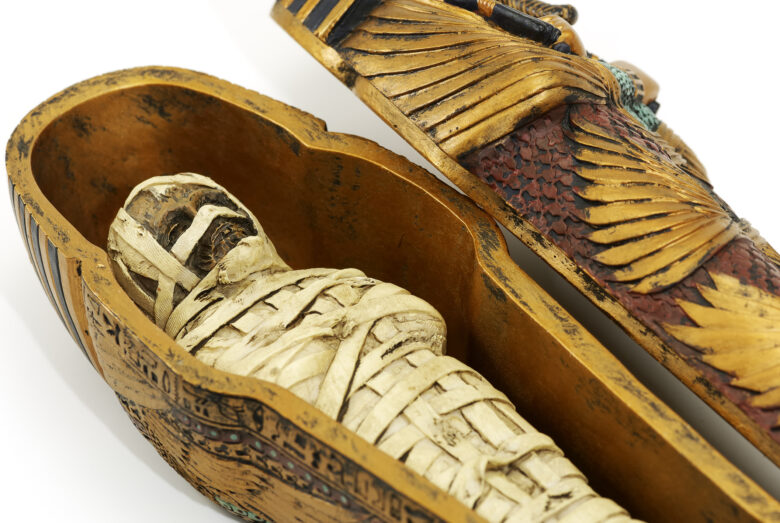
Howard Carter was out of money and almost out of patience. Lord Carnarvon had told him the next dig would be the last, Historic UK notes.
On November 4, 1922, a boy carrying water tripped on a stone. It was the top of a staircase, Smithsonian Magazine reports. Three weeks later, Carter made a small hole in a sealed door and held up a candle. Carnarvon asked whether he could see anything.
“Yes, wonderful things!”

The bridge people drove for fun
Drivers used to wait for a windy day, then line up to ride the Tacoma Narrows Bridge, HistoryLink says. Workers had nicknamed it Galloping Gertie during construction. Some sucked lemons to fight seasickness.
It opened on July 1, 1940. On November 7, a 42 mph wind twisted it apart, the Washington State Department of Transportation notes. Camera shop owner Barney Elliott filmed the whole thing. No people died. A cocker spaniel named Tubby, left behind in a car, was the only casualty, Design News reports.
About half a minute
That’s how long the Spruce Goose stayed in the air.
Howard Hughes lifted the H-4 Hercules off Long Beach Harbor on November 2, 1947. Its wingspan was 320 feet, HistoryNet reports. Most accounts say it rose about 70 feet and went a mile. The museum that owns it says 25 feet and just under half a mile, Aerocorner notes.
Either way, it never flew again.

Whose rock is it?
Back in Alabama, Ann Hodges had a second problem. Her landlady, Birdie Guy, said the meteorite belonged to her.
The two sides settled for $500, and the Hodges kept the rock. By then, no one wanted to buy it. For a while it served as a doorstop, Smithsonian Magazine says. Reporters and sightseers had already packed the yard, the Encyclopedia of Alabama notes. In 1956, the family gave it to the Alabama Museum of Natural History, where it still sits, the University of Alabama affirms.
Struck twice before the first minute
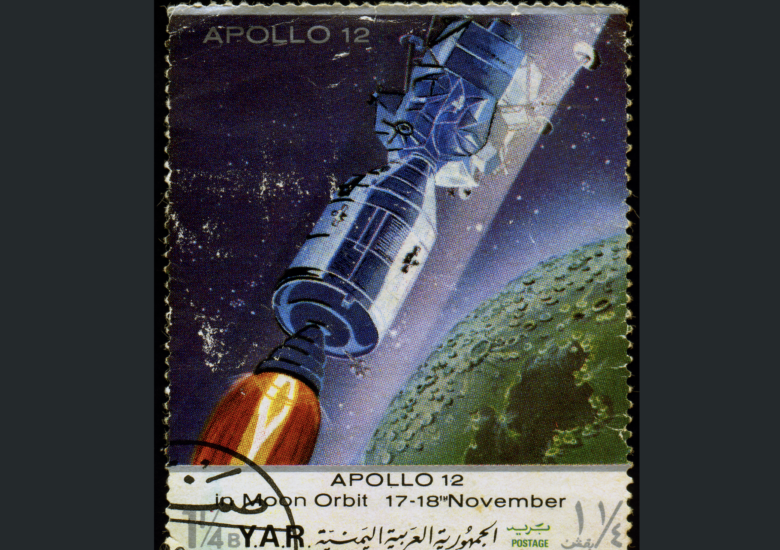
Apollo 12 left the pad on November 14, 1969, in heavy rain. Lightning hit the Saturn V at 36.5 seconds. It hit again at 52 seconds, NASA notes.
All three fuel cells went offline. Instruments went haywire. In Houston, John Aaron, 24, remembered a similar glitch from a training run and called, “Try SCE to AUX.” Astronaut Alan Bean knew exactly which switch that was, Live Science reports. Power came back. The crew made it to the Moon.
Short, so nobody got bored
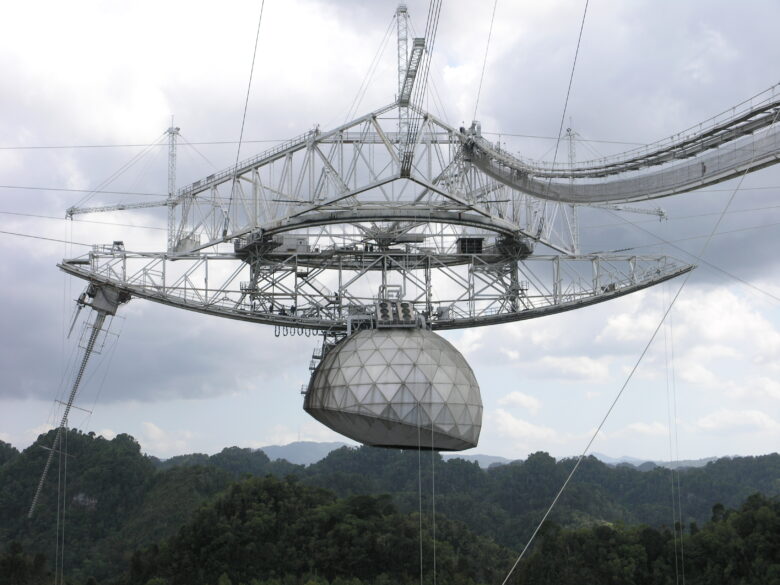
At a ceremony on November 16, 1974, the Arecibo telescope in Puerto Rico beamed a 1,679-bit message toward the star cluster M13, about 25,000 light-years away, Astronomy magazine reports.
The celebration marked a telescope upgrade, and 250 guests watched. Frank Drake wanted the message short enough that they wouldn’t get restless, Supercluster notes. A reply, if one ever comes, would take about 50,000 years, National Geographic says.
The bottom line
Frank Drake kept the 1974 Arecibo message under three minutes so the 250 guests wouldn’t get bored. The meteorite that hit Ann Hodges spent time as a doorstop before the Alabama Museum of Natural History got it.
Ask us! What questions do you have about content, strategy, pop culture, lifestyle, wellness, history or more? We may use your question in an upcoming article!
Related:
- 8 places and discoveries where exploration has limits
- Some of the most surprising record deals in music history
Like MediaFeed’s content? Be sure to follow us.
This article was syndicated by MediaFeed.co.