
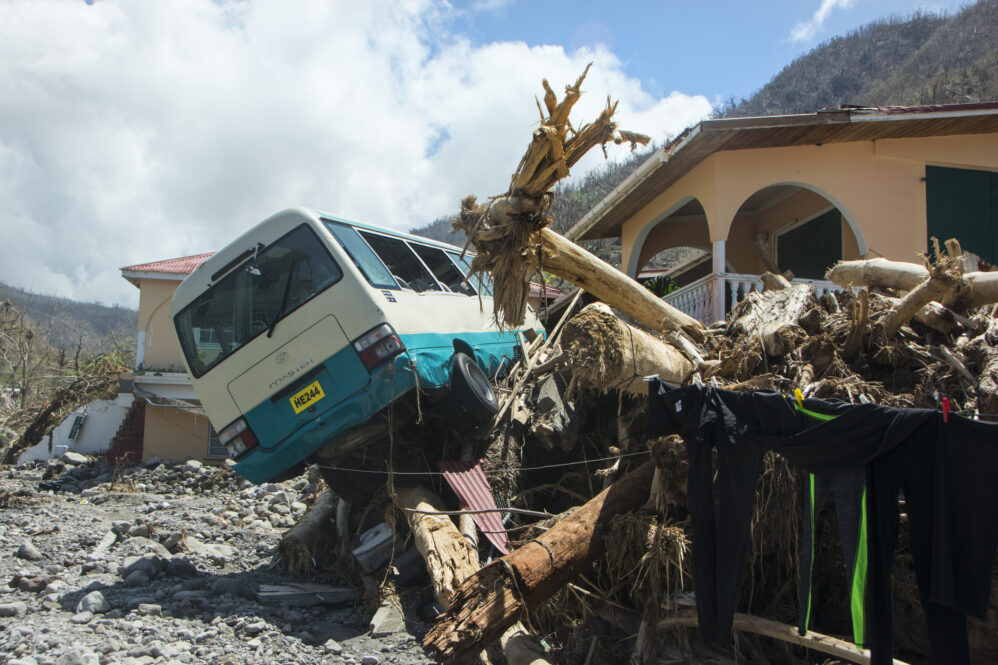
El Niño disrupts hurricane patterns, but long-term trend of costlier storms continues
Hurricane season isn’t quite over yet, but it’s already been an unusual one. Nine named tropical storms but just one hurricane — Isaias — have formed in the North Atlantic as of October 23. Meanwhile, the North Pacific is close to breaking records, with three Pacific hurricanes reaching Category 5 status, and two hitting Hawaii. Scientists say that a stormier Pacific and a quieter Atlantic is due to this year’s El Niño, a cyclical warming of the Pacific Ocean that is impacting the weather worldwide.
While this North Atlantic hurricane season has been relatively mild so far, it’s not without cost. Preliminary estimates of insured losses from Isaias top $2 billion. And a look at the bigger picture shows an undeniable trend — hurricanes are costlier than ever. According to the National Oceanic and Atmospheric Administration, four out of seven of America’s costliest storms have been recorded within the past decade. Warmer oceans, wetter storms and higher seas — the result of climate pollution warming the atmosphere — combined with development in risky areas, are combining to make hurricanes increasingly expensive.
Let’s take a look at America’s costliest hurricanes on record. All dollar figures have been adjusted for inflation. Below are the most expensive hurricanes in U.S. history.
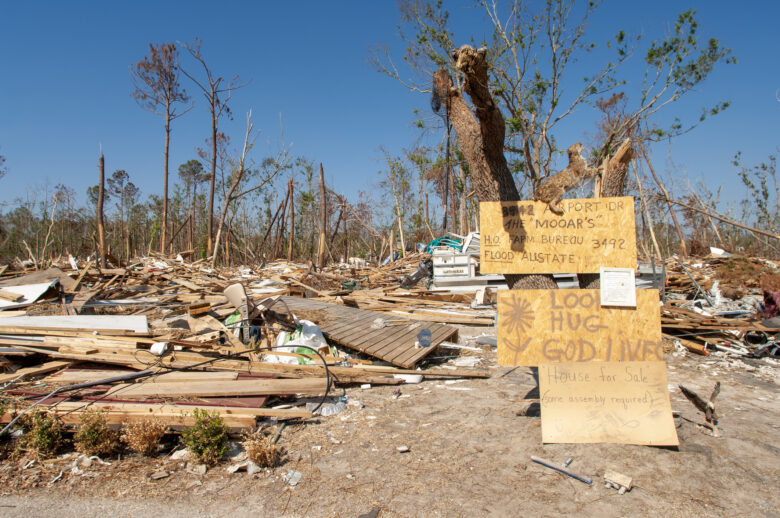
1. Hurricane Katrina (2005)
- Affected areas: Southeastern Louisiana and Mississippi, including severe levee breaches in New Orleans
- Estimated deaths: 1,883
- Cost: $201.3 billion
Sign up for the Vital Signs Newsletter
Pictured: House debris litters Diamondhead, Mississippi, after 2005 Hurricane Katrina’s 115 mph winds and 28-foot storm surge caused catastrophic damage.
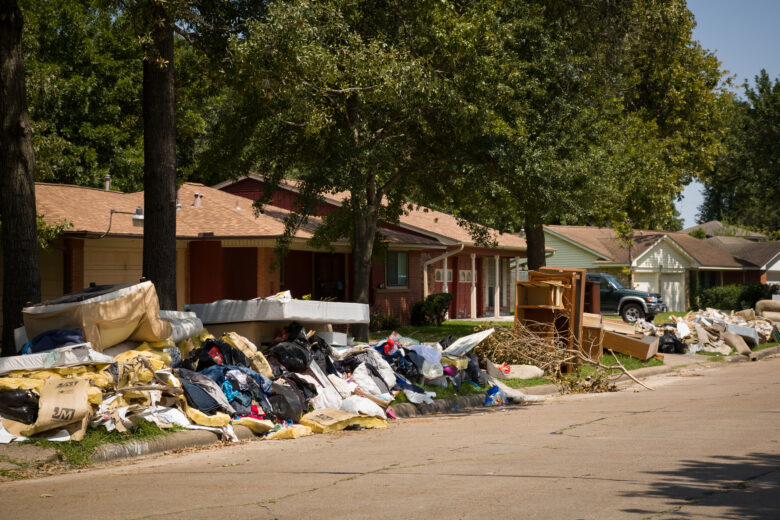
2. Hurricane Harvey (2017)
- Affected areas: Southeast Texas and Louisiana, including catastrophic flooding around Houston
- Estimated deaths: 89
- Cost: $160 billion
Pictured: Flood-damaged houses and piles of ruined belongings along a suburban Houston street following Hurricane Harvey.
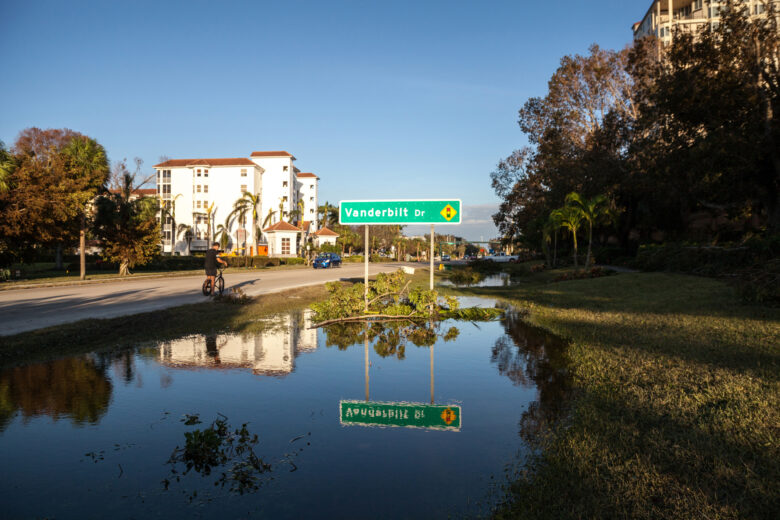
3. Hurricane Ian (2022)
- Affected areas: Southwest Florida, struck by a Category 4 storm surge
- Estimated deaths: 152
- Cost: $119.6 billion
Pictured: Dark storm clouds and extreme winds rage as Hurricane Ian arrives in Florida.
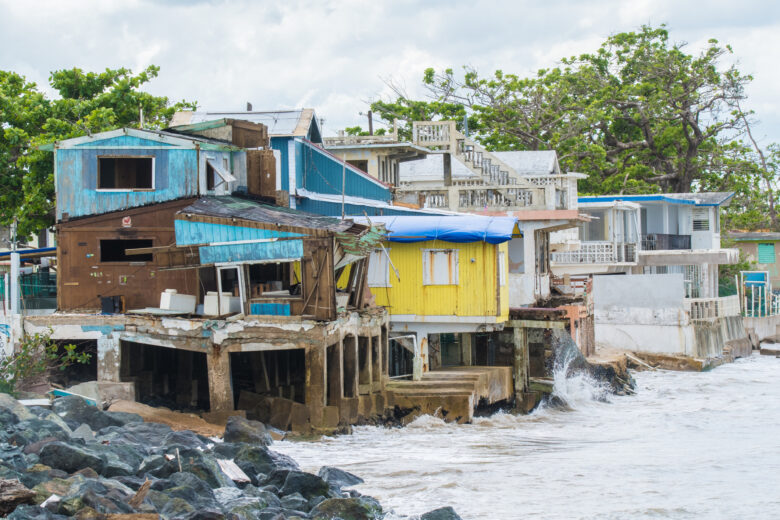
4. Hurricane Maria (2017)
- Affected areas: Puerto Rico and the U.S. Virgin Islands
- Estimated deaths: Nearly 3,000
- Cost: $115.2 billion
Pictured: A battered seaside community in Rincon, Puerto Rico, after Hurricane Maria.
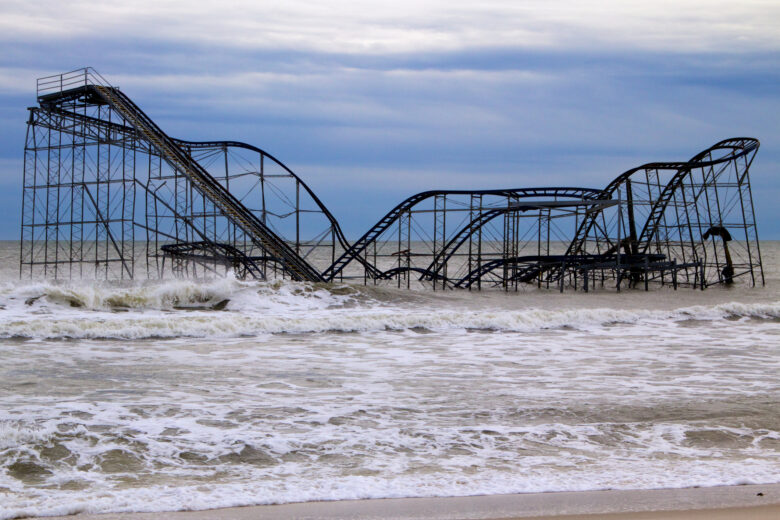
5. Superstorm Sandy (2012)
- Affected areas: The Mid-Atlantic and Northeast U.S., including major surge flooding in New York and New Jersey
- Estimated deaths: 147
- Cost: $88.5 billion
Pictured: Hurricane Sandy left the Star Jet roller coaster of Seaside Heights, New Jersey, partially submerged in the Atlantic Ocean.
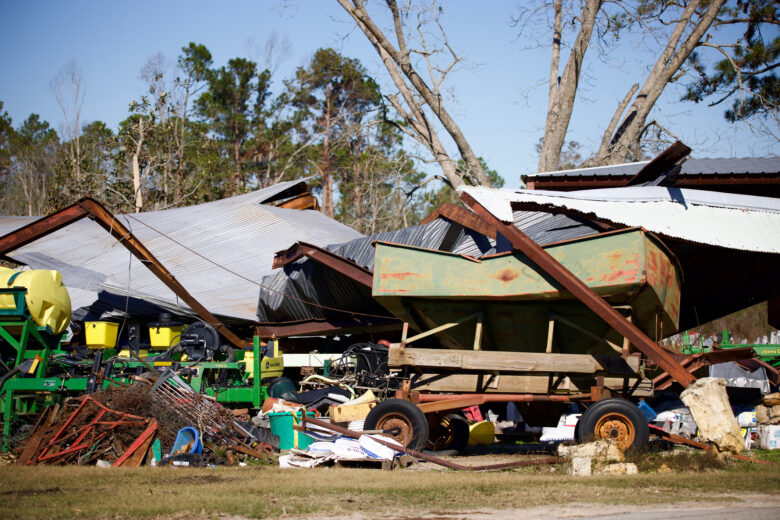
6. Hurricane Helene (2024)
- Affected areas: The Southeast U.S., with historic inland flood damage across western North Carolina and Georgia
- Estimated deaths: 250
- Cost: $78.7 billion
Pictured: Winds from Hurricane Helene destroyed this equipment barn on a farm in Berrien County, Georgia.
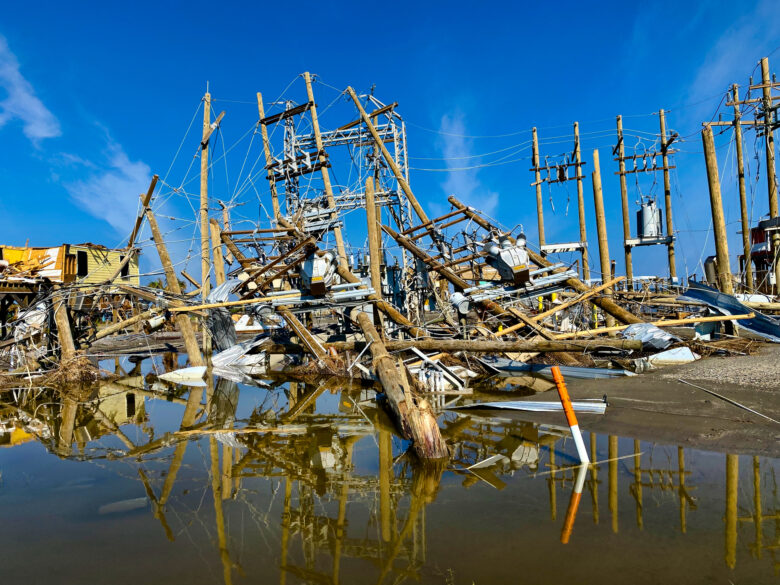
7. Hurricane Ida (2021)
- Affected areas: Louisiana, struck as a Category 4 storm, followed by severe flash flooding in the Northeast
- Estimated deaths: 55
- Cost: $75 billion
Pictured: Destroyed power lines and electrical infrastructure in Grand Isle, Louisiana, after Hurricane Ida.
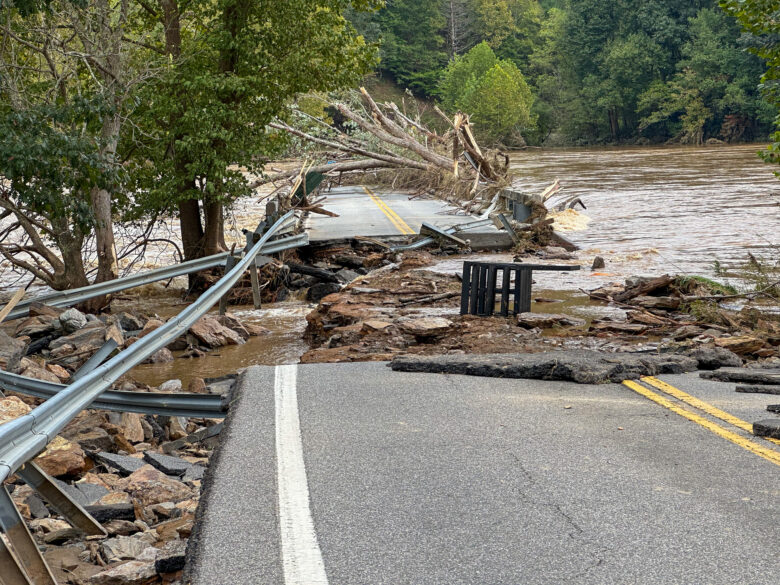
Why are hurricane costs rising?
While there isn’t just one reason for America’s rising hurricane costs, climate change is a major factor. Experts point to these climate-related factors that are amping up hurricanes and the damage they cause.
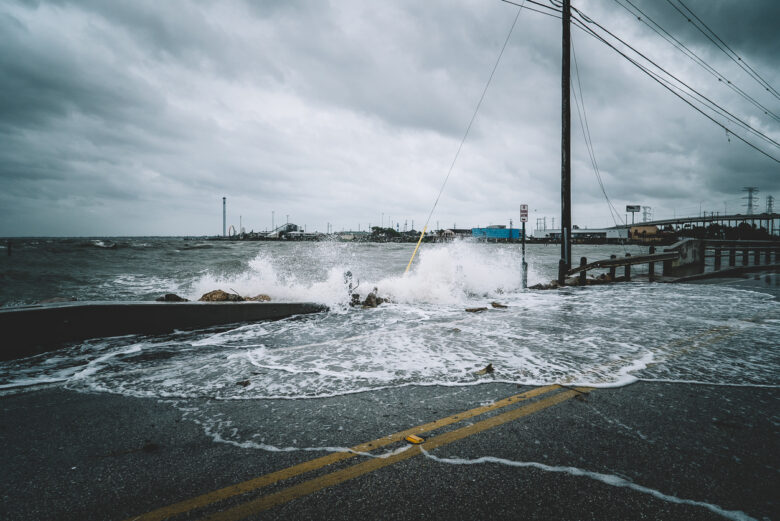
1. Warmer sea surface temperatures
Heat from warm ocean waters provides fuel for hurricanes. As climate pollution heats the ocean, the proportion of very intense (Category 4 and 5) hurricanes is increasing. Warmer water can also rapidly intensify the wind speed of a storm, making it harder to forecast and prepare for severe storms.
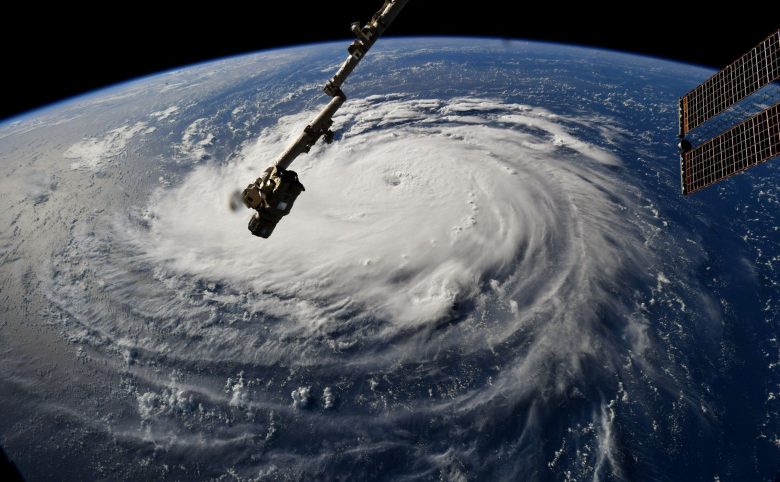
2. Heavier rainfall
A warmer atmosphere holds more moisture, mainly as rain, with studies showing 7% more moisture for every degree Celsius of warming. Heavy rainfall from hurricanes Harvey and Helene led to flooding disasters inland, well away from the coast.

3. Higher storm surge
Sea levels are rising as climate pollution heats up the atmosphere, warming the oceans and melting glaciers. That means there’s more water for winds to push ashore during hurricanes, known as storm surge. In addition, storm surge now starts from a higher sea level, allowing floodwaters to reach farther inland and inundate areas that were previously unaffected. Rising storm surges can push water farther inland than identical storms did a century ago.

4. Slower, stalling storms
Rising temperatures can weaken the winds hurricanes rely on to move along. So, today’s storms are stalling or pausing over land for longer than they have in the past, dropping more rain in one place. This happened when Harvey landed on Texas, resulting in severe flooding.
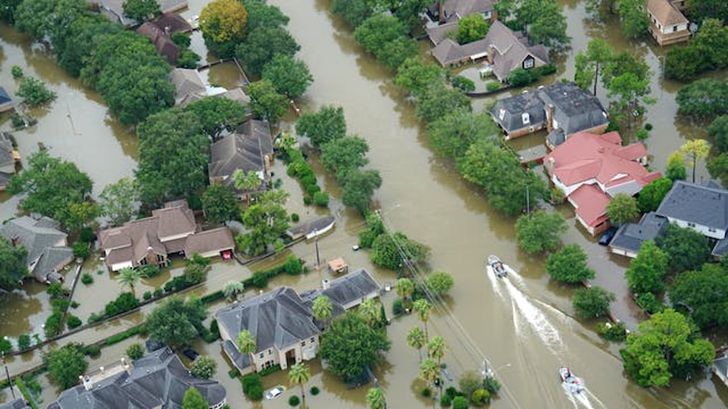
Where do we go from here?
Experts are already finding ways to combat rising hurricane costs. For instance, forecast improvements since 2007 alone are estimated to have saved around $2 billion per hurricane landfall. That’s largely because they have given communities affected by hurricanes more time to prepare and evacuate. This points to the importance of maintaining funding for the government research that provides critical data for meteorologists. However, the Trump administration has proposed several cuts to these organizations, including a 26 percent cut to NOAA’s budget. As of October 23, 2026, Congress has not enacted these cuts into law.
According to scientists from Environmental Defense Fund, the global nonprofit, there are two main ways to deal with the growing threat of hurricanes and other extreme weather events that are being intensified by climate change. The first is to limit the climate pollution that is warming the atmosphere and driving extreme weather — that includes limits on carbon dioxide and on methane, a climate super-pollutant that is responsible for 30% of today’s warming.
Also important — reducing the impacts of storms when they do arrive. Extreme weather solutions include protecting wetlands, improving flood mapping, creating smart community preparedness plans and investing in at-risk communities.
No single solution will stop a hurricane from forming. But together, science-backed preparedness and policies that cut climate pollution are two of the clearest ways communities and governments can keep the next storm from costing as much as the last.
Related:
- 3 lies about wind energy, debunked in 30 seconds
- 6 charts that show where we are winning and losing against climate change
Ask us! What questions do you have about content, strategy, pop culture, lifestyle, wellness, history or more? We may use your question in an upcoming article!
Like MediaFeed’s content? Be sure to follow us.
This article originally appeared on EDF Vital Signs and was syndicated by MediaFeed.co.