The worst Halloweens in human history to have been alive
810. That’s how many fires Detroit firefighters answered over three nights around Halloween 1984. A record, per the CDC’s own report. And Detroit wasn’t alone.
A magician died on October 31. A radio drama blamed for a nationwide panic. A storm that swallowed a fishing boat. A hurricane that put trick-or-treating on hold for a whole state. A crowd crush in Seoul.
Six Halloweens, 1926 to 2022. We stick to what’s documented, and where a famous story grew bigger than the facts, we say so.

“I’m tired of fighting”
Montreal, October 22, 1926. Harry Houdini is resting on a dressing-room couch when a 31-year-old McGill student named J. Gordon Whitehead walks in and asks if it’s true he can take a punch. Before Houdini can brace, Whitehead hits him in the stomach. Several times.
Houdini finished his Montreal shows. Then he took a train to Detroit, played the Garrick Theatre on October 24, and collapsed. Surgeons removed his appendix. The infection had already spread.
A week later, he whispered to his brother Theo, “I’m tired of fighting,” and died at 1:26 p.m. on October 31, in Room 401 of Grace Hospital.
Did the punch kill him? Historians still argue. Whitehead was never charged. Houdini’s insurer paid double for an accident.
A fake news bulletin, 8 p.m. on October 30
Orson Welles was 23. It was a Sunday night, and his Mercury Theatre on the Air was doing H.G. Wells, dressed up as breaking news. A cylinder in Grover’s Mill, New Jersey. Then Martians.
Next morning, the New York Times ran “Radio Listeners in Panic, Taking War Drama as Fact.” Welles woke up as America’s most talked-about man.
Historians have since taken the panic apart. A ratings survey found only about 2 percent of listeners were tuned in. Jefferson Pooley and Michael Socolow say the famous study behind it confused being frightened with being panicked. Some people were scared. Most weren’t listening.
810
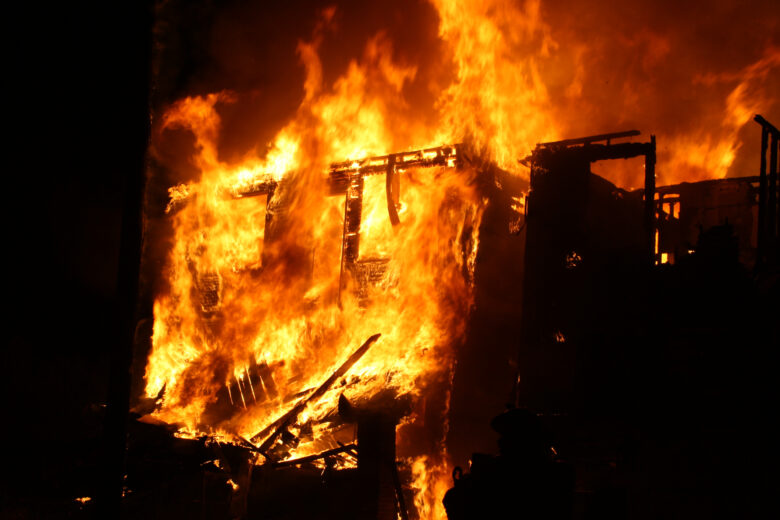
October 1984, Detroit. The night before Halloween used to mean soapy windows and toilet paper in trees. By the early ’80s, it meant arson. In 1983, firefighters counted 553 fires in 72 hours. In 1984, 810.
Mayor Coleman Young fought back. A curfew for kids under 17. More than 11,000 volunteers walked the streets. In 1985, fires dropped to 370.
The city later renamed it Angels’ Night, and by 2017 it ended the program. Nobody needed it anymore. On October 30, 2024, Detroit counted seven fires. From 1984 to 1996, arson caused nearly half of the city’s fire deaths, the CDC found.

“She’s comin’ on, boys”
Captain Billy Tyne’s last radio call came from somewhere off Nova Scotia. The Andrea Gail, a Gloucester swordfishing boat with six men aboard, was heading home. Then nothing. The Coast Guard says she vanished between October 28 and 30, 1991, with everyone aboard.
Hurricane Grace had run into two other weather systems. People called it the Halloween Nor’easter. Bob Case, a retired NOAA meteorologist, called it a perfect storm, and Sebastian Junger wrote the book. Twelve people died. The boat has never been found.
Ethel Shatford was at work when she heard the Andrea Gail was missing. Her first reaction: you’ve got the names wrong.

A governor, a parade, a hurricane
Hurricane Sandy made landfall on October 29, 2012. Two days later, New Jersey Governor Chris Christie signed Executive Order 105. Flooding, downed trees, and power lines forced Halloween to be postponed to Monday, November 5.
Christie joked he might move it to Election Day. He didn’t.
In Manhattan, the Village Halloween Parade was canceled for the first time in 39 years. Jeanne Fleming, who had directed it for 32 of them, confirmed it. The White House also called off its party.

Itaewon, 10:20 p.m.
October 29, 2022. Tens of thousands of people poured into Seoul’s Itaewon district for the first Halloween weekend in three years without COVID curbs. In a narrow alley near the Hamilton Hotel, a crowd crush killed 159 people, mostly young women in their 20s.
Police had expected more than 100,000 people. They put 137 officers on the streets.
A Seoul court later called it a “man-made disaster.” It sentenced former Yongsan police chief Lee Im-jae to three years.
This year, Yongsan is putting about 2,550 personnel in Itaewon for Halloween.

The bottom line
Only about 2 percent of American listeners were tuned in to Welles in 1938, and the Andrea Gail has never been found.
Ask us! What questions do you have about content, strategy, pop culture, lifestyle, wellness, history or more? We may use your question in an upcoming article!
Related:
- Your cozy (or spooky!) Halloween movie, according to your horoscope
- Halloween hauntings at famous movie sets
Like MediaFeed’s content? Be sure to follow us.
This article was syndicated by MediaFeed.co.