
The strangest unsolved mystery from every state
In Gurdon, Arkansas, a light drifts along an abandoned railroad bed and backs away when you walk toward it. On a Georgia ridge, an 885-foot wall of stacked stone has no known builder. In Mattoon, Illinois, a whole town spent two weeks hunting a prowler who sprayed gas through bedroom windows.
Fifty entries follow, one per state, in alphabetical order. A few have popular explanations (bears, hysteria, headlights), but each has a loose thread that kept it off the solved pile.

Alabama: Who put Madoc on Mobile Bay?
In 1950, two amateur historians published a book placing a Welsh prince at Fort Morgan in the year 1170. The Daughters of the American Revolution planted a marker there three years later, and professional historians have picked the story apart ever since.

Alaska: The SS Baychimo, 1931 to 1969
A 1,322-ton steamer built in Sweden in 1914, abandoned in Arctic ice, then found 45 miles away days later, still iced in. Sightings kept coming for nearly four decades. In 2006, the state began a project to locate it.
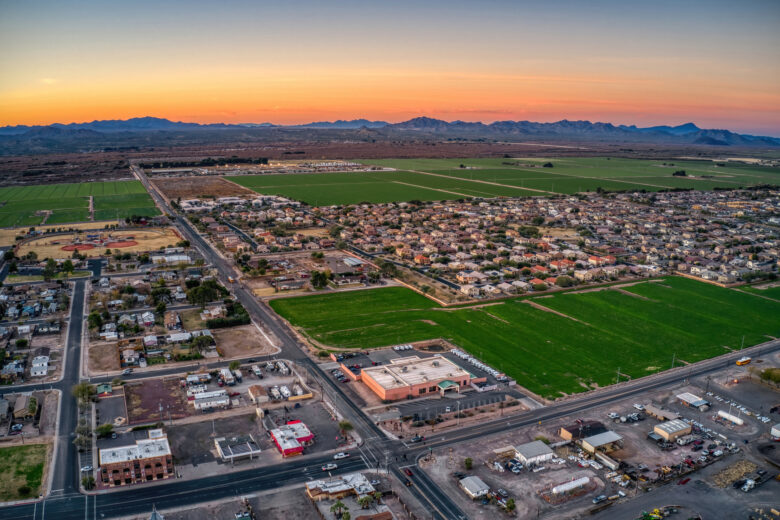
Arizona: “I have no idea if the Lost Dutchman exists”
That’s Donald Burt, a geology professor at Arizona State, after fielding reporters’ questions about the mine for 50 years. Treasure hunters have been combing the 160,000-acre Superstition Wilderness since at least 1892.

Arkansas: Gurdon’s light, about the size of a basketball
One visitor described it as basketball-sized, around fifty yards off, and unwilling to be approached: walk toward it and it recedes, sometimes turning up behind you. It glows white-blue or orange along an old stretch of railroad track. A piezoelectric explanation, stressed quartz underground, is the leading scientific guess.
California: Dummy heads in the beds
Over eight months, Frank Morris and brothers John and Clarence Anglin drilled through the walls behind their Alcatraz cells. On June 11, 1962, they propped up dummy heads and paddled into San Francisco Bay. The FBI closed the case in 1979.

Colorado: Mesa Verde empties out around 1300
Ancestral Puebloans had been building into the canyon walls at Mesa Verde for centuries when the place emptied. The suspects are drought, depleted resources, and conflict, in some combination.
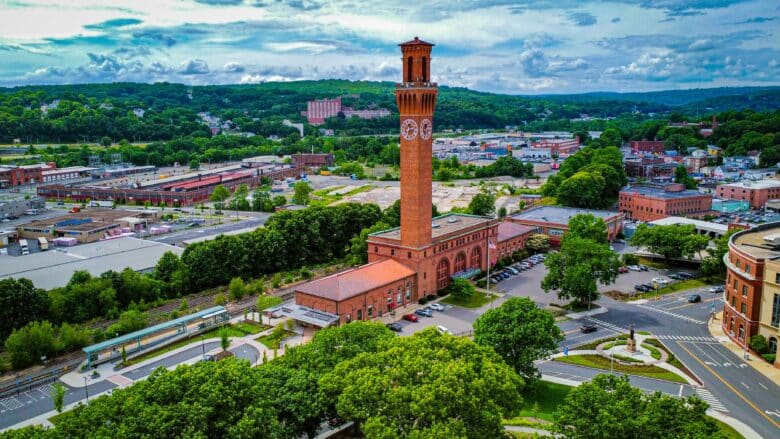
Connecticut: 240 pages Yale can’t read
Rare-book dealer Wilfrid Voynich bought the manuscript in 1912. Carbon dating puts the vellum in the early 1400s, so a modern forgery is out, but codebreakers have come up empty on its script and its plants.

Delaware: HMS De Braak, May 1798
The sloop went down off Cape Henlopen on May 23, 1798, and a rumor of treasure went down with it. Salvors raised the hull in 1986, doing considerable damage to the wreck site along the way. The fortune stayed a rumor.

Florida: A man who moved 30-ton blocks alone, at night
Ed Leedskalnin started Coral Castle in 1923 after his 16-year-old fiancée called off their wedding, and in 1936 he moved the whole site about ten miles. One story has a quarry foreman turning his back, then finding Leedskalnin sitting in his truck with several tons of coral already loaded. He never let anyone watch him work.

Georgia: The wall at Fort Mountain
885 feet of stone along a ridge, credited to Cherokee ceremony, to a fort, to conquistadors, and, in Cherokee folklore, to the “moon-eyed people” who lived there first.

Hawaii: A fishpond finished before sunrise
The Menehune are credited with fishponds and ditches built in a single night. Archaeologists attribute the stonework to early Hawaiians, and who the Menehune were, if anyone, is another matter.

Idaho: Bear Lake’s serpent
A Mormon colonizer reported a serpent in the lake that straddles the Utah border in 1868, and reports have kept trickling in.

Illinois: Thirty-three people smelled it in twelve days
On August 31, 1944, a Mattoon man woke to a strange odor, nauseated and weak. By September 12, the Daily Illini counted 33 people in twelve days. The next day, the police chief said plant fumes were behind the rumors, and the last reported incident came on September 13.

Indiana: Oscar, a turtle the size of a car
Churubusco made national headlines in 1949 over a snapping turtle said to weigh 500 pounds in Fulk Lake. Reporters and sightseers jammed the streets, planes flew overhead, and divers, hooks, lines, and nets came up empty. The town leaned in: its signs now welcome visitors to “Turtle Town U.S.A.”

Iowa: Bears and birds, built from dirt
Effigy Mounds National Monument, on the Mississippi, holds more than 200 earthen mounds, about thirty of them shaped like animals. Whether they mark burials, ceremonies, or territory depends on who you ask.

Kansas: Alexander Hamilton’s heifer
In April 1897, Hamilton of Leroy signed an affidavit saying an airship had hovered over his cattle pen, snagged a heifer, and sailed off with it. Neighbors signed a statement vouching for his character, the Yates Center Farmer’s Advocate printed it, and historians now list it as a hoax.

Kentucky: Chunks of red meat, 100 by 50 yards
They fell near Olympia Springs in Bath County one day in 1876, and local doctors mailed samples to chemists in Kentucky, Ohio, and New York. One piece sat in storage until it was rediscovered in 2004. Vultures regurgitating in flight is the usual theory.

Louisiana: Lafitte’s loot
Jean Lafitte worked out of Barataria Bay and helped Andrew Jackson defend New Orleans in 1815. Treasure stories place his hoard anywhere along the Louisiana and Texas coast, which is a lot of coast.

Maine: A map the size of a postcard
The Spirit Pond runestones turned up near Phippsburg in the early 1970s. The map stone is a flat slab about 7 by 5 inches, the only runestone map on record, and scholar Erik Wahlgren dismissed the whole set as “a hoax on a hoax.”

Maryland: “Reynolds”
Edgar Allan Poe was found delirious at a Baltimore tavern on October 3, 1849, and spent his last night calling out that name. No one has identified Reynolds.

Massachusetts: The empty frames still hang
In 1990, thieves took art worth about $500 million from the Isabella Stewart Gardner Museum, the largest art theft on record. The museum kept the frames up. The FBI says it’s still investigating.

Michigan: “We are holding our own”
Captain Ernest McSorley sent that message from the Edmund Fitzgerald at 7:10 p.m. on November 10, 1975. Minutes later, the 729-foot freighter vanished from the radar of the ship following it, with no distress call and all 29 crew lost. The cause is unknown.
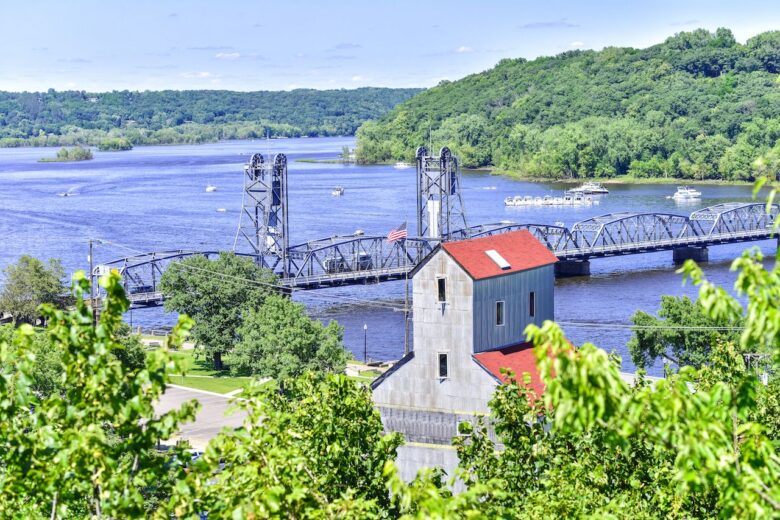
Minnesota: A 230-pound stone with a date on it
Olof Ohman found the Kensington Runestone in 1898, tangled in tree roots, carved with a date Hjalmar Holand read as 1362. Holand defended it for more than fifty years, while a Danish museum curator declared it a fake. The state historical society’s own summary: either a Norse record or “Minnesota’s most brilliant and durable hoax.”

Mississippi: Pascagoula, 1973
Charles Hickson and Calvin Parker reported being taken aboard a craft while fishing on October 11, 1973. After the Hill abduction, it’s the best-known case of its kind in the country.

Missouri: The Hornet Spook Light
A single ball of light, or a tight cluster, shows up at night on a gravel road west of Hornet, near the Oklahoma line. The Army Corps of Engineers reportedly called it a “mysterious light of unknown origin,” and locals guess marsh gas and reflections off minerals.

Montana: The eel in the big lake
Flathead Lake’s monster comes out of Kutenai legend and is usually drawn as a very long eel, living in the largest natural freshwater lake in the western United States.

Nebraska: Fifteen people, one stalled car, one nap
At 7:25 p.m. on March 1, 1950, a gas explosion destroyed the West Side Baptist Church in Beatrice, right when choir practice was supposed to begin. Nobody was inside. The pianist had overslept, one member was finishing a geometry problem, another had a stained dress, and all 15 were late.

Nevada: The red-haired people of Lovelock Cave
Paiute oral tradition tells of the Si-Te-Cah, a red-haired people, and Lovelock Cave is where the story and the archaeology meet. Digs have produced thousands of artifacts. No giants.

New Hampshire: America’s Stonehenge isn’t much like Stonehenge
Mystery Hill in Salem has the nickname but little of the English monument’s shape, just stone chambers, walls, and slabs. Archaeologists lean toward builders from recent centuries, and some argue parts of it are far older.

New Jersey: The thirteenth child
The Jersey Devil is said to have been born in 1735 to a mother who cursed her thirteenth baby, and it now lends its name to an NHL team.
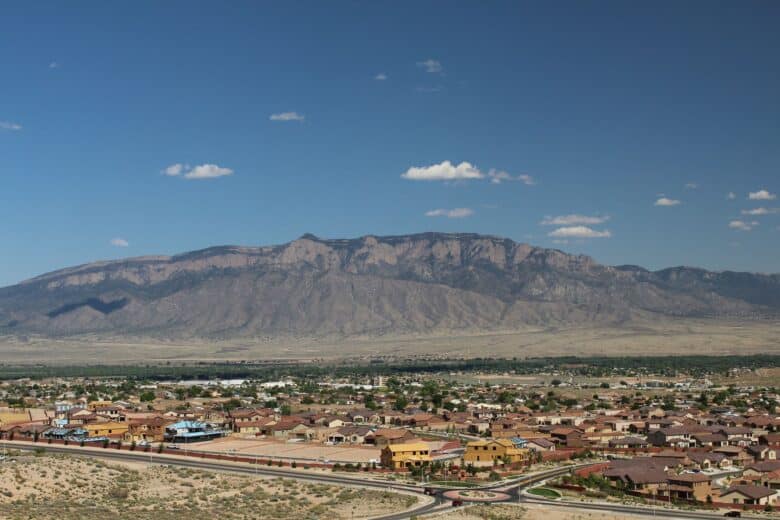
New Mexico: A hum between 32 and 80 hertz
A study in Taos in the early 1990s found at least two percent of residents could hear it, each at a different pitch, and one hearer said its range was 30 miles. Nothing has traced it to a source.

New York: The Leatherman, in a leather suit
For about three decades he walked a 365-mile loop between the Connecticut and Hudson rivers, reaching each town every 34 days. Ten towns passed ordinances exempting him from the state’s tramp law. When a humane society had him hospitalized in 1888, doctors found him “sane except for an emotional affliction” and released him, since he had money and wanted his freedom.

North Carolina: CROATOAN
About 115 colonists, including a baby named Virginia Dare, settled Roanoke Island in 1587. A supply ship delayed until 1590 found the houses gone and one word carved on a post. The colony was never located.

North Dakota: Writing Rock
Two granite boulders covered in thunderbirds, still held sacred by the Dakota and Assiniboine peoples. The smaller one lived at the University of North Dakota until 1965, when it was returned.

Ohio: A quarter-mile serpent
Serpent Mound in Hillsboro coils across a hilltop, and researchers disagree about which culture built it and when.

Oklahoma: Three runestones, one state
Heavener, Poteau, and Shawnee each have a stone carved with marks that some readers call Norse and others call much newer.

Oregon: The shack where balls roll uphill
The Oregon Vortex opened in Gold Hill in 1930, and a University of Oregon physicist who visited in 1966 called its effects an optical illusion. Magician James Randi did the same in 1998. The owner agreed about the house and insisted something odder was happening outside it.

Pennsylvania: Two missing boxes of NASA papers
On December 9, 1965, a fireball crossed six states and something was reported down in the woods near Kecksburg. A Soviet space probe is the leading explanation, but at a 2005 hearing NASA’s liaison officer testified that two boxes of papers from the time were missing. Locals call it “Pennsylvania’s Roswell.”

Rhode Island: Vikings, Templars, or a windmill
The Newport Tower has been credited to all three. Digs turned up colonial-era artifacts, and most scholars side with the windmill, but the Viking theory keeps getting invited back.

South Carolina: “Good for the community”
That’s how the local chamber of commerce described the attention when a green, seven-foot Lizard Man started turning up in Lee County in 1988, after a 16-year-old said something chased him from a flat tire. The sheriff suspected a bear, one man later said he’d faked a sighting, and the T-shirts went on sale.

South Dakota: Louis and Ivan Thoen’s slab
Brothers Louis and Ivan Thoen were gathering sandstone near Spearfish in March 1887 when they found a slab inscribed with the story of a gold party in 1834. If it’s real, gold was found in the Black Hills forty years before the Custer expedition. The original now sits in the Adams Museum in Deadwood.

Tennessee: The Bell Witch
From 1817 to 1821, the Bell family of Adams reported knocking, scratching, and a voice with opinions. The Bell Witch is now Tennessee’s best-known ghost story.

Texas: Rancher Robert Ellison wrote it down in 1883
His account of lights near Marfa predates cars by decades. Skeptics point to traffic on Highway 67 for modern sightings, and Apache stories call the lights stars that fell.

Utah: Skinwalker Ranch
A remote ranch in the Uintah Basin where reports of lights and odd events began in the 1990s, and where private research teams later set up instruments. No explanation has stuck.

Vermont: A guide, a student, a bus passenger
Between 1945 and 1950, five people disappeared around Glastenbury Mountain, including a guide leading a hunting party in 1945, a college student on a hiking trail in 1946, and a man who vanished from a bus.

Virginia: Three pages, one cracked
The Beale ciphers, published in an 1885 pamphlet, claim to point to a fortune buried near Bedford. The second page yielded to a key that turned out to be the Declaration of Independence. The other two haven’t.

Washington: Nine objects at 1,200 miles an hour
Pilot Kenneth Arnold was searching for a missing military plane near Mount Rainier on June 24, 1947, when he saw nine shiny objects he clocked at about 1,200 miles an hour, roughly three times faster than any manned aircraft then flying. The press quickly coined “flying saucer.”

West Virginia: Mothman
Reports from Mason County began in the mid-1960s, and Point Pleasant now has a statue and a museum.
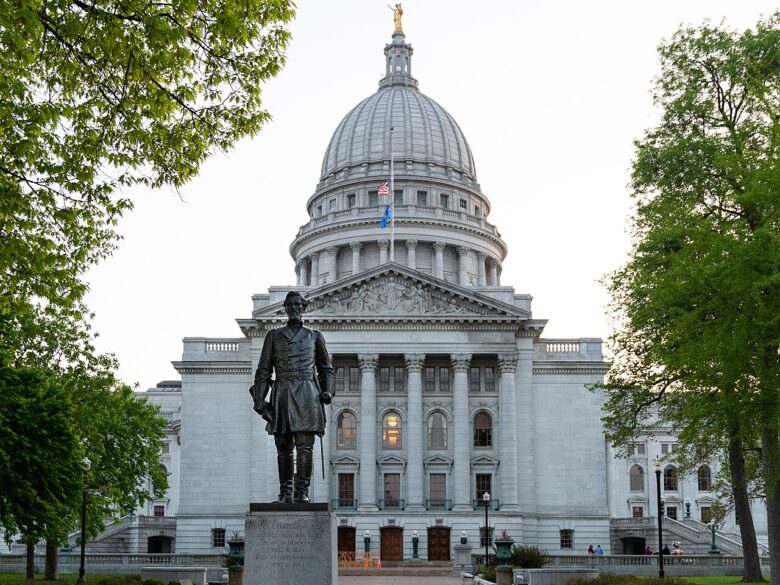
Wisconsin: Bray Road
Starting in the late 1980s, people near Elkhorn reported a bear- or wolf-like animal walking on its hind legs. Reporter Linda Godfrey’s coverage spread the story, and her articles were later published as a book.
Wyoming: John Eddy’s spokes
In the 1970s, astronomer John Eddy noticed that some spokes of the 75-foot Bighorn Medicine Wheel point to solstice sunrise and to rising stars. The wheel predates the Crow people’s arrival in the area, so who built it is open.

The bottom line
Bears, hysteria, and headlights explain a few of these. The rest are still open, and several have gift shops.
Ask us! What questions do you have about content, strategy, pop culture, lifestyle, wellness, history or more? We may use your question in an upcoming article!
Related:
- Historical “discoveries” that turned out to be elaborate hoaxes
- Some of the most surprising record deals in music history
Like MediaFeed’s content? Be sure to follow us.
This article was syndicated by MediaFeed.co.