
5 Ways Taking Control of Your Finances Can Save (or Earn) You Money
Being good with money is not about loving spreadsheets. It is about a handful of decisions that quietly move real dollars — what you pay to borrow, what you earn on savings, what you hand your insurer every month. Take control of those and your budget starts working for you instead of against you. Here are five places where a little attention pays off in 2026.
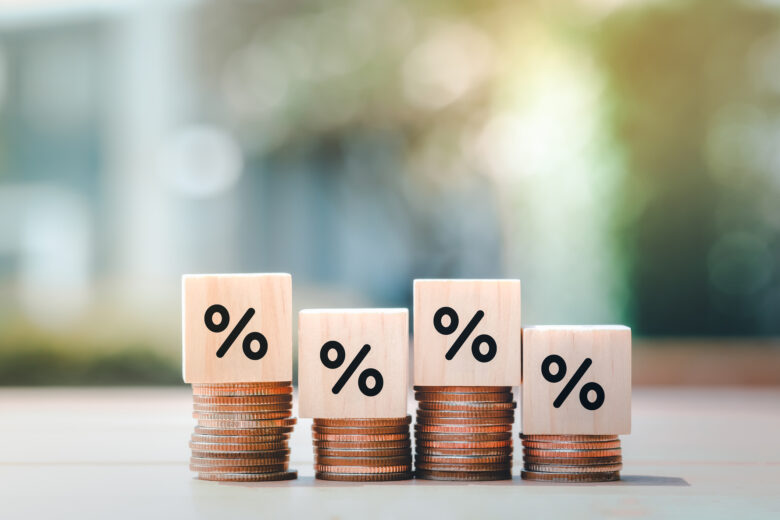
1. Get a Low Mortgage Rate
For most homeowners the mortgage is the biggest monthly bill, which makes its rate the most valuable number you can shop. Posted 30-year rates have spent 2026 in the mid-6s, but lenders can sit surprisingly far apart on the very same morning — comparing several quotes is an hour of work that can be worth thousands over the life of the loan. See where rates stand on our mortgage rates page. Already have a mortgage? If you locked yours in near the 2023 peak, when rates brushed 8%, refinancing into the mid-6s can be real money: moving a $400,000 balance from 7.75% to 6.5% saves about $340 a month. Closing costs typically run 2%–5% of the loan amount, so check your break-even point before you sign — it is the one division problem that decides whether a refinance is smart or just satisfying.
2. Pay Off High-Interest Debt
Not all debt costs the same. Credit cards that carry a balance averaged 22.15% APR in mid-2026, while a typical three-year personal loan runs around 13.4%. That gap is the whole case for consolidation: swap expensive revolving debt for one fixed payment at a lower rate, and every month costs less. Compare the main ways to consolidate before you choose, and mind origination fees, which run 1%–8% on many personal loans. One caution: rolling card debt into your mortgage turns unsecured debt into debt your home guarantees — cheaper on paper is not automatically safer.

3. Find Affordable Auto Insurance
Auto insurance premiums surged about 17% in 2024, eased through 2025, and have run roughly flat in 2026 — yet full coverage still averages in the $2,300s a year, and loyal customers rarely get the best price. Re-shop your policy at renewal with identical coverage levels and deductibles so the comparison is honest, and see how a deductible change moves your premium with our auto insurance calculator. Even a modest saving repeats every year you keep it.

4. Get a High-Yield Savings Account
This is the easiest raise you will ever give yourself. Top high-yield savings accounts pay around 4% in 2026, while many large traditional banks still pay well under 1% on standard savings. On a $30,000 balance that gap is roughly $1,000 a year — for the effort of opening an account online. With the Fed on hold and yields hanging on, keeping your cash at a big bank out of habit is leaving money on the table.
5. Get a Certificate of Deposit
A savings account rate can change whenever your bank feels like it; a certificate of deposit locks yours in. Top nationally available CDs pay about 4.3%–4.5% APY in 2026 — a guaranteed, FDIC-insured return in exchange for leaving the money alone until the term ends. Cash out early and you will usually owe a penalty, so match the term to money with a known job and a known date: next summer’s move, a wedding, a car down payment. Compare terms and yields on today’s CD rates before you lock.
None of this requires a finance degree — just the willingness to spend an hour on numbers most people never look at. Between a shopped mortgage, cheaper debt, right-priced insurance, and cash that finally earns its keep, that hour may be the best-paid one of your year.
Related:
- Eight Uses for Personal Loans — and Which Ones Make Sense in 2026
- How to Choose the Right Bank Account in 2026
Like MediaFeed’s content? Be sure to follow us.
This article originally appeared on RateZip.com and was syndicated by MediaFeed.co