
Odd things schools allowed back in the ’60s
Life in high school today is vastly different compared to the ‘60s. Schools are now forced to adapt to advancing tech, while magnet schools were just starting out in the ‘60s and are now common. A lot has changed in education throughout the decades. Here are six odd things schools allowed in the ‘60s.
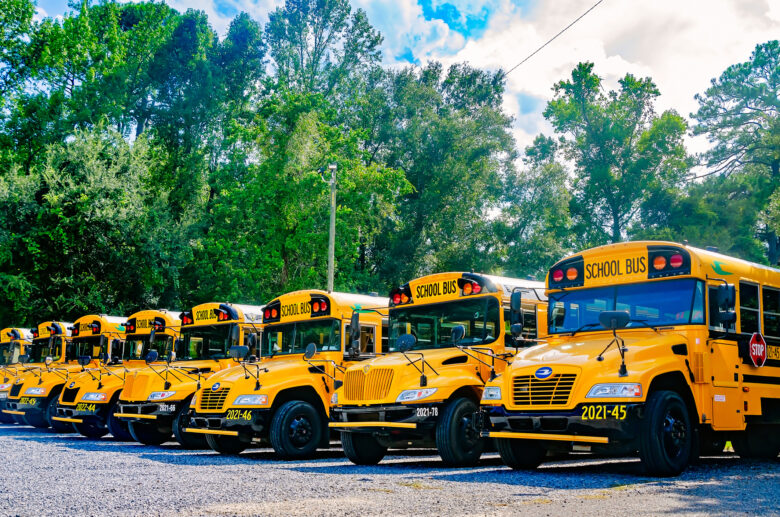
16- and 17-year-old school bus drivers in rural areas
It’s fair to say that teenagers today miss out on school experiences that were routine for teenagers back in the ‘60s — having to look up simple facts in the encyclopedia, spending time with friends rather than constantly staring at the screen, and, apparently, driving school buses.
Due to wartime labor shortages and cost-saving labor, more than 20 states allowed students, starting from the age of 16, to drive school buses around neighborhoods during the ‘60s. Though drivers need to go through strict training procedures and get certified, many teenagers today wouldn’t even brave driving a car, let alone a school bus.

Corporal punishment
In today’s high school, if a student misbehaves, the most they’ll face is a detention or a talking to in the principal’s office. But things weren’t easy-going back in the ‘60s. Whether it was a student talking back or forgetting to do a homework assignment, corporal punishments were the norm. Corporal punishment could be in the form of a wooden paddle to the butt or a slap on the hand with a wooden ruler.
While corporal punishments are no longer a common form of discipline in schools, the practice is still considered constitutional depending on the state. In Ingraham v. Wright, the Supreme Court stated that the Eighth Amendment does not prevent corporal punishments in schools and is left up to the states. Today, 17 states like Texas, Florida and Arizona still consider corporal punishment legal.

Strict gender roles in school curricula
Before 1972’s Title IX, schools were separated by gender, which meant counselors and curricula were revolved around requiring girls to take classes like home economics and boys doing more vocational classes. This extended past class curricula and into athletics, where sports teams were only reserved for boys while girls weren’t allowed to participate. However, that all changed thanks to Title IX, where sexual discrimination in schools was outlawed. Today, both boys and girls take home economics and vocational classes, while girls in sports are now a norm.
Smoking in high school
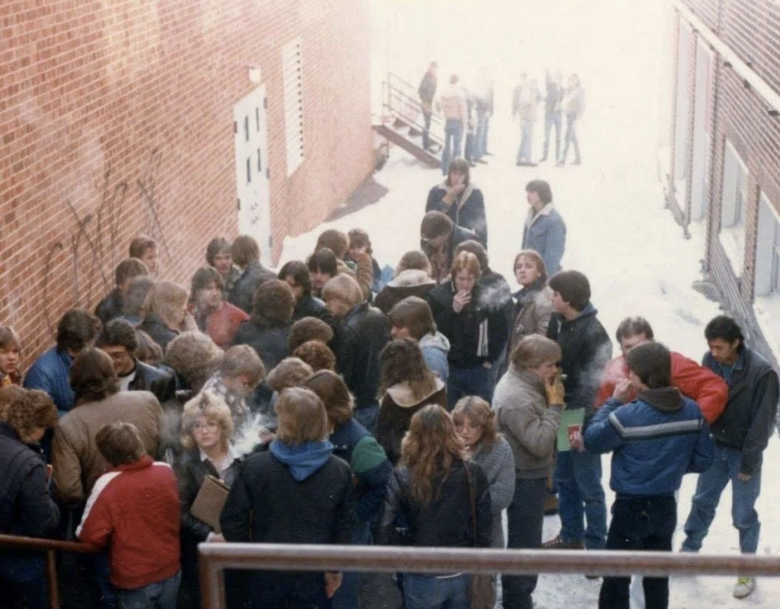
If you were to ask anyone today, they’d say smoking is bad for you — I mean, the signs are there. But when smoking was wildly popular in the country in the ’30s and ’40s, it was advertised as a way to soothe an irritated throat, and everyone bought it. Because there was less scientific research, everyone was picking up smoking.
However, even with research from Ernest Wynder, Evarts Graham, Richard Doll and Austin Bradford Hill in 1954, smoking was advertised as a lifestyle appeal. The change in advertising allowed smoking to prosper as even teenagers were picking up the habit. In schools, designated areas were set up outdoors to allow students to smoke.
Mandatory prayers up until two Supreme Court cases
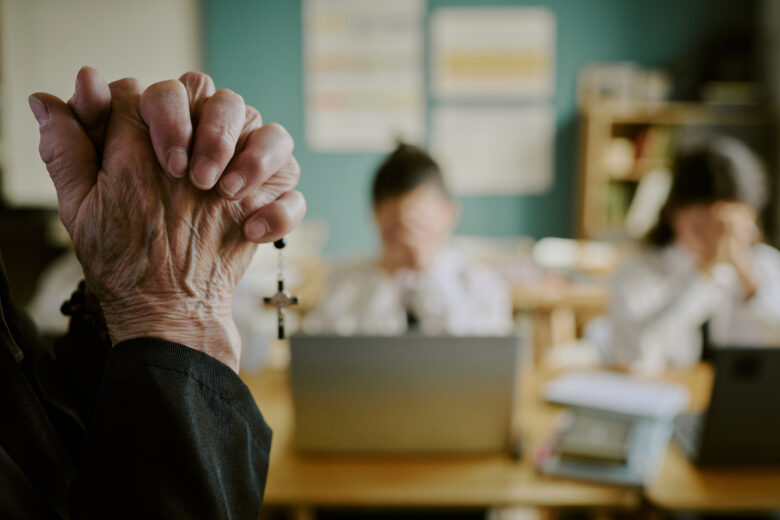
Though praying in schools was constitutional up until 1962, this was common practice throughout the country. Due to long-standing historical traditions and anxieties related to the Cold War, prayers were regularly utilized in classrooms, no matter the students’ religion.
That all changed with the 1962 landmark case, Engel v. Vitale, which stated school-led prayers violated First Amendment rights. The following year, in Abington v. Schempp, the Supreme Court stated that state-mandated Bible readings also violated the First Amendment.
While prayers in school haven’t been utilized since 1962, states have started to incorporate religion back into school. In Texas, schools are now required to display the Ten Commandments in classrooms, while in Oklahoma, state superintendent Ryan Walters required schools to incorporate the Bible into curricula, but the Oklahoma Supreme Court blocked Walters from spending money on his mandate.
Large class sizes
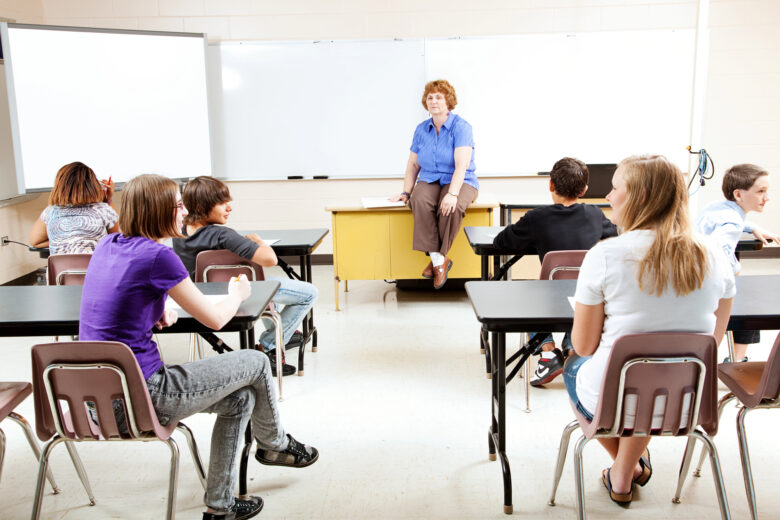
Due to the Baby Boomer generation, the size of classrooms was bigger compared to today’s classrooms. As the children of the Baby Boomer generation grew up, classrooms had an average student-to-teacher ratio of 25.1 to 26.4. Today, the average student-to-teacher ratio is about 14.8 across the country.
While Baby Boomers entering schools is one of the main reasons for large class sizes, it was also the lack of specialized teachers that led to large classrooms. Specialized programs like the gifted and ESL programs divided students into smaller classrooms, a concept that is widely used today, allowing for smaller, more manageable classes.

Wrap Up
In the ‘60s, these things were considered normal in schools, from corporal punishment as discipline to large class sizes. In today’s standard, they’re considered odd. With the country’s education landscape is always changing, it not only shapes the quality of the education, but a person’s outlook on life.
Related:
- Things Boomers learned in school that turned out to be wrong
- Be ready for back-to-school with allergen-friendly lunches
Ask us! What questions do you have about content, strategy, pop culture, lifestyle, wellness, history or more? We may use your question in an upcoming article!
Like MediaFeed’s content? Be sure to follow us.
This article was syndicated by MediaFeed.co.