What life was really like in the Old West
This captivating collection of photographs will transport you back in time, offering a mesmerizing look at life in the real American Old West.
These aren’t your ordinary dime-novel illustrations or Hollywood facsimiles; these images capture the raw, unfiltered essence of a frontier world that’s been frozen in time, yet continues to ignite our imagination. From the dusty saloons where gunslingers like Billy the Kid and Calamity Jane made their mark, to the open plains where Buffalo Soldiers and Native Americans etched their stories, these photographs give us a window into a time that epitomizes the spirit of American expansionism, rugged individualism, and daredevil bravado.

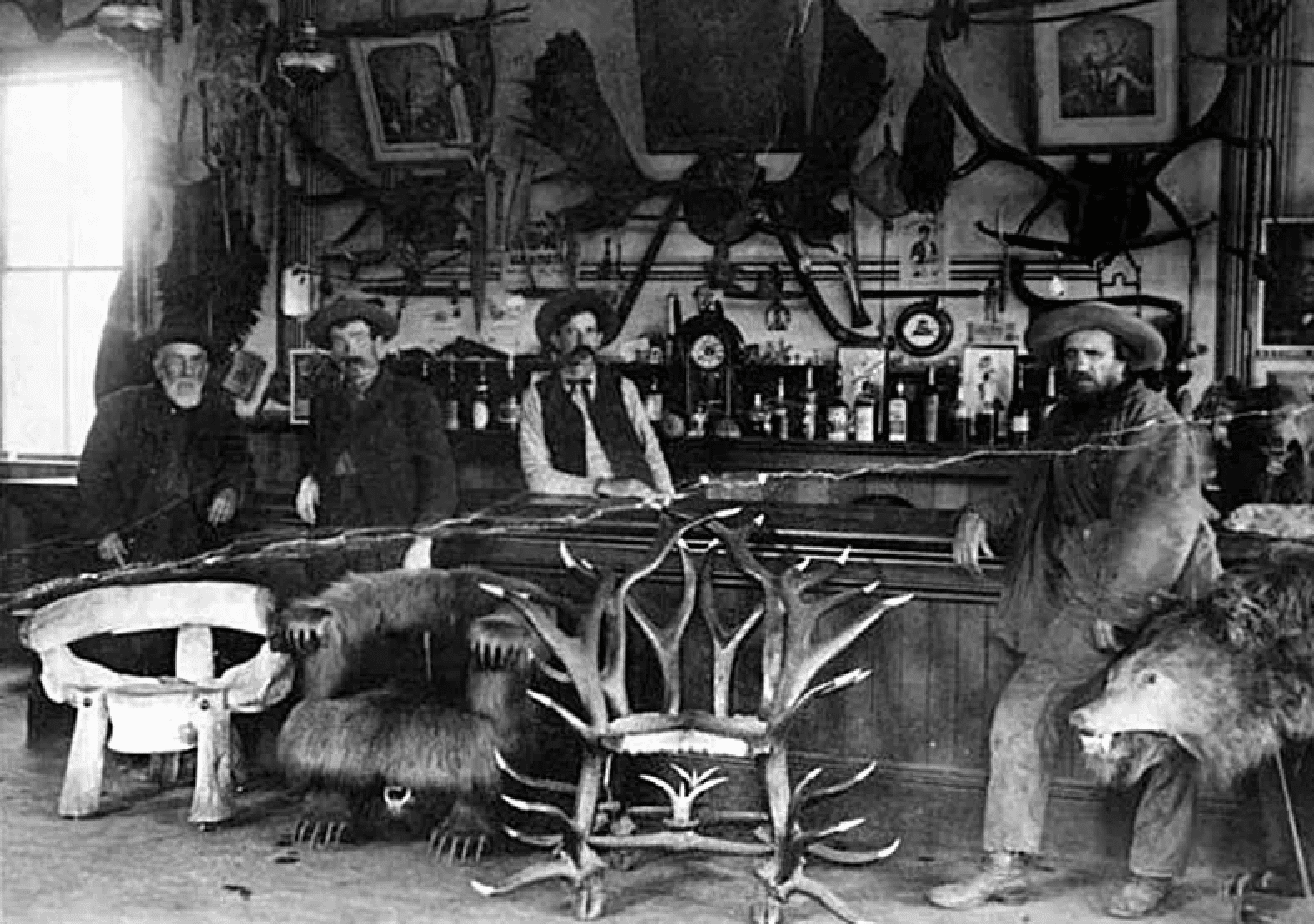
Skagway Alaska, 1897
When you hear “Old West,” images of gun-toting cowboys, saloons with swinging doors, and high-speed horse chases likely flood your mind. This archetype—cemented in the collective American consciousness—refers to the American frontier period that spanned the 19th century, but most commonly is associated with the latter half of that century, particularly after the Civil War ended in 1865.
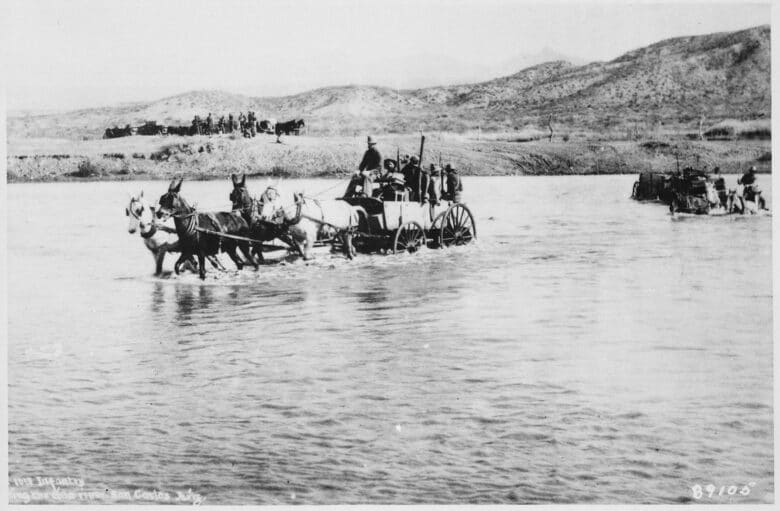
Crossing Gila River in buckboard wagons near San Carlos, Arizona, 1885
The idea of the “Old West” is often more mythological than factual, shaped heavily by decades of Hollywood films, pulp fiction, and folklore. However, the realities of life on the frontier were just as compelling, albeit often less glamorous, than their cinematic counterparts.
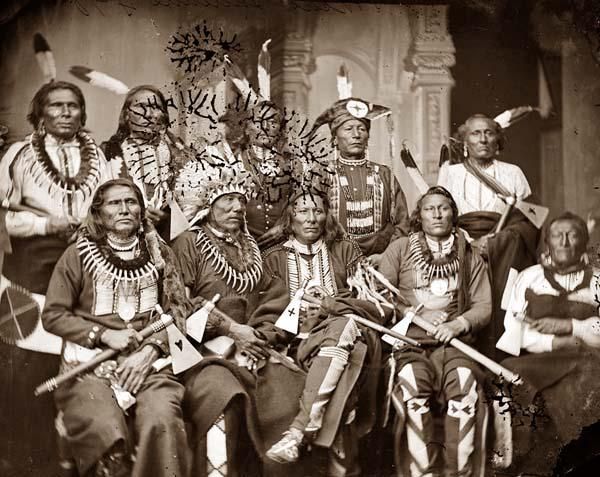
Native American chiefs,1865
The frontier was a complex social tapestry woven from a variety of groups: Native Americans who had occupied the lands for centuries; European settlers moving westward in wagons; the “forty-niners” and subsequent gold rush prospectors; Mexican ranchers; and African Americans seeking freedom and opportunity post-Civil War.

Settlers escaping the Dakota War of 1862
At the core of the westward expansion was the idea of Manifest Destiny—the belief that American settlers were destined to expand across the continent. It was an era of land grabs, treaties, and territorial disputes, as explorers and settlers ventured beyond the Mississippi River. Trail systems like the Oregon Trail and the Santa Fe Trail facilitated westward migration.
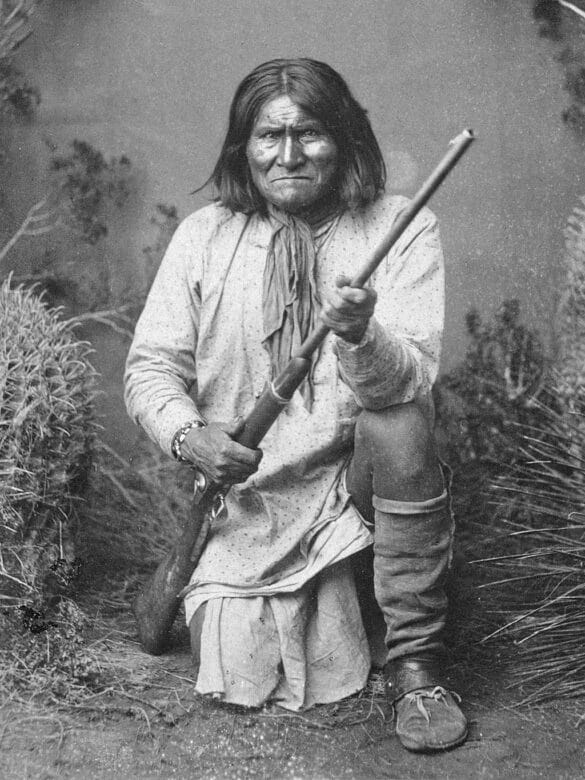
Geronimo
The expansion had devastating consequences for Native Americans, who were often driven from their ancestral lands. Leaders like Sitting Bull, Crazy Horse, and Geronimo led resistance against American encroachment, culminating in tragic events like the Battle of Little Bighorn and the Wounded Knee Massacre.
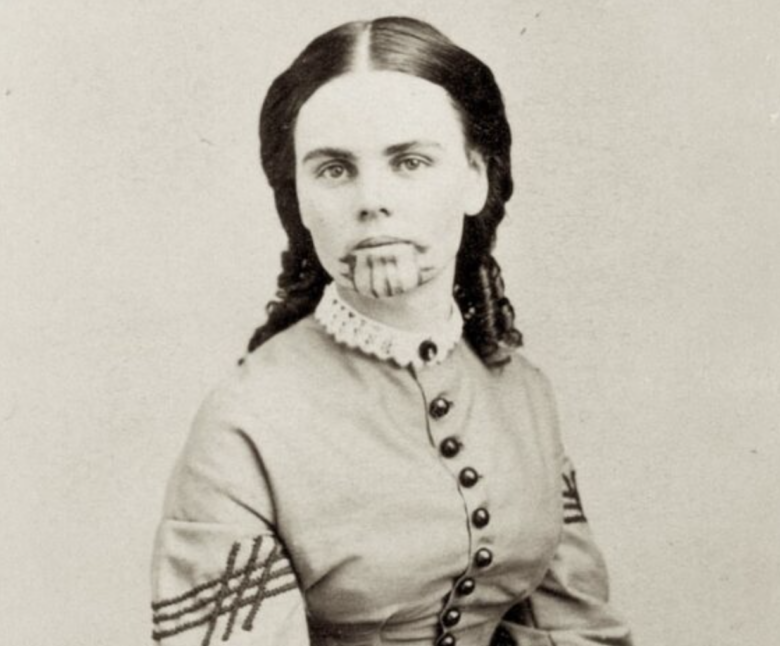
Olive Oatman
One of the notable figures who symbolizes the complex interactions between settlers and Native Americans during the Old West era is Olive Oatman. Her life’s journey epitomizes the hardships, uncertainties, and cultural collisions that characterized the American frontier. Born into a family seeking a better life in the West, Olive experienced the harsh reality of this migration when her family was attacked near present-day Yuma, Arizona. After being taken captive and eventually adopted by the Mohave tribe, Olive returned to white society years later with a blue chin tattoo, a mark of her time spent with the Mohave.
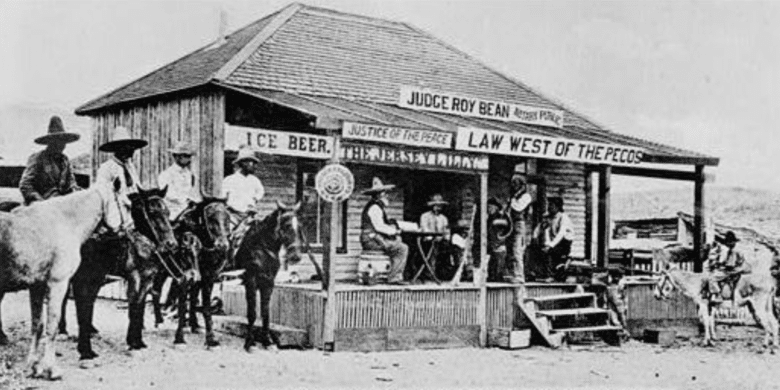
Old West saloons
Saloons were the epicenters of social life in Old West towns.Not just places to knock back a whiskey or two, these establishments were the social media of their time, albeit much grittier and more personal.
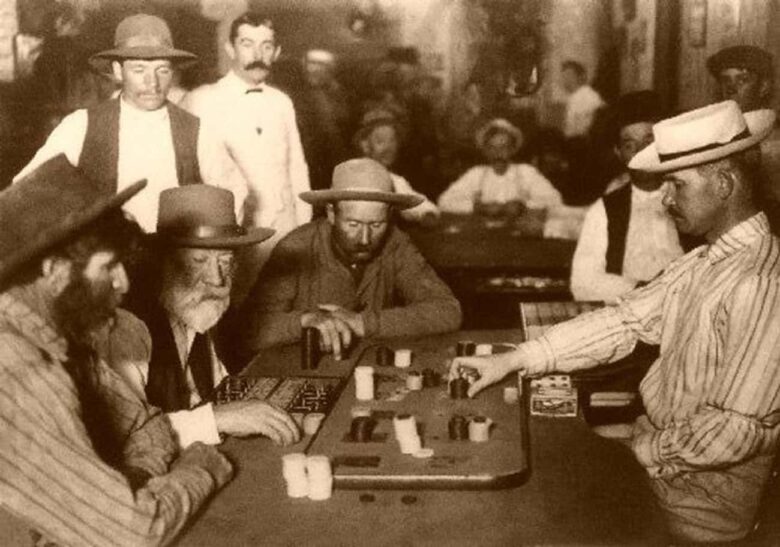
Playing faro, 1895
Card games like poker and faro were the order of the day, and many a man’s fortune was made or lost on the turn of a card. These were not quiet, subdued places. A lively piano often competed with raucous laughter and the clinking of glass. And let’s not forget the entertainers, men and women who traveled the circuit providing much-needed diversions—singers, dancers, and even theatrical troupes.

1889 photo of the Interior of Table Bluff Hotel and Saloon in Table Bluf
Saloons were also where important deals were struck, where miners could cash in their hard-earned gold, and where cattle ranchers came to negotiate prices with buyers. It was in these dimly lit confines that the pulse of the Old West was most keenly felt. The saloon encapsulated the rugged individualism, unbridled ambition, and—yes, let’s admit it—occasional lawlessness that defined this era.
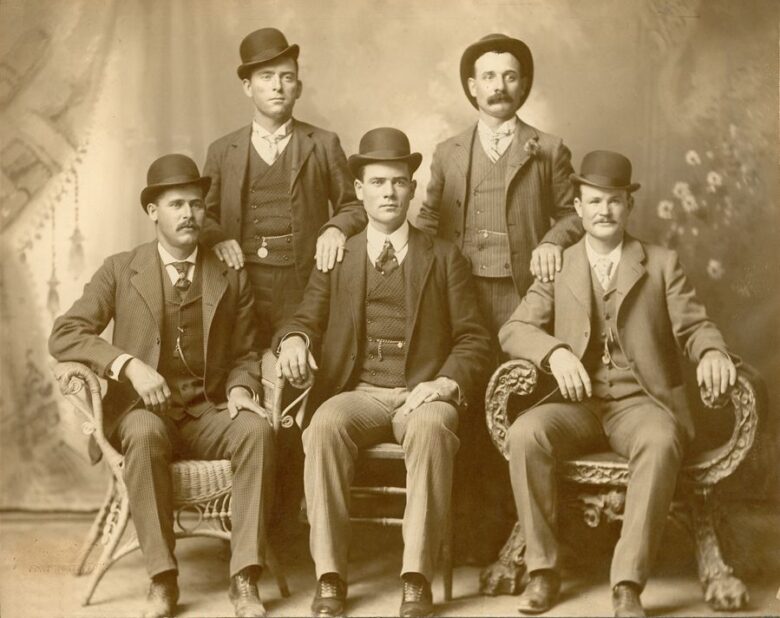
Fort Worth Five
Lawlessness was another defining characteristic of the Old West. The absence of a structured legal system in many areas led to vigilante justice and the rise of famous outlaws. Speaking of outlaws, one iconic image that vividly encapsulates the lawless era of the Old West is the Fort Worth Five Photograph. Taken in 1900, this infamous photo features a group of notorious criminals who were part of Butch Cassidy’s Wild Bunch. The snapshot was actually part of a larger scheme; the gang had assembled in Fort Worth, Texas to lay low, but couldn’t resist the urge to visit a local photography studio and capture the moment. Little did they know, the photograph would end up being plastered on wanted posters, eventually contributing to their capture.
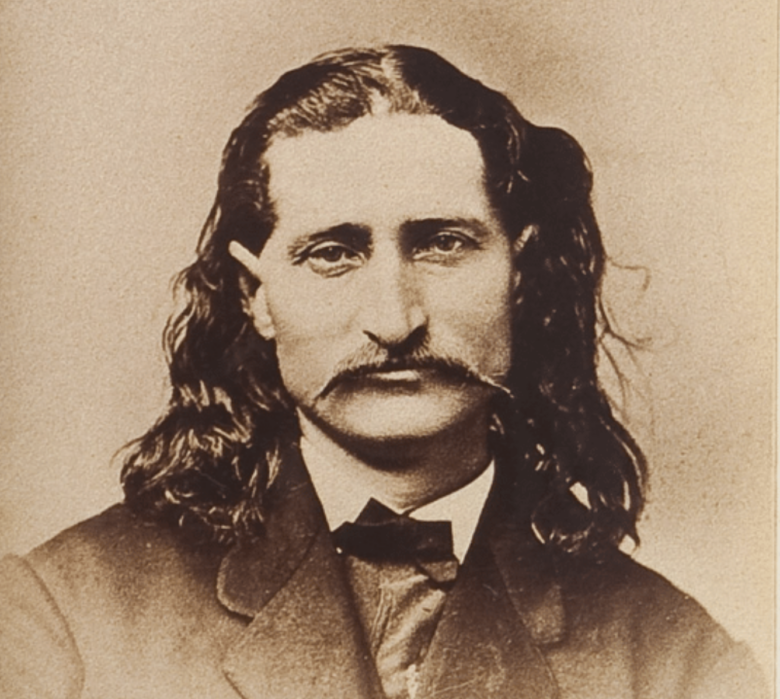
Wild Bill Hickok
Wild Bill Hickok, born James Butler Hickok in 1837, was a legendary gunslinger and lawman of the Old West. Known for his sharpshooting and roles in Buffalo Bill’s Wild West Show, Hickok met his end in 1876 when he was shot while playing poker in Deadwood, South Dakota. His last hand, a pair of aces and eights, became known as the “Dead Man’s Hand.”
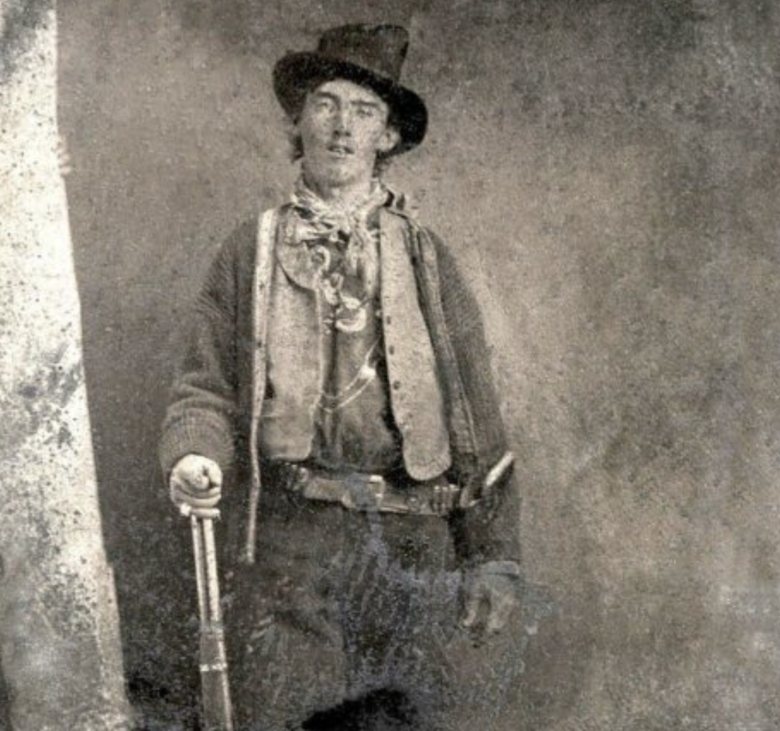
The only surviving authenticated portrait of Billy the Kid
The story of Billy the Kid remains one of the most captivating tales of lawlessness and youthful rebellion in the annals of the West. After evading capture multiple times, he was eventually cornered and killed by Sheriff Pat Garrett, sealing his place as one of the most notorious figures in Western lore.

Calamity Jane at Wild Bill Hickok’s gravesite, Deadwood, Dakota Territory
Following the trails blazed by other colorful characters, Calamity Jane carved her own niche in the Old West. Known for her sharpshooting skills and a penchant for wearing men’s clothing, she befriended the likes of Wild Bill Hickok and earned a reputation as a woman not to be trifled with.

Jesse and Frank James in 1872
Jesse James and his older brother Frank were infamous outlaws who turned train and bank robbing into a high-stakes enterprise. More than just criminals, they were symbols of resistance against the changing times and were often romanticized as Robin Hood figures of the West. These brothers executed daring heists, evaded capture, and became legendary figures that, for better or worse, personify the lawless spirit of the Old West.
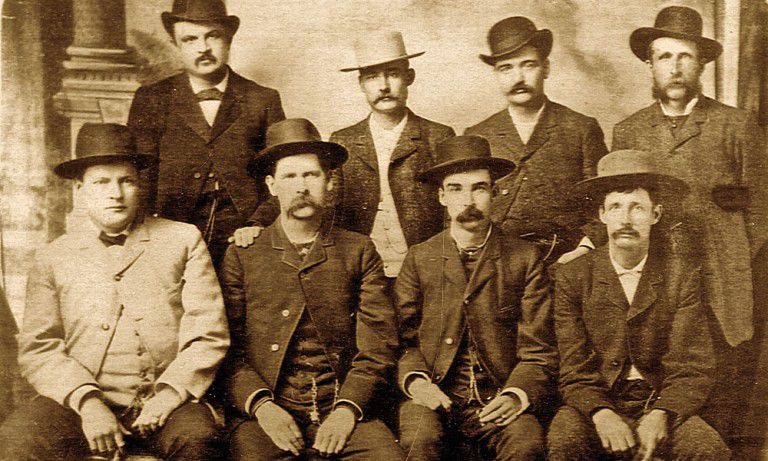
Dodge City Peace Commission
In a landscape where law enforcement was often improvised or downright absent, the Dodge City Peace Commission stands out as a compelling attempt to instill some semblance of order. Dodge City, awash in the flux of cattle drivers, gamblers, and other transient folks, was a fertile ground for lawlessness. Traditional governance structures were lacking, leaving a vacuum that often led to chaos. Into this void stepped the Dodge City Peace Commission, comprising figures like Wyatt Earp and Bat Masterson. They didn’t wait for some higher authority; they took it upon themselves to be the law. This wasn’t mere vigilantism; the commission represented a collective yearning for structure and stability. Their efforts may have been self-appointed, but they laid the groundwork for more formal law enforcement and governance in these turbulent frontier towns.

Wyatt Earp
Wyatt Earp was a significant figure in the Old West, mainly known for his role as a lawman. He served as a deputy marshal in Tombstone, Arizona, and was a key player in the Gunfight at the O.K. Corral. Earp worked alongside his brothers and Doc Holliday to maintain law and order in a time and place where it was sorely lacking.
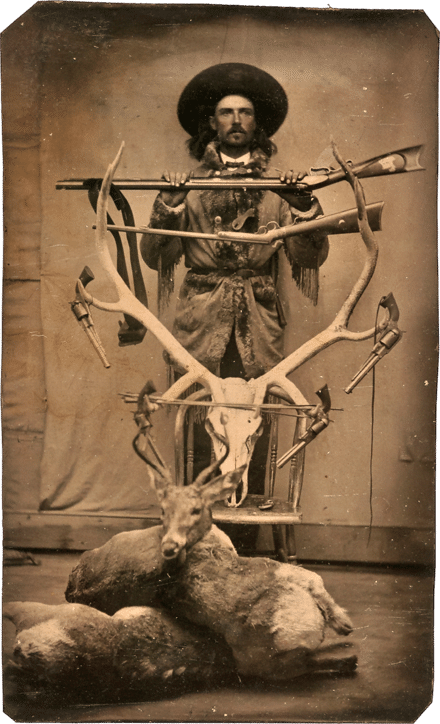
Buffalo Bill in 1871
The period also gave rise to the entertainment industry, with characters like Buffalo Bill Cody and his Wild West Show.

Sitting Bull and Buffalo Bill in 1885
The show was part rodeo, part theater, and all American, providing many Easterners and Europeans their first glimpse into Western life. From roping to sharpshooting, it showcased a variety of frontier skills and included personalities like Sitting Bull and Annie Oakley. Buffalo Bill’s enterprise was more than just entertainment; it shaped perceptions of the American West for generations to come.
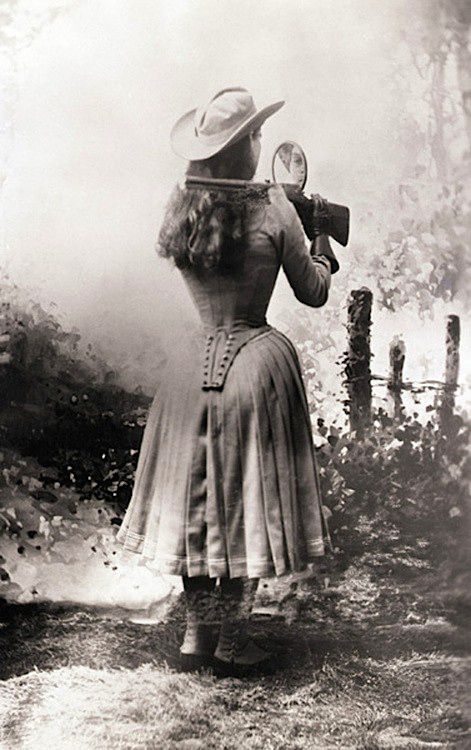
Oakley shooting over her shoulder using a hand mirror
While Buffalo Bill’s show brought the mythical American West to life, performers like Annie Oakley—a sharpshooter with skills that could put most men to shame—added their own incredible personal histories to the spectacle, enriching the narrative and creating legends that would stand the test of time. Her extraordinary talents challenged gender norms of the era and made her one of the most iconic figures in the lore of the American frontier.
Related:
- The dark side of the Roaring 1920s: daily struggles our great-grandparents never talked about
- 10 historical figures who inspired chilling ghost stories
Ask us! What questions do you have about content, strategy, pop culture, lifestyle, wellness, history or more? We may use your question in an upcoming article!
Like MediaFeed’s content? Be sure to follow us.
This article was syndicated by MediaFeed.co