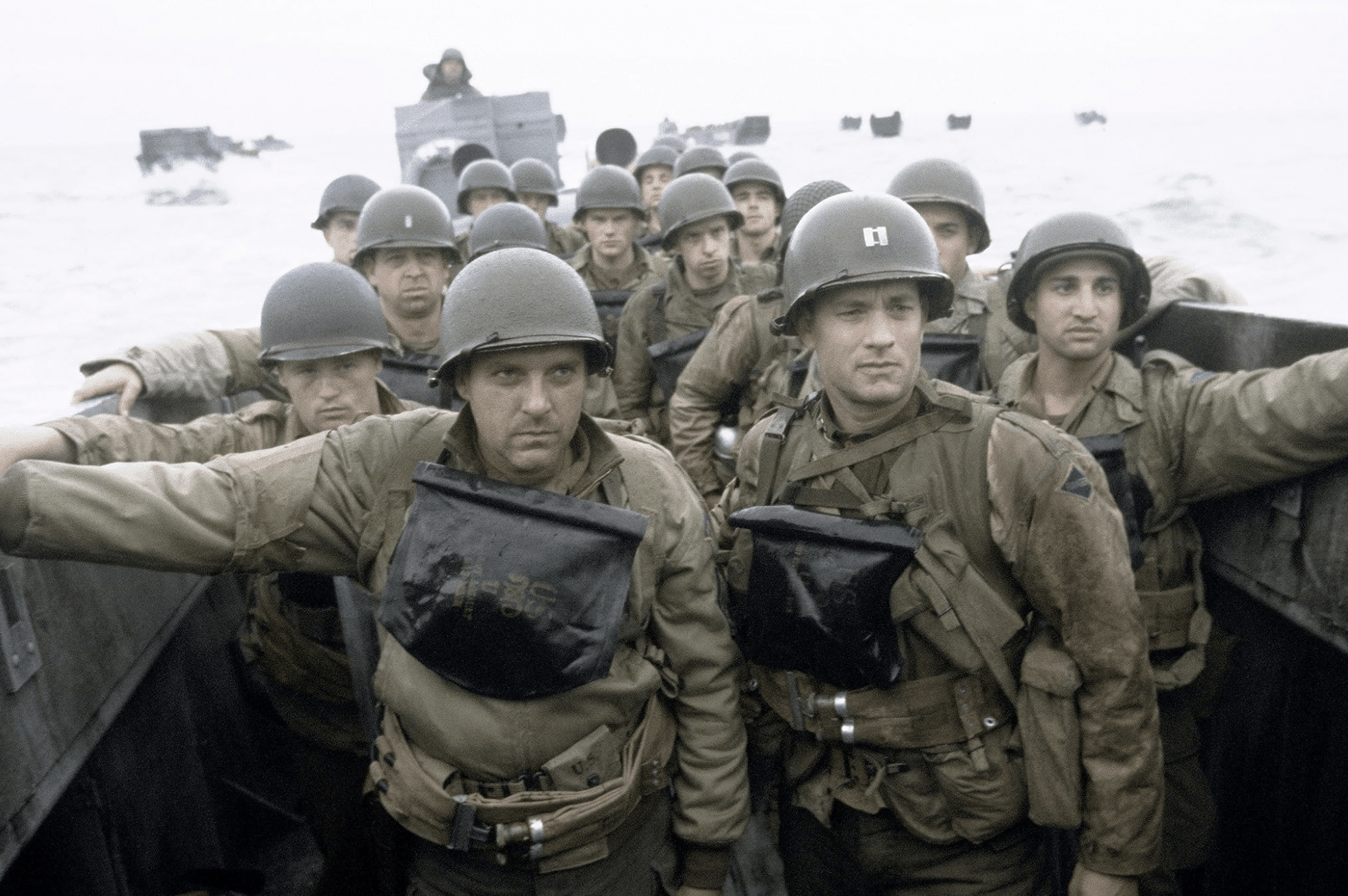
On July 24, 1998, Steven Spielberg released his Saving Private Ryan in American theaters, with Tom Hanks as Captain John Miller and Matt Damon as Private James Francis Ryan.
The film is set in France in 1944, and was inspired by the stories of military families who lost several members during World War II and on a 1944 application of the sole-survivor policy in which the U.S. War Department recalled paratrooper Frederick Niland, the only survivor of four Niland sons, and removed him from combat so he can be with his parents after the death of all of their sons. Later, one of Niland’s brothers, who was believed to be dead, was released from a Burmese prisoner of war (POW) camp and returned home before the end of the war.
For the war scenes, Spielberg wanted to create battle sequences that can really capture the brutality of combat so audiences could feel how it would feel to actually be there. So what Spielberg did was that he put most of the actors through six days of military-style boot camp training, then made sure to shoot the movie in narrative order, so the actors could experience the emotions of loss of their friends as the mission progressed.
“By the time the third day came around, it was cold and miserable and people began to get sick and they just didn’t understand how getting yelled at by this gray-haired guy was going to make them better actors. But in the course of this meeting we had, I said, ‘Look, this is our rehearsal. Never again on this movie will we have it all to ourselves, we’ve got our characters, we’ve got the equipment, we’ve got stuff to learn and it’s not about dialogue. It’s about our own individual motivations and monologues.’ That was what Hanks said in an interview talking about the boot camp training.
Spielberg didn’t storyboard the sequence in advance. Instead, camera operators use handheld devices to film the actors and whatever would catch their attention. Some computer-generated imagery (CGI) elements, such as bullets and body parts, were added to the footage.
The movie grossed over $480 million worldwide, earned 11 Academy Award nominations, and won five Oscars, including Best Director for Spielberg.
Ask us! What questions do you have about content, strategy, pop culture, lifestyle, wellness, history or more? We may use your question in an upcoming article!
Like MediaFeed’s content? Be sure to follow us.
This article was syndicated by MediaFeed.co