Is your partner still interested? The science of senior intimacy
Something shifts in long-term relationships that most people don’t talk about openly enough. The forms of closeness change. What felt like one thing at 35 becomes something different at 65, not necessarily lesser, often deeper, sometimes more complicated, frequently more intentional. The research on what happens to physical and emotional intimacy in older couples is more interesting than most people expect, and considerably more optimistic than the cultural silence on the subject would suggest.
Older couples often report greater satisfaction than younger ones
The National Institute on Aging makes a point that gets overlooked: many older couples find greater satisfaction in their intimate lives than they did when they were younger. Fewer distractions, more time and privacy, and a better ability to express what they want and need. This is not a consolation prize framing. It is a description of conditions that genuinely favor deeper closeness. The couple that has been together for thirty years knows things about each other that a couple together for three years cannot.
Touch matters more than most people realize
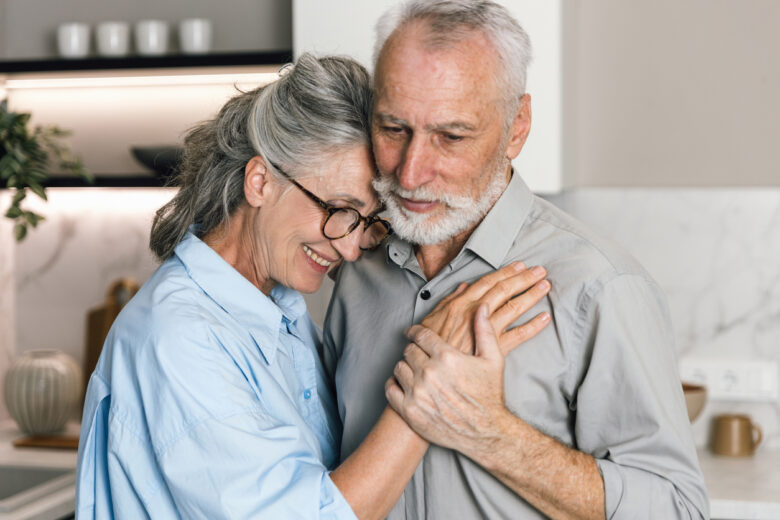
A longitudinal study from Penn State tracking 953 couples with an average age of 71 over five years found that the frequency of affectionate touch between partners predicted increases in relationship satisfaction, life satisfaction and mental health, independent of other physical dimensions of the relationship. Holding hands. A hand on the shoulder. An embrace before sleep. These are not trivial; they are measurable predictors of wellbeing over a five-year horizon.

What the stress research reveals
A study from Humboldt University Berlin, tracking 120 couples with an average age of 71 over seven days, found that on days when older adults experienced greater physical closeness with their partner, women reported less negative emotion and men showed lower cortisol levels, a direct physiological marker of reduced stress. Wishing for closeness that wasn’t happening was associated with higher stress and more negative emotion in both partners. The gap between wanted and experienced closeness has a measurable cost.
What actually changes with age
The NIA is direct: aging brings life transitions that require couples to redefine what closeness means to them. Physical changes are real: medications affect responsiveness, health conditions affect energy, chronic pain changes what is possible. None of this means desire disappears. Couples who navigate that transition together tend to maintain closer bonds than those who don’t.

When one partner’s interest seems to have changed
If your partner seems less engaged or less affectionate, health conditions (depression, hormonal changes, chronic pain, medication side effects) can significantly affect desire without reflecting anything about the relationship itself. The NIA recommends speaking with a healthcare provider when changes are noticed, because many causes are treatable once identified. What looks like disinterest in a partner may be a physical condition that neither of you has named yet.

The bottom line
The science of senior intimacy is not a story of decline. It is a story of change that requires attention, conversation and sometimes medical input. The couples who navigate it best are not the ones who pretend nothing has changed. They are the ones who notice, name it and decide together what to do about it.
Ask us! What questions do you have about content, strategy, pop culture, lifestyle, wellness, history or more? We may use your question in an upcoming article!
Related:
Like MediaFeed’s content? Be sure to follow us.
This article was syndicated by MediaFeed.co.