The evolution of Fourth of July celebrations through the decades
People are often oblivious of the distant past, so if you ask someone what the Fourth of July has always looked like and they’ll describe roughly what it looks like now. Fireworks, barbecue, flags, a parade if the town is small enough. What they’re describing is a recent invention. The celebration of 1777 would be unrecognizable to someone from 1903. The celebration of 1903 would alarm someone from 1950. Every generation inherited the holiday and quietly rebuilt it from scratch while insisting nothing had changed.
1777: The first real celebration
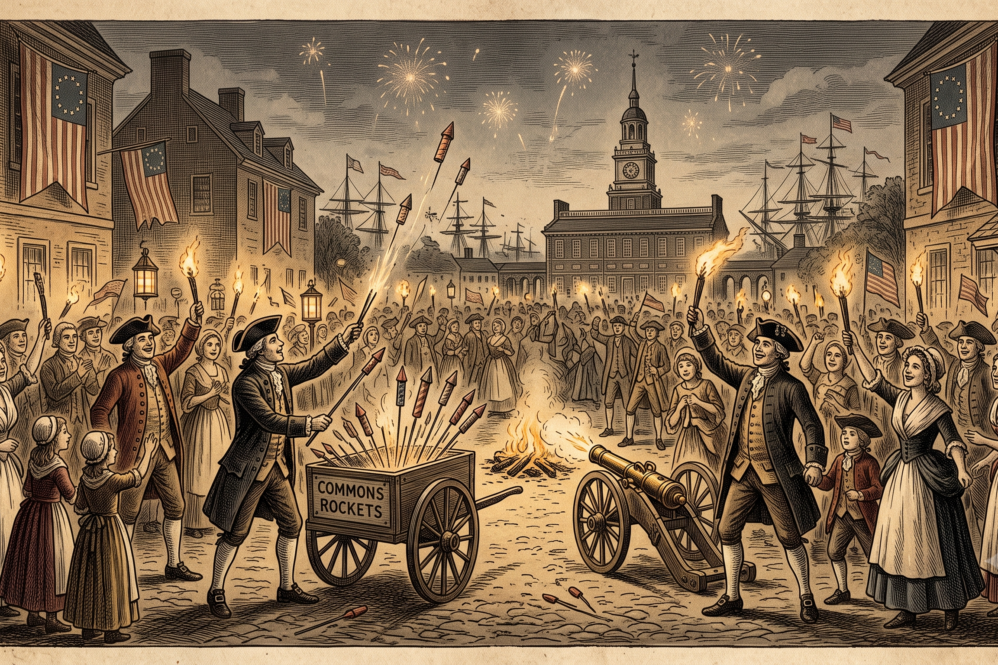
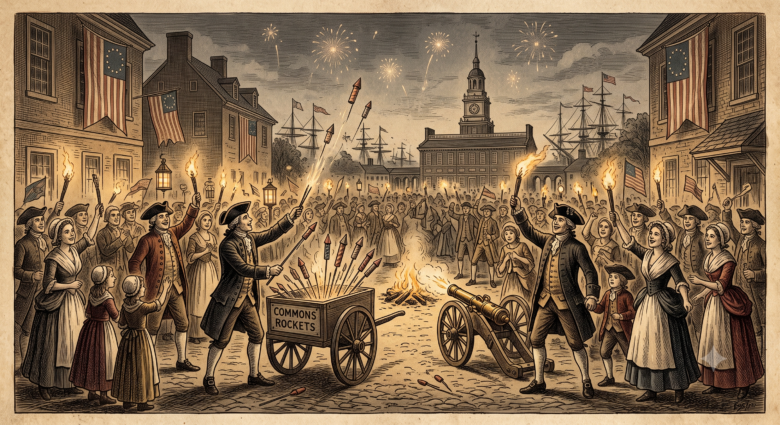
Philadelphia set the template. Bells, cannon fire, thirteen rockets from the commons, ships in the harbor dressed in patriotic colors, the city illuminated, and from the Virginia Gazette, the face of joy and gladness was universal. Mental Floss confirms it was the first organized celebration of its kind. Boston also had fireworks that year. Nobody had to be told to celebrate. Nobody had to be told twice.
1790s: Two holidays, not one
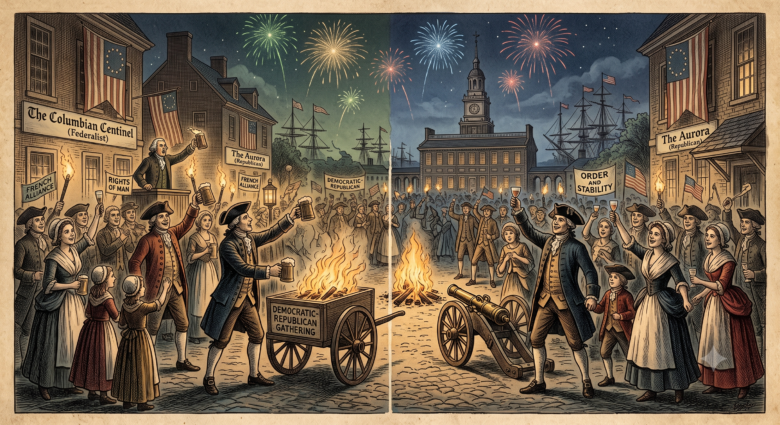
Within a decade of independence, Federalists and Democratic-Republicans were holding separate Fourth of July celebrations, toasting different visions of the country they had just founded, occasionally in the same cities on the same day. The holiday had become an argument before most of the people who signed the Declaration were dead. That tradition has proven remarkably durable.
Early 1900s: 466 dead in one year
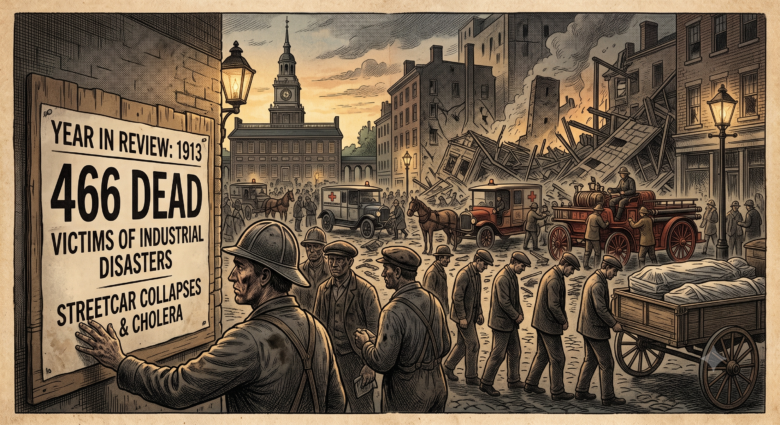
In 1903, Smithsonian documents 466 people died from Fourth of July accidents and 4,449 were injured. Colorado miners who didn’t receive their fireworks order blew up the post office instead. Chicago’s mayor banned cannon fire, explosives and the placing of torpedoes on streetcar tracks. A reform movement emerged under the name Safe and Sane Fourth. They wanted picnics. They largely lost.
1941: Finally official
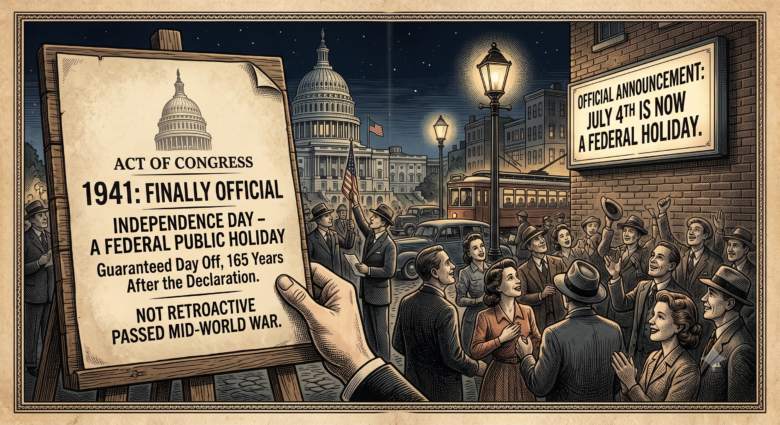
Congress declared Independence Day a federal public holiday in 1941, 165 years after the Declaration was signed. Not retroactive. An act of Congress passed in the middle of a world war to make America’s birthday a guaranteed day off.
Post-WWII: The privatization of patriotism
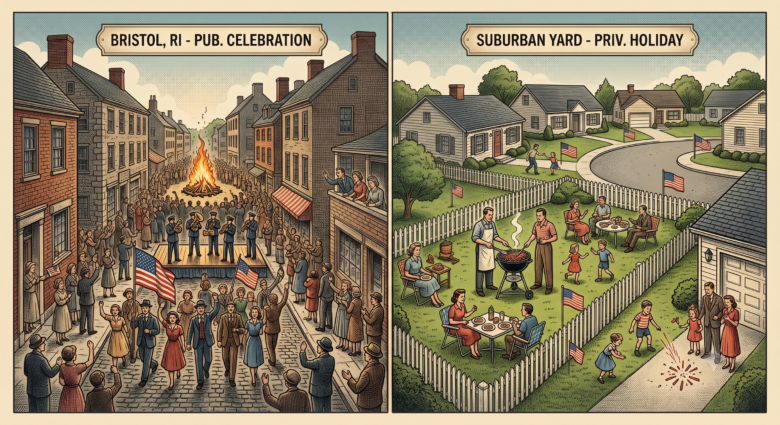
The GI Bill, suburban development and the American lawn moved the celebration into the backyard. The communal bonfire became the charcoal grill. The town square became the cul-de-sac. Bristol, Rhode Island, which has been celebrating since 1785, is one of the few places where the original public model survived. The backyard is the rule. Bristol is the exception.
Now: 15,000 displays and 150 million hot dogs
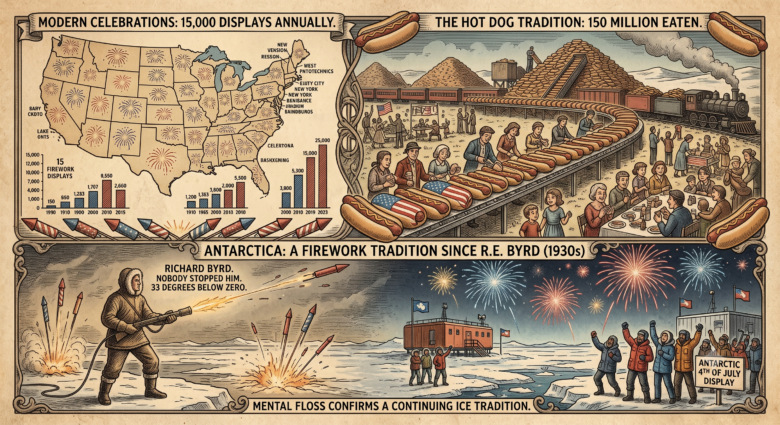
The American Pyrotechnics Association estimates 15,000 fireworks displays annually. Americans eat approximately 150 million hot dogs on the Fourth. Mental Floss documents that fireworks have been set off in Antarctica on the Fourth, at 33 degrees below zero. Richard Byrd did this. Nobody stopped him.
The bottom line
The Fourth of July has never been one thing. It has been a cannon-fire festival, a political argument, a safety crisis, a suburban barbecue, and a televised fireworks spectacular, often in that order, always with people insisting this is how it has always been done.
Ask us! What questions do you have about content, strategy, pop culture, lifestyle, wellness, history or more? We may use your question in an upcoming article!
Related:
- 10 budget-friendly ideas for a star-spangled July 4th bash
- Slang words from 1776 to brush off this July 4
Like MediaFeed’s content? Be sure to follow us.
This article was syndicated by MediaFeed.co.