12 ways to cool down your outdoor space
A shady spot makes your summer better, and it also saves you money on your electric bill. Whether you need a quick fix this weekend or a long-term solution, there’s a shade option for every budget and yard size.
To help you assess your options, we’ve broken these shade solutions down into 3 categories: fast shade solutions, shade structures, and ground-level cooling tips. We’ll wrap up with some ways to choose the shade solution that’s best for you and your yard.
Key Takeaways
- Shade sails and patio umbrellas are the fastest, most affordable options.
- Strategically placed trees reduce annual cooling energy use by 10% to 50%.
- Pergolas and covered patios add livable outdoor space and increase property value.
- Combining structures and plants gives you layered, year-round coverage.
Fast shade solutions
The quickest way to add shade requires no permits and no contractors.
- Patio umbrellas
These are the most affordable way to start. You can expect to spend $50 to $300 for a cantilever or center-pole style. Look for fabric that has a UPF 50+ protection, and make sure you have a heavy base so it stays upright in the wind.
For tight budgets, Wojciech Chrzanowski, president at Euro Paving in Chicago, highly recommends this option.
“If someone gave me a strict $1,000 long-term shade budget, I’d put it into the best large cantilever umbrella they can afford, positioned over the main use zone of the patio, because it gives real targeted coverage, keeps the yard flexible, and doesn’t force a bad permanent layout before the full backyard plan is ready,” he says.
- Shade sails
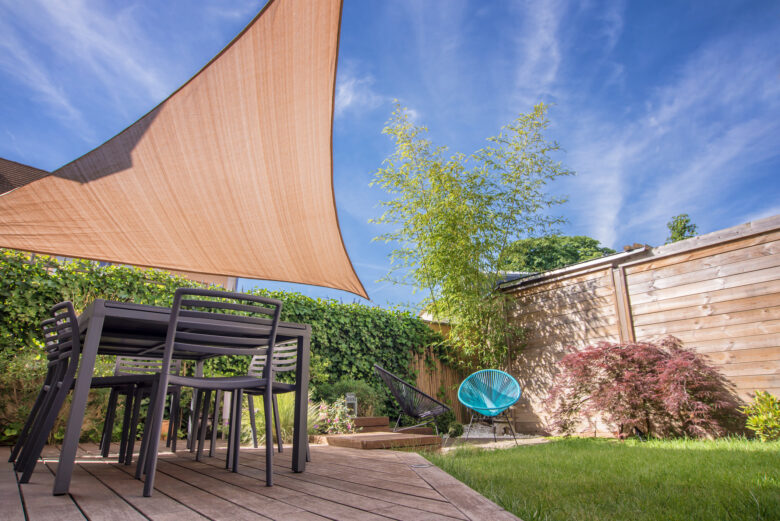
These cover a lot of ground for the money. They are fabric panels you attach to posts, fences, or walls to cover 100 to 300 square feet. A DIY kit costs about $30 to $400, while a professionally installed one can cost $2,000 to $8,000. They are perfect for a dining area or a spot where kids play.
Steve Rice, owner at Lawn Kings in Valencia, California, says you must overbuild the anchor points.
“I use stainless steel turnbuckles, through-bolted structural posts set in concrete footings at least 2-3 feet deep, and I pre-tension the sail to eliminate flapping, which is what actually causes most failures,” Rice says.
- Retractable awnings
You attach these to your house and pull them out over a patio or deck. Manual versions are about $350 to $1,650, and motorized ones start around $2,000. These are great if you want shade in the afternoon but still want to see the sun in the morning.
Rice says that regular cleaning is essential.
“The most common issue I see after a few years is motor failure or fabric wear at the seams,” he warns. “Another frequent issue is mildew buildup if the awning is retracted while damp.”
Shade structures
Permanent shade structures cost more upfront, but they give you a lot more usable space in your yard.
- Pergolas
These have an open frame with a slatted roof. They filter the light rather than fully blocking it entirely, but you can add shade cloth or climbing plants to get more coverage. A DIY kit is about $550 to $4,000, while a professional pergola install can cost $2,100 to $6,000.
- Covered patios
This is the most permanent option. It attaches to your house with a solid roof. A covered patio is the most expensive option, costing between $5,000 and $25,000, but it adds real living space to your home.
- Gazebos
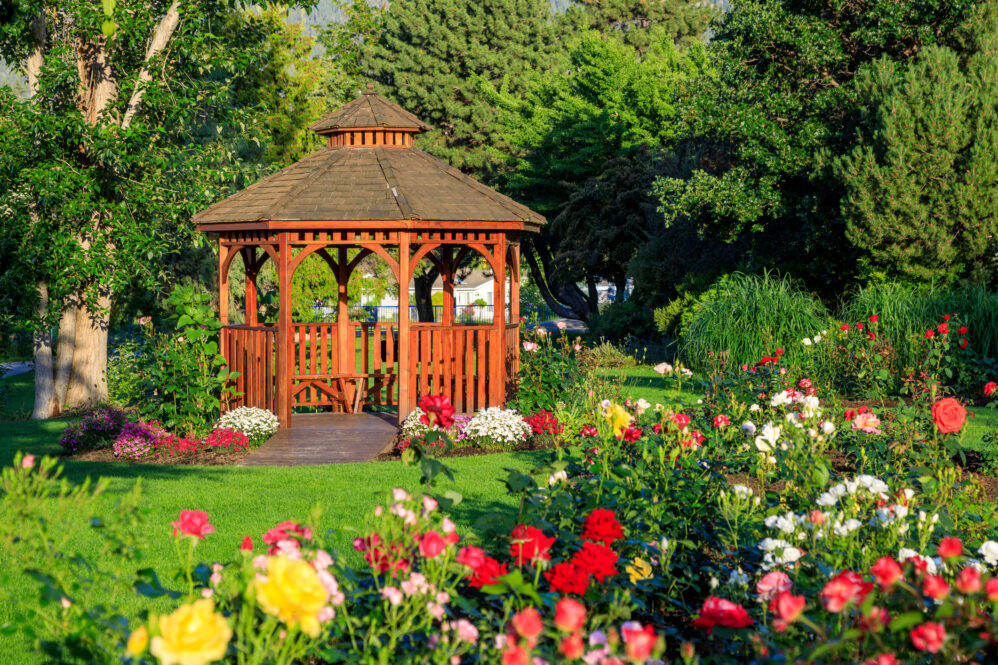
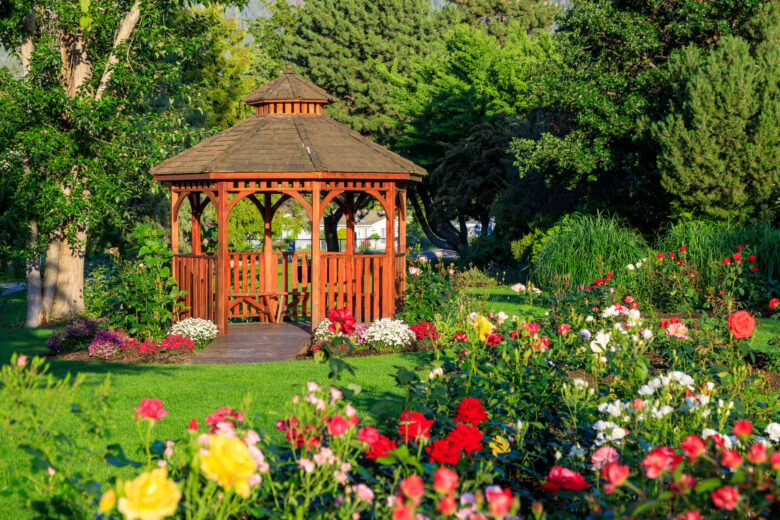
These have a full roof and protect you from the sun and light rain. Prefab kits cost around $1,500, while a custom gazebo build costs about $5,365 to $9,025.
- DIY shade cloth structures
These are just posts with fabric stretched between them. They are a great budget choice for gardens or play areas, and usually cost under $500.
- Shade trees and plants
Trees are the best long-term solution for a yard exposed to a lot of sun. They help with air quality, give wildlife a home, and make your home more valuable.
However, you should be careful when planting fast-growing trees. If planted too close to a house, their fast-growing roots and branches can damage the foundation, roof, and gutters.
Fast-growing shade trees:
- Red maple: Usually grows about 1 to 2 feet per year, with some fast cultivars reaching close to 3 feet, and is reliable across most of the U.S. (zones 3–9)
- Tulip poplar: One of the fastest-growing native hardwoods, often growing 2 to 3 feet per year, so they need a large yard (zones 4–9)
- River birch: Grows about 1.5 to 3 feet per year and is a great choice for wetter areas (zones 4–9)
- Quaking aspen: Grows 3 to 5 feet per year, and it does best in cool climates (zones 1–7)
Matt Lopez, owner at Matt’s Exteriors in Atlanta, says that choosing trees just because they grow fast can cause major problems later on.
“Homeowners put fast growers too close to patios, foundations, gutters, or rooflines, then a few years later they’re dealing with constant debris load, clogged drainage, limbs rubbing shingles, and moisture staying trapped against siding and fascia,” Lopez says.
Tip: Plant trees on the west or southwest side of the space you want to shade. Afternoon sun from the west is when outdoor temperatures peak, and research from USDA Forest Service shows that three well-placed trees, two on the west side of a home and one on the east, can reduce annual air conditioning energy use by about 10% to 50%.
Climbing plants:
You can use vines on a pergola to get full coverage in just 2 to 3 seasons.
- Wisteria: Grows very fast and smells great, but you have to prune it every year
- Clematis: Provides big, showy blooms in shades of purple, pink, and white, and grows 1 to 2 feet per season
- Climbing roses: Tough and fragrant with flowers all summer long, reaching 8 to 12 feet total height over 3 to 5 years
- Trumpet vine: Handles drought well and brings hummingbirds to your yard
- Climbing hydrangea: This one grows a bit slower but is easier to take care of
- Hops: These grow incredibly fast, but they die back when winter hits
You should avoid aggressive vines like wisteria. Mike Werner, CEO at Matera Builders. in Ocean City, New Jersey, strongly advises against them.
“I recommend planting clematis or climbing roses, which provide dense shade without the aggressive, moisture-trapping thicket of Wisteria that can rot wood over time,” Werner says.
Lopez adds that you must keep airflow around the wood.
“Whatever you pick, keep airflow around the members and don’t let growth bury connections, because trapped moisture is what starts rot,” Lopez says.
Ground-level cooling tips
Shade overhead works even better if you deal with the heat coming off the ground.
- Use light colored hardscaping
Light-colored hardscaping absorbs and retains less heat than darker materials like asphalt. “When we replace dark asphalt driveways or patios with lighter Unilock pavers, clients consistently comment on how much cooler the surface feels underfoot in summer,” Chrzanowski says.
- Keep your grass or add ground cover
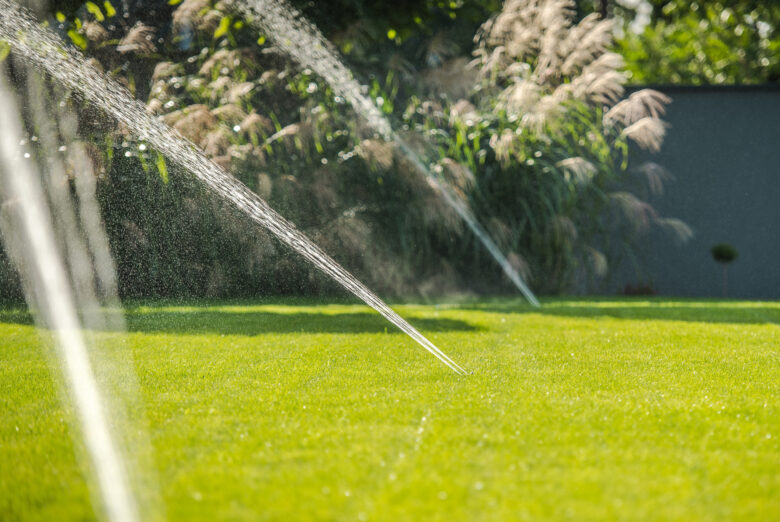
Having a lawn or ground cover can also help cool your yard. Natural grass stays cooler than hard surfaces because it releases moisture into the air. If you want a low-maintenance option that still feels cooler than stone, consider high-quality synthetic turf.
Rice has actually measured the difference in heat.
“I’ve personally measured 15 to 25 degree surface temperature drops when swapping dark stone or asphalt for synthetic turf or lighter pavers, and you can feel that difference immediately in ambient comfort.”
- Mulch your beds
Adding 2 to 3 inches of mulch keeps the soil much cooler. It also helps the soil hold moisture longer, which means roots are less stressed during hot weather.
Mulch can also suppress weeds, reduce erosion, and smooth out temperature swings so the root zone stays more stable through summer heat.
- Misting systems
You can spend $50 to $500, but they work well in dry heat. In humid areas, they often just leave surfaces damp.
“I’ve installed a few where clients loved the cooling effect initially, but later complained about wet cushions and slippery surfaces,” Rice says. “One client ended up using it only during peak heat for short bursts instead of continuously.
How to choose the right shade solution
When picking the best way to cool your yard, there are three main things you need to consider:
- How fast you need it: If you need relief from the sun right now, go with an umbrella, a sail, or an awning. If you can wait a few years, plant some trees and use a temporary structure while they mature.
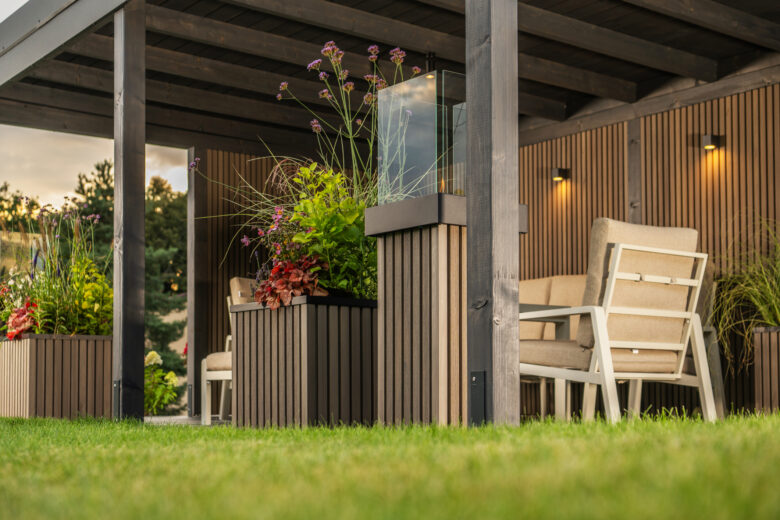
- How much space you have: If you have a small backyard, Rice recommends building up instead of out. “When layering shade in a small backyard, the key is to think vertically and keep it visually light. I usually combine a slim pergola, a small tree with an airy canopy, and low-profile turf or groundcover to avoid clutter,” Rice says.
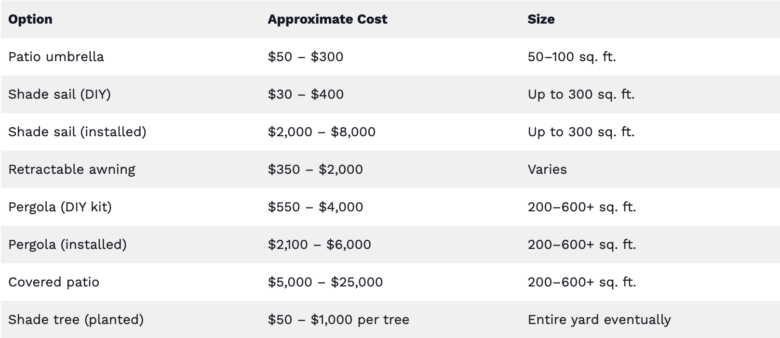
- Your budget: Check the table below to see which options fit your price range.
FAQs
How do I add shade to a backyard with no trees?
Shade sails and pergolas are the best options for treeless yards. For a long-term fix, plant trees on the west side of your yard, but avoid planting fast-growing species too close to your foundation.
Does a pergola provide enough shade?
A standard pergola with slatted rafters blocks about 50% of direct sunlight. You can make it better by adding shade cloth, a retractable canopy, or letting vines fill in the gaps over 2 to 3 seasons.
How close to a house can you plant a shade tree?
You should plant large shade trees at least 20 to 30 feet away from your foundation. For small ornamental trees, 8 to 15 feet is usually fine. Always check how wide the tree will get before you dig.
Take back your yard and stay cool
Getting your backyard shade plan right takes some know-how, the right tools, and time you may not have. You don’t have to spend your whole weekend sweating over a project that might not even work.
Related:
Ask us! What questions do you have about content, strategy, pop culture, lifestyle, wellness, history or more? We may use your question in an upcoming article!
Like MediaFeed’s content? Be sure to follow us.
This article originally appeared on Lawn Love and was syndicated by MediaFeed.co.