Slang words only East Coasters will understand
The East Coast of the United States is not one place. It is Boston and Baltimore, Philadelphia and Providence, New York City and Newark, each with its own accent, its own cultural reference points and its own perfectly specific vocabulary that people two states away will greet with a blank stare. What unites the East Coast linguistically is a shared intensity and a collective disdain for over-explaining anything.
If you have to look any of these up, you are probably from somewhere else.
Wicked
Boston’s most exported word. Not evil but an intensifier. Something wicked cold is very cold. Something wicked good is excellent. Word Smarts notes that there is no clear explanation for when Bostonians started using it this way. It has been in consistent use for generations and shows no sign of retreating.
Jawn
Philadelphia’s gift to the English language. According to Babbel, it is unlike any word in any other language. It evolved from “joint” in the 1970s and now substitutes for nearly any noun. “I’ll be at Will’s jawn. Bring the jawn for my new jawn.” Clear to a Philadelphian.

Jimmies
In most of the country, they are called sprinkles. On the East Coast, particularly in Boston and throughout New England, they are jimmies. Timeout Boston confirms jimmies specifically means the chocolate variety. Ask for sprinkles in Boston and you will be identified as an outsider. The origin of the name is disputed fiercely.
Grinder
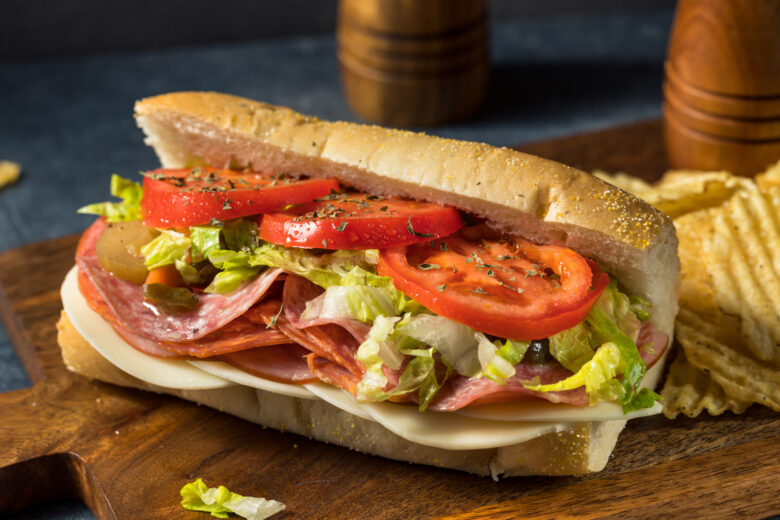
In Connecticut and across much of New England, a submarine sandwich is not a sub. It is a grinder. Per Let’s Learn Slang, Connecticans deploy the term unprompted and defend it. Whether the name comes from the chewing required or from shipyard workers depends on which New Englander you ask.

Pissa
Pronounced “piss-ah” and meaning outstanding. Timeout Boston lists it as one of the defining terms of Boston English. Combined with wicked, it becomes wicked pissa. It lands completely flat outside New England.

Mad
Covered in the New York slang article, but worth noting that mad as a pure intensifier is genuinely an East Coast phenomenon. According to Babbel, it functions as a stand-in for “many” or “very” and is a staple of the New York and New Jersey dialect specifically. “Mad heads were at the party” means a lot of people were there. “That’s mad good” means it is very good. The word has traveled nationally through hip-hop, but its original home is the northeast corridor.

OD
Short for overdose, but not in the medical sense. On the East Coast, to OD on something means to go overboard or to take something too far. Let’s Learn Slang, it can apply to effort, behavior, a reaction or a portion size. “Don’t OD on the hot sauce” means exercise restraint. “He ODed at the party” means his behavior was excessive. The word has migrated from drug-related usage into general everyday speech with no drug-adjacent implication whatsoever.

Wrap up
The East Coast’s linguistic range reflects four centuries of distinct immigration waves and urban cultures. Boston sounds nothing like Philadelphia, which sounds nothing like New York. What they share is a conviction that their way of saying things is correct.
Ask us! What questions do you have about content, strategy, pop culture, lifestyle, wellness, history or more? We may use your question in an upcoming article!
Related:
Like MediaFeed’s content? Be sure to follow us.
This article was syndicated by MediaFeed.co.