
Space phenomena that defy the laws of physics
Physics works and we know this because it has been tested to extraordinary precision across every scale from subatomic particles to galaxy clusters, and it holds. Which makes the things it cannot explain all the more unsettling. The universe appears to contain phenomena that sit at the edges of what current theory can account for, and in some cases, well beyond those edges.
The universe is considerably stranger than the textbooks suggest.
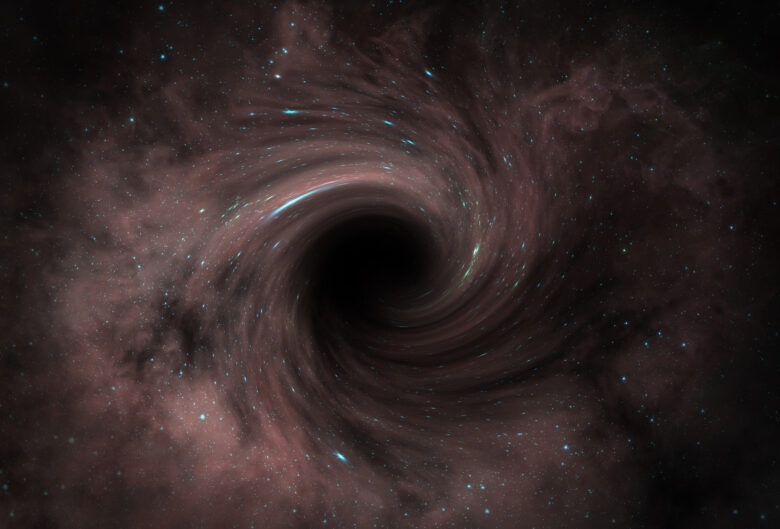
Dark matter
Galaxies rotate at speeds that should tear them apart. The Voyaging documents that stars in outer regions move at roughly the same speed as those near the center, contradicting Newtonian gravity. Dark matter, an estimated 25 percent of the universe’s total mass-energy per Oldest.org, has never been directly detected, does not interact with light, and has no confirmed place in the Standard Model of particle physics.
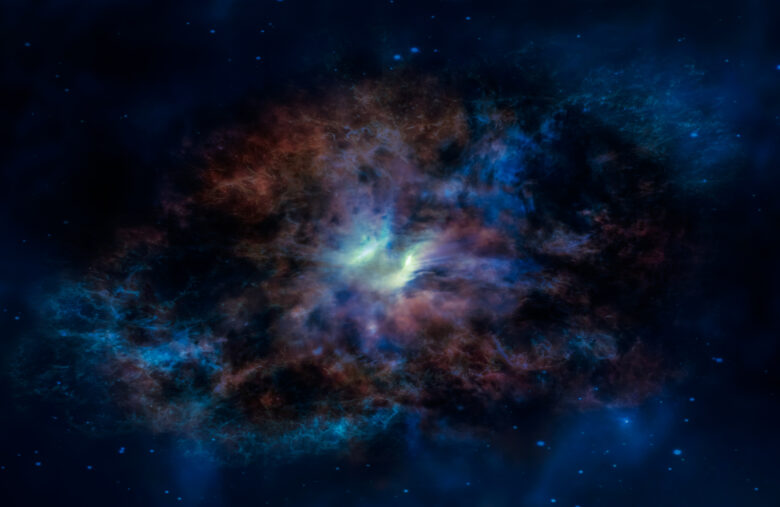
Dark energy
The universe is not just expanding. It is expanding at an accelerating rate. Science Daily notes that 25 years on, this acceleration remains one of the greatest unsolved problems in science. Dark energy, roughly 68 percent of the universe’s total content, has no mechanism that current physics can identify.
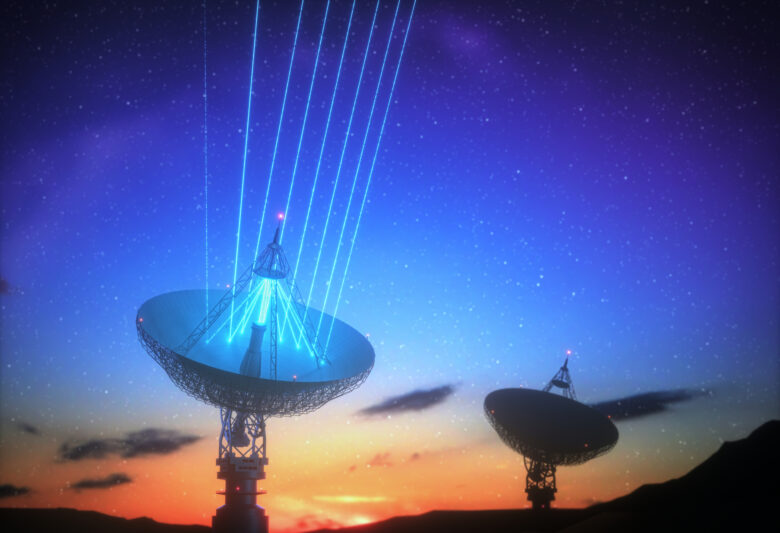
Fast radio bursts
First discovered in 2007, these millisecond pulses of radio energy release more power than the Sun produces in several days, then vanish entirely. Hundreds have since been detected. The Voyaging notes that magnetars explain some but not the diversity of repetition patterns observed, and some repeat on intervals that appear almost regular.

The Fermi bubbles
Two enormous lobes of high-energy gamma radiation extend 25,000 light-years above and below the center of the Milky Way. Oldest.org confirms their edges are sharp enough to suggest a sudden, powerful explosion rather than gradual stellar activity. The leading suspects are a violent outburst from the Milky Way’s central supermassive black hole or intense star formation near the galactic core. No similar structures have been found in any other observed galaxy.

Antimatter asymmetry
The Big Bang should have created equal matter and antimatter. When they meet, they annihilate each other. The Voyaging notes that perfect symmetry would have meant nothing exists. Somehow, matter won, in a way that breaks the fundamental symmetry physics assumes at its foundation.

The Pioneer anomaly
Both Pioneer spacecraft deviated slightly from their predicted trajectories in a way no gravitational model could explain for 40 years. Thermal radiation from the craft itself is now the favored explanation, but the anomaly briefly suggested our understanding of gravity might require revision at very large scales.
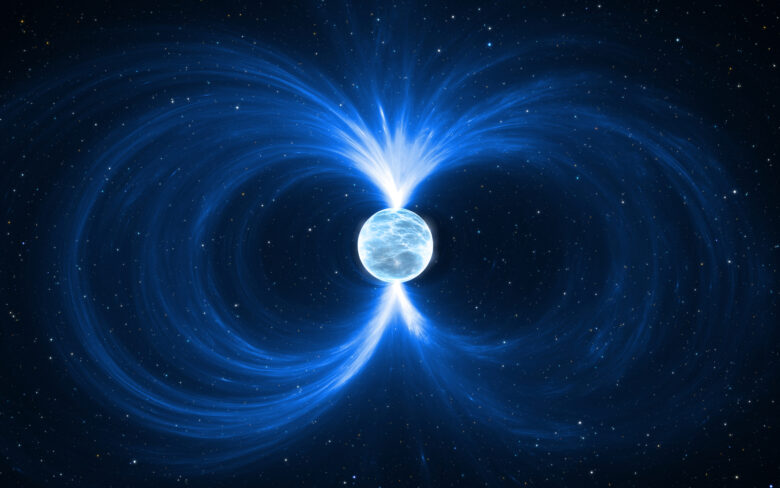
The cold spot in the cosmic microwave background
The cosmic microwave background is the thermal radiation left over from the Big Bang, and it is almost perfectly uniform. Almost. A region of the cosmic microwave background spanning roughly 1.8 billion light-years, documented by Oldest.org, is significantly colder than its surroundings and defies standard cosmological models. Explanations include a supervoid, a vast region largely empty of galaxies, or a collision with another universe. Neither has been ruled out.

Wrap up
Dark matter and dark energy together represent 95 percent of the universe’s total content. The Standard Model of physics, the most precisely tested theory in scientific history, accounts for none of it. The gaps are not minor. They are most of everything.
Ask us! What questions do you have about content, strategy, pop culture, lifestyle, wellness, history or more? We may use your question in an upcoming article!
Related:
- Creepy discoveries that archaeologists still can’t explain
- The hidden & stimulating physics of India’s Ellora caves
Like MediaFeed’s content? Be sure to follow us.
This article was syndicated by MediaFeed.co.