What is return on capital?
Return on Capital (ROC) is a number that measures the profits relative to the amount of money that’s been invested in a business. It’s a way to determine a business’s skill at using capital to generate earnings.
Why is return on capital so important?
Imagine you want to start a lemonade stand. It will cost $100 to buy lemons, a blender, and a desk (and poster board, a chair, sugar, a marker, etc.). If you generate $102 in revenue, that implies $2 in profit and 2% return on capital ($2/$100). Not so impressive. You would be better off buying a Treasury bond that yields 2.5%.
On the other hand, if you generate $200 in sales that implies $100 profit and 100% return on capital.
The power of return on capital is when you reinvest your profits. If you take that $100 and create another stand down the block (and your cousin also works for free), and it also generates $100 in profit, now by the end of year two you’ve earned $200. Take that $200, and reinvest in two more stands, and at the end of year three, you could earn $400. That’s just by starting out from investing $100. It compounds powerfully.
Putting it into practice
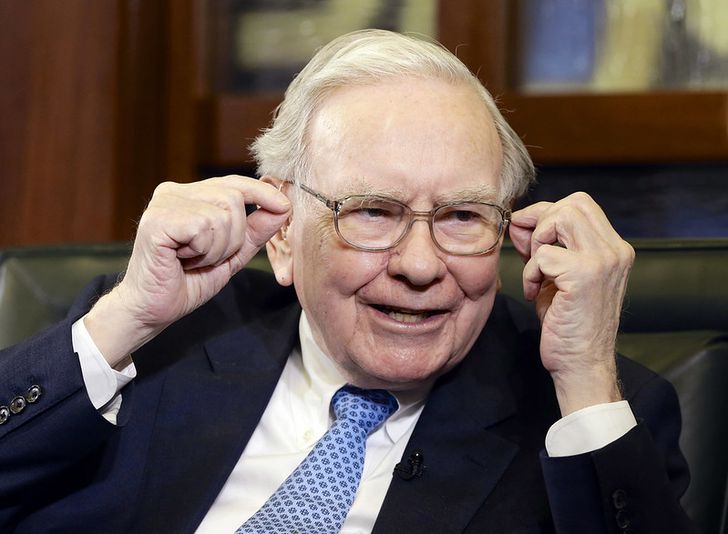
Warren Buffett underscored the importance of ROC in Berkshire Hathaway (BRK.B) subsidiary, See’s Candies, which he described as his “prototype of a dream business” (check out his 2007 Shareholder Letter — worthwhile read).
Buffett noted that in 1972, See’s Candies generated “under $5M” in pre-tax profits and had $8M in capital (only “modest seasonal debt”). Dividing the former with the latter is how Buffett calculated a 60% return on capital.
Subsequently, in 2007, Buffett noted that See’s Candies generated $82M in pre-tax profits and had $40M in capital.
That amounts to an astounding 200% return on capital ($82M/$40M). A major driver of this increase was See’s ability to increase prices.

What’s remarkable is that since its acquisition, Buffett says that See’s generated an aggregate $1.35B in earnings (pre-tax), compared to an *incremental* investment of $32M. That is a multiple of over 40x!
Turning to Apple, in 2007, the year it released its iPhone, the company had pre-tax earnings (operating income) of $3.496B. Since Apple is a considerably more complex business, not only in terms of the physical product but financially speaking in terms of capital structure, than See’s, we may want to exercise some judgment in ascertaining the denominator, capital, as there are a variety of ways to do so. Because Buffett in his 2007 letter alludes to working capital and fixed assets, we will include working capital and PPE to get a value of capital of $14.5B. That results in a return on capital of 30%. In 2019, pre-tax earnings were $41.1B and capital $93B, which equates to a return on capital of 68%.

There are a number of nuances we aren’t addressing that could yield different ROC figures, which would include slightly different measures like Return on Invested Capital (ROIC) and Return on Capital Employed (ROCE).
The main conclusion is that Apple has had a high ROC. Note that the median ROC across all industries was previously estimated at 12%.
As Warren Buffett has suggested, identifying companies with high ROC could be a good place to start.
Keep up with the latest developments, pros/cons, and high quality discussion on Nvstr. If you have any questions on a stock you can also ask former Wall St. pros (e.g., former Institutional Investor-ranked and multi-billion dollar fund analysts)
All views expressed in this article are the authors’ own and do not necessarily reflect the position of Nvstr Financial LLC (“Nvstr”) or its affiliates. This communication is for discussion purposes only. Neither Nvstr nor the authors endorse any linked content. Statements herein may not be representative of the typical experience of Nvstr customers and are no guarantee of future performance or success. The contents of this article and of nvstr.com are not investment advice or a recommendation of a securities transaction or investment strategy. This is not an order, solicitation, or offer to buy or sell securities or business interests. Investing in stocks is inherently risky; using margin may increase these risks.
This article originally appeared on Nvstr.com and was syndicated by MediaFeed.org.
Featured Image Credit: freeimage4life / Flickr.