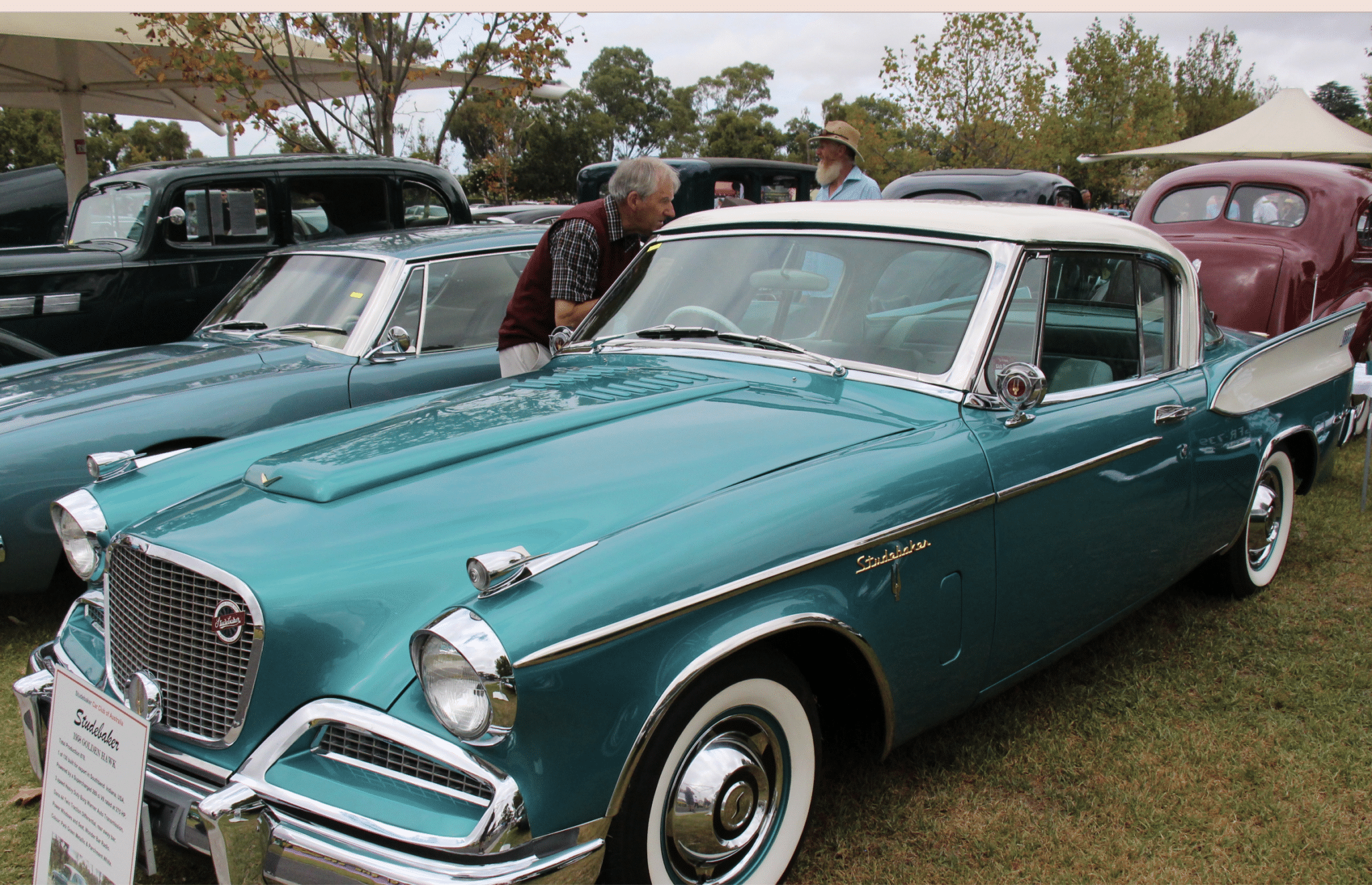
December 9, 1963, marked a turning point in American automotive history as the last U.S.-built Studebaker rolled off the assembly line at the company’s longtime manufacturing headquarters in South Bend, Indiana. The event symbolized the end of an era for one of America’s oldest and most storied vehicle producers. Studebaker’s heritage stretched back more than a century, beginning in the 1850s as a manufacturer of horse-drawn wagons and carriages before transitioning into automobiles in the early 1900s. Throughout its evolution, the company became known for distinctive designs, strong engineering, and a willingness to innovate, even when operating at a scale far smaller than its major competitors.
Studebaker’s history included several memorable contributions to the automotive landscape. In the 1930s, the brand gained attention for its aerodynamic styling and forward-thinking designs under the direction of famous industrial designer Raymond Loewy. After World War II, Studebaker successfully pivoted back to civilian production and introduced models that were widely praised for their modern appearance and engineering features. The company also engaged in bold experimentation, including early work on compact cars and the introduction of performance-oriented models such as the supercharged Golden Hawk. Despite these achievements, Studebaker increasingly found itself fighting an uphill battle.
By the late 1950s and early 1960s, the U.S. auto industry was overwhelmingly dominated by the Big Three—Ford, General Motors, and Chrysler—whose financial resources, dealer networks, and economies of scale gave them decisive advantages. Studebaker, as a smaller independent automaker, faced mounting challenges. Production costs rose, profit margins shrank, and sales grew increasingly inconsistent. Attempts to merge with other automakers, including a brief and troubled partnership with Packard in 1954, failed to deliver the stability the company needed.
The early 1960s brought additional pressures as consumer preferences shifted and competition intensified. Compact cars from both domestic and foreign brands gained popularity, further straining Studebaker’s position. The company struggled to maintain the volume necessary to keep its South Bend operations profitable. After extensive analysis and mounting financial losses, Studebaker announced the closure of the Indiana plant in December 1963. Production was consolidated at its smaller facility in Hamilton, Ontario, where the company continued assembling vehicles until March 1966.
The final Studebaker built in South Bend represented more than just the end of U.S. production—it symbolized the difficulties faced by independent automakers during a period of rapid consolidation and industrial change. The closure marked the loss of thousands of jobs and dealt a heavy economic blow to the South Bend community, where Studebaker had been a major employer for generations. It also served as a broader reminder of the challenges inherent in competing against large, vertically integrated corporations that increasingly defined the automotive market.
For automotive historians and enthusiasts, December 9, 1963, remains a significant and emotional milestone. It highlights both the achievements and vulnerabilities of a company whose legacy extends well beyond its final day of American manufacturing. Studebaker’s story continues to be celebrated for its creativity, resilience, and lasting impact on automotive design and culture.
Related:
- Then & Now: 44 Photos Comparing Car Companies’ Debut vs Latest Models
- Classic Muscle Cars of the ’60s & ’70s
Like MediaFeed’s content? Be sure to follow us.
This article was syndicated by MediaFeed.org.