Famous Boomers you didn’t know were LGBTQ+
Baby Boomers, born between 1946 and 1964, shaped culture, politics, and entertainment in ways that continue to resonate today, defining everything from rock and roll to civil rights movements to the very concept of youth culture as a commercial and social force. This generation produced some of the most recognizable names in music, film, television, literature, and politics, creating the soundtrack, visual language, and political discourse that dominated the second half of the 20th century. However, many of these influential figures lived part or all of their lives in the closet, hiding their LGBTQ+ identities from the public and sometimes from their closest friends and family because the risks of being openly queer during their formative years and early careers were simply too significant to contemplate.
Coming out was far riskier during the peak of Boomer careers than it is today, with homosexuality considered a mental illness by the medical establishment until 1973, sodomy laws criminalizing same-sex relationships in most states until 2003, and social stigma so severe that exposure could mean losing your career, your family, your housing, and your safety. Many Boomer entertainers, artists, and public figures who are now known to be LGBTQ+ spent decades carefully managing their public images, giving vague answers to questions about their personal lives, entering “lavender marriages” or strategic relationships, and living a form of double life where their authentic selves could only emerge in private spaces or within the queer community. Their queer identities often weren’t widely known at the time of their biggest successes, meaning that audiences consuming their art or following their careers had no idea that the person they admired was navigating life as an LGBTQ+ person in an often hostile world.
This article spotlights well-known Boomer figures whose LGBTQ+ identities may surprise readers today, either because they came out relatively late in life, because their coming out didn’t receive widespread attention, or because younger generations simply aren’t aware of their sexual orientation or gender identity. These individuals made significant contributions to their fields while often hiding fundamental aspects of who they were. Understanding their queer identities adds important context to their work and their lives.
Lily Tomlin
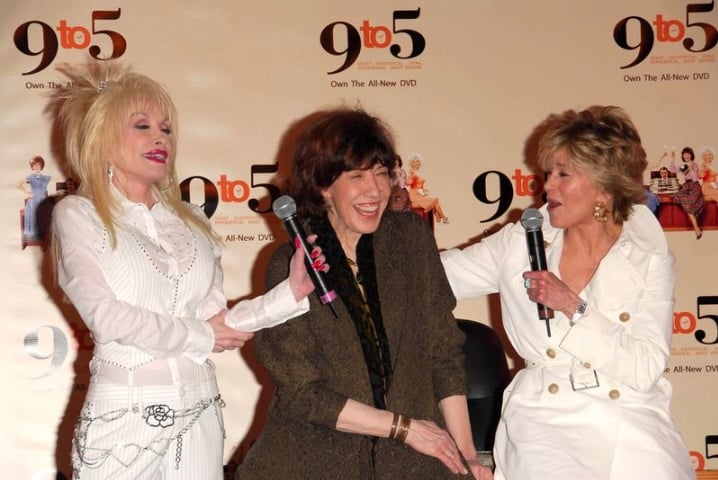
Lily Tomlin became one of America’s most beloved comedians and actresses through her work on “Rowan & Martin’s Laugh-In,” her one-woman shows, and films ranging from “9 to 5” to “Nashville,” creating memorable characters like Ernestine the telephone operator and Edith Ann while becoming a fixture of American comedy for over five decades. Born in 1939 (technically just before the official Boomer generation but close enough to be included in this cohort), Tomlin built a career on sharp observational humor and character work that made her a household name by the 1970s. However, throughout her rise to fame and most of her career, Tomlin’s lesbian identity remained largely unacknowledged publicly, though she lived openly with writer and producer Jane Wagner (whom she eventually married in 2013 after 42 years together) and was known to be gay within entertainment industry circles and the LGBTQ+ community.
Tomlin didn’t formally come out publicly until relatively late in her career, not because she was ashamed but because the entertainment industry climate made being openly gay seem incompatible with mainstream success, particularly for women in comedy. In interviews, she’s discussed how her management advised her to keep her sexuality private, warning that coming out would destroy her career and make her unemployable in Hollywood. For decades, Tomlin navigated this impossible situation by neither confirming nor denying her sexuality publicly, refusing to lie about it but also not making declarations that could have endangered her livelihood. Her eventual openness about her identity, particularly after marrying Wagner, has made her an essential figure for LGBTQ+ visibility in older generations. This demonstrates that it’s never too late to live authentically and that longtime partnerships within the queer community deserve recognition and celebration.
George Takei
George Takei achieved fame as Hikaru Sulu on the original “Star Trek” series, becoming one of the first Asian American actors to have a prominent role on American television and later appearing in Star Trek films and numerous other projects throughout a long entertainment career. Born in 1937, Takei’s early life included being imprisoned with his family in Japanese American internment camps during World War II. This experience shaped his commitment to civil rights and social justice throughout his life. However, for most of his career, Takei kept his sexual orientation private, not publicly coming out as gay until 2005 when he was 68 years old, despite having been with his partner Brad Altman (whom he married in 2008) for nearly two decades.
Takei’s coming out was motivated partly by his opposition to then-California Governor Arnold Schwarzenegger’s veto of same-sex marriage legislation, transforming Takei from simply an actor with progressive politics into one of the most prominent LGBTQ+ activists of his generation. Since coming out, Takei has used his platform (including his massive social media following) to advocate for LGBTQ+ rights, marriage equality, and broader social justice issues, becoming particularly beloved among younger generations for his humor, his progressive politics, and his willingness to speak openly about his experiences as a gay Asian American man. His Star Trek role has taken on additional significance in retrospect, with Sulu’s position as a respected officer on the Enterprise representing the kind of normalized LGBTQ+ presence in positions of authority and respect that wouldn’t become common in mainstream media until decades later.
Barry Manilow
Barry Manilow became one of the best-selling artists of the 1970s and 1980s with a string of hit songs, including “Mandy,” “Copacabana,” and “Can’t Smile Without You,” selling over 85 million records worldwide and becoming a staple of adult contemporary music with a fanbase that remained devoted through the decades. Born in 1943, Manilow built his career on romantic ballads and upbeat pop songs, which made him a favorite of a primarily female audience. He performed in Las Vegas residencies and concert tours that demonstrated his enduring appeal. However, throughout his decades-long career, Manilow remained private about his personal life and sexuality, neither confirming nor denying speculation about his sexual orientation despite persistent rumors and questions from fans and media.
It wasn’t until 2017, when Manilow was 73 years old, that his marriage to longtime manager Garry Kief (a relationship that had lasted over 40 years) became public knowledge, confirming what many had suspected but what Manilow had never publicly acknowledged. In interviews after the revelation, Manilow explained that he had kept his sexuality private because he worried about disappointing his fans, particularly the women who formed the core of his audience and who might feel betrayed to learn that the man singing romantic songs to them was gay. This reasoning reveals the complex calculations that LGBTQ+ entertainers, particularly those whose appeal is partly based on romantic or sexual attraction, have had to make about whether coming out would destroy the illusion that audiences wanted to believe. Manilow’s late-life openness about his marriage and sexuality has been met mainly with support from fans, suggesting that his fears about audience rejection may have been unfounded and raising questions about how many years of authentic living he sacrificed to protect a career that might not have been threatened after all.
Elton John
Elton John became one of the biggest music stars in the world starting in the 1970s, with a catalog of hits written with lyricist Bernie Taupin that includes “Rocket Man,” “Tiny Dancer,” “Candle in the Wind,” and dozens of other songs that have become part of the soundtrack of multiple generations. Born in 1947, John was flamboyant in his stage presence from early in his career, with elaborate costumes, oversized glasses, and theatrical performances that pushed boundaries of masculine presentation in rock music. However, his sexuality was a subject of confusion and evolution publicly, with John initially identifying as bisexual in a 1976 interview (a revelation that did damage his career in the United States, where radio play and record sales declined). Marrying a woman (Renate Blauel) in 1984 in what he later acknowledged was an attempt to hide his sexuality, and finally coming out as gay in 1988 after his divorce.
John’s journey reflects the complexity of sexual identity, the pressure that celebrity and social expectations place on that identity, and how difficult it can be to live authentically when the stakes include career success, public perception, and personal relationships. Since coming out as gay and particularly since entering into a civil partnership (later converted to marriage) with David Furnish in 2005, John has been open about his sexuality, his relationship, and his family (he and Furnish have two sons via surrogate), using his platform to advocate for LGBTQ+ rights and HIV/AIDS awareness through his Elton John AIDS Foundation. His Oscar-winning biopic “Rocketman” (2019) depicted his sexuality and his struggles with it honestly, introducing younger generations to the reality that even someone as seemingly liberated as Elton John faced tremendous pressure to hide who he was and suffered personally from internalized homophobia and societal stigma.
k.d. lang
k.d. lang emerged from the Canadian music scene to become a country and pop artist known for her powerful voice, her androgynous presentation, and eventually for her openness about being a lesbian at a time when country music was (and largely remains) deeply conservative. Born Kathryn Dawn Lang in 1961, making her one of the youngest Boomers, lang initially worked within country music traditions while pushing against its conventions with her appearance, her vocal style, and her artistic choices. Her 1992 album “Ingénue” achieved mainstream pop success with the hit “Constant Craving,” establishing her as a significant artist beyond the country genre that had been ambivalent about her unconventional approach.
Lang came out publicly as a lesbian in a 1992 interview with The Advocate magazine, a revelation that was celebrated within the LGBTQ+ community as a brave act of visibility, but that effectively ended her country music career as country radio stations stopped playing her music and country audiences rejected her. Her coming out was particularly significant because she was at the peak of her commercial success and because she represented a rare example of an openly LGBTQ+ person in country music, a genre that has historically been hostile to queer artists despite having many closeted LGBTQ+ performers and fans. Lang’s willingness to be open about her sexuality despite the professional costs, her refusal to soften her androgynous presentation or apologize for who she was, and her continued artistic success in pop and adult contemporary music made her an essential figure for LGBTQ+ visibility in the 1990s and a pioneer whose courage paved the way for later LGBTQ+ country artists.
Freddie Mercury
Freddie Mercury, born Farrokh Bulsara in 1946, became one of rock music’s most legendary frontmen as the lead singer of Queen, with his four-octave vocal range, his theatrical stage presence, and his songwriting producing classics like “Bohemian Rhapsody,” “We Are the Champions,” and “Somebody to Love.” Mercury’s sexuality was complicated and often misunderstood, with him having relationships with both women and men throughout his life, refusing to label himself publicly, and maintaining a level of privacy about his personal life even as rumors circulated and his association with the gay community became increasingly apparent. His flamboyant stage persona, his mustache and leather look in the 1980s, and his presence in gay clubs and venues made his queerness an “open secret” within the music industry and among fans. However, he never formally came out or discussed his sexuality in interviews.
Mercury’s death from AIDS-related illness in 1991 brought his sexuality into public discussion in ways it hadn’t been during his life, with his illness and death becoming part of the broader conversation about the AIDS epidemic that was devastating the LGBTQ+ community. In retrospect, Mercury is recognized as bisexual or gay (depending on which accounts and time periods you reference). However, he himself resisted labels and seemed to understand his sexuality as fluid rather than fixed. The 2018 biopic “Bohemian Rhapsody,” despite its flaws and historical inaccuracies, introduced younger generations to Mercury’s story and his queerness, making him a queer icon for Gen Z audiences who weren’t alive during his lifetime. Mercury’s legacy is complicated by the fact that he never became an activist for LGBTQ+ rights and seemed uncomfortable with the idea of being a spokesperson. Still, his mere existence as a queer person at the pinnacle of rock stardom, his refusal to conform to heteronormative expectations, and his artistry that transcended categories made him significant for LGBTQ+ representation, whether he intended that role or not.
Armistead Maupin
Armistead Maupin became one of the most essential queer voices in American literature through his “Tales of the City” series, which began as a serialized column in the San Francisco Chronicle in 1976 and expanded into nine novels that chronicled the lives of residents of 28 Barbary Lane and the broader LGBTQ+ community in San Francisco across several decades. Born in 1944 in North Carolina and raised in a conservative Southern family, Maupin’s journey to becoming an openly gay writer living in San Francisco involved coming out relatively late (in his early 30s) after years of trying to conform to heterosexual expectations, including serving in the Navy and working as a conservative journalist. His “Tales of the City” series became groundbreaking for its matter-of-fact inclusion of gay, lesbian, bisexual, and transgender characters living their lives, falling in love, dealing with families, and navigating the AIDS crisis, presenting queer life as simply part of the human experience rather than as exotic, tragic, or shameful.
Maupin’s work provided representation and visibility for LGBTQ+ people at a time when positive queer characters were rare in mainstream literature. His serialized format meant that straight readers of the San Francisco Chronicle were exposed to queer characters and storylines in their daily newspaper in ways that humanized LGBTQ+ people and their experiences. His own coming out and his openness about being a gay man in interviews and public appearances made him an essential figure beyond his writing, demonstrating that LGBTQ+ people could be successful, happy, and create art that reached broad audiences. The various adaptations of “Tales of the City” for television, including the original PBS miniseries in 1993 and the Netflix revival in 2019, have introduced his work to new generations and demonstrated the enduring appeal of his characters and his vision of San Francisco as a place where queer people could build chosen families and live authentically.
Jewelle Gomez
Jewelle Gomez, born in 1948, is an author, activist, and cultural critic whose work explores the intersections of race, gender, and sexuality through fiction, poetry, and essays that center on Black lesbian experiences. Her most famous work, the novel “The Gilda Stories” (1991), reimagined vampire mythology through the lens of a Black lesbian protagonist who lives for over two centuries, using the vampire narrative to explore themes of community, survival, chosen family, and resistance to oppression. Gomez’s writing and activism have been crucial to Black lesbian feminist thought, addressing how multiple marginalized identities intersect and how Black queer women navigate spaces that may be racist within LGBTQ+ communities or homophobic within Black communities.
As an activist, Gomez has worked on numerous issues affecting LGBTQ+ people and communities of color, serving on boards and organizations focused on arts funding, LGBTQ+ rights, and racial justice. Her visibility as a Black lesbian in literature and activism has been crucial for representation in fields where Black queer women are often marginalized or erased. Her work has also influenced younger generations of Black queer writers and activists who see her as a pioneer. While she may be less widely known than some other figures on this list, her contributions to LGBTQ+ literature and activism have been significant, particularly in creating space for Black lesbian voices and perspectives that mainstream LGBTQ+ movements have often overlooked.
Larry Kramer
Larry Kramer, born in 1935 (just before the official Boomer generation but close enough to be included), became one of the most critical and controversial voices in the fight against AIDS and for LGBTQ+ rights through his confrontational activism, his angry eloquence, and his refusal to be polite about the fact that government inaction was allowing thousands of gay men to die. His play “The Normal Heart” (1985) depicted the early days of the AIDS crisis in New York City and his own experiences trying to get the gay community, the medical establishment, and the government to take the mysterious illness seriously, becoming one of the most essential pieces of AIDS literature and educating countless people about the crisis. Kramer co-founded Gay Men’s Health Crisis (GMHC) in 1982, one of the first organizations to provide services to people with AIDS, though he later left after disagreements about the organization’s approach.
He later founded ACT UP (AIDS Coalition to Unleash Power) in 1987, the confrontational activist organization that used civil disobedience, media-savvy protests, and aggressive tactics to force pharmaceutical companies, government agencies, and society at large to take AIDS seriously and respond with urgency rather than apathy. Kramer’s anger, which manifested in speeches, essays, and protests that called out everyone from the gay community itself to President Reagan to pharmaceutical executives, made him a controversial figure even within LGBTQ+ activism, but his rage was proven justified as tens of thousands died. At the same time, treatments that could have been developed faster sat in bureaucratic limbo. His death in 2020 prompted widespread recognition of his role in forcing America to confront AIDS, in saving countless lives through his activism, and in demonstrating that sometimes anger and confrontation are not just appropriate but necessary responses to injustice.
Tammy Baldwin
Tammy Baldwin, born in 1962 (making her one of the youngest Boomers, on the cusp of Generation X), made history multiple times through her political career: first as the first woman elected to Congress from Wisconsin, then as the first openly lesbian woman elected to Congress in 1998, and finally as the first openly LGBTQ+ person elected to the U.S. Senate in 2012. Baldwin’s willingness to be open about her sexual orientation while running for and serving in high-profile political offices broke barriers and demonstrated that being openly LGBTQ+ was no longer necessarily disqualifying in American politics, at least in certain states and constituencies. Her success required courage, as she faced attacks based on her sexuality from opponents and had to navigate being a visible representative of LGBTQ+ people, whether she wanted that role or not.
As a Senator, Baldwin has worked on healthcare, economic, and civil rights issues. She has also been a consistent voice for LGBTQ+ equality, using her position to advance protections and visibility for queer people in ways that are only possible when LGBTQ+ people hold actual political power rather than relying on allies. Her presence in the Senate provides representation that demonstrates to LGBTQ+ young people they can aspire to any position, including the highest levels of government. Her legislative accomplishments show she is effective beyond merely being a symbolic first. Baldwin’s career represents how far LGBTQ+ political participation has come in a relatively short time, from an era when being openly gay was political suicide to one where it’s possible (though still difficult) to be elected to national office while being open about one’s identity.
David Geffen
David Geffen, born in 1943, became one of the most powerful and wealthy figures in the entertainment industry. He achieved this through his work as a music executive, film producer, and co-founder of DreamWorks Studios, building a fortune estimated in the billions through his business acumen and his ability to identify talent. Geffen founded Asylum Records and Geffen Records, working with artists including The Eagles, Joni Mitchell, Guns N’ Roses, and Nirvana, and later moved into film production and Broadway, succeeding in multiple entertainment sectors. However, for much of his career, Geffen was not publicly out as gay despite his homosexuality being known within entertainment industry circles, remaining relatively private about his personal life while building his business empire.
Geffen came out publicly in the 1990s and has since been open about his sexuality, becoming a significant philanthropist who has donated hundreds of millions of dollars to causes including LGBTQ+ organizations, medical research, and educational institutions. His wealth and power make him one of the most influential openly gay men in America. However, his billionaire status and his business practices have also made him a controversial figure who draws criticism from the left for representing the kind of wealthy elite whose interests don’t always align with broader LGBTQ+ community needs. Geffen’s story demonstrates that LGBTQ+ people have existed at the highest levels of business and entertainment for decades, often hiding in plain sight because being openly gay was seen as incompatible with that level of success, and that coming out as a wealthy, influential person involves different risks and calculations than coming out as someone with less privilege and protection.
Angela Davis: Scholar, activist, and queer icon
Angela Davis, born in 1944, is best known as a radical political activist, scholar, and author associated with the Black Panther Party and Communist Party. She became an icon of 1960s and 1970s activism through her involvement in civil rights, prison abolition, and revolutionary politics. Her activism led to her being charged with conspiracy in connection with a courtroom shooting, spending time in jail, and ultimately being acquitted in a case that became an international cause célèbre and made “Free Angela Davis” a rallying cry for the left. For decades, Davis was recognized primarily for her race-based activism and her Marxist politics, with her personal life remaining relatively private and her sexuality not being a significant part of her public identity.
In recent years, Davis has spoken more openly about being queer and about how her sexuality intersects with her other identities and her political work. However, she has also emphasized that she doesn’t center her identity around sexuality and that she understands queerness as part of a broader radical politics rather than as a separate issue. Her discussion of queerness has been primarily in academic and activist contexts rather than in mainstream media, meaning that many people who know her name and her political legacy may not know about this aspect of her identity. Davis’s queerness adds another dimension to understanding her politics and her role in intersectional activism, and her willingness to discuss it (even if not prominently) contributes to the visibility of older Black queer women in political movements.
Conclusion
These Boomer LGBTQ+ figures were pioneers in their own right, often paving the way for younger generations despite facing enormous risks and having to navigate their careers and lives in eras when being openly queer could mean losing everything. They achieved success in entertainment, music, literature, activism, and politics while hiding or minimizing fundamental aspects of who they were, demonstrating that LGBTQ+ people have always possessed the talent, drive, and creativity to reach the highest levels of their fields even when society told them they were disordered, immoral, or unworthy. Their eventual coming out, whether during their careers or after retirement, and whether by choice or by circumstance, adds important context to their work and lives, helping us understand the pressures they faced and the courage it took to live authentically.
Many of these figures didn’t just come out but became activists and advocates once they did, using their platforms and their privilege to advance LGBTQ+ rights and visibility in ways they couldn’t when they were closeted. This activism represents a form of paying it forward, using the security and success they achieved to make life easier for younger LGBTQ+ people, to challenge the systems that forced them to hide, and to create the visibility that they didn’t have when they were young. Their work has contributed to the legal, social, and cultural changes that have made life better for LGBTQ+ people, even as significant challenges remain.
Related:
- Why does the LGBT+ community love The Golden Girls?
- The 15 things you’d instantly recognize if you grew up in the ‘80s
Like MediaFeed’s content? Be sure to follow us.
This article was syndicated by MediaFeed.org.