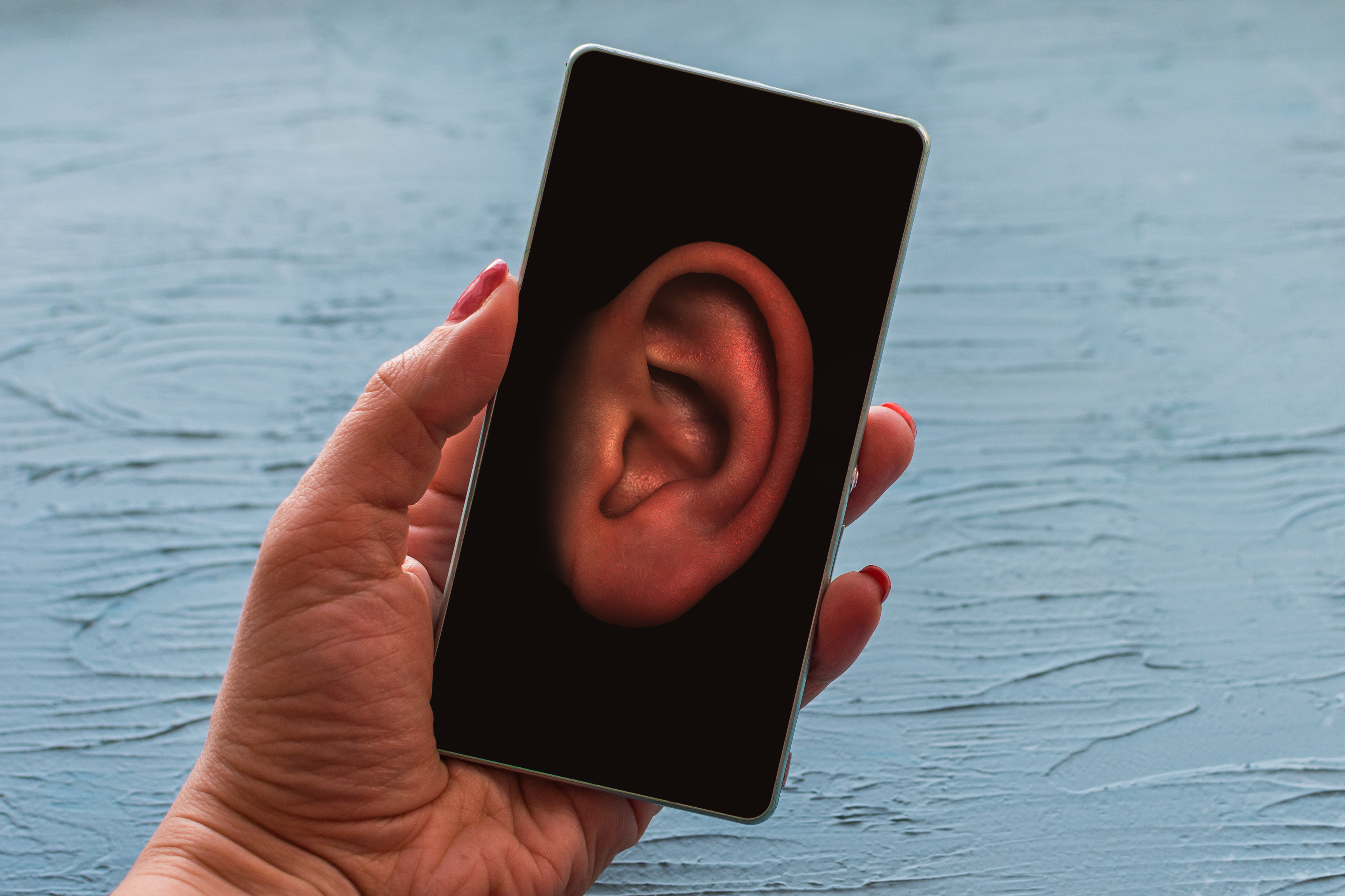
Is your phone really listening to you? The truth behind those creepy coincidences
The unsettling experience of discussing a niche topic in conversation and immediately seeing related advertisements on your phone has become so common that most smartphone users have their own examples. Mentioning a vacation destination you’ve never searched for online, then seeing travel ads for that exact location within hours, creates the visceral sense that devices are actively eavesdropping on private conversations. The product you casually mentioned to a friend, which suddenly appears in your social media feed, confirms fears of technological surveillance.
The natural conclusion people draw from these experiences is that “my phone is listening to me,” with device microphones constantly recording ambient conversations to feed advertising algorithms. This surveillance theory feels intuitively correct given the uncanny accuracy of the targeting and the timing that makes coincidence seem impossible. The creepiness factor intensifies when the ads appear for things you only thought about rather than discussed aloud, suggesting mind-reading capabilities beyond simple audio monitoring.
Devices are not usually “listening” in the way people assume, yet these “coincidences” result from highly sophisticated data collection networks and psychological biases that make random occurrences seem meaningful. The actual surveillance mechanisms are simultaneously less intrusive in some ways and more comprehensive in others than simple microphone eavesdropping. Understanding what’s genuinely happening requires examining both the technical realities of data collection and the cognitive biases that shape our interpretations of targeted advertising.

Common examples of creepy targeting
Discussing a rare holiday destination with friends and seeing travel advertisements for that specific location within hours creates the impression that devices captured the conversation and transmitted it to advertisers. The specificity of the targeting and the immediate timing make alternative explanations seem implausible. These experiences occur frequently enough that they’ve become a standard topic of suspicion in conversations about technology companies.
Seeing product advertisements immediately after only thinking about items without any online searches or verbal mentions pushes the creepiness into seemingly telepathic territory. The appearance of ads for friends’ recent purchases or interests on your own devices suggests that social connections are being monitored and exploited to predict your likely interests. Suggested searches or autofill text that seems to anticipate your exact query before you finish typing creates the impression of mind-reading through predictive algorithms.

The listening myth versus reality
Smart speakers and voice assistants, including Siri, Alexa, and Google Assistant, do technically listen constantly, but only for specific wake words that trigger active recording and transmission. The devices process audio locally on the device itself to detect these trigger phrases without sending general ambient conversation to company servers. Once the wake word activates the device, recording and transmission begin; however, this represents a fundamentally different process than continuous monitoring and uploading of all audio.
The high-volume data issue makes continuous audio surveillance impractical from both technical and legal perspectives, as transmitting and processing all ambient audio would require massive bandwidth, storage, and computational resources that would be easily detectable. Battery drain from constant transmission would be evident to users, and the data volume would create network traffic signatures that security researchers would be able to identify. Various laws, including wiretapping statutes in most jurisdictions, make such surveillance illegal without explicit user consent, which must be clearly disclosed.
The actual data collection mechanisms
Location data represents one of the most powerful targeting tools as it allows companies to cross-reference people who occupy the same physical spaces, linking their interests through proximity. If you spend time with someone who recently searched for banjos, your location data reveals that association even if you never discussed banjos aloud or online. The algorithms suggest that people who spend time together are likely to share interests or influence each other’s purchasing decisions.
Digital fingerprinting combines data from multiple sources to create comprehensive user profiles that accurately predict interests. Search and browsing history provide obvious explicit interest signals. App usage patterns reveal preferences through the time spent, scroll rates, content skipped, and notifications opened. Purchase history from credit cards and retail loyalty programs feeds directly into advertising profiles. Cross-device tracking links your laptop, phone, and tablet activity into unified profiles that follow you across contexts.

Predictive AI capabilities
Algorithms predict your next interest based on sophisticated profiles of “people like you” rather than needing direct evidence of your specific interests. If thousands of people matching your demographic profile, browsing patterns, and location history show interest in particular products after certain life events or seasonal changes, the algorithms bet that you will follow similar patterns. The predictions often prove accurate because human behavior is more predictable than we’d like to believe.
Targeting friends’ interests to you as a predictive model means that your friend buying a banjo can trigger banjo advertisements on your devices because the system predicts that social connections influence purchasing decisions. The algorithm doesn’t know you discussed banjos, but it knows that people who spend time together often develop similar interests or influence each other’s choices. This social proximity targeting creates the illusion of eavesdropping, but it actually leverages social network data and proximity tracking.

Confirmation bias and selective attention
You notice the one advertisement that seems impossibly accurate and immediately forget the hundreds of irrelevant ads that appeared throughout the day, creating a selective memory that makes the targeting seem more precise than it actually is. The vast majority of ads you see are not particularly relevant, but these fade from memory because they don’t trigger the pattern-recognition response that makes accurate targeting feel significant. The memorable targeting incidents stand out precisely because they seem to defy explanation, making them more salient than the mundane majority.
The psychological impact of a single accurate ad outweighs the memory of dozens of misses, creating inflated perceptions of targeting accuracy. Your brain prioritizes unexpected connections and dismisses expected randomness, making the few hits feel more significant than statistical probability would suggest. This selective attention creates the foundation for surveillance theories by making algorithmic guesses seem like impossible knowledge.

The Baader-Meinhof phenomenon
Once you become aware of a concept, product, or idea, you suddenly notice it appearing everywhere, despite it having been present all along at the same frequency. This frequency illusion occurs because your brain has an active search pattern for the concept, making you notice instances that would have been invisible previously. Seeing advertisements for a product after becoming aware of it through any means creates the impression that the ads suddenly appeared rather than recognizing that you’re suddenly noticing ads that were always present.
The phenomenon explains why you might see car advertisements for a model you just learned about, not because the ads have increased, but because your attention now catches them. The timing feels too perfect to be a coincidence, yet the ads ran before your awareness changed. The psychological impact makes it feel like the world is responding to your thoughts when actually your attention patterns have shifted to notice what was always visible.

Pattern recognition and apophenia
Humans have a strong tendency to see meaningful connections in random or unrelated data, seeking cause-and-effect relationships even when none exist. Apophenia fuels conspiracy theories and superstitious thinking by making random correlations appear as intentional patterns. The desire to understand why things happen makes random coincidences feel insufficient as explanations, prompting people to seek surveillance theories that offer satisfying causal narratives.
The brain evolved to detect patterns as a survival mechanism; however, this can create false positives, where random occurrences appear to be connected. Seeing an ad after a conversation feels too coincidental to dismiss, yet coincidences happen constantly in data-rich environments where millions of ads are served to billions of users daily. The sheer volume of advertisements and conversations means that some will align by pure chance, yet we interpret these as meaningful rather than statistical inevitabilities.

The reality of invasive tracking
The ethical concerns about data collection practices remain valid even when devices aren’t literally recording conversations, as the comprehensive surveillance through digital fingerprinting and behavioral profiling represents potentially greater invasions of privacy than audio monitoring. The aggregated data reveals patterns about your life, relationships, movements, and likely future behaviors that audio snippets alone could never provide. The “worse than listening” problem emerges when you recognize that the actual data collection methods build more complete and invasive profiles than conversation recording could achieve.
Behavioral manipulation represents the actual goal rather than simple advertising targeting, as algorithms don’t just predict your interests but actively shape them through content selection and strategic ad placement. The systems don’t just observe your behavior but influence it through carefully timed interventions designed to nudge purchasing decisions. This active manipulation of decision-making processes raises concerns beyond passive surveillance.

Privacy protection measures
Checking app permissions on your devices reveals which applications have access to microphones, cameras, location data, and other sensitive information. Limiting location access to “only while using the app” rather than “always” reduces the proximity tracking that links you to others’ interests. Reviewing and revoking microphone permissions for apps that don’t require voice input eliminates one potential surveillance vector, though this addresses the least likely actual threat.
Using privacy-focused browsers, blocking third-party cookies, and employing a VPN can reduce the effectiveness of digital fingerprinting. Opting out of personalized advertising through platform settings decreases targeting precision. Reading privacy policies, though tedious, reveals what data companies collect and how they use it. These measures provide some protection, though the comprehensive nature of modern data collection means that complete privacy while using connected devices remains nearly impossible.

Conclusion
Your phone is probably not recording conversations about specific products, yet the highly accurate targeting results from far more extensive and sophisticated data collection networks that make audio surveillance unnecessary. The comprehensive behavioral profiles built through location tracking, browsing history, purchase data, and social network analysis accurately predict your interests. This feat is impossible without direct access to your thoughts. The algorithmic predictions seem magical because they’re based on patterns you don’t consciously recognize in your own behavior.
The “creepy coincidence” represents an intentional feature, rather than a bug, explicitly designed to make advertisements feel hyper-relevant through timing and specificity, creating emotional impact. The uncanny valley feeling serves advertising purposes by making the targeting memorable and seemingly impossible to escape. The system works precisely because it makes you feel seen and understood, even as you remain unsure how it achieved that knowledge.
Balancing convenience with digital privacy in the modern world requires accepting trade-offs between the personalization that makes services valuable and the surveillance that makes you uncomfortable. Complete privacy requires abandoning the connected services that have become integral to modern life, while complete convenience demands accepting comprehensive monitoring. Most people navigate this spectrum by choosing which invasions they’ll tolerate for which benefits, though few fully understand what they’re trading away. Check out our other technology and privacy articles here at MediaFeed to discover additional insights into how digital systems track behavior and what measures can protect your information.
Related:
- The secrets your smartphone knows about you (that you don’t)
- Scary urban legends that are actually true
Like MediaFeed’s content? Be sure to follow us.
This article was syndicated by MediaFeed.org.