
The most bizarre (and questionable) childhood toys parents let us play with in the ’70s
The 1970s represented a “Wild West” era for toy manufacturing when the newly established Consumer Product Safety Commission lacked the enforcement mechanisms and regulatory framework that would later protect children from dangerous products. Toy companies operated with minimal oversight, producing items that prioritized novelty and profitability over child safety or long-term health consequences. Parents purchased these products trusting that anything sold in stores must be reasonably safe, lacking the consumer protection information and advocacy networks that would later empower more informed purchasing decisions.
The combination of lax regulation and limited safety awareness created a bizarre collection of toys that contemporary parents would immediately recognize as unacceptable hazards, highlighting dramatic shifts in both parenting culture and product safety standards over the past five decades. These products ranged from obvious physical dangers, including projectile weapons and burn hazards, to subtle chemical exposures and questionable social messaging that normalized harmful behaviors. Understanding this history reveals how regulatory frameworks and cultural awareness evolved to protect children from products that previous generations accepted as normal childhood experiences.

Lawn Darts (Jarts)
Lawn Darts consisted of oversized, weighted metal projectiles with sharp tips that players threw across yards toward ground targets, essentially teaching children to hurl javelins in environments where other people and pets were present. The game’s premise required participants to launch heavy metal objects high into the air with limited control over landing locations, creating obvious risks that somehow escaped regulatory attention for years. The darts weighed approximately a pound each and featured metal tips designed to penetrate ground surfaces, making them formidable weapons when thrown with force.
The product caused thousands of emergency room visits and documented cases of serious injuries, including skull penetrations and permanent disabilities, before the Consumer Product Safety Commission finally banned it in 1988. The ban came only after sustained advocacy from parents whose children had been severely injured or killed by the toys. The Lawn Darts case became a landmark example of how dangerous products could remain on shelves for years despite documented evidence of serious harm, ultimately driving the development of stronger regulatory frameworks for toy safety.
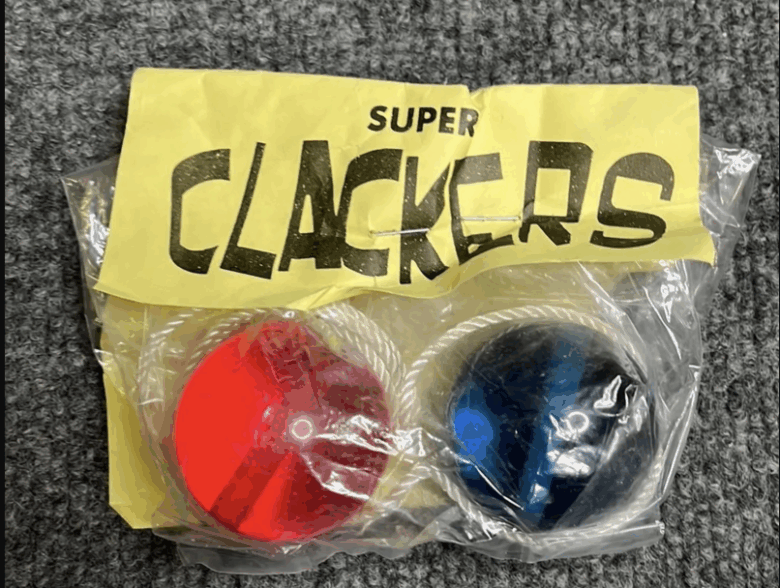
Clackers (Click-Clacks)
Clackers featured two hard acrylic balls connected by a string that users violently slammed together to create loud clicking sounds and generate momentum until achieving rapid oscillation. The toy’s appeal centered on the percussive noise and the challenge of maintaining increasingly fast oscillation patterns. However, the acrylic construction meant that the balls frequently shattered under stress, transforming them into projectiles that launched plastic shrapnel toward users’ faces and nearby observers.
The design created multiple injury pathways, including bruised wrists from the swinging balls, pinched fingers caught in the string mechanism, and eye injuries from flying plastic fragments when the balls inevitably broke apart. The widespread injuries led to recalls and reformulations using softer materials, though the fundamental design remained problematic. The Clackers phenomenon demonstrated how a toy’s primary entertainment value could stem from its dangerous qualities rather than succeeding despite them.

Missile-firing action figures
Action figures and vehicles that launched small, hard plastic missiles represented a common toy feature throughout the 1970s, with franchises like Battlestar Galactica producing figures whose main play feature involved firing projectiles. The missiles were sized perfectly to become choking hazards for younger children or to cause serious eye injuries when fired at close range. The toys encouraged children to aim and fire projectiles at targets, including other children, during play scenarios.
The accumulation of injury reports led to product recalls and the establishment of mandatory safety guidelines for detachable toy parts, including minimum size requirements to prevent choking hazards. The regulatory response demonstrated how specific product failures could drive broader safety standards affecting entire industry practices. The missile-firing toy controversy helped establish precedents for evaluating toys based on foreseeable misuse, rather than just their intended applications.
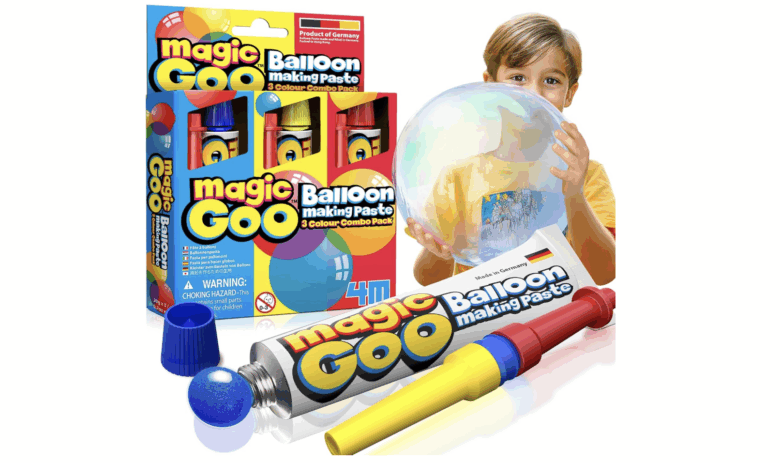
Super Elastic Bubble Plastic
Super Elastic Bubble Plastic tubes contained viscous chemical solutions that children squeezed onto thin plastic straws and then blew into bubbles, directly inhaling fumes from volatile compounds, including acetone and ethyl acetate. The product’s appeal came from creating colorful bubbles that hardened into temporary toys, but achieving this effect required children to place their mouths directly on material coated with toxic chemicals. The packaging provided minimal warnings about the chemical exposure risks involved in normal product use.
Users commonly experienced dizziness, headaches, and nausea from inhaling the noxious fumes during the bubble-blowing process. The product remained available for years despite obvious health concerns that children might deliberately inhale volatile organic compounds. The Super Elastic Bubble Plastic case illustrated how chemical exposure risks could be overlooked when toxicity was less immediately visible than physical injuries from other dangerous toys.
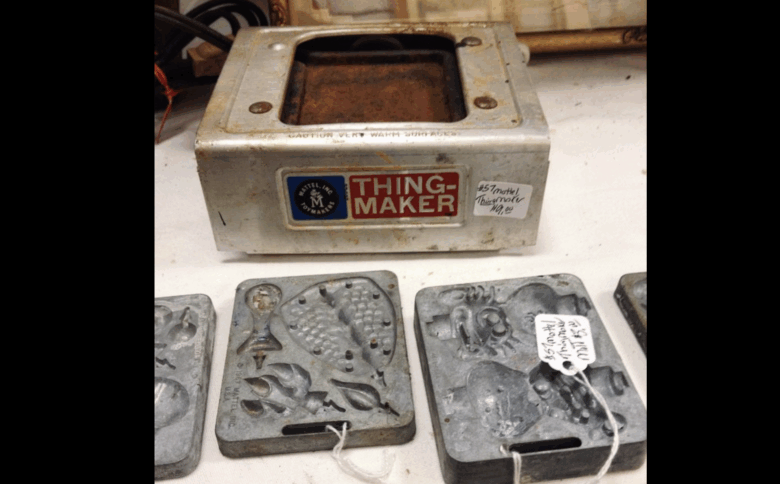
Thingmaker sets
Thingmaker sets, including Creepy Crawlers and various Hot Wheels factory kits, featured open-face electric heating elements that reached temperatures approaching 400 degrees Fahrenheit to cure liquid plastic “Plasti-Goop” into rubbery toy forms. The design required children to handle and pour liquid plastic compounds into metal molds placed directly on exposed heating surfaces. The process involved multiple burn risks, including touching hot molds, spilling hot liquid plastic, or accidentally contacting the heating element itself.
The toys resulted in numerous third-degree burns and emergency room visits from children who misjudged temperatures or experienced accidents during the molding process. Despite the apparent dangers, the products remained popular because they allowed children to manufacture their own toys. The Thingmaker series exemplified the extreme prioritization of creative play possibilities over basic safety considerations that would prevent serious injuries in 1970s toy design.

Lead paint and toxic materials
Toys throughout the 1970s commonly contained high levels of lead in paint applications and cadmium in plastic components, creating widespread but invisible health risks that affected millions of children. Toxic materials were found in major toy brands, including early LEGO bricks and various plastic playsets, exposing children to neurotoxins during regular play that involved hand-to-mouth contact. The health consequences, including developmental delays and cognitive impairment,t often went unrecognized because the connection between toy exposure and symptoms was not immediately apparent.
The subtle nature of heavy metal toxicity meant that these risks received less attention than toys causing immediate physical injuries, allowing widespread exposure to continue for years before regulatory action addressed the problem. The lead paint crisis in toys eventually drove comprehensive testing requirements and acceptable threshold limits for toxic materials in children’s products. This case demonstrated how invisible chemical risks could affect far more children than dramatic but isolated incidents of injury from other dangerous toys.
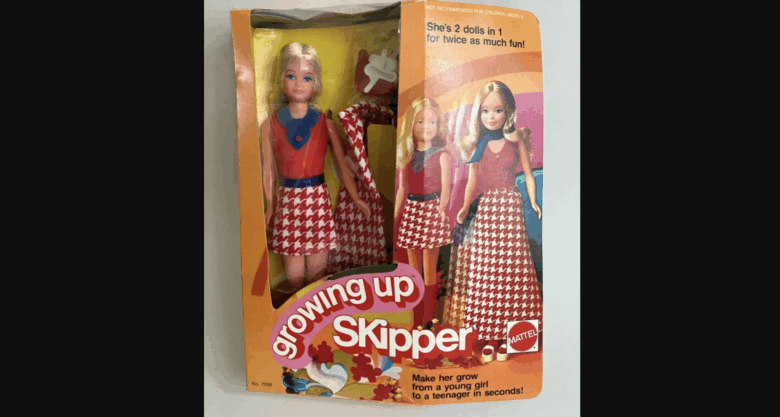
Growing Up Skipper
Growing Up Skipper featured a mechanism where rotating the doll’s arm caused her torso to elongate and her chest to develop breasts, explicitly simulating instant puberty transformation as a play feature. The toy’s marketing positioned this physical maturation as exciting developmental milestone that children could control and reverse repeatedly. The design reduced female physical development to a novelty feature, trivializing the actual psychological and physical complexities of adolescence.
The doll’s concept raised questions about encouraging children to focus on physical maturation and body changes as entertainment, rather than as a natural part of their development. The product reflected broader cultural attitudes about femininity and development that contemporary toy makers would recognize as inappropriate messaging for young children. Growing Up Skipper demonstrated how toys could normalize problematic attitudes about bodies and development through seemingly innocent play features.

Candy cigarettes and smoking toys
Candy cigarettes and bubble-producing plastic pipes actively encouraged children to mimic smoking behaviors through toys designed to replicate cigarette appearance and use patterns. The candy cigarettes were packaged to resemble actual cigarette brands and could be held between fingers or lips to simulate smoking gestures. The products normalized smoking behaviors during an era when tobacco health risks were becoming widely recognized, but cultural attitudes remained permissive.
The toys introduced smoking as an acceptable and even desirable behavior to children years before they could legally purchase tobacco products. The widespread availability of these items reflected cultural acceptance of youth smoking imagery that would later be recognized as inappropriate marketing to children. The eventual decline of smoking toys paralleled broader shifts in tobacco regulation and public health messaging about preventing youth smoking initiation.

Pet Rock
Pet Rock consisted of an ordinary stone packaged in a cardboard carrier with air holes and straw bedding, accompanied by a detailed instruction manual for “caring” for the rock. The product succeeded as a novelty gift and cultural phenomenon despite offering no functional toy features beyond the packaging and humorous manual. Parents purchased rocks at premium prices as actual toys for their children, demonstrating how effective marketing could create demand for absurdist products with no play value.
The Pet Rock phenomenon reflected 1970s consumer culture’s willingness to embrace ironic consumption and novelty items as legitimate purchases. The product’s success despite its obvious absurdity made it a cultural touchstone representing the era’s particular approach to consumption and humor. The Pet Rock demonstrated how effective marketing and cultural timing could generate substantial sales for products that deliberately offered no utility or entertainment value.
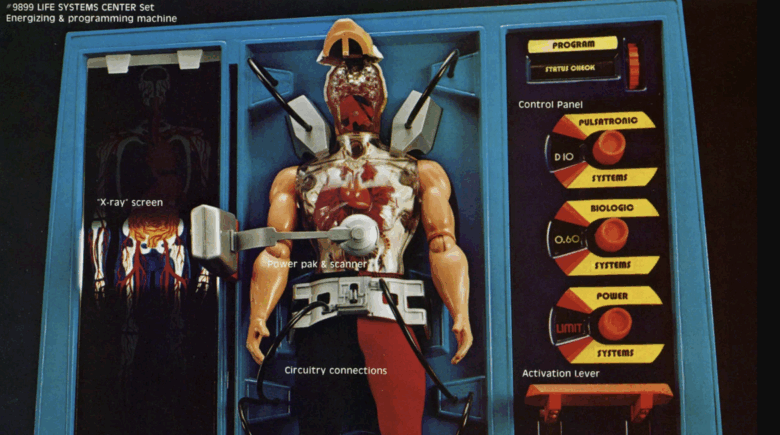
Pulsar action figure
Pulsar featured a transparent chest cavity that displayed stylized internal organs, including the heart, lungs, and circulating blood, which became visible when users pressed a button on the figure’s back. The toy’s main selling feature involved watching the hero’s organs expand and blood swirl through translucent chambers in his torso. The design positioned the character’s exposed internal anatomy as their defining characteristic, rather than traditional superhero attributes.
The bizarre aesthetic choice created an action figure whose appeal centered entirely on anatomical novelty rather than character identity or play scenarios. The toy reflected 1970s fascination with transparent designs and visible mechanisms that allowed children to observe typically hidden processes. Pulsar represented how toy designers pursued novelty through increasingly strange concepts that prioritized unusual features over coherent character design or play value.

Conclusion
These toys would never receive approval under contemporary safety regulations, consumer protection standards, and cultural awareness about appropriate children’s products. The regulatory frameworks established, in part, in response to the 1970s toy disasters now prevent the most obviously dangerous products from reaching store shelves. Digital entertainment alternatives and changed cultural attitudes about risk have transformed childhood play in ways that make these physical toys seem like artifacts from a fundamentally different era.
The children who survived the 1970s toy landscape demonstrated resilience in navigating products designed with minimal consideration for their safety or well-being. These bizarre toys now function as expensive collectibles and cultural artifacts representing a unique moment when minimal regulation, limited safety awareness, and creative toy design combined to produce products that seem incomprehensible to contemporary sensibilities. Check out our other nostalgia and cultural history articles here at MediaFeed to discover additional insights into how consumer products and childhood experiences have evolved across generations.
Related:
- 10 groovy gadgets sold on TV in the ’60s and ’70s
- 25 items you might own that just might be worth a fortune
Like MediaFeed’s content? Be sure to follow us.
This article was syndicated by MediaFeed.org.