The real-life historical facts that sound like fiction
Reality possesses an uncanny ability to surpass the wildest imagination. Throughout centuries of human existence, numerous events have unfolded under extraordinary circumstances that challenge our understanding of what seems possible. These moments in time often eclipse the creativity of the most inventive storytellers.
History books overflow with absurd, unbelievable, and truly bizarre events that remain 100% factual, despite their seemingly impossible nature. From military disasters involving flightless birds to natural phenomena that transformed entire cities into scenes of surreal chaos, the documented past reveals truths more outrageous than any fictional narrative could ever imagine. These authenticated occurrences remind us that the boundary between reality and fantasy frequently blurs in ways that leave us questioning the very nature of truth itself.
This exploration delves into remarkable historical episodes that exemplify the strange tapestry of human experience. We’ll examine bizarre military conflicts that defied conventional warfare, unusual disasters that transformed urban landscapes, mysterious plagues that drove populations to inexplicable behaviors, and individual survival stories that challenge the limits of human endurance.

The war we lost to birds
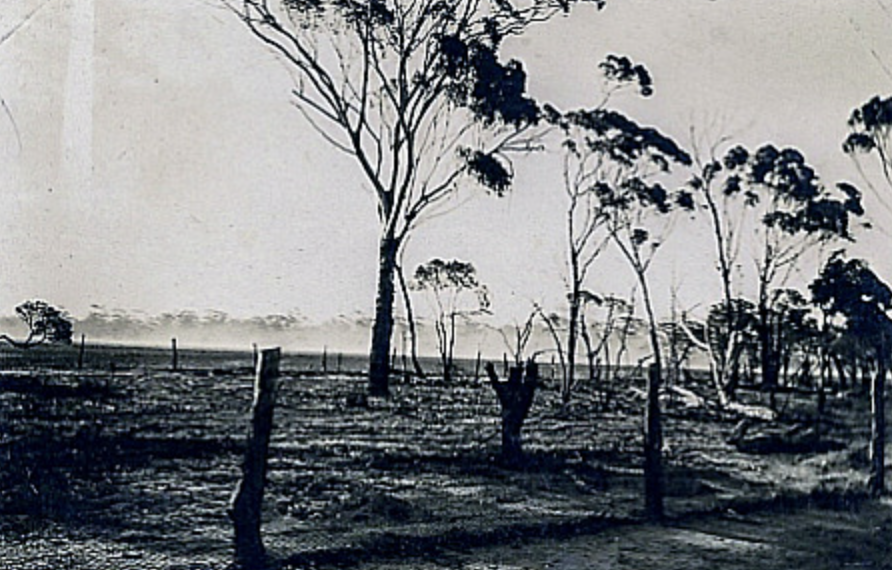
Australia’s Great Emu War of 1932 stands as one of the most embarrassing military campaigns in modern history. Following World War I, the Australian government had promised returning veterans farmland in Western Australia. However, these settlers soon discovered their agricultural efforts faced an unexpected adversary: thousands of emus migrating inland after their coastal breeding season. These large, flightless birds destroyed crops with ruthless efficiency, consuming and trampling wheat fields that represented the livelihood of struggling farmers.
The situation became so desperate that farmers petitioned the government for military assistance. In November 1932, the Australian army responded by deploying soldiers armed with Lewis machine guns to combat the emu invasion. Major G.P.W. Meredith led this unusual military operation, expecting a swift victory against the seemingly defenseless birds. However, the emus proved surprisingly resilient and tactically superior to their human opponents.
The birds demonstrated remarkable survival instincts, scattering when approached and regrouping elsewhere. Their thick feathers provided unexpected protection against bullets, and their speed allowed them to outmaneuver the military forces. After several weeks of futile combat, the army retreated in defeat, having killed fewer than 1,000 emus despite expending thousands of rounds of ammunition. The Great Emu War became a source of national embarrassment and international amusement, illustrating that nature can sometimes triumph over human military might in the most unexpected ways.

When the city was drowned in dessert
Boston’s North End experienced one of history’s most bizarre industrial disasters on January 15, 1919, when the Great Molasses Flood transformed ordinary city streets into a nightmarish landscape of sticky devastation. The Purity Distilling Company had constructed a massive steel tank measuring 50 feet tall and 90 feet in diameter to store molasses for rum production and munitions manufacturing. This industrial giant contained over 2.3 million gallons of the thick, dark syrup when structural failure triggered an unprecedented catastrophe.
The tank’s collapse released a 25-foot-high wave of molasses that surged through the densely populated neighborhood at speeds of up to 35 miles per hour. This viscous tsunami possessed enough force to demolish buildings, overturn vehicles, and trap unfortunate victims in its relentless path. The molasses wave lifted a three-story house off its foundation, crushed a fire station, and derailed an elevated train. Twenty-one people lost their lives in this sweet disaster, yet 150 others suffered serious injuries from the suffocating syrup and flying debris.
The cleanup process proved almost as remarkable as the disaster itself. Boston Harbor turned brown from the massive molasses spillage, and the sticky residue clung to everything it touched for months afterward. Residents reported that on hot summer days, the North End would still emit the distinctive smell of molasses years later. The Great Molasses Flood led to lengthy legal proceedings and significant changes to building safety regulations, ensuring that such a tragic event would never recur.

The plague that made people dance
Strasbourg witnessed one of history’s most perplexing medical mysteries in July 1518, when a phenomenon known as the Dancing Plague transformed the city’s streets into scenes of inexplicable choreographed chaos. The bizarre epidemic began with a single woman named Frau Troffea, who stepped into the street and started dancing with wild, uncontrollable movements. Her frenzied performance continued for hours without pause, drawing curious crowds who initially assumed they were witnessing a religious or celebratory display.
Within days, the dancing contagion had spread to dozens of other residents, and within a month, approximately 400 people had joined this involuntary dance marathon. The afflicted individuals showed no signs of stopping, continuing their movements day and night until exhaustion overwhelmed them. Many dancers collapsed from heart attacks, strokes, or sheer physical depletion, yet those who survived would resume their compulsive choreography once they regained consciousness.
Local authorities and physicians struggled to understand this unprecedented outbreak. Some believed the dancing resulted from divine punishment, leading them to organize religious processions and prayers in response. Others theorized that music and professional dancers might help cure the affliction, inadvertently making the situation worse by encouraging the behavior. Medical experts today suggest the Dancing Plague may have resulted from ergot poisoning, mass hysteria, or extreme stress caused by famine and disease. The Dancing Plague of 1518 remains one of history’s most fascinating examples of mass psychogenic illness, demonstrating how social and psychological factors can manifest in seemingly impossible physical symptoms.
The man who cheated death twice
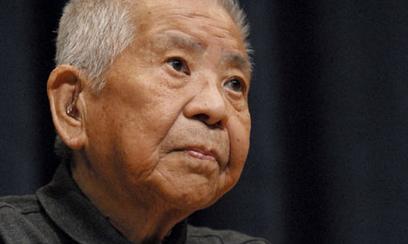
Tsutomu Yamaguchi possessed the most remarkable and terrifying luck in recorded history, becoming the only person officially recognized as surviving both atomic bombings that ended World War II. This Mitsubishi engineer’s extraordinary ordeal began on August 6, 1945, during a business trip to Hiroshima. He had completed his work assignment and was preparing to return home when the Enola Gay dropped the first atomic bomb on the unsuspecting city.
The blast occurred approximately two miles from Yamaguchi’s location, close enough to inflict severe burns on his face, arms, and legs, yet far enough away to spare his life. Despite his injuries, he managed to survive the immediate aftermath of the explosion and spent the night in an air raid shelter. The following day, determined to return to his family, he boarded a train bound for his hometown of Nagasaki, traveling through a landscape transformed into an apocalyptic wasteland.
Yamaguchi arrived in Nagasaki on August 8, seeking medical treatment and planning to report the Hiroshima disaster to his supervisors. The next morning, as he described the atomic bomb’s devastating effects to incredulous colleagues at the Mitsubishi shipyard, another B-29 bomber appeared overhead. At 11:02 AM on August 9, 1945, the second atomic bomb detonated over Nagasaki, and once again, Yamaguchi found himself surviving the unsurvivable. His story of double atomic survival remained relatively unknown until later in his life when he became an advocate for nuclear disarmament. The incredible survival story of Tsutomu Yamaguchi serves as a powerful testament to human resilience and the random nature of fate during humanity’s darkest moments.

Conclusion
These remarkable episodes from human history demonstrate that reality consistently produces scenarios more extraordinary than any work of fiction could ever imagine. The Great Emu War reveals how nature can humble even the most formidable military forces. The Great Molasses Flood demonstrates how industrial disasters can take the most unexpected forms. The Dancing Plague exemplifies the mysterious power of mass psychology, and Tsutomu Yamaguchi’s survival story demonstrates that human endurance can triumph over seemingly insurmountable odds.
History remains a rich tapestry of human experiences, where the most incredible stories are those that truly happened. These authenticated events remind us that the past holds countless surprises, and the most unbelievable tales often carry the unmistakable stamp of truth.
Related:
- The haunting history behind this hidden Italian destination
- From the photo archive: 8 buttons that shaped American history
Like MediaFeed’s content? Be sure to follow us.
This article was syndicated by MediaFeed.org.