Cleaning out your home? How to keep your junk out of the landfill.
Do you have a lot of unwanted junk?
Rather than toss it all in the trash (and contribute to water and climate pollution), try these six eco-friendly ways to get rid of the things you don’t need:

1. Pay it forward
All those rubber bands you liberated from the junk drawer? Egg sellers at the farmers market, your local librarian or the office at your kids’ school will thank you for them.
The dress-up clothes you no longer use at your new, remote gig can help out under-resourced job seekers through Dress for Success and 100 Suits.
Books you’ve already read? Check for a Little Free Library, a freestanding give/take community bookshelf on a street near you.
And, of course, thrift shops accept re-sellable items to support their missions — a win for giver and seller alike.

2. Have a yard sale
One person’s trash is someone else’s treasure.
You can go old-school and set out your wares on your stoop or driveway or look to resources online.
Websites that list local sales include Garage Sale Finder and Garage Sales by Map, while online retailers such as ThredUp, Poshmark, eBay, Facebook Marketplace and OfferUp can help you sell your unwanted things so they don’t end up in the trash.

3. Give it away
There is almost no end to the stuff people will be happy to take off your hands. A 2021 New York Times article reported that a gallon of pickle juice once made its way from one Big Apple resident to another through a local Buy Nothing group, an online community where people give and get stuff from their neighbors gratis. Find your local group on Facebook. Freecycle works similarly.
As Winston Churchill aptly said, “We make a life by what we give.”

4. Take care with hazardous household waste
Paint, pesticides, motor oil, cleaning products — many household items are toxic, corrosive or flammable. First, try to give away anything you don’t need. (See above.)
Then, take advantage of the recycling programs offered by large retailers such as Best Buy, Staples, Home Depot and Autozone. Many of them take electronics, lightbulbs, car batteries and more.
Finally, check with your local sanitation department for rules and regulations for disposing of hazardous household waste. Many host disposal events or offer drop-off sites where you can get rid of hazardous waste safely.

5. Don’t trash good food
In 2023, there were more than 47 million food-insecure people in the U.S. alone, according to the U.S. Department of Agriculture.
You can help, and get rid of your excess healthy, safe food, in a number of ways. Sidewalk-based community fridges allow neighbors to leave what they have or take what they need. Find one online (Freedge lists some) or even start your own. Your local food pantry might also take your excess. Some police stations accept non-perishable food to later distribute to food pantries.
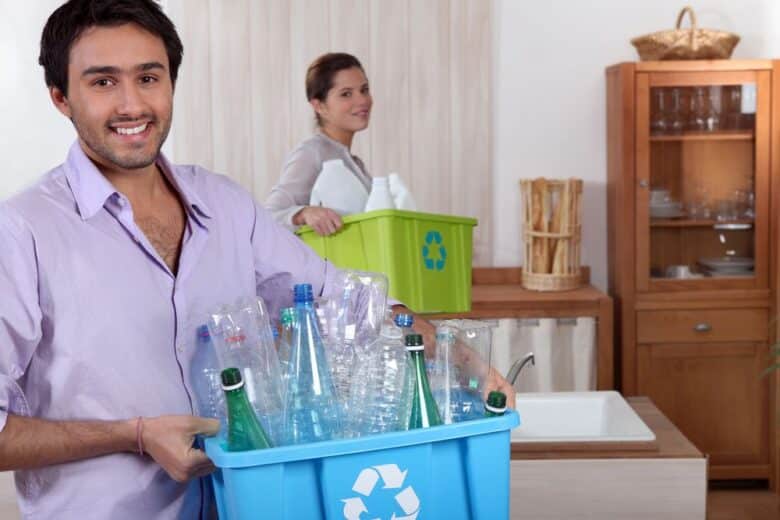
6. Recycle
After reuse, look to recycle. Your local government can tell you what and how you can recycle in your area. Websites like Earth911 and RecycleNow offer ideas for what to do with hard-to-recycle items like packing peanuts and coffee pods.
- Related: Are plastic-eating bacteria the solution to ocean pollution? It’s not that simple, science shows.
- Related: 3 reasons electric vehicles are good for America
Like MediaFeed’s content? Be sure to follow us.
This article originally appeared on Vitalsigns.edf.org and was syndicated by MediaFeed.org.