This article was reviewed by Kelly Brown MD, MBA
Does fasting boost testosterone, or is that just another internet myth?
The short answer: It’s complicated. While fasting has certain benefits like blood sugar control and weight loss, the idea that it increases testosterone isn’t strongly backed by science. In fact, fasting often leads to lower testosterone levels, especially in men already at a healthy weight.
Factors like the length and intensity of your fast, calorie intake, and body fat percentage all play a role in testosterone levels.
In this article, we break down the research on fasting and testosterone levels, explore the benefits of fasting, and share ways to support healthy testosterone levels.
Image Credit: Rasa Petreikiene/Istockphoto.
Intermittent Fasting Testosterone: How Does It Affect Testosterone?

Fasting is the practice of not eating for a set period. Intermittent fasting involves eating all of your daily calories within a specific time frame — commonly an 8-hour eating window, followed by a 16 hour fast.
How fasting impacts testosterone levels isn’t straightforward, since different fasting methods can have different effects on the body.
Image Credit: Prostock-Studio/Istockphoto.
Does Fasting Lower Testosterone?

What we do know is that prolonged starvation can lower testosterone while increasing stress hormones like cortisol. Additionally, research shows low-fat diets tend to slightly reduce testosterone compared to diets rich in healthy fats.
Since cholesterol (a type of fat your body naturally produces) is necessary for testosterone production, extended fasting might limit the amount of fats in your bloodstream, which, in turn, may affect your testosterone levels.
Image Credit: jarun011/istockphoto.
Long-Term Fasting

In a 2021 study, researchers looked into the long-term effects of fasting on muscle mass, strength, fat mass, and other health markers.
Researchers observed 20 males who followed either a regular diet or a time-restricted eating pattern (with an 8-hour eating window) while doing resistance training.
After 12 months, compared to the non-fasting group, the fasting group showed lower:
-
Body mass
-
Fat mass
-
Testosterone
-
Insulin growth factor 1
Image Credit: Yummy pic/Istockphoto.
Short-Term Fasting

In a 2020 study involving 26 active males, researchers explored how time-restricted eating impacts body composition and muscle performance.
The participants were split into two groups:
-
A “normal diet” group
-
A fasting group that ate all their meals within an 8-hour window each day
Both groups followed a supervised, full-body resistance training program for four weeks.
By the end of the study both groups showed notable decreases in:
-
Body mass
-
Fat mass
-
Body fat percentage
-
Testosterone levels
The dip in testosterone? Likely the result of stress from intense workouts.
Another 2020 study looked at the effect of intermittent fasting in a small group of elite endurance athletes.
They were also split into two diet groups (fasting and no fasting).
Researchers found those in the fasting group saw reductions in body weight, fat mass percentage, and free testosterone.
Keep in mind, both sample sizes were small. And elite athletes aren’t representative of the typical male.
Image Credit: PeopleImages/istockphoto.
Does Fasting Increase Testosterone?

Testosterone, the main male hormone, plays a key role in supporting your overall health. It helps:
-
Build and maintain muscle
-
Maintain your drive
-
Support your energy levels
-
Keep your bones strong
-
Produce sperm
We just covered how not eating might lower testosterone. But can fasting boost testosterone?
For men at a healthy weight, there’s no solid evidence to back that claim.
Anybody who claims otherwise is either cherry-picking small studies, misinterpreting research, or skipping the science altogether.
For men with obesity, the story might be different. Obesity can lead to low testosterone, and some research shows that losing weight can help bring levels back up. That said, if fasting leads to weight loss, it might improve testosterone, too.
But it’s important to note that it’s not clear whether the benefits come from weight loss itself or adopting healthier habits overall.
Image Credit: Sasithorn Phuapankasemsuk/Istockphoto.
Improved Insulin Sensitivity

Prediabetes happens when blood sugar levels are higher than typical but not quite high enough to be full-blown diabetes. If ignored, it can lead to type 2 diabetes. Type 2 diabetes is when your body becomes less responsive to insulin, the hormone that regulates glucose.
Some research suggests fasting could improve insulin sensitivity, which is how well your body responds to insulin, in people with prediabetes or diabetes. Poor insulin sensitivity (AKA insulin resistance) is tied to low testosterone. There’s also a link between insulin resistance and high levels of a protein called hormone-binding globulin (SHBG), which reduces the free testosterone your body can actually use.
Basically, fasting might help improve insulin sensitivity, which could, in turn, increase testosterone and free testosterone levels in people with prediabetes and diabetes.
Image Credit: Halfpoint / iStock.
Does Fasting Have Other Benefits?

Fasting can be a helpful diet strategy for some, but it’s not for everyone — and that’s okay! You can be healthy and have balanced hormones without a restrictive eating pattern.
Potential health benefits of fasting include:
-
Better cholesterol. Research suggests that alternate-day fasting over eight to 12 weeks may improve LDL cholesterol, total cholesterol, and triacylglycerol levels.
-
Blood sugar control. Fasting may help lower blood sugar and slightly reduce insulin levels.
-
Mood boost. Some studies suggest fasting might improve mood in the short-term, though the evidence is mixed.
-
Reduced inflammation. Intermittent fasting may lower C-reactive protein, a marker doctors use to check for inflammation.
-
Higher growth hormone levels. Fasting could increase human growth hormone, which supports muscle mass and bone health.
Image Credit: Daniel de la Hoz/Istockphoto.
How Does Your Body Produce Testosterone?
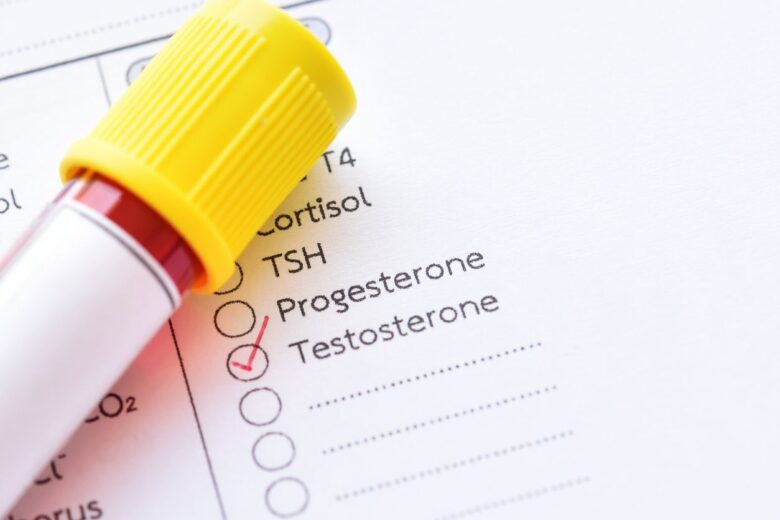
Here’s a breakdown of how your body makes testosterone:
-
It starts in the brain. Your hypothalamus produces a hormone called gonadotropin-releasing hormone (gnRH).
-
GnRH stimulates additional hormone production. This hormone tells your pituitary gland to produce luteinizing hormone (LH) and follicle-stimulating hormone (FSH).
-
LH and FSH act on cells in your testicles. Together, they stimulate sperm and testosterone production.
Your adrenal glands (glands on your kidneys) also make small amounts of the hormones dehydroepiandrosterone and androstenedione. Your body can convert these into testosterone.
Research suggests that LH, FSH, and testosterone levels drop within 48 hours of fasting in healthy males.
Image Credit: jarun011/Istockphoto.
How Else Can You Increase Your Testosterone?

As you age, it’s natural for your testosterone levels to decline. The following healthy habits can help support healthy T levels as you get older:
-
Maintain a healthy body weight
-
Eat nutritious foods to prevent insulin resistance and diabetes
-
Exercise to promote muscle growth, fat loss
-
Get plenty of high-quality sleep
-
Limit alcohol — more than two drinks per day can turn testosterone into estrogen
-
Manage stress to keep cortisol in check
-
Avoid opioid painkillers, which can drop your testosterone levels
Image Credit: Liubomyr Vorona/Istockphoto.
Do Testosterone Supplements Work?

While many supplements claim to boost testosterone, most don’t work and some could even harm your health. Be cautious and do your research before trying supplements, especially products that make bold claims that sound too good to be true.
Image Credit: Jovanmandic / iStock.
When to See A Doctor

Common signs of low testosterone include:
-
Low drive
-
Fatigue
-
Reduced muscle mass
-
Mood swings, irritability, or even depression
If this sounds familiar, it’s time to check in with a healthcare professional. They can screen you for underlying medical conditions and recommend treatment options.
Sometimes, simply lifestyle tweaks can help boost testosterone levels. If that’s not enough, your doctor might recommend testosterone replacement therapy (TRT).
Low-T can also impact your ability to get and keep an arousal. Read more about that in our guide to testosterone and ED.
Image Credit: gorodenkoff / iStock.
Bottom Line: Does Fasting Boost Testosterone?

There’s little to no evidence that fasting boosts testosterone levels in men without obesity or diabetes.
Restricting your eating window isn’t a quick fix for low testosterone. And some research even suggests fasting may actually lower testosterone levels.
Let’s recap what we know about testosterone and fasting:
-
Fasting may lower testosterone in men of normal weight. But the effect on testosterone depends on how long or intensely you fast.
-
Weight loss might help boost testosterone. In particular, in men with obesity. But more research is needed.
-
Healthy habits may help with testosterone imbalances. Regular exercise, quality sleep, and a balanced diet are all ways to naturally increase testosterone.
Sometimes, healthy habits aren’t enough to fix low-T. If you think you have signs of low testosterone, consider speaking with a healthcare professional. They can identify the underlying cause of your symptoms and go over your treatment options, like testosterone replacement therapy.
Related: Vitamin B12 overdose: How much is too much?
Related: How to find the right Viagra dosage for you
Like MediaFeed’s content? Be sure to follow us.
This article originally appeared on Thectoclub.com and was syndicated by MediaFeed.org
Image Credit: PeopleImages/istockphoto.