
Dedicated gymgoers keep a tub (or even two) of protein powder front and center on their kitchen counters at all times. If you’re looking to fuel your muscles and recover from training, it’s just what you do. And, when you want to really intensify your workout, you undoubtedly grab a pre-workout formula with caffeine (and perhaps some beta-alanine, nootropics, and l-citrulline). Pretty basic stuff, right? The unsung puzzle piece to making real and lasting gains, however, is the often-misunderstood compound known as creatine.
Image Credit: The Vitamin Shoppe.
Creatine & Your Health

One of the most scientifically researched supplements in the game, adding creatine to your sports nutrition stack can spur on major muscle benefits. So, what exactly is it and how does it help you go harder and get stronger? A brief explainer ahead.
Image Credit: Stefan Simonovski / iStock.
What Is Creatine?

Known as a ‘non-protein nitrogen’, creatine is a compound made in our liver and pancreas from three amino acids. It’s also found in animal proteins like meat and fish. Almost all of the creatine we produce or consume is stored in our muscles, according to an International Society of Sports Nutrition (ISSN) position paper.
When you exercise, your muscles burn through cellular energy called ATP, explains Brian Tanzer, M.S., nutritionist and director of scientific affairs at The Vitamin Shoppe. The creatine stored in your muscles helps make more ATP so you can keep grinding.
In addition to helping your body make energy, creatine also helps your muscles repair and grow in two ways. First, it draws water into your muscles, which helps stimulate protein synthesis (the process through which your muscles rebuild and grow). Second, it stimulates insulin-like growth factor (IGF), a compound that’s also involved in the protein synthesis process, says Tanzer.
Image Credit: Farion_O / iStock.
Creatine Supplements And Exercise

One of the most researched sports nutrition supplements out there, creatine can help anyone who incorporates strength training into their routine improve performance and body composition. That’s because creatine can help you power through a few extra reps or lift heavier and boost your ability to pack on muscle, says Tanzer.
One study published in Medicine and Science in Sports and Exercise found that men who supplemented with creatine made greater strength and muscle mass gains after 12 weeks of strength-training than those who took a placebo. There’s a lot of research, like this study, to support creatine’s impact on lean mass and strength gains, says Tanzer.
But creatine can also help you with exercise that involves explosive movements or quick intervals of work—like HIIT, sprints, or burpees. Get this: A study published in International Journal of Sports Nutrition and Exercise Metabolism found that exercisers produced more power during a high-intensity cycling test after just six days of taking creatine. They could also cycle for longer before becoming exhausted than those who didn’t take creatine.
If you’re training for a marathon or going for long bike rides, though, creatine won’t do much for you, says Tanzer. Great for strength and power—not so much for endurance.
Image Credit: Jacob Wackerhausen / iStock.
Getting Started
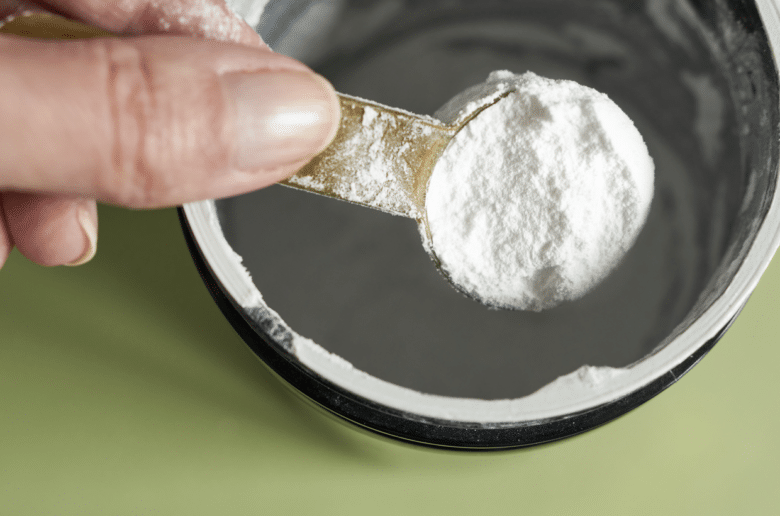
Ready to super-charge your lifting sessions and CrossFit® classes? One thing to note when shopping for creatine is that different supplements may use different forms of creatine. The two most popular are creatine monohydrate and creatine hydrochloride. Creatine monohydrate is the OG form focused on in most research, but for some people, it can cause some stomach issues, says Tanzer. “If you have digestive issues with monohydrate, you’d want to try creatine hydrochloride, which is more soluble,” he says.
For creatine monohydrate, you’ll typically want a dose of about five grams, while for creatine hydrochloride, you’ll want about two grams, Tanzer recommends. And while you may think of creatine as a pre-workout supplement, recent research actually suggests it’s beneficial after you train—usually within a window of a half-hour to an hour. “The carbs in your post-workout meal spike your insulin, which helps shuttle creatine and amino acids into your muscles, replenishing your stores for your next workout,” Tanzer explains.
Further proof for all you nonbelievers: A 2013 study published in the Journal of the International Society of Sports Medicinefound that guys who took creatine after strength-training saw greater improvements in strength and body composition after one month than those who took creatine before.
It’s also worth noting that research hasn’t identified any negative effects of supplementing with doses of creatine long-term. Just stay well-hydrated, says Tanzer, because as you metabolize creatine through your kidneys, your body pulls in water and creates extra urine.
- Read More: 7 Benefits Of Creatine That Women Should Know About
- Read More: 6 Tips For Maximizing The Benefits Of Creatine
This The Vitamin Shoppe article originally appeared on WhatsGoodbyV.com and was syndicated by MediaFeed.org.
Like MediaFeed’s content? Be sure to follow us.
Image Credit: Natalia Rusanova / iStock.