

Are you planning to travel to Cape Town soon? Then, this post is for you!
Cape Town is probably one of my favorite cities in the world. I have been many times, and plan on going again (in fact, watch this space as I am currently making plans for this year’s trips).
The Mother City, as locals lovingly call it, is a thriving city with an interesting history, lots of incredible attractions, magnificent vistas (the sunset from Table Mountain is one of the best you’ll ever see) and lots and lots of things to do.
One thing for sure, as you plan your trip to South Africa and think about visiting Cape Town, you will be asking yourself many questions. Don’t worry though, I am here to give you all the answers! In this post I will tell you everything you need to know before you travel to Cape Town and share the best Cape Town travel tips.
Image Credit: DepositPhotos.com.
How long to stay

Before you travel to Cape Town, you will come across posts that suggest two days are enough to visit the city. I could not disagree more.
The first time I traveled to Cape Town I had planned to spend five full days there. I thought this would be plenty of time to explore the city and its surroundings, and worried I may actually get quite bored. I couldn’t have been more wrong!
Five days is actually the minimum amount of time you should plan to spend in Cape Town and enjoy its main attractions such as Kirstenbosch Garden and Groot Constantia; Robben Island; the V&A Waterfront; Table Mountain and Lion’s Head; Signal Hill and Bo Kaap. Also don’t forget that Cape Town is the best starting point to explore the Cape Point Peninsula.
Image Credit: DepositPhotos.com.
When to visit Cape Town

In general, any time is a good time to travel to Cape Town, but your experience will vary a lot depending on when you decide to go. I once went in June, when it was winter, and felt it was cold and miserable most of the time with lots of wind, rainy days, and so much fog that it was completely pointless to go up Table Mountain.
Spring is definitely better! I visited in November, in late spring, and had nicer, warmer and longer days (though it was actually terribly cold and wet when I went to Boulder’s Beach) and it was overall more pleasant.
To make the most of the city, it’s actually better to visit Cape Town in the spring and summer months, when the weather is meant to be nicer.
Image Credit: Ilonde / iStock.
Is Cape Town safe?
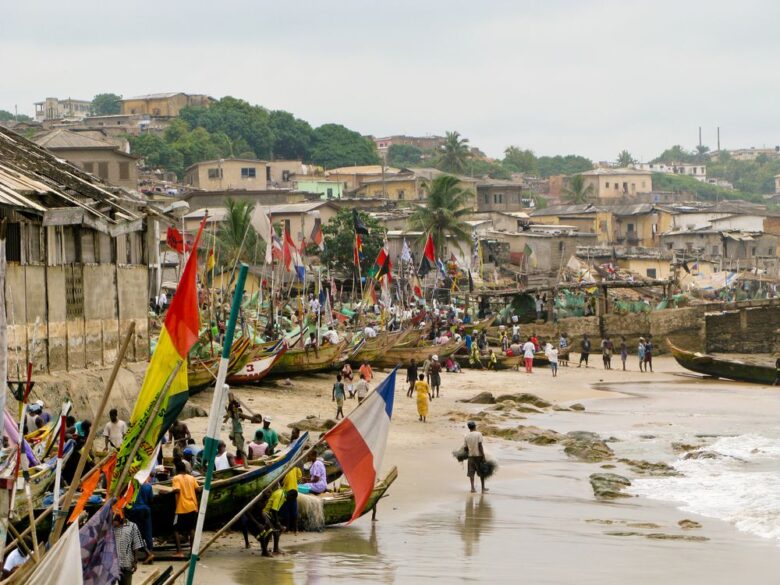
Many people who know I have been a few times ask me: “Is Cape Town safe?” and I can never give them a straightforward answer.
There’s no denying that Cape Town has some safety issues. You will most likely feel a heavy vibe whenever walking around Long Street, and while that may not be the case during the day, it will definitely be the case at night.
This street in the city center of Cape Town is often the scene of muggings, so it’s best you never flash your belongings, never bring too much cash, never take out your phone and in fact try to avoid it altogether at night if you can. And by all means, don’t walk along it if you have been drinking!
As for the rest of the city, I’d say to always follow locals advice: if they say it is better to take an Uber at night, or to avoid certain areas, they most definitely have a point. And their usual advice is to never walk alone at night, and never to flash your money, your camera, or your phone in public.
Additionally, always keep your car window rolled up and your car door locked, even when you are in the car and especially if you stop at a robot (that’s a traffic light in South Africa); never leave valuables in the car and get additional insurance for break in, broken glass windows and the like.
Image Credit: DepositPhotos.com.
How to get to Cape Town from the Airport
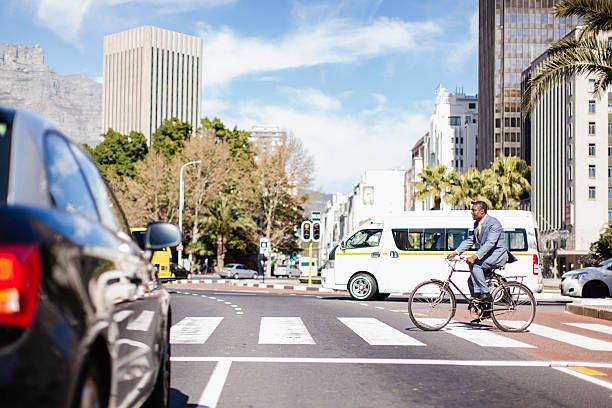
Cape Town International Airport is very well connected to the rest of Africa and the world via a number of flights – if you are coming from Europe, you will find flights operated by Air France, KLM, British Airways, Turkish Airlines and Lufthansa, among others.
Reaching Cape Town from the airport is fairly easy. The MyCiTi shuttle goes directly from the airport to the center of town, to the Civic Centre Bus Station. It leaves every 20 minutes and runs from 5:00 am to 9:30 pm.
You can also count on taxis and Uber, as well as shuttles that can be booked either online (here) or directly at the airport.
Image Credit: AfricaImages / iStock.
How to move around Cape Town

Once in the city, you can use public transportation (MyCiti) or – depending on where you are staying – walk to all the attractions, or use the hop-on hop-off bus.
There are several places around town where to get the tickets for the hop-on hop-off bus, and where the bus stops. There are also various routes.
If you are staying in the City Bowl, you can get the bus from Long Street and hop on the blue line that goes to Mount Nelson, Kirstenbosch Gardens, Constantia (where there’s a connection with the pink line to explore the valley), as well as Mariner’s Wharf (Hout Bay) and the V&A Waterfront.
When the sun sets, you will be significantly better off using Uber. It’s much cheaper than taxis, it’s safe, the drivers are nice, friendly and always up for a chat, and it goes right to your door. It’s also the best way to get to and from the airport.
Image Credit: fokkebok / iStock.
Get travel insurance

I always recommend getting a good insurance for all your trip, and you will definitely want one when visiting Cape Town. It’s really is the kind of thing you want to buy hoping you never have to use it – but alas, a must.
Image Credit: DepositPhotos.com.
Get a local Sim Card

This is one of the most important things you need to do as soon as you get to Cape Town. A local SIM card will help you on many occasions. First of all, WiFi is less than reliable in South Africa, with some places not having it altogether and others demanding users pay a fee for even the shortest usage.
The best and actually cheapest way around it is to get a local SIM card. You will need it to call an Uber when you have no wifi; to use Google Maps to find your way around town, whenever you are driving a car that has no GPS system.
There’s a Vodacom shop right outside the arrivals hall at Cape Town airport and getting a SIM card with data is a 10-minute process. I used Vodacom on all my trips to South Africa and the network always worked well.
Alternatively, you can opt for an MTN card, which is cheaper and allegedly works better than Vodacom. MTN has some great offers too – especially MTN-to-MTN minutes which means it’s cheaper for you to call people on the same network.
And you can get weekly rather than monthly data packages, which may turn out to be cheaper if you are staying in the country for a short time.
Image Credit: Katsuya Yoshida / istockphoto.
Be prepared for load shedding

Ah, this is an interesting thing to know before you travel to Cape Town!
Load shedding refers to the regular power cuts that scheduled around South Africa, including Cape Town. Each time it means not having power for up to 2.5 hours, and at times even multiple times a day.
It happens occasionally – I actually never noticed it during my trips to South Africa, but my friend Nelson who lives in the Cape Town area told me about it, and it’s definitely something to be aware of.
Image Credit: Junior Mukeba / iStock.
Don’t hike alone

My post Why Hiking Alone Is A Bad Idea always attracts lots of criticism, but I stand by my argument and in fact must stress that hiking alone in definitely something you must avoid in Cape Town, even if you are used to it, and even if you think you have super powers.
You simply don’t want to be on the trails alone, in case there is a sudden weather change with sudden fog or rain (and trust me, this can happen in the Cape Town area), or even worse in case you get attacked (and again, this is something that unfortunately occurs).
If you are traveling solo but are still keen on hiking, you can simply join one of the many guided hikes that regularly go to Table Mountain or Lion’s Head.
Image Credit: DepositPhotos.com.
Where to stay in Cape Town
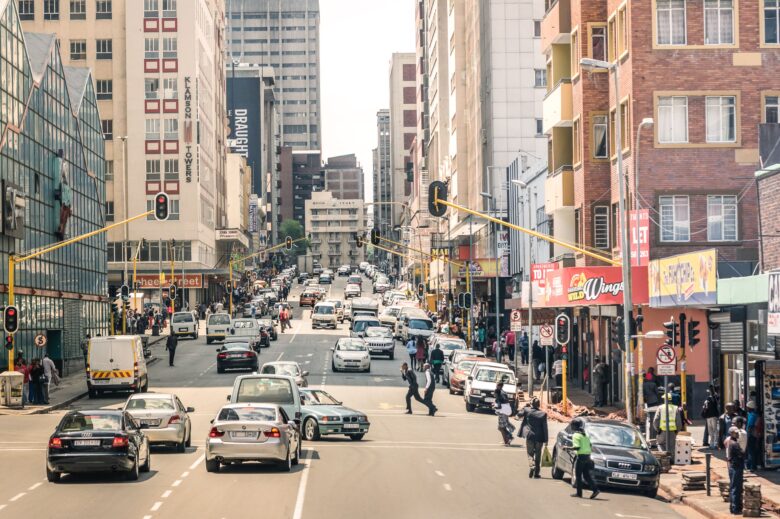
There are plenty of great places to stay in Cape Town. If you are traveling solo, I recommend staying at a social hostel such as the Backpack. Alternatively, you will find plenty of good hotels and Airbnbs around town.
During my visits I have normally stayed in the CBD – which is pretty much downtown. I also also stayed in Sea Point. Other good areas of town are De Waterkant and Green Point (probably the best areas to stay for tourists in terms of safety and access to attractions), the Gardens and Camps Bay.
Here’s a selection of the best places to stay in Cape Town:
- The Backpack – a fabulous boutique hostel in the heart of the city.
- Cape Heritage Hotel – a boutique hotel in the heart of the city.
- Loader B – a beautiful villa for those that prefer self-catering.
- Taj Cape Town – walking distance from all the main attractions.
- The Capital Mirage Hotel – right by De Waterkant.
Image Credit: ViewApart / iStock.
Join a guided tour

One of my best tips for visiting Cape Town if you have a limited amount of time in the city (ie not five full days as I have recommended at the beginning of this post) is to join a guided tour. There are many that explore various areas of the city, taking you to places such as Bo Kaap, Table Mountains, Woodstock and more.
Image Credit: BlueBarronPhoto / iStock.
Be prepared for a culinary experience

I came across a post that said that food in Cape Town is nothing to write home about. Well let me tell you, I am Italian and I know a thing or two about good food, and I was honestly impressed by how delicious the food in Cape Town is and how thriving the culinary scene actually is.
This is definitely the best place to try Cape Malay cuisine, which is unique to the Western Cape of South. Cape Malay food is an interesting mix of fruity and mild spices flavors. The signature dish is the bobotie, prepared with ground meat (typically lamb), curry and fruit, with a baked egg and cheese topping.
Cape Town is also a good place to try braai, South African style barbecue. You will also find many restaurants serving anything from delicious sushi and ceviche to excellent steaks, burgers and seafood dishes.
Image Credit: Paramath / iStock.
Keep small change

Having some small change (and especially coins) is useful if you are renting a car and need to pay tolls, car parking fees, or need to leave a small tip at the gas station attendant and even to the guys that offer to help you park your car (ie by pointing you to a parking spot) and look after it while you are away.
In fact, change is the way to go also for tips at restaurants. Leaving a tip in South Africa is sort of customary – you are expected to leave around 10% if you are happy with the service.
You can have it added to your card (but you’ll have to calculate how much you want to leave, unlike in the US), or simply leave some change on the table for the waiting staff.
Image Credit: Valentina Makarova / iStock.
Can you drink tap water in Cape Town?

This is a very useful thing to know before you travel to Cape Town.You will find many sources suggesting that tap water is safe to drink in most urban areas in South Africa.
Having said so, I have heard about lots of people getting sick from it, and thought I’d rather be safe than sorry and avoided it when I visited. You have the option of getting bottled water or, if you want to be more environmentally friendly, bring your own water bottle and a filter.
Image Credit: brazzo / iStock.
Get the Entertainer App
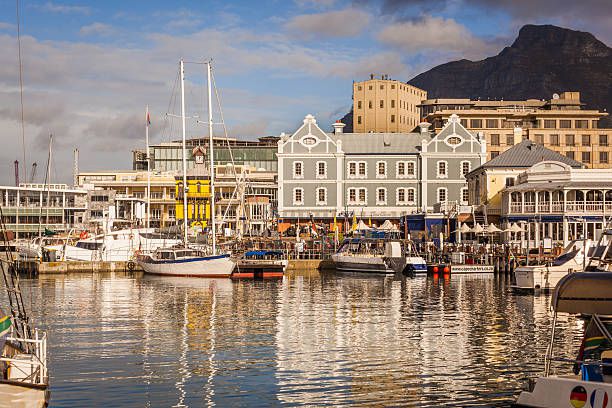
One thing you need to do before you travel to Cape Town is downloading the Entertainer App, which basically is a cell phone app that gives you coupons and 2-for-1 deals at many restaurants and attractions in Cape Town and the entire Western Cape area.
It’s not free – you pay 400 Rand (that’s not even $25 USD) to download it, but if you are traveling with a friend or partner you pretty much break even if you just use it three or four times.
Image Credit: mdmworks / iStock.
Wear layers!

I will be writing a more detailed guide on what you need to pack for a trip to South Africa. For the purpose of this post, let me just quickly say that you can never fully trust the weather in Cape Town.
The weather changes fast, temperatures can drop quickly, and it can get windy and rain even when you think the sun will shine for the rest of the day. With this in mind, just know that you will be always better off carrying an extra (warm) layer with you.
- Related: The Best Day Trips From Cape Town
- Related: Where To Go On A Safari From Cape Town
This article originally appeared on MyAdventuresAcrossTheWorld.com and was syndicated by MediaFeed.org.
Image Credit: Michal Karkowiak / iStcok.



