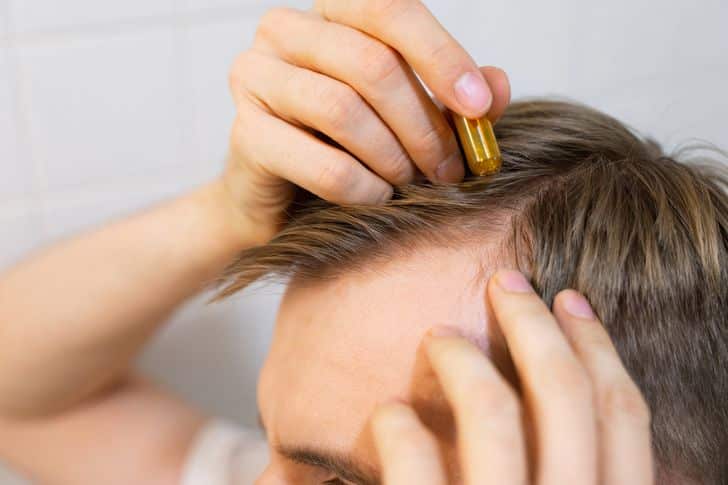
Losing your hair can bring up a ton of emotions, and it can force you to reckon with how you feel about your appearance (not to mention your age). It can make you feel desperate, but luckily, there are solutions.
You can look at hair restoration, a hair transplant and even hair pieces, but it might help to start with a hair loss treatment that’s less disruptive and proven effective. Because if you can slow or even stop your balding with a topical medication, why would you want to do more?
Typically sold as an oral medication, finasteride is a proven hair loss treatment option. But what about a topical finasteride solution that can give you the same results and be easily incorporated into your daily hair care routine?
This question might bring up some of your own. Does topical finasteride work? How do topical finasteride results compare to the usual oral tablet? What do reviews about these products say? Here are the answers.
What Is Topical Finasteride?
If you’re around 50 years old and dealing with thinning hair or a receding hairline, you’re in good company — male pattern baldness (also known as androgenetic alopecia or androgenic alopecia) affects about 30 percent to 50 percent of men by age 50.
But no need to worry, as there are two medications approved for hair loss by the Food and Drug Administration (FDA): topical minoxidil (the active ingredient in Rogaine) and finasteride.
Oral finasteride (sold under the brand name Propecia) is FDA-approved for the treatment of hair loss, but for some people it can cause side effects like ED.
To reduce those systemic side effects, some may opt for a topical finasteride treatment instead.
But whether applied via a topical application like a spray or gel or taken orally, finasteride works to prevent male pattern baldness in the same way.
Male pattern hair loss is caused by enzymes that are responsible for the conversion of testosterone into the male hormone dihydrotestosterone (DHT), a major androgen.
High DHT levels cause the hair follicles — the tiny organs throughout your scalp from which your hair grows — to shrink and reduce, which leads to baldness.
Finasteride is part of a group of medications called 5-alpha reductase inhibitors, which prevent the conversion of testosterone to dihydrotestosterone.
Oral finasteride is absorbed systemically, which means every part of your body from your skin to your liver absorbs it. Topical finasteride, on the other hand, provides localized treatment and is mainly absorbed through your scalp (assuming that’s where you apply it).
Topical finasteride isn’t approved for use by the FDA, but some combination hair loss products (those that include multiple kinds of medication) may contain it in very low concentrations according to a systematic review published in the journal Natural Products and Bioprospecting.
But before you start putting it on your scalp, you probably want to know if topical finasteride is effective. Keep reading to find out what research has been done on topical finasteride results. (And learn more about Minoxidil drug interactions here.)
Topical Finasteride Results for Hair Growth
There’s plenty of evidence for the effectiveness of oral finasteride, but what about the effectiveness of topical finasteride?
While the current topical finasteride studies are smaller in size, they do have promising results.
A quick helpful note — in the scientific world, “systematic reviews” and “meta-analysis” are words to describe scientific papers that look at multiple clinical studies from a high-level overview without getting into the details.
For example, this 2018 systematic review of seven topical finasteride studies published in the Journal of Drugs in Dermatology found that the medication was correlated with a significant decrease in the rate of hair loss, a significant increase in total hair counts and positive hair growth assessment.
The studies referenced in this review noted a decrease in both scalp DHT and serum DHT levels throughout the body, leading researchers to conclude that the finasteride results were “safe and promising” and recommend continued research and follow-up.
A 2020 review of 33 scientific articles published in the Journal of Dermatological Treatment on topical finasteride had similar findings — the studies “showed positive results with a favorable safety profile,” and the authors called for continued research.
Oral Finasteride vs Topical Finasteride
Current research, while limited, points to topical finasteride as effective at preventing future hair loss and encouraging hair regrowth.
But which should you choose: oral or topical finasteride? That depends.
If you’re wondering how effective topical finasteride is compared to oral finasteride, studies have looked at the results of both.
A study of more than 440 patients that compared the effectiveness of a topical finasteride spray and the oral tablet found that the spray significantly improved hair count compared to placebo but had less of an impact on serum DHT levels than the tablet.
Another study in the Indian Journal of Dermatology comparing the effects of topical finasteride gel against the oral tablet form was carried out on 45 men with androgenetic alopecia.
By the end of the study, both groups saw similar positive effects on hair growth.
Both seem to be fairly efficient in regrowing hair. And if you want to learn more about the effectiveness of oral finasteride, this article on finasteride results covers all the research behind the other version of this hair loss treatment.
Of course, only the oral medication is FDA-approved but topical finasteride is often prescribed off-label for hair loss. Many people may opt for the topical solution so they don’t have to deal with the potential side effects of finasteride taken orally.
Topical Finasteride vs Topical Minoxidil
Topical finasteride isn’t the only topical solution for hair loss. Minoxidil, the other FDA-approved treatment, stimulates hair growth by encouraging blood flow to your hair follicles. It’s also thought that minoxidil lengthens the growth phase of your natural hair growth cycle.
You can try either a minoxidil foam or liquid minoxidil solution drops. Both are applied directly to hair and the scalp.
Typically you can see new hair growth after eight weeks of treatment.
Minoxidil is also a highly effective treatment, with the results of several large-scale studies backing up hair regrowth claims.
In a one-year study of 904 men with androgenetic alopecia, 62 percent saw a significant decrease in hair loss using minoxidil twice a day.
Another study found that after 16 and 26 weeks of treatment, minoxidil led to improved hair density compared to a placebo.
Oral finasteride is often prescribed in conjunction with topical minoxidil, and evidence suggests the two medications work best side by side.
But this may also be true for a combination of minoxidil and finasteride topical solution.
A study of 50 men with androgenetic alopecia who had been using a combination of topical minoxidil and oral finasteride for two years switched to a topical solution of minoxidil fortified with finasteride. The majority of patients continued seeing improvements in hair density, even after the treatment switch.
Side Effects of Topical Finasteride
Of course, like any medication, topical finasteride has potential side effects. Most often, side effects of topical finasteride are minimal and often occur where the product is applied.
The most common side effects include:
-
Redness at the application site
-
Scalp itching
-
Irritation
However, more research is needed on the potential side effects of topical finasteride.
Is Topical Finasteride Effective? Final Thoughts
While a gold standard to treat male hair loss, oral finasteride can cause side effects like intimacy dysfunction. So, some men may want to try topical finasteride instead. But is this alternative hair loss treatment effective?
-
Topical finasteride treats hair loss the same way as oral finasteride — by blocking the enzyme that converts testosterone into DHT, which means DHT can’t shrink hair follicles and stop new hair from growing.
-
Although topical finasteride is relatively new (compared to oral medication, anyway) and not FDA-approved, current research shows it’s just as effective as oral finasteride at increasing hair count and density.
-
While studies on topical finasteride results are promising, oral finasteride is FDA-approved for the treatment of androgenetic alopecia, with a significant amount of research to support its safety and effectiveness.
Finasteride and minoxidil are just two ways to treat hair loss. You can also give hair a boost with a volumizing shampoo and conditioner duo.
Certain ingredients are also beneficial for hair, like biotin and saw palmetto. You can easily add biotin gummies to your daily routine or use a thickening shampoo with saw palmetto as part of your hair care.
Or, if you’d like to learn more about hair loss, you can seek medical advice from a dermatologist or healthcare provider and discuss more hair loss treatments.
This article originally appeared on Hims.com and was syndicated by MediaFeed.org.
More from MediaFeed:
7 Common Causes of Hair Loss for Men (& How to Treat Them)

What probably comes to mind when you think of hair loss, or alopecia, is an older man with a receding hairline and a bald spot on the top of his head. But from male pattern baldness to hair loss caused by autoimmune conditions, vitamin deficiencies, or stress, hair loss comes in many patterns and affect men of all ages.
You might be thinking, “Why is my hair thinning?” or “Why is my hair falling out?” More importantly, you might be wondering if your hair falling out is permanent or if there’s something you can do to treat it.
Some forms of hair loss can actually be reversed, and the sooner you start, the better the outcome.
So let’s dive into all things hair loss — its symptoms, causes, treatments, and more.
LightFieldStudios/istockphoto

Classically, symptoms of hair loss in men include a receding hairline (particularly over the temples, creating a characteristic “M” shape) and signs of balding at the top of the head, referred to as the crown.
But, as we mentioned, this only represents one of many types of hair loss (more on these below).
Hair loss can be sudden or gradual. In can come in waves or happen in stages. It can be permanent or temporary. In some cases, hair loss might not be a complete loss of hair. Instead, the hairs get thinner, shorter and lighter.
It’s not a one-size-fits-all situation, and it comes with many potential signs and symptoms. Some of the common ones include:
-
Hair loss on different parts of the head or body
-
Thinning hair
-
Patchy hair loss
In some cases, hair loss can also include:
-
Itching
-
Irritation
-
Redness
-
Scaling
-
Oozing
-
Pain
-
Burning
-
Tenderness
If your hair loss is related to a medical condition or vitamin deficiency, you could also experience:
-
Skin changes
-
Nail changes
-
Other symptoms
Lastly, depending on how you feel about your hair loss, you may have symptoms such as:
-
Stress
-
Distress
-
Low self-esteem or confidence
-
Depression
DepositPhotos.com

As you can guess, each type of hair loss has its own causes.
Broadly speaking, the different types of hair loss can be broken down into two categories: non-scarring alopecia and scarring alopecia (also called cicatricial alopecia).
With non-scarring alopecia, hair follicles are preserved, meaning hair loss is potentially reversible. With scarring alopecia, hair follicles are irreversibly damaged, leading to permanent hair loss.
Of the two, non-scarring alopecia is the more common. Let’s take a look at each common cause of hair loss.
seb_ra/istockphoto

Male pattern hair loss — also called androgenetic alopecia or androgenic alopecia — is a progressive type of hair loss. It’s mostly influenced by genetics, meaning the genes you get from your parents determine if you develop this type of hair loss.
In the case of male pattern hair loss, in susceptible men, a hormone called dihydrotestosterone (or DHT), which is a derivative of testosterone, causes hair follicles to undergo a process called follicular miniaturization.
Follicular miniaturization is what it sounds like — hair follicles get smaller, and the hairs they produce get thinner and lighter. Technically speaking, hairs transform from terminal hairs (the longer, darker hairs like the ones typically found on the scalp) to vellus hairs (the tinier hairs on the rest of the body).
As the hair follicle shrinks, it also loses attachment to the arrector pili muscles under the skin that help hold it in place.
This whole process takes time. If you start addressing male pattern hair loss early on, hair loss can be delayed or even stopped completely. In some cases, it can even be reversed and you can regrow hair. But if the process is allowed to go on for too long, hair follicles can reach a point of no return.
In women, this form of hereditary hair loss is called female pattern hair loss.
Chris Curry/Istockphoto

Telogen effluvium is a type of hair loss that occurs when hair falls out rapidly.
It’s caused by stress (such as by experiencing a trauma) or a sudden change to the body, such as being in an accident, getting surgery, weight loss, having a change in your hormones (like during menopause, in women), childbirth, having an illness or starting a new medication.
This type of hair loss is usually temporary.
Maridav/istockphoto

Alopecia areata is a type of hair loss that results in patches of complete hair loss. It’s an autoimmune hair loss disease, so it’s caused by the body’s immune system attacking your own hair follicles.
Suriyawut Suriya/istockphoto

Traction alopecia is a type of hair loss that can occur from certain hairstyles. When hair is pulled too tight repeatedly or for a prolonged period (like in tight braids or ponytails), it can result in areas of hair loss where the hair is being strained. While certain hairstyles can cause traction alopecia, wearing a hat is not considered a cause of hair loss.
Deagreez / iStock

Some vitamin deficiencies, such as a biotin deficiency and iron deficiency, can lead to hair loss or unhealthy hair.
(Related: 12 Best Vitamins for Hair Growth)
DepositPhotos

Trichotillomania, also called hair-pulling disorder, is a mental health condition in which a person habitually and compulsively pulls out their own hair. The hair can be pulled directly from the scalp, but can also include other parts of the body including the eyebrows, arms, legs, and elsewhere.
Chris6 / iStock

Other medical conditions can cause hair loss, such as psoriasis, syphilis, thyroid disease or a fungal infection like ringworm (tinea capitis). Depending on the medical condition and severity, these may also be scarring alopecias.
dragana991 / iStock

Hair loss can sometimes be a side effect of medication. If you suspect this is the case, talk to your healthcare provider — don’t stop taking any medication without their guidance. Other medical interventions can also cause hair loss, such as chemotherapy, which is associated with anagen effluvium.
Hazal Ak/istockphoto

There are many different kinds of scarring alopecia. In these cases, hair follicles are damaged by inflammation. Types include but aren’t limited to frontal fibrosing alopecia, lichen planopilaris, discoid lupus erythematosus, folliculitis decalvans, dissecting cellulitis and central centrifugal cicatricial alopecia.
Victor Manuel Mulero Ramirez/istockphoto

Just like there are many types of hair loss, there are also many different risk factors.
Chief among them is your genes. Having a history of hair loss on either side of the family — your mother’s or your father’s — can increase your risk of experiencing hair loss.
Other risk factors include:
-
Advanced age
-
Poor diet
-
Having a medical condition that can cause or contribute to hair loss
-
Taking a medication that can cause hair loss as a side effect
-
Stress
-
Certain hairstyles that pull on the hair
-
A sudden change, such as something major happening physically or emotionally
Delmaine Donson/istockphoto

According to the American Academy of Dermatology, losing 50 to 100 hairs a day is normal. So, if you’re waking up with just a few hairs on your pillow or you see some hairs stuck in your comb after using it, there usually isn’t cause for concern — this is normal hair shedding.
However, if you notice a sudden change in how much hair you’re losing, feel like your hairline has changed or your hair feels thinner when you run your hands through it, it can be time to talk to a healthcare provider.
In some cases, you might not be the first person to notice hair falling out. A friend might tell you that the hair at the top of your head looks thinner, or after looking at an old photo of you, a friend might say it looks like your forehead has gotten larger. These can also be signs that your body is changing, and a conversation with a healthcare professional is a good idea.
You should also contact a provider if your symptoms are sudden or if you’re experiencing other symptoms along with your hair loss, like irritation, redness, flaking, skin and nail changes and more.
Ekaterina Ilchenko/istockphoto

To diagnose hair loss, a medical professional will typically start by asking you about your symptoms and taking a medical history.
They may ask things like:
-
How long you’ve been experiencing hair loss
-
If you have hair loss in your family
-
If you recently started taking any new medications or supplements.
Next, a healthcare provider might do a physical exam in which they pay close attention to your hair, skin and nails.
During this physical exam, they’ll look for signs of what could be causing your hair loss and other skin conditions you might have. There are also specific tests they might do, like the pull test. The pull test involves pulling several hairs at once to see how many come out.
In some cases — like if you have very classic male pattern hair loss — additional testing might not be necessary.
In others, your healthcare provider may run additional tests — like a scalp biopsy, blood tests or microscopic hair exams — to help figure out what might be causing your hair loss.
LightFieldStudios/istockphoto

The specific medical treatment for your hair loss will depend on the type of hair loss you have.
For many, medication is the right approach for treating hair loss. And there are lots of treatment options to choose from. The two most common medications used for treating male pattern hair loss in men are finasteride and minoxidil. They can be used separately or together. So let’s take a closer look at each of these.
Daria Bulgakova /istockphoto

Finasteride is a type of prescription medication known as a 5-alpha-reductase inhibitor. Remember DHT, the hormone that can lead to follicular miniaturization and male pattern hair loss? Well, 5-alpha reductase inhibitors like finasteride prevent the conversion of testosterone to DHT.
Finasteride is available as a generic medication or as the brand name Propecia, which is FDA-approved to treat male pattern hair loss. It’s also available in a higher dose as a generic and as the brand name Proscar.
Proscar is FDA-approved to treat the symptoms of benign prostatic hyperplasia (BPH), which is an enlarged prostate.
There’s another 5-alpha-reductase inhibitor called dutasteride that’s also FDA-approved to treat the symptoms of BPH, but is sometimes used off-label to treat hair loss in men.
Propecia, or generic finasteride, is a pill intended to be taken daily. It is also sometimes found in compounded medications — alone or combined with other active ingredients — and in a topical form that can be applied directly to the scalp.
Some men may prefer this form of finasteride because it reduces the risk of experiencing unwanted finasteride side effects, such as intimacy side effects (including decreased libido and ED).
(Related: Finasteride for Hair Loss: Side Effects, Dosage & More)
stefanamer / iStock

Minoxidil is the active ingredient found in the brand name Rogaine. It is a topical medication that is available over the counter, and it comes in different strengths — 2% and 5% — and in various forms — as a topical solution or foam.
Researchers aren’t entirely sure of how minoxidil works, but it’s thought that it increases blood flow to hair follicles and could prolong the anagen phase (growth phase of the hair growth cycle) of a hair.
Recently, there has also been a lot of buzz about oral minoxidil. Oral minoxidil is an FDA-approved blood pressure medication, but research shows it can effectively be used off-label to treat hair loss.
Like all medications, both finasteride and minoxidil can cause side effects. They also aren’t appropriate for everyone and could interact with other medications you’re taking. Keep your healthcare provider up to date with all of your medications and medical conditions.
(Related: How Much Does Rogaine (Minoxidil) Cost?)
DepositPhotos.com

While finasteride and minoxidil are the most common medications used for hair loss and the only ones specifically FDA-approved for male pattern hair loss, other interventions can also be effective. The exact treatment depends on the type of hair loss you are experiencing — some of these treatments can be effective for male pattern hair loss, while others are better for other hair loss types.
-
Ketoconazole, an antifungal medication, has some activity against 5-alpha-reductase (similar to how finasteride works).
-
Spironolactone, another blood pressure medication, can be used to treat hair loss in women because of its effects on hormones.
-
Low-level laser therapy (LLLT) uses a laser, typically over several treatment sessions, to stimulate hair growth.
-
Platelet-rich plasma (PRP) involves injections of your own blood components to prevent hair loss and promote new growth.
-
Other injections, such as corticosteroids, can be given as a potential treatment.
-
Supplements like biotin (vitamin B7), vitamin E, saw palmetto and more. Research on the efficacy of supplements for hair loss is generally weak or mixed, so we still need to learn more before these can be considered hair loss “treatments.”
In general, medications and treatments to treat hair loss and promote hair growth can take time to work — typically several months. In some cases, it can also appear that things are getting worse before they get better.
And if all of this doesn’t work for you, surgery can be an option, too. Different types of hair transplantation surgery include follicular unit transplantation (FUT) and follicular unit extraction (FUE). To learn more about whether hair transplant surgery is right for you, talk to a healthcare provider.
Lastly, let’s not forget about hair tattoos, wigs and toupees. Is it your natural hair? No. But can it be just as stylish? Yes!
koldo studio/istockphoto

Hair loss is a BIG topic. It affects many people. There are many different types. There are many different causes. There are many different treatments. It seems like it would be easiest just to avoid hair loss in the first place. So, is that possible? Can you prevent hair loss?
Unfortunately, preventing hair loss altogether just isn’t in the cards for some people. Nearly everyone’s hair will thin with age and, for a large part of the population, genetics determines what you get to keep on your head.
But that doesn’t mean there isn’t anything you can do. If you’re concerned about hair loss, try to:
-
Eat a healthy, balanced diet
-
Manage stress
-
Use hair care products that aren’t damaging to your hair and scalp
-
Avoid hairstyles that tightly pull on your hair
-
Cut back on unhealthy habits, like smoking
-
Treat other health conditions you might have
And if you notice your hair is falling out and want to do something about it, schedule an appointment with a healthcare provider. For some kinds of hair loss, the sooner you intervene, the better — and you could not only prevent further hair loss but potentially even regrow some new hair.
You can go to your primary care provider or a dermatologist, or you can connect with a healthcare provider online from the comfort of your own home and start addressing hair loss today.
When it’s that easy, why wait? A fuller head of hair — if you want it — might be just around the corner.
This article originally appeared on Hims.com and was syndicated by MediaFeed.org.
LENblR/istockphoto

RollingCamera/istockphoto
Featured Image Credit: Daria Bulgakova /istockphoto.