
In the face of economic and environmental challenges, small businesses have a unique opportunity to positively impact the environment. By integrating sustainable practices, you can reduce your environmental footprint, enhance your brand reputation, and attract eco-conscious consumers: 1 in 3 consumers prefer eco-friendly products, and 63% of Americans hope businesses will take the lead in driving environmental change, according to SurveyMonkey.
While the term “sustainability” is quite broad, sustainability for business, or corporate sustainability, simply means connecting business activities with global sustainability goals.
From reducing waste and conserving resources to embracing eco-friendly technologies and fostering a culture of sustainability, there are many sustainability initiatives to consider:
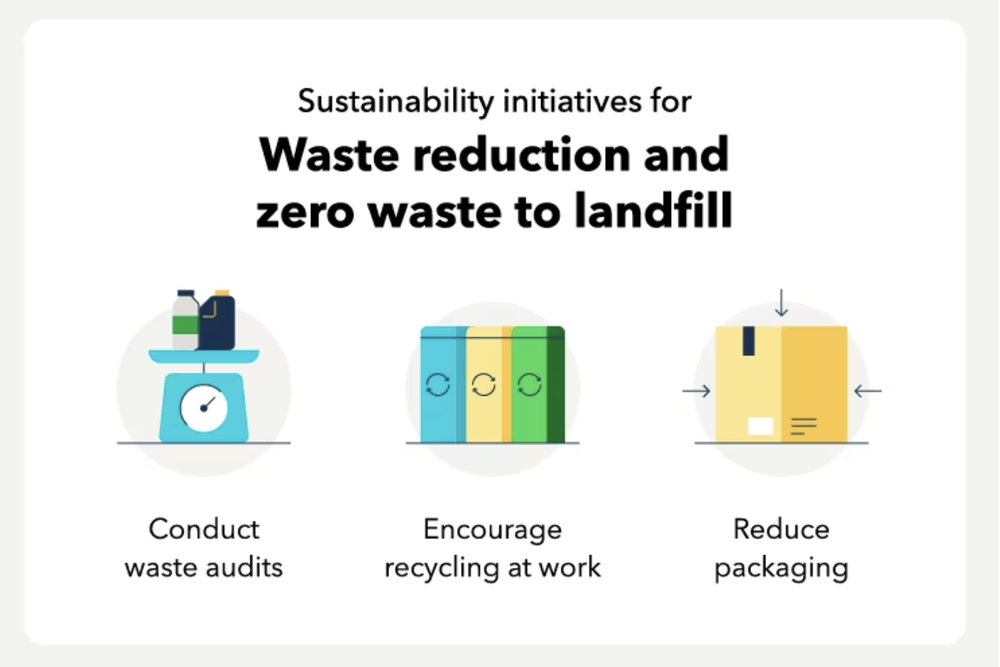
1. Conduct waste audits
A waste audit involves taking stock of the quantity and types of waste your business generates and how it’s managed. Waste audits are a helpful way to discover what’s being recycled and what’s not, identify disposal problems and areas of inventory waste, and spot inefficiencies in your current waste management.
Your waste audit results can help you review purchasing and management decisions when it comes to resource efficiency. Addressing these issues to reduce waste in your business can help you save money on costly disposal processes, ensure you’re meeting regulatory requirements, and create more sustainable waste management systems.
2. Encourage recycling among employees
Promoting a culture of recycling within the workplace can help reduce waste sent to landfills and conserve valuable resources. Recycling not only diverts materials from landfills but also reduces the energy and water consumption required to produce new products.
To encourage recycling, provide clearly labeled recycling bins throughout the premises, making it easy for employees to sort and dispose of recyclable materials properly. Establish company-wide communication to raise awareness about the importance of recycling and provide guidance on what items can and can’t be recycled. By fostering employee engagement and participation, you can start a collective effort to minimize waste and promote a greener workplace.
3. Reduce packaging
Product packaging is a main culprit of landfill waste. Of the 2 million tons of plastic containers and packaging waste produced in 2018, over 69% was landfilled, according to the EPA’s most recent data.
To limit your business’s contribution to growing landfills, evaluate your current packaging systems and consider more sustainable packing options. Swap out single-use containers for more environmentally friendly materials, or consider how to implement box-free returns. Companies like Happy Returns, for example, offer box-free, label-free returns that ship inside reusable totes, reducing packaging waste significantly.
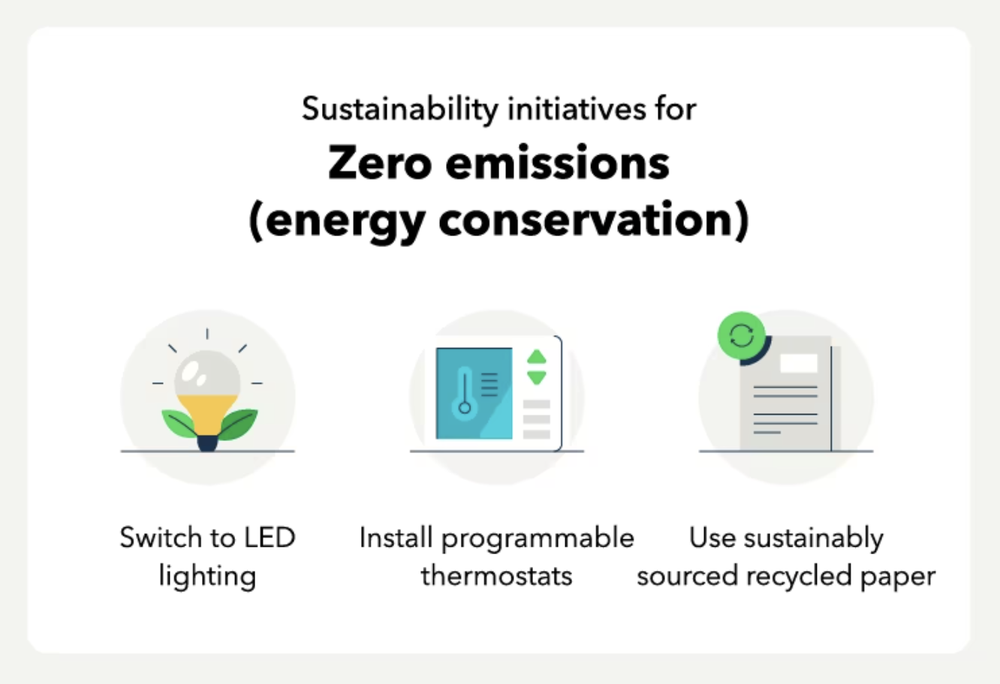
4. Switch to LED lighting
LED lights are energy-efficient, consuming significantly less electricity than traditional incandescent or fluorescent bulbs. Making the switch to LED lights can help reduce energy consumption, lower carbon emissions, and decrease your overall environmental footprint. Plus, switching to LED lighting has an average payback period of less than 12 months, according to a QuickBooks survey.
Assess your current lighting system and identify areas where you can install LED lights. Replace outdated bulbs with energy-efficient LED alternatives, which last longer and require less frequent replacement. Consider installing motion sensors or timers to optimize energy usage and further reduce electricity waste. The initial investment in LED lighting is often offset by long-term savings through reduced energy bills and maintenance costs.
5. Install programmable thermostats
Contribute to energy efficiency and reduce your business’s environmental footprint by installing programmable thermostats. Programmable thermostats provide automated temperature control, so you can optimize heating and cooling based on occupancy at any given time. As a result, you can save energy, reduce greenhouse gas emissions, and lower your operating costs.
To get started, assess your heating and air conditioning (HVAC) systems to determine where you can install programmable thermostats. Choose programmable models that offer customizable schedules that you can sync with your hours of operation. Adjust temperatures during unoccupied hours or periods of lower demand to ensure energy isn’t wasted when it’s not needed.
6. Use sustainably sourced recycled paper
While going 100% paperless isn’t always practical for business operations, using sustainably sourced recycled paper can help reduce the environmental impact of paper consumption. Opting for paper made from post-consumer recycled content helps conserve natural resources, mitigate deforestation, reduce energy consumption, and minimize the waste sent to landfills.
Purchase paper products with recognized certifications like FSC (Forest Stewardship Council) or PCF (Processed Chlorine Free). These certifications ensure that the paper is responsibly sourced from sustainably managed forests or made from recycled materials. You can also encourage double-sided printing to maximize your use of each page and implement digital alternatives (like digital invoices and receipts) wherever possible.
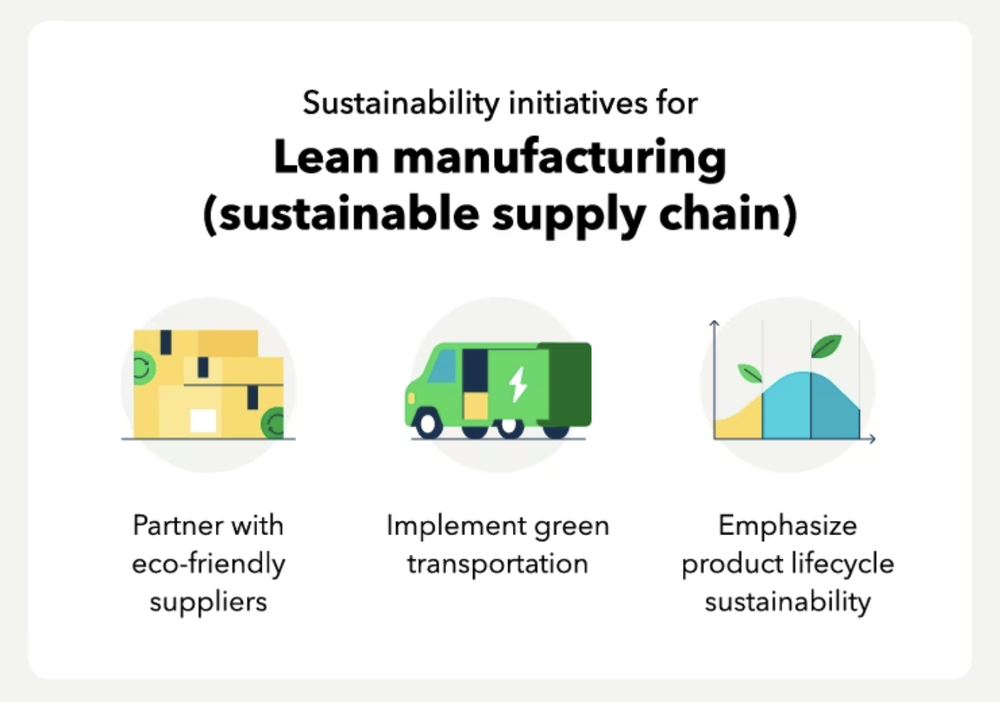
7. Partner with eco-friendly suppliers
Partner with suppliers who prioritize ethical sourcing, waste reduction, energy efficiency, and eco-friendly packaging. By collaborating with suppliers who prioritize sustainability, you can contribute to a more sustainable supply chain.
Look for suppliers with eco-certifications such as the CarbonNeutral Certification, LEED Certification, Green Seal certification, or memberships in recognized sustainability programs like the Rainforest Alliance or FSC. Partnering with eco-friendly suppliers not only reduces the environmental impact of your business, but also supports the growth of sustainable practices across industries.
8. Implement green transportation
Prioritizing eco-friendly transportation options in your supply chain can contribute to cleaner air quality and reduced greenhouse gas emissions. Start by assessing your current transportation practices for receiving goods from suppliers and delivering products to customers.
Evaluate any areas where you can adopt greener alternatives. If you have a company fleet, explore transitioning to electric or hybrid vehicles. You might also consider promoting a hybrid work schedule to minimize commuting.
9. Emphasize product lifecycle sustainability
By considering the entire lifecycle of your product, you can make informed choices that minimize waste and conserve resources.
Evaluate your product—from design and manufacturing to disposal—and identify areas for improvement. Choose materials that are renewable, recyclable, or have a lower environmental footprint. Design products for sustainability and durability to encourage a longer lifespan. Finally, look for ways to reduce waste during manufacturing, such as minimizing packaging.

10. Monitor and reduce water usage
To be proactive about resource conservation, implement a water monitoring system to actively track water consumption and usage patterns in your business. From there, identify where water is used inefficiently or excessively, such as leaks, inefficient equipment, or wasteful practices. Fix leaks promptly and consider upgrading to water-efficient fixtures and appliances.
11. Install water-efficient fixtures
A great way to work toward conserving water is by installing water-efficient fixtures, including faucets, toilets, and irrigation systems. Replace old and inefficient fixtures with low-flow or aerated faucets that use less water, and install dual-flush or low-flow toilets to minimize water waste.
Promote water conservation within your business by educating employees about efficient water use and implementing leak detection and repair programs. This sustainability initiative not only helps preserve local water sources, but can also lead to cost savings through reduced water bills.
12. Invest in water-saving technologies
There are a number of different water-efficient technologies available for more ways to conserve water. When you need to replace a water heater or another water-producing product (like a dishwasher), consider WaterSense- and Energy Star-certified products, which are designed for improved efficiency.
Other technologies to explore include smart irrigation systems, which adjust watering schedules based on weather conditions and plant needs, sensor-based faucets that automatically control water flow, and even water recycling systems or greywater reuse systems that repurpose water.
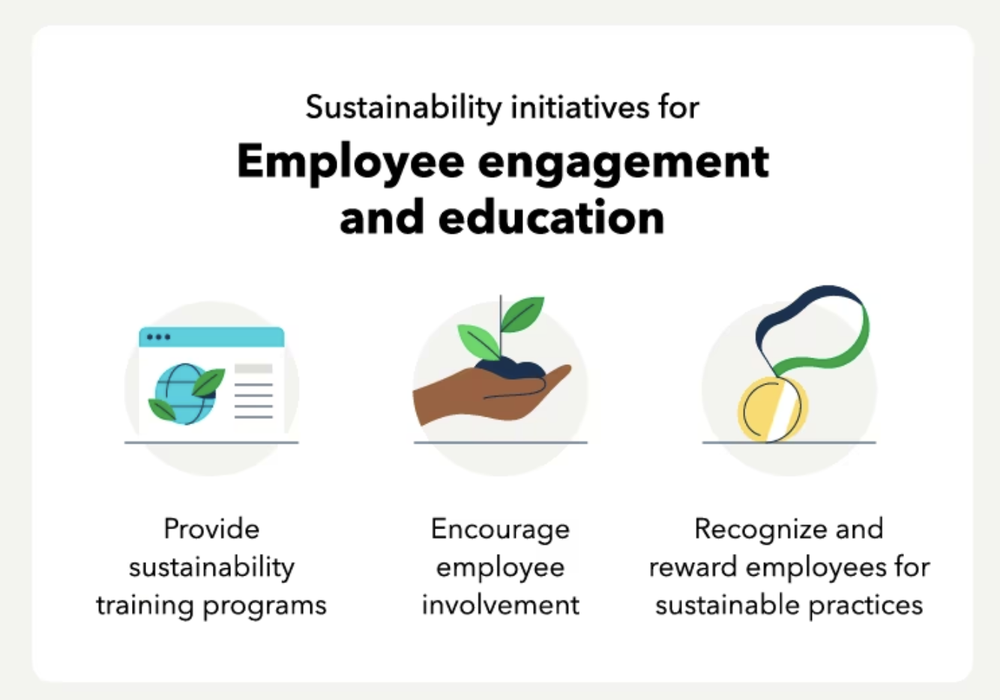
13. Provide sustainability training and awareness programs
To foster a culture of sustainability in the workplace, provide training and awareness programs to help educate and engage employees. This is particularly helpful for enforcing sustainability initiatives that depend on your employees. Providing relevant training can help establish your commitment to sustainability, ensure alignment on your sustainability plan, and give your employees the tools they need to participate meaningfully.
Sustainability training programs can cover key topics like energy conservation, waste reduction, and responsible consumption. You can provide resources, workshops, or seminars on your highest-priority initiatives, whether that’s a one-time workshop or a monthly lunch and learn.
14. Encourage employee involvement in sustainability initiatives
The success of any collective sustainability initiative in the workplace depends heavily on how involved your employees are. You’ll want to find ways to empower your employees to actively participate in your company’s sustainability efforts.
You can do this by creating a sustainability committee or task force. This gives employees the opportunity to take ownership of corporate sustainability initiatives, share their thoughts and ideas, and play an active role in implementing them. You could also encourage a little healthy competition related to your sustainability initiatives, making the process fun and promoting teamwork to reach your goals.
15. Recognize and reward employees for sustainable practices
Acknowledging your employees’ efforts to adopt sustainable practices is crucial for maintaining a greener workplace. It motivates employees to continue their positive efforts and reinforces the importance of sustainability within your organization.
There are various ways to recognize and reward employees. You can highlight exceptional employees in company-wide meetings or internal communications, offer incentives and rewards for sustainable actions, or provide exciting opportunities for further growth and development in sustainability.
Can going green be good for your bottom line?
Investing in sustainability initiatives may require some time and effort upfront, but the long-term payoff is worthwhile—both for your business and the environment. Sustainability is an ongoing journey that requires commitment, creativity, and collaboration, where each small step adds up to significant progress over time. Make sure you also have the right accounting software to help you manage your expenses, track cost savings thanks to your sustainability initiatives, and calculate tax deductions.
This article originally appeared on the QuickBooks Resource Center and was syndicated by MediaFeed.org.
More from MediaFeed:
The average credit card debt by state

Millions of Americans continue to struggle with credit card debt. The average credit card debt in America is $5,982 as of July 2023, according to a new report from TransUnion®.Out of the 50 states, Alaska has the highest average credit card debt ($7,394), while Wisconsin has the lowest average ($4,843), data show.More than 6 million cardholders are at least 30 days past due on a minimum payment, according to TransUnion’s credit card delinquency data.Your credit card balance is your credit card debt. Making transactions on your credit card is a liability that eventually needs to be repaid. Below we highlight the average credit card debt in all 50 states and explain why making minimum payments each billing cycle may not be right for you.
Damir Khabirov / iStock

Consumer credit card debt in the United States exceeds $1 trillion as of the second quarter (Q2) of 2023, according to the Federal Reserve Bank of New York.The average American credit card debt increased to $5,982 in July 2023 (it was $5,932 in June 2023 and $5,350 in July 2022), according to TransUnion, a nationwide credit bureau.Credit card debt can be costly if you’re paying interest charges. The average interest rate on credit cards is 22.16% as of Q2 2023, according to preliminary Federal Reserve data on credit card accounts assessed interest. (Learn more atHow Many Credit Cards Should I Have?).
Kiwis/istockphoto

TransUnion publishes U.S. credit card debt data every month in all 50 states and the District of Columbia. We’re tracking the data as it becomes available and then ranking the average credit card debt by state in descending order using TransUnion’s recent industry snapshot (July 2023):
fizkes/istockphoto

The nation’s capital is not a state, but the District of Columbia has one of the highest average credit card debt balances in the United States. The average credit card debt in Washington, D.C., stands at $7,022 per consumer as of July.
Sean Pavone/istockphoto

Alaska is the largest state in the country in terms of its geographical boundaries (586,412 square miles). It also leads all 50 states with the highest average credit card debt in the nation. Cardholders in Alaska have an average credit card balance of $7,394 as of July.
chaolik/istockphoto

Hawaii sports tropical climate and active volcanoes. This state of islands in the Pacific is also known for its relatively high average credit card debt. Consumers in the Aloha State have an average credit card balance of $6,720 as of July.
Art Wager

Maryland sits south of the Mason-Dixon line. This Old Line State has a relatively high credit card debt in the USA. The average credit card debt in Maryland stands at $6,650 per consumer as of July.
James_Lane

Nevada may have some issues with gambling debt. This predominantly desert and semiarid state also ranks high in credit card debt. The average credit card debt in Nevada is $6,529 per consumer as of July.
AlizadaStudios

New Jersey is the most densely populated state in the United States. The Garden State also has a high average credit card debt. Cardholders in New Jersey have an average credit card balance of $6,526 as of July.
Ultima_Gaina / istockphoto

Virginia enjoys close proximity to the nation’s capital in a region locally nicknamed DMV (District of Columbia, Maryland, and Virginia). Similar to Maryland and Washington, D.C., consumers in the Old Dominion state carry a relatively high average credit card debt in America. Virginia’s average credit card debt stands at $6,523 per consumer as of July.
DenisTangneyJr

Colorado hosts a large stretch of the Rocky Mountains. The Centennial State also hosts a large amount of credit card debt per consumer. The average credit card debt in Colorado is $6,450 per cardholder as of July.
Postoak at English Wikipedia

Texas is one of the largest states in the nation in terms of its geographical boundaries and population. The Lone Star State also has a relatively high average credit card debt in the U.S. The average credit card debt in Texas is $6,397 per consumer as of July.
Sean Pavone/istockphoto

Nicknamed the Constitution State, Connecticut has the highest average credit card debt in New England. What is the average credit card debt in Connecticut? It’s $6,386 per consumer as of July.
DenisTangneyJr

California is the most populous state in the nation with more than 38.9 million people as of Jan. 1, 2023. The Golden State also has one of the highest amounts of credit card debt per consumer. The average credit card debt in California is $6,368 per cardholder as of July.
Art Wager

Georgia produces tons of agricultural goods, but the Peach State also has a relatively high level of credit card debt. The average credit card debt in Georgia is $6,347 per consumer as of July.
SeanPavonePhoto

Florida is one of the largest states in the nation in terms of population and economic activity. The Sunshine State has more than 22 million residents and a gross domestic product (GDP) of nearly $1.4 trillion as of 2022. The average credit card debt in Florida is $6,336 per consumer as of July.
Kasra Keighobady/istockphoto

Washington state borders the Canadian province of British Columbia and carries a relatively high amount of credit card debt per consumer. The average credit card debt in Washington is $6,331 per cardholder as of July.
4nadia

New York remains one of the largest states in the nation despite its recent decline in population. The average credit card debt in New York is $6,224 per consumer as of July.
TomasSereda/istockphoto

Arizona welcomes domestic and international tourism with its Grand Canyon natural landmark and desert climate. The average credit card debt in Arizona is $6,083 per consumer as of July.
wanderluster

Delaware is a relatively small state in terms of its geographical boundaries and population. The First State, however, is one of the bigger states in terms of average credit card debt. The average credit card debt in Delaware is $6,044 per consumer as of July.
mdgmorris

Wyoming has the smallest population in the nation (fewer than 600,000 people). But this Mountain West state has a relatively high amount of credit card debt per consumer. The average credit card debt in Wyoming is $5,931 per cardholder as of July.
dschreiber29

Massachusetts rests in the heart of New England. The Bay State also has a relatively high amount of credit card debt per consumer. The average credit card debt in Massachusetts is $5,927 per cardholder as of July.
ivanastar/istockphoto

Illinois enjoys its reputation as the Land of Lincoln. This Midwestern state also has a relatively high amount of credit card debt per consumer. The average credit card debt in Illinois is $5,916 per cardholder as of July.
Shelly Bychowski/istockphoto

New Hampshire represents one of the smaller states but has a high amount of credit card debt per consumer. The average credit card balance in New Hampshire is $5,888 per cardholder as of July.
Sean Pavone/istockphoto

Utah has the Great Salt Lake and a smaller average credit card debt than most of the states it borders. The average credit card debt in Utah is $5,834 per consumer as of July.
AndreyKrav

Oregon carries a lower level of credit card debt per consumer than most of the states it borders. The average credit card debt in Oregon is $5,820 per cardholder as of July.
HaizhanZheng

South Carolina is known for its coastline and beaches. The Palmetto State shares a border with Georgia but has a much smaller scale of credit card debt on average. The average credit card debt in South Carolina is $5,816 per consumer as of July.
SeanPavonePhoto

North Carolina is known for its colleges, universities, and military bases, among other things. (The Tar Heel State has several state-based student loan forgiveness programs.) The average credit card debt in North Carolina is $5,757 per consumer as of July.
” Darwin Brandis”

Rhode Island is the smallest state in the country in terms of its geographical area (1,214 square miles). The average credit card debt in Rhode Island is $5,747 per consumer as of July.
DepositPhotos.com

Oklahoma is located in the middle of the 48 contiguous states. The Sooner State is also at or near the middle of the pack regarding average credit card debt in America. The average credit card debt in Oklahoma is $5,737 per consumer as of July.
Wiki

Louisiana sits along the Gulf Coast in the South. The Pelican State is also known as the Creole State and the Sugar State. The average credit card debt in Louisiana is $5,713 per consumer as of July.
DepositPhotos.com

Nicknamed the Keystone State, Pennsylvania has a lower amount of credit card debt per consumer compared with its Mid-Atlantic neighbors of New York and New Jersey. The average credit card debt in Pennsylvania is $5,612 per cardholder as of July.
Sean Pavone/istockphoto

Idaho is nicknamed the Gem State and is known for its potatoes. Average credit card debt per consumer in Idaho is one of the lowest in the Mountain West region. The average credit card balance in Idaho is $5,548 per cardholder as of July.
knowlesgallery

Well-known for its country music scene, Tennessee has a lower credit card debt per consumer than most of the 50 states. The average credit card balance in Tennessee is $5,516 per cardholder as of July.
Swarmcatcher

Minnesota became the North Star State because of its geographical location in the country’s heartland. The average credit card debt in Minnesota is $5,481 per consumer as of July.
JoeChristensen

North Dakota has multiple nicknames, including the Flickertail State, Sioux State, and the Peace Garden State. The average credit card debt in North Dakota is $5,471 per consumer as of July.
sequential5

New Mexico has a lower credit card debt per consumer than each of the neighboring states surrounding it. The average credit card debt in New Mexico is $5,466 per cardholder as of July.
Davel5957

Kansas markets itself as the Sunflower State. The average credit card balance in Kansas is $5,449 per consumer as of July.
Michael Pham

Montana is known as America’s Treasure State and Big Sky Country. Montana also has the lowest average credit card debt in the Mountain West region. The average credit card balance in Montana hovers at $5,447 per cardholder as of July.
YinYang

Missouri is not just any state — it’s the Show Me State. The average credit card debt in Missouri is $5,397 per consumer as of July.
DepositPhotos.com

Alabama enjoys a coastline along the Gulf Coast. Known as the Cotton State, Alabama is also known for peanuts. The average credit card debt in Alabama is $5,396 per consumer as of July.
Sean Pavone

Maine has relatively low credit card debt per consumer compared with other New England states. The Pine Tree State also has among the lowest credit card debt per consumer along the East Coast. The average credit card balance in Maine is $5,369 per cardholder as of July.
traveler1116

Michigan hosts several manufacturers of popular car makes and models. It’s also known as the Wolverine State and the Great Lake State. The average credit card debt in Michigan is $5,353 per consumer as of July.
pawel.gaul/istockphoto

South Dakota hosts the famous Mount Rushmore National Memorial. The average credit card debt in South Dakota is $5,277 per consumer as of July.
RiverNorthPhotography

Ohio serves 11.8 million residents as of 2022, making Ohio one of the most populous states in the nation. The Buckeye State also has among the lowest credit card debt per consumer in the United States. The average credit card debt in Ohio is $5,267 per cardholder as of July.
dypics

Vermont is known as the Green Mountain State. The average credit card debt in Vermont is $5,259 per consumer as of July.
” DonLand”

Arkansas — dubbed the Natural State because of its wildlife, bodies of water, and preserved open space — is a Southern state with a relatively low level of credit card debt per consumer. The average credit card debt in Arkansas is $5,210 per cardholder as of July.
Tara Ballard

Mississippi is one of the poorest states in the nation, but the cost of living in the Magnolia State is also among the lowest nationwide. The average credit card debt in Mississippi is $5,208 per consumer as of July.
peeterv/istockphoto

Nebraska produces 81.6% of the nation’s great northern beans as of 2022, according to federal data. The average credit card debt balance in Nebraska is $5,180 per consumer as of July.
marekuliasz

Indiana is America’s Hoosier State. The average credit card debt in Indiana is $5,125 per consumer as of July — one of the lowest in the nation.
f11photo

Kentucky has a relatively low level of credit card debt per consumer. The average credit card debt in Kentucky is $5,088 per cardholder as of July.
Thomas Kelley

West Virginia remains one of the few states that may pay you to move there if you work from home. The average credit card debt in West Virginia is $5,062 per consumer as of July.
hkim39 // istockphoto

Iowa ranks first in the nation in the production of corn for grain. The average credit card debt in Iowa is $4,958 per consumer as of July.
Jacob Boomsma/istockphoto

Wisconsin remains the largest cheese producer in the nation, and consumers in America’s Dairyland have the lowest average credit card balances nationwide. The average credit card debt in Wisconsin is $4,843 per cardholder as of July.
csfotoimages/istockphoto

You can find out your credit card balance by reading your credit card statement. Your credit card balance matters because it’s your unpaid credit card debt that you are expected to repay as fast or as slow as you wish.
The slowest way to pay down credit card debt is to make minimum payments each billing cycle. The fastest way to pay down credit card debt is to pay the full statement balance each billing cycle.
Cardholders with a credit card grace period may avoid interest charges on new purchases by paying the statement balance in full each billing cycle.The annual percentage rate (APR) on a credit card can be quite high compared with other consumer lending products. If you make minimum payments each billing cycle, it could take years to pay off the debt and the interest charges could be costly in particular.
How much credit card debt does the average American have? The average American credit card balance is $5,844 per consumer as of May 2023, according to TransUnion data.
Barbara Lorena Vergara/istockphoto

In general, leaving a small balance on your credit card is not the best idea if your goal is to build credit without incurring interest charges.Carrying a small balance may not be right for you if you can afford to pay off your statement balance each billing cycle. Unless you have a 0% introductory APR, you may face interest charges if you pay less than the statement balance.
How To Avoid Credit Card Interest
If your credit card has a grace period, you may avoid credit card interest charges by paying your statement balance in full each billing cycle. You may also want to avoid credit card cash advance transactions if you’re trying to avoid credit card interest charges. (Learn more at Should You Cancel Unused Credit Cards?).
Farknot_Architect/istockphoto

Consumers in all risk tiers use credit cards to buy goods and services. Credit card debt exists across all risk scores, but cardholders with bad credit are more likely to experience serious delinquency.According to TransUnion’s credit card debt data by risk tier (July 2023):
- 18.55% of subprime cardholders fell 90+ days past due
- 1.21% of near prime cardholders fell 90+ days past due
- 0.19% of prime cardholders fell 90+ days past due
- 0.01% of prime plus cardholders fell 90+ days past due
- 0% of super prime cardholders fell 90+ days past due
Pratchaya/istockphoto

While it’s interesting to learn the average credit card debt in the U.S., it doesn’t help you much when you’re struggling to pay down your own credit card debt.
Most credit cards are unsecured without collateral. This means credit card account holders typically are not required to make a security deposit. Failing to pay and defaulting on your credit card bills can severely damage your credit.
When you make transactions on a credit card, the transaction activity represents an unpaid debt that you’ll eventually have to repay as fast or as slow as you wish. If you’re facing credit card debt challenges, below we highlight some ways you may manage your debt.
fizkes/istockphoto

Here are three tips that may help you reduce credit card debt:
1. Using Balance Transfer Credit Cards
Some credit card issuers offer new applicants 0% introductory APR financing on balance transfers. This enables you to transfer existing credit card debt to a new card and gives you a break from incurring interest charges. And when you transfer balances from multiple cards, you’re consolidating your debt as well, which can make it easier to stay on top of payments since you’ll have just one instead of multiple.
Promotional APR offers last a minimum of six months and can extend up to 21 months. Just note that you may incur a balance transfer fee, which is typically 3% to 5% of the amount transferred. With the way credit cards work usually, the balance transfer fee is added to the balance of the new account.
The key to utilizing a balance transfer credit card is to pay a portion of your remaining balance each month before you resume swiping at places accepting credit card payments. This ensures that you have the entire balance paid off by the time the promotional rate expires and the standard rate resumes.
fizkes/istockphoto

Another option to pay off credit card debt is to use a personal loan to consolidate debt. Personal loans are typically installment loans with fixed monthly payments and a fixed repayment schedule. Approval typically is based on your personal credit history and credit score.
If you have good or excellent credit (661+ VantageScore® 4.0), you might be able to qualify for a loan with a lower interest rate than your current credit cards have. When you receive funding from a personal loan, you can use it to pay off your credit card debt, which may have higher interest rates — especially if your APR is above the average credit card interest rate.
designer491/istockphoto

You could also look for a credit counseling service that can offer advice on how to manage your credit card debt and pay it off. There are nonprofit credit counselors who can help you to choose from one of many possible solutions, such as credit card debt forgiveness.
Credit counseling can also offer general financial education, such as explanations of important credit card definitions and tips on budgeting. Counseling can take place in person, online, or over the phone. You may be able to find nonprofit credit counseling services through a university, military base, credit union, or housing authority.
Beware that some vendors may not be legitimate credit counselors. The U.S. Department of Justice maintains a list of approved credit counseling agencies by state. Most of the reputable credit counseling agencies are nonprofit organizations that offer services at local offices, online, or on the phone, according to the Federal Trade Commission.
PeopleImages/istockphoto

Whether you have a large or small amount of credit card debt, paying that balance off as soon as possible may reduce or eliminate your interest costs. When choosing a credit card, consider the card’s standard interest rate, as well as any promotional financing offered on new purchases, balance transfers, or both.
This article originally appeared on SoFi.com and was syndicated by MediaFeed.org.
Please understand that this information provided is general in nature and shouldn’t be construed as a recommendation or solicitation of any products offered by SoFi’s affiliates and subsidiaries. In addition, this information is by no means meant to provide investment or financial advice, nor is it intended to serve as the basis for any investment decision or recommendation to buy or sell any asset. Keep in mind that investing involves risk, and past performance of an asset never guarantees future results or returns. It’s important for investors to consider their specific financial needs, goals, and risk profile before making an investment decision.
The information and analysis provided through hyperlinks to third party websites, while believed to be accurate, cannot be guaranteed by SoFi. These links are provided for informational purposes and should not be viewed as an endorsement. No brands or products mentioned are affiliated with SoFi, nor do they endorse or sponsor this content.
Communication of SoFi Wealth LLC an SEC Registered Investment Advisor
SoFi isn’t recommending and is not affiliated with the brands or companies displayed. Brands displayed neither endorse or sponsor this article. Third party trademarks and service marks referenced are property of their respective owners.
Communication of SoFi Wealth LLC an SEC Registered Investment Adviser. Information about SoFi Wealth’s advisory operations, services, and fees is set forth in SoFi Wealth’s current Form ADV Part 2 (Brochure), a copy of which is available upon request and at here. Liz Young is a Registered Representative of SoFi Securities and Investment Advisor Representative of SoFi Wealth. Her ADV 2B is available at here.
PeopleImages/istockphoto

ValentynVolkov/istockphoto
Featured Image Credit: DepositPhotos.com.