“The Twelve Days of Christmas” may be 250 years old, but that’s done nothing to diminish its popularity as a Christmas carol. Does that mean people today love to observe all 12 days of Christmas? Absolutely not.
There are lots of Christmas traditions that people may have heard of but have precious few people actually observing them, either because of the passage of time or because they’re strictly local traditions that don’t translate to other cultures. Here’s our list of 15 traditions that no one would observe anymore.
Image Credit: Depositphotos.com.
1. Sugar plums

The poem “‘Twas the Night Before Christmas” contains a line about children having “visions of sugar plums” dancing in their heads, and people can be forgiven for thinking these candies no one makes anymore contain actual plums. They don’t, but the “sugar” part of the candy’s name is 100% on point because the candies are made of nothing but hardened sugar.
Image Credit: iStock/ voltan1.
2. Placing fruitcake under your pillow

The Yuletide tradition of eating fruitcake is one of the more baffling because in 2023, it’s pretty hard to find anyone who will cop to eating it, because it’s gross (apologies to aficionados!). In 19th century England, though, people not only ate it but those without a spouse would put slices of it under their pillows so they could dream about their intended as they slumbered. We’re not sure that worked, but can you prove it didn’t?
Image Credit: Natalia Pogodina / iStock.
3. Feast of the Donkey

No one in the modern world does this today, but in 12th century France, there was a holiday custom in which a donkey would be brought to the church altar and just kind of stand there throughout the entire service. The priest and his flock would exchange donkey brays, and it’s not hard to figure out why this tradition reached its expiration date 900 years ago.
Image Credit: Wikipedia/Public Domain.
4. String bean cake

We all love to find hidden treasure, as children’s delight in locating hidden Easter eggs that they have no intention of eating would seemingly bear out. This is analogous to the long-forgotten tradition of baking a string bean into a Christmas cake, which one imagines was a lot of fun to find but had no takers when it came to eating it.
Image Credit: DepositPhotos.com.
5. Lord of misrule

The lord of misrule was usually a peasant or other such average Joe who had been chosen by the local church to run the seasonal revelries. The lucky contestant was normally chosen by lot, sort of like jury duty. In Scotland, the individual performing this service was known as the “Abbot of Unreason,” which we think is a cooler name.
Image Credit: Wikipedia/Public Domain.
6. Nice house you’ve got here

In 19th-century Europe, going out caroling looked more like Halloween than Christmas because the carolers in question expected to get something – normally refreshments of some sort. If the homeowner who had received the unsolicited caroling didn’t pony up some kind of reward, the implication was that they would receive the 19th-century equivalent of someone toilet-papering their house. So give them some egg nog, or else.
Image Credit: DGLImages.
7. Elves who are rascals
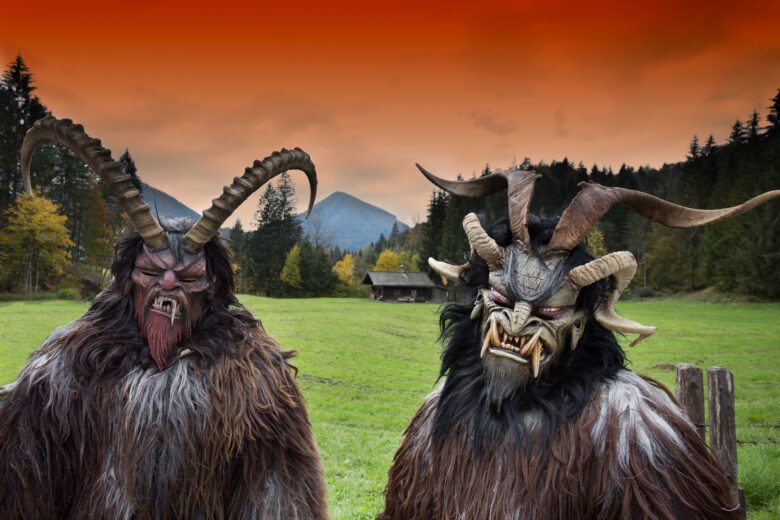
Today we think of Santa Claus as a kindly old man who loves nothing more than giving children toys made by happy elves in his workshop. In some European countries, Santa’s helpers were actually kind of unpleasant characters, especially the Krampus, sort of alternate-universe Santa whose sole preoccupation was punishing naughty children. The creature was the subject of the foolish 2015 horror movie “Krampus.”
Image Credit: Depositphotos.com.
8. Christmas pickle
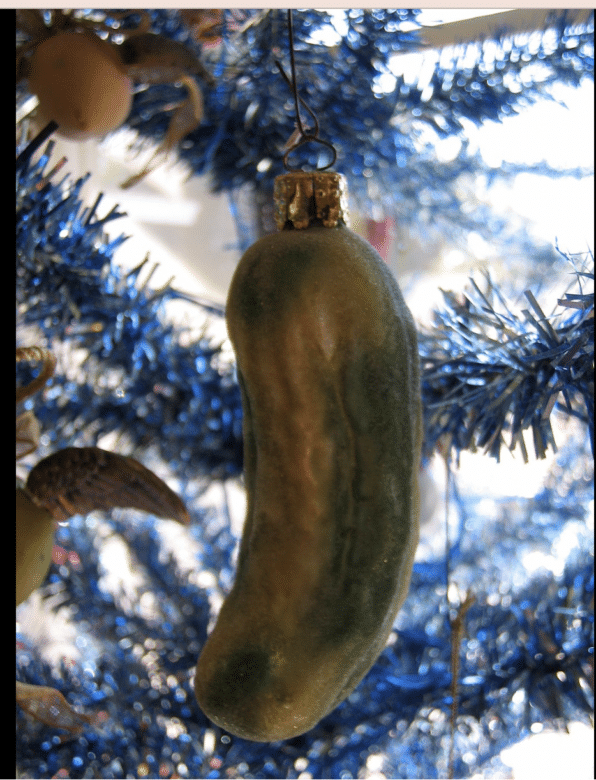
The Christmas pickle is believed to be a 19th century tradition brought to America by German immigrants. The pickle is not an actual pickle but a remarkable simulation, and whoever found it among the many ornaments on the Christmas tree would get a prize of some kind. In 2016, the New York Times reported that in a poll, 91% of Germans had never heard of this tradition before.
Image Credit: Dean Johnson/Wikimedia Commons.
9. Caganer

OK, this one is just weird. Catalonian nativity scenes are unlike those in any other part of the world, due to the presence of a figurine known as a Caganer. This figurine crouches among the Wise Men and little baby Jesus to leave a big old number two behind. We cannot explain anything about this very bizarre custom at all, but we’re glad it’s a tradition that never took off elsewhere in the world.
Mr. Hanky the Christmas Poo, you’ve got nothing on the Caganer!
Image Credit: Roeland P./Wikimedia Commons.
10. Yule cat
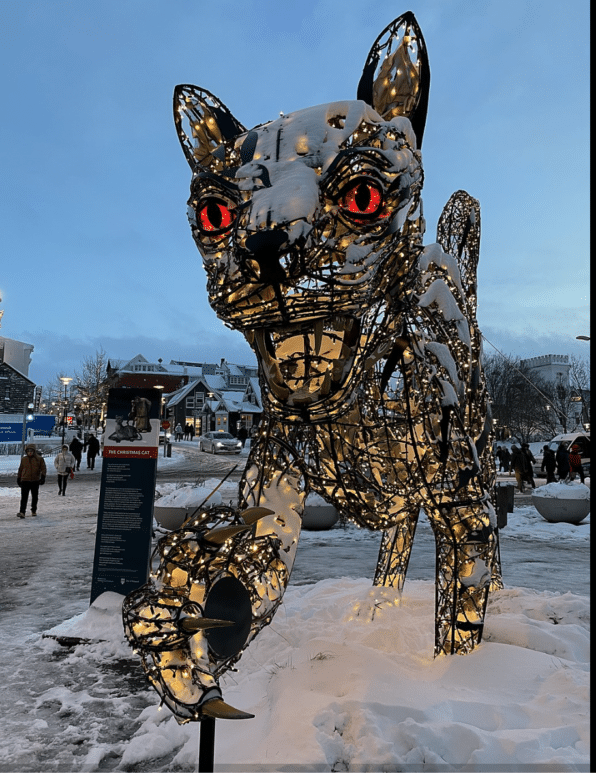
If you prefer to envision Christmas as a family-friendly holiday, don’t travel to Iceland around then. In that country’s lore, the Yule cat is a savage creature who furtively stalks people, eating those who have committed the crime of not buying any new clothes before Christmas Eve. That’s better though than some interpretations of the story, in which the cat simply eats anyone without new clothes, even in August.
Image Credit: ProcrastinatingHistorian/WikimediaCommons.
11. Mari Lwyd

If you have any nightmares or phobias about answering the front door and being greeted by a horse skull, avoid Wales at Yuletide. In that part of the world, they enjoy the folk custom known as the Mari Lwyd, in which people go door to door with a horse’s skull on a pole, carried by someone hidden beneath it in a cloth. We’re pretty sure we’re okay with this activity being limited to one part of the world, so we’ll avoid it during the holidays and visit in June.
Image Credit: Wikimedia Commons/ AndyDingley.
12. Burning of the devil

When Christmas rolls around in Guatemala, few people go to Wal-Mart to put their children on Santa’s lap. Rather, they take three weeks to create a piñata in the likeness of the devil and set it on fire, even though the devil lives in a place that’s always on fire and it doesn’t seem to bother him. In 2023, Guatemalans created one in the likeness of Attorney General Consuelo Porras Argueta, who had been accused of trying to falsify election results.
Image Credit: Depositphotos.com.
13. Night of the Radishes
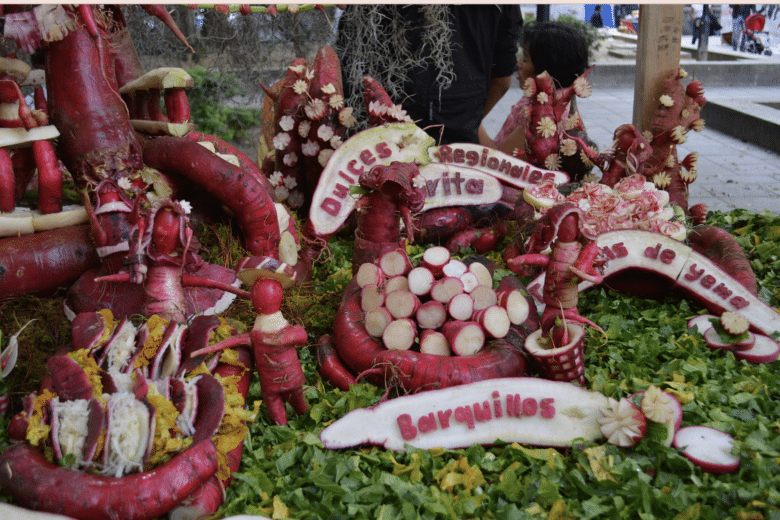
“Night of the Radishes” sounds like a low-budget horror movie, but in reality it’s a delightful tradition observed in the Mexican city of Oaxaca every December 23. It involves the carving of very large radishes to create holiday scenes and in some cases win fabulous prizes. The veggies start wilting the minute they get carved, so showing up on time is a must if you want to see the finished products.
Image Credit: Wikimedia Commons/AlejandroLinaresGarcia.
14. Shoe-tossing

In some places, “shoe-tossing” simply consists of standing outside of a chapel where a wedding is happening and then pelting the happy bride and groom with footwear. In the Czech Republic, it’s a Christmas tradition that one assumes leads to a lot less bruising – unmarried women throw a shoe over their shoulder against the door of a house, and if it points away from the domicile in question, they will be wed. It sounds just as effective as catching the bouquet at a wedding.
Image Credit: Wikimedia Commons.
15. Caga Tió
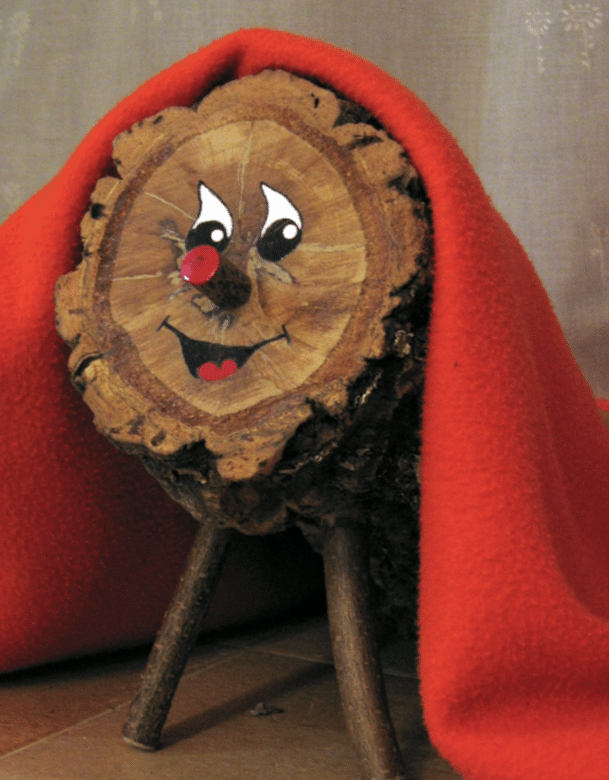
Catalonia takes the prize for the least bidden Christmas tradition of all time. Called “Caga Tió,” it’s a log that you “feed,” then bring to your delighted children as it showers nougat all over them from the other side of the log. We don’t want to get too much more graphic than that but if you just think a minute about what happens a little while after you eat, we’re sure you’ll put it together.
This article was produced and syndicated by MediaFeed.
Image Credit: Wikimedia Commons/Toniher.
More from MediaFeed

Holiday traditions that creep us out just a little
- 10 questions you should never answer if the police pull you over
- 30 awesome things we could do in the ‘70s that today’s kids have missed out on
Like MediaFeed’s content? Be sure to follow us.
Image Credit: Depositphotos.com.