
Let’s be real, nobody likes to think about worst-case scenarios. We usually go about our days, crossing our fingers and hoping nothing bad happens. But the fact is, accidents do happen all the time, and more often than not, we’re not really sure how to handle them. Sometimes, knowing just the right thing to do can be a game-changer. So, we’ve put together 19 science-backed facts that could save your life in some pretty common situations, like facing a polar bear or getting caught in quicksand.
Image Credit: Depositphotos.com.
Chewing aspirin during a heart attack can delay the formation of blood clots.

First of all, if you feel alarming symptoms that point to a heart attack, you should always first call 911. However, studies have shown that chewing—not swallowing—one full-strength aspirin can delay potentially fatal blood clots. Heart attacks and strokes occur when the blood supply to a part of your heart muscle or brain is clogged by blood clots. According to the American Heart Association, aspirin thins the blood, which helps prevent the formation of blood clots. Regular aspirin is quickly dissolved and absorbed in the stomach, and chewing it will do its job faster. One study shows that participants who chewed on a 325-milligram aspirin had a faster response than those who swallowed the tablet whole, for which it took 12 minutes to take effect.
Image Credit: DepositPhotos.com.
The best way to survive in a falling elevator is to lie down on your back.

Plunging elevators are fairly rare, but what should you do if you find yourself in a falling elevator? Squat? Jump? Sit? Standing is the worst thing you can do, and while sitting is also bad, it’s better than standing. Jumping up in the air just before the elevator hits the bottom only delays the inevitable. Your best chance is to lie down on your back, tush to the ground. In this position, your buttocks act as nature’s safety foam. Being compressible, muscle and fat help absorb the G-forces of the impact, cushioning the blow.
Image Credit: Depositphotos.com.
Keep your car keys on your bedside table.

Always keep your car keys on your bedside table. In case of a home invasion or if you hear a suspicious noise outside, press the panic button on your keys. It will trigger your car’s alarm, causing the horn to sound continuously until you switch it off or the car battery runs out.
Image Credit: DepositPhotos.com.
Learn the foreign emergency call numbers.
While looking up your destination’s emergency phone number isn’t at the top of your travel itinerary, it’s always better to be safe than sorry. Remember, the emergency 911 line is operational only in the U.S., its territories, Canada, and Mexico. The European equivalent to 911 is 112. To find the emergency call line for any country, you can refer to an alphabetized list provided by the State Department. Taking just a few minutes to note down this crucial number could be a lifesaving decision for you or someone else.
Image Credit: DepositPhotos.com.
When stuck in a riptide, always swim parallel to the shore.

According to the National Oceanic and Atmospheric Administration (NOAA), in an unfortunate case of being caught in a rip current, the worst thing you can do is fight it or panic-swim against it. Stay calm—it won’t pull you under—it’ll just pull you away from shore. Instead, float or swim parallel with the waves to shore until you’ve cleared the pull of the rip current.
Image Credit: Depositphotos.com.
If the tornado appears to stay in the same place—it is headed right at you.

If you find yourself stranded during a tornado and notice it seems to stay in one place, getting closer or appearing larger without moving to the right or left, it’s likely headed directly toward you. Don’t try to outrun it. Instead, immediately seek the nearest indoor shelter. If you cannot find a shelter, move away from trees and cars and lie flat on the ground with your face down.
Image Credit: vintagemirror / istockphoto.
If the tide suddenly goes out too far, get away fast.

When you see the ocean retreating unusually rapidly or far it’s sign that a killer wave—Tsunami— is on its way. According to experts, the best thing to in a situation like this is going to high ground immediately. The 2004 Indian Ocean Tsunami killed many people because they went down to the beach to view the retreating ocean exposing the seafloor.
Image Credit: johnnorth / istockphoto.
If you house smells fishy for no apparent reason—it can be an electrical fire.

Electrical outlets have wires and components covered with special heat-resistant chemicals and a plastic coating for insulation. When these materials get really hot, they can start to smell a bit like fish because of the burning odor they give off. As soon as you smell that fishy scent, call an electrician immediately.
Image Credit: Depositphotos.com.
Smash the edges of a car window, not the center.

If you find yourself in a situation where you have to break a car window, avoid hitting the center of the glass with a blunt object. Instead, target the edges of the window since those are the weakest points and are more likely to break.
Image Credit: rep0rter/iStock.
Kick yourself out of icy water.

If you ever find yourself trapped under icy water, it’s important not to let the shock of the cold and panic overwhelm you. You have about 10 minutes before hypothermia sets in, and your body becomes too cold to pull itself out. “Kick and pull,” advises Gordon Giesbrecht, a professor at the University of Manitoba who studies hypothermia and is known as “Professor Popsicle.” He told ABC News, “Put your arms on the ice, and just kick your legs, and try to pull yourself along the ice.”
Image Credit: Depositphotos.com.
If your vomit looks like coffee grounds—get to a hospital.

If your vomit has the appearance of coffee grounds, seek immediate medical attention as it may indicate old blood in your stomach.
Image Credit: DepositPhotos.com.
If you get stabbed/impaled by a sharp object—do not pull it out!

An object that has been lodged in your body works as a plug, so don’t pull it out because you will start to bleed more. Instead, cover the wound and try to stop the bleeding as much as you can until you find medical assistance.
Image Credit: Depositphotos.com.
If you’re lost in the wilderness, follow the water.

If you find yourself stranded while hiking, your safest bet is to head downhill and follow any water source you come across. People tend to settle near water, so following streams or rivers makes you more likely to find help or a nearby community.
Image Credit: istockphoto.
If you ever get caught in a burning building, always lay low to the ground.
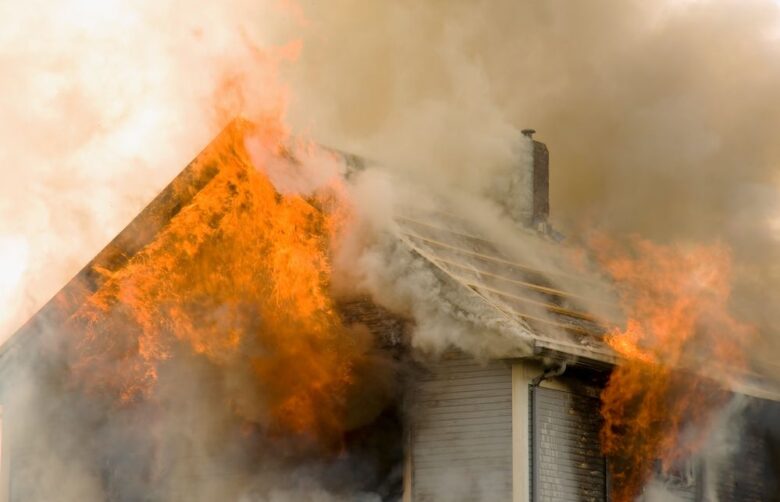
Most deaths in house fires are caused by smoke inhalation, not burns. So in case of a house fire stay low to the ground to reduce the risk of breathing in too much smoke.
Image Credit: DepositPhotos.com.
If you’re ever buried in an avalanche, spit.

People caught in avalanches die due to suffocation, so creating an air pocket is vital as it can provide enough air to survive until rescue arrives. This air pocket also allows for a useful technique: If you’re buried in snow and disoriented, spit. The direction your spit falls will indicate which way is down, helping you understand which way to move – if you’re able to.
Image Credit: Lysogor / istockphoto.
If you are ever being chased by a polar bear get naked and run.

Fact: the chances of you coming face-to-face with a polar bear are slim. But in case you do, don’t try to outrun it. Instead, try to stay calm and slowly strip down until you are buck-naked. Polar bears are very curious and easily distracted, and they should stop, sniff, and inspect your clothes, leaving you with enough time to escape. Well, this might increase your chance of dying of exposure, but hey, you can’t expect us to solve all your problems.
Image Credit: DepositPhotos.com.
If a powerline falls next to you, do not walk or run.

Say a power line falls onto a car or truck. This makes the area around it electrically charged. It’s kind of like when you drop a stone in water and see ripples. Each ripple is like a different level of voltage. Now, if you step from one ripple to another, it’s bad news because you can get electrocuted. That’s why, if you have to get out of a car with a power line on it, don’t just walk away. Either hop with your feet together, like you’re imitating a bunny, or shuffle your feet without lifting them, kind of like how a penguin walks. This helps you avoid stepping into different voltage areas.
Image Credit: Depositphotos.com.
If your hair suddenly stands up on end, duck and cover.

If your hair stands on end, it’s a good sign that lightning is about to strike in your vicinity. National Weather Service recomends to drop to your knees and bend forward but don’t lie flat on the ground. Wet ground is a good conductor of electricity.
Image Credit: Depositphotos.com.
If you find yourself in quicksand, lean back slowly.

Let’s say you’re trapped in quicksand. What you want to do is lean back. This will help spread your weight out and keep you from sinking more. You can slowly move back and forth, to let water mix with the sand around your stuck part, and loose it up.
This article was produced and syndicated by MediaFeed.
Image Credit: Depositphotos.com.
More from MediaFeed

A surgeon with a 300% mortality rate & other mega-entertaining historical facts
- 10 questions you should never answer if the police pull you over
- 30 awesome things we could do in the ‘70s that today’s kids have missed out on
Like MediaFeed’s content? Be sure to follow us.
Image Credit: DepositPhotos.