Stories of clandestine groups, consisting of a select few (almost exclusively white men), carrying out notorious rituals with real human skeletons, and conspiring against ordinary people while controlling the world have been a recurring theme in countless novels, TV shows, and never-ending discussions. While in almost all cases, these tales about secret societies are exaggerated for dramatic effect and to keep authors like Dan Brown in business, the fact remains that secret societies do exist and have flourished throughout history. We’ve researched and dug deeper into 9 of the most notorious and famous secret societies. Here are their stories.
Image Credit: Depositphotos.com.
The Knights Templar
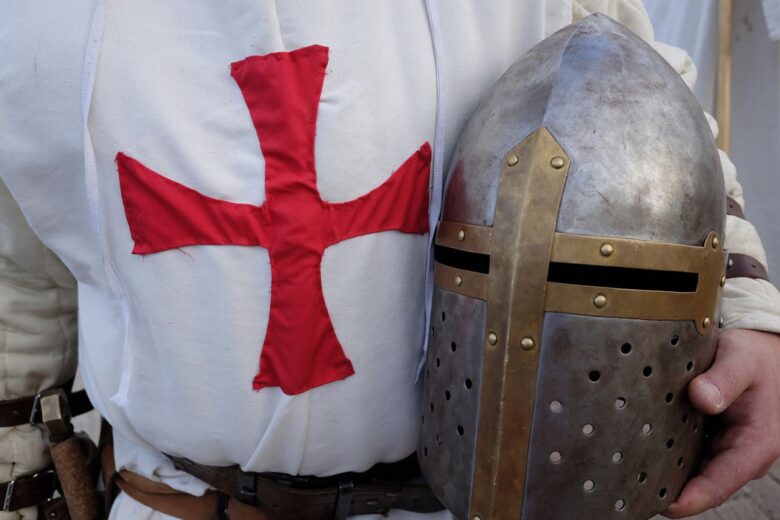
One does not talk about secretive societies without mentioning The Knights Templar, the medieval supermen, the fathers of all fraternal organizations. The mysterious order that has fascinated the public for centuries was founded around 1118 during the Crusades by Christian warrior monks devoted to protecting Christian pilgrims en route to the Holy Land.
In 1099, in the Christian-ruled Jerusalem, European pilgrims traveling to the Holy Land were killed and robbed while crossing through Muslim-controlled territories. In 1118, a French Knight named Hugues de Payens gathered eight relatives and acquaintances to form a secret military order called Poor Fellow-Soldiers of Christ and the Temple of Solomon—later known as The Knights Templar.
Clad in white robes emblazoned with a red cross, the Templars swore an oath of poverty, chastity, and obedience and defended the Holy Land with bloodshed and prayer. But more than just skilled fighters, the Templars were also finance-savvy bankers— setting up a banking system that allowed pilgrims to deposit assets in their home countries and withdraw funds in the Holy Land—which sounds like the foundations of modern banking. Supported by the Pope, the Templars turned valiant defenders of the Crusader states, built castles, fought and won battles against Islamic forces, and set a standard for military orders.
When the Muslim armies retook Jerusalem in the late 12th century and destroyed the last remaining Crusader refuge in the Holy Land, the Knights Templar were forced to disperse. Over the ensuing decades, European backing for military campaigns in the Holy Land waned, accompanied by growing criticism from secular and religious leaders towards the wealth and power of the Templars. The order was officially dissolved by Pope Clement V in 1314.
Image Credit: iStock/robypangy.
The Freemasons

While nowadays there is nothing secret about this society, the Freemasons are the largest and the most-talked-about mysterious order of them all—known for their secret handshakes, white aprons, and mysterious symbols.
The exact origins of this secret society are murky but they were most likely founded in the Middle Ages and supported—you guessed it—masons. Stoneworkers in Medieval times were often employed to build cathedrals around the world, so they had a tendency to travel more than other commoners. While on the road they would start to mingle with other stoneworkers to talk about, you know, their craft.
Over time, these gatherings evolved into more structured meetings that involved discussions about world events, governments and basically everything except stonework. By 1717, they officially set up shop in London, traded hammers for gavels, and started accepting members who weren’t even in the profession. Freemasonry quickly spread across Europe and to the American colonies, and 13 of the 39 men who signed the U.S. Constitution were members of the fraternal order.
The roster of renowned Freemasons is extensive, featuring luminaries like Mozart, Winston Churchill, George Washington, FDR, Houdini, Oscar Wilde, Charles Lindbergh, Buzz Aldrin, Count Basie, Medgar Evers, Davy Crockett, and Thurgood Marshall, to mention just a few.
The fraternal society still exists today, but rather than controlling the world they play cards and participate in charity events.
Image Credit: Wikipedia/Public Domain.
The Illuminati

In the late 18th century, a seemingly ordinary Bavarian professor, Adam Weishaupt, aiming for a society driven by logic rather than religious rules, founded The Order of the Illuminati. The secret society’s main goal was to ultimately decrease religious influences on society and promote logical thinking, open debate, and free speech.
Initially, The Order of the Illuminati’s members were Weishaupt’s students, but it soon attracted big names like the German author Johann Wolfgang von Goethe.
The society thrived for a decade until the Bavarian government got anxious about their growing power and shut them down in 1785, forcing Weishaupt to leave the country.
But that was that the end of the Illuminati story? That’s been the debate ever since. They turned into popular blame for all sorts of significant historical events, from the French Revolution to JFK’s assassination, leading to a whole bunch of theories. Weishaupt’s group even became a popular theme in books and movies, thanks to writers like Dan Brown and Umberto Eco.
Image Credit: Depositphotos.com.
Bohemian Club

This is not a secret society by traditional definition but might as well be one, considering its exclusivity and secretive agenda.
Founded in 1872 in San Francisco, the Bohemian Club began as a spot for newspaper writers and grew to include artists, businessmen, military leaders, and politicians. The club’s signature event, the annual retreat at Bohemian Grove in Sonoma, is a veritable playground for the elite, a secluded haven where over a hundred camps with evocative names offer a backdrop for high-powered networking and unique ceremonies.
While the club’s motto, “weaving spiders, come not here,” coming from Shakespeare’s “A Midsummer Night’s Dream,” means no shop talk, a rumor persists that in 1967, Ronald Reagan and Richard Nixon discussed the upcoming Republican primaries at an annual retreat at the Bohemian Grove.
Other well-known members throughout the years have been George H.W. Bush, Clint Eastwood, and famous writers like Mark Twain. A big owl statue, which Walter Cronkite once voiced, is a key part of the club’s ceremonies.
The secrecy of the club and the fact that many powerful people are members have led to lots of theories and controversies. Journalists have tried to sneak in to find out more about the club, and there have been protests against it, showing that people are curious and sometimes skeptical about what goes on there.
Image Credit: Jenikirbyhistory.getarchive.net.
Skull and Bones
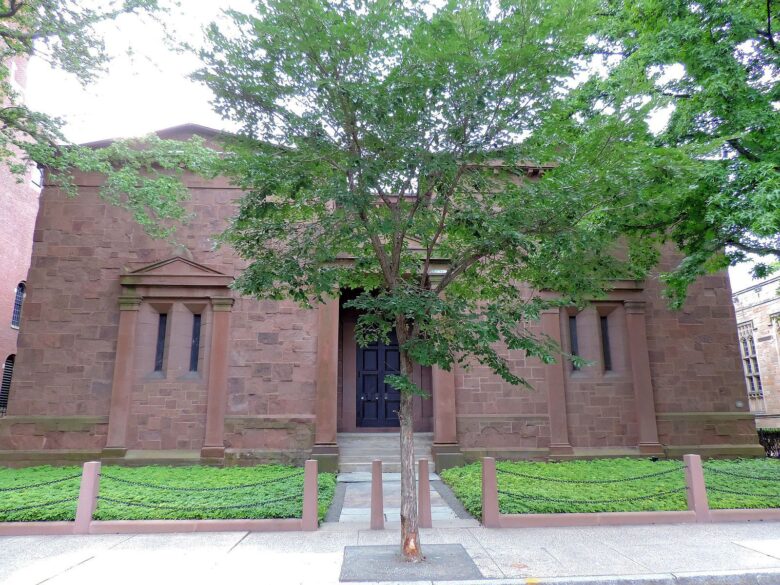
In 1832, Yale students William Huntington Russell and Alphonso Taft ( President William Howard Taft’s father) met in a windowless building known as “The Tomb,” where they were sworn to secrecy, underwent initiation rituals, and founded what is now known as Skull and Bones, the university’s most secretive society.
Since then, every year, 15 senior students at Yale University are selected to join the Skull and Bones, with their names listed in the Yale Rumpus. Upon joining, members are known as “knights” during their initiation and become “patriarchs” after graduation. Those not in the society are referred to as “barbarians.”
While the club itself is not the most secretive out there, in fact, it’s very popular, the activities inside its headquarters, the Tomb, remain largely mysterious. Over the years, rumors have circulated about the club’s barbaric initiation practices, which supposedly include a hazing ritual where members lie in a coffin naked and disclose details about their sexual experiences. There was also a claim suggesting that the society stole and displayed the skull of the Apache leader Geronimo in 1918 within their headquarters.
Its members include various U.S. Presidents like William Howard Taft, George W. Bush, and other influential figures.
Image Credit: Wikimedia Commons/Nevit Dilmen.
The Independent Order of Odd Fellows

In 18th century England, those working “odd” jobs had no unions or guild to protect them. So, a seemingly altruistic group that called themselves The Independent Order of Odd Fellows was formed to share the ideals of love, friendship, and truth. The order quickly gained popularity and made its way across the pond in 1820.
Now, what doesn’t exactly scream love, friendship, and truth are the real skeletons found in the order’s lodges used as a part of their initiation rituals to remind members of their mortality.
Members wearing blindfolds and sometimes chains were led through dark rooms. When they stopped, and the blindfold was taken off, they’d suddenly be face-to-face with a very much real human skeleton.
It’s believed that some of these skeletons were bought from medical supply catalogs, but there’s a chance that some might have been taken from graves.
Image Credit: Wikimedia Commons/Timothy Titus.
The Knights of Pythias
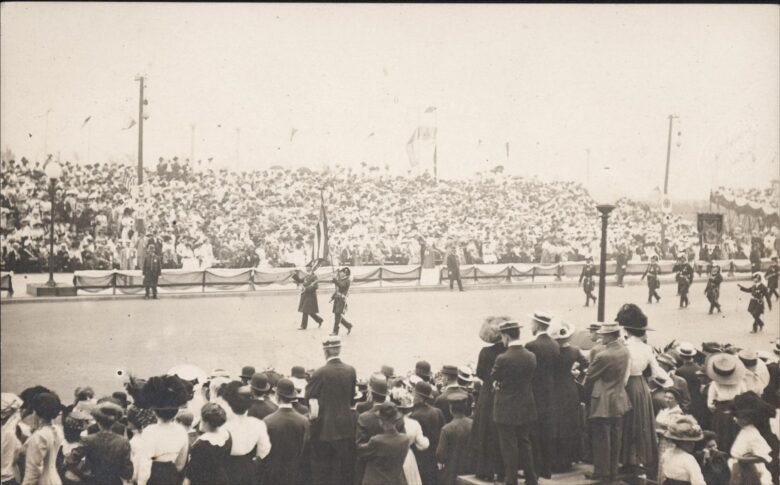
In 1864, amid the Civil War, a government employee in Washington, D.C., Justus H. Rathbone, felt there was a moral need for an organization that practiced “brotherly love.” Named after the Greek legend of “Damon and Pythias,” the Pythagorean ideal of friendship, most of The Knights of Pythias’ founding members were government employees.
The Knights of Pythias use the colors blue, yellow, and red, each symbolizing different values: blue for friendship, yellow for charity, and red for benevolence, as reported by the North Carolina Evening Chronicle during their 50th anniversary in 1914. The organization is still around today and works closely with the Boy Scouts of America, which is notable as the second group to get a charter from the United States Congress.
Image Credit: Wikipedia/Public Domain.
Molly Maguires

In the late 19th century when 24 foremen and supervisors in Pennsylvania’s coal mining community were assassinated, the Molly Maguires, a secret society with Irish roots were the prime suspects.
The Maquires reportedly got their name from disguising themselves in women’s clothing while seeking to protect the rights of Irish immigrant miners and resist the control of mine owners and companies. This protection often manifested in the form of death threats and arson.
In 1873, the Pinkerton Detective Agency was hired by the mining companies to infiltrate and destroy the Molly Maguires, whose union organizing became an obstacle to increasing railroad profits. This led to a series of trials where 20 members of the Molly Maguires were sentenced to death by hanging.
Image Credit: Wikipedia/Public Domain.
The Bullingdon Club
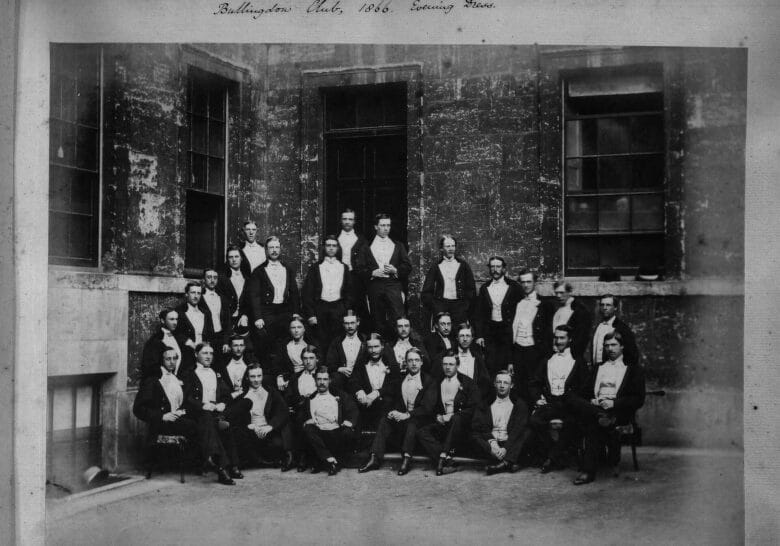
Founded in 1780 at Oxford University as a hunting and cricket club, The Bullingdon Club quickly became known for antics that don’t involve hunting and cricket. The club was so scandalous that Evelyn Waugh wrote about them in his 1928 novel “Decline and Fall,” thinly disguised as the “Bollinger Club.”
Every year, a handful of Oxford students are tapped, and those who make the cut wake up to their rooms being destroyed. Former Prime Minister Boris Johnson was a member of the notorious secret society.
This article was produced and syndicated by MediaFeed.
Image Credit: Wikipedia/Public Domain.
More from MediaFeed

Want to save money in 2024? 6 tips for saving $10k in just one year
- 10 questions you should never answer if the police pull you over
- 30 awesome things we could do in the ‘70s that today’s kids have missed out on
Like MediaFeed’s content? Be sure to follow us.
Image Credit: Wikipedia.