The S&P sectors represent the different categories that the index uses to sort the companies it follows. There are 11 sectors that make up the S&P 500, and they include health care, technology, energy, real estate, and more. “S&P” refers to Standard & Poor; the S&P 500 index tracks the movements of 500 large-cap US companies. A number of mutual funds and exchange-traded funds (ETFs) use this index as a benchmark.
Understanding how the S&P sectors work and break down further can help both institutional and retail investors manage risk through different economic cycles by allocating their portfolio across multiple sectors. For example, cyclical stocks and cyclical sectors tend to fare well when the economy booms. During a recession, however, defensive stocks may outperform them. However, it’s also possible for all 11 sectors to trend in the same direction.
Examining the 11 Sectors of the S&P
The Global Industry Classification System (GICS) has 11 stock market sectors in its taxonomy. It further breaks down these 11 sectors into 24 industry groups, 68 industries, and 157 sub-industries. Here’s a look at the S&P Sector list:
1. Technology
Technology is the largest sector of the S&P 500. This sector includes companies involved in the development, manufacturing, or distribution of tech-related products and services. For example, companies in the technology sector may produce computer software programs or electronics hardware, or research and develop new technologies.
Tech stock investments are typically cyclical, in that they usually perform better in stronger economies. But during the coronavirus pandemic, many tech stocks saw a boost as demand for things like video-conferencing platforms and cloud storage increased as more companies adopted remote work.
The technology sector includes a number of growth stocks, which are companies that reinvest most or all of their profits in expansion versus paying dividends. Examples of the biggest tech stocks include:
2. Health Care
The next largest of the S&P sectors is health care. This sector includes pharmaceutical companies, companies that produce or distribute medical equipment, and supplies and companies that conduct health care-related research.
The health care sector also includes alternative health companies. For example, GW Pharmaceuticals is a drug developer focused on cannabis. The company develops medical marijuana products to treat various health conditions. As such, it’s generally considered part of the health care sector.
More traditional examples of healthcare sector companies include:
- CVS (CVS)
- Johnson & Johnson (JNJ)
- UnitedHealth Group (UNH)
- Thermo Fisher Scientific (TMO)
- Regeneron (REGN)
Health care stocks are typically non-cyclical, as demand for these products and services usually doesn’t hinge on economic movements.
3. Financials
The financials sector covers a variety of industries, including banking and investing. Banks, credit unions, mortgage companies, wealth management firms, credit card companies and insurance companies are all part of the financial sector.
Financial services companies are usually categorized as cyclical. For example, a credit card issuer’s profit margins may shrink during a recession if unemployment rises and people spend less or can not keep up with credit card payments. But this can be subjective, as mortgage companies may benefit during recessionary periods if lower interest rates spur home-buying activity.
Some of the biggest names in the financial sector include:
4. Real Estate
Real estate is a relatively new addition to the S&P sectors list. This sector includes real estate investment trusts (REITs) as well as realtors, developers and property management companies. REITs invest in income-producing properties and pay 90% of profits out to investors as dividends.
Investing in real estate can be a defensive move as this sector is largely uncorrelated with stocks. So if stock prices fall, for example, investors may not see a correlating drop in real estate investments as property generally tends to appreciate over time.
Examples of real estate companies in the S&P 500 include:
5. Energy
The energy sector includes companies that participate in the production and/or distribution of energy. That includes the oil and gas industry as well as companies connected to the development or distribution of renewable energy sources.
Energy stock investments can be more sensitive to economic movements and supply-demand trends compared to other sectors. For example, gas and oil prices declined in 2020 as stay at home orders kept drivers off the roads. Gas prices shot up in 2021, however, following the Colonial Pipeline hack which sparked fears of fuel shortages.
Some of the biggest energy sector companies include:
6. Materials
The materials sector includes companies connected to the sourcing, processing or distribution of raw materials. That includes things like lumber, concrete, glass, and other building materials.
Materials is one of the cyclical S&P sectors, as it can be driven largely by supply and demand. During a housing boom, for example, the materials sector may benefit from increased demand for lumber, plywood and other construction materials.
Material stocks in the S&P 500 include:
- Dupont (DD)
- Celanese (CE)
- Sherwin Williams (SHW)
- Air Products & Chemicals (APD)
- Eastman Chemical (EMN)
7. Consumer Discretionary
The consumer discretionary sector is a largely cyclical sector that includes companies in the hospitality and entertainment sectors, as well as retailers.
Examples of stocks that fit into the consumer discretionary sector are:
Generally, these companies represent things consumers may spend more money on in a thriving economy and cut back on during a downturn. That’s why they’re considered cyclical in nature.
8. Industrials
The industrial sector covers a broad range of industries, including those in the manufacturing and transportation sectors. For example:
Industrials are often considered to be cyclical stocks, again because of how they react to changes in supply and demand. The airline industry, for example, saw a steep decline in 2020 as air travel was curtailed due to the coronavirus pandemic.
9. Utilities
Utilities represent one of the core defensive S&P sectors. This sector includes companies that provide gas, electricity, water, and other utilities to households, businesses, farms, and other entities.
Since these are essentials that people typically can’t do without, they’re generally less sensitive to major shifts in the economic cycle. They also often pay dividends to their investors.
Examples of utilities stocks include:
10. Consumer Staples
Consumer staples stocks represent things consumers regularly spend money on. That includes groceries, household products and personal hygiene products. The consumer staples sector is also a defensive sector because even when the economy hits a rough spot, consumers will continue spending money on these things.
From an investment perspective, consumer staples stocks may not yield the same return profile as other sectors. But they can provide some stability in a portfolio when the market gets shaky.
Companies that are recognized as some of the top consumer staples stocks include:
- General Mills (GIS)
- Coca-Cola (KO)
- Procter & Gamble (PG)
- Conagra Brands (CAG)
- Costco Wholesale (COST)
11. Communications
Last but not least on the list of S&P sectors is communications. This sector spans companies that provide communications services of some kind. That can include landline phone services, cellular phone services, or internet services.
Communications also includes companies responsible for producing movies and television shows.
The communications sector can be hard to pin down in terms of whether it’s cyclical or defensive. In a down economy, for example, people may continue to spend money on phone and internet services but cut back on streaming services. So there’s an argument to be made that the communication sector is a little of both.
Companies that belong to this sector include:
- Comcast (CMCSA)
- AT&T (T)
- Dish Network (DISH)
- Discovery Communications (WBD)
- Activision Blizzard (ATVI)
The Takeaway
Knowing what the S&P sectors are and which types of industries or sub-industries they represent can help investors achieve diversification through different types of investments. While some financial experts liken the sectors to a pie, with several individual slices, it may be more helpful to think of them as a buffet from which investors can pick and choose.
You can either purchase stocks within or across sectors, or look for funds that can provide that diversification for you. It’ll all depend on your overall financial plan and investment strategy. If you need help honing that in, it may be beneficial to speak with a financial professional.
This article originally appeared on SoFi.com and was syndicated by MediaFeed.org.
SoFi Invest®
The information provided is not meant to provide investment or financial advice. Also, past performance is no guarantee of future results.
Investment decisions should be based on an individual’s specific financial needs, goals, and risk profile. SoFi can’t guarantee future financial performance. Advisory services offered through SoFi Wealth, LLC. SoFi Securities, LLC, member FINRA / SIPC . SoFi Invest refers to the three investment and trading platforms operated by Social Finance, Inc. and its affiliates (described below). Individual customer accounts may be subject to the terms applicable to one or more of the platforms below.
1) Automated Investing—The Automated Investing platform is owned by SoFi Wealth LLC, an SEC registered investment advisor (“Sofi Wealth“). Brokerage services are provided to SoFi Wealth LLC by SoFi Securities LLC, an affiliated SEC registered broker dealer and member FINRA/SIPC, (“Sofi Securities).
2) Active Investing—The Active Investing platform is owned by SoFi Securities LLC. Clearing and custody of all securities are provided by APEX Clearing Corporation.
3) Cryptocurrency is offered by SoFi Digital Assets, LLC, a FinCEN registered Money Service Business.
For additional disclosures related to the SoFi Invest platforms described above, including state licensure of Sofi Digital Assets, LLC, please visit Sofi. Neither the Investment Advisor Representatives of SoFi Wealth, nor the Registered Representatives of SoFi Securities are compensated for the sale of any product or service sold through any SoFi Invest platform. Information related to lending products contained herein should not be construed as an offer or prequalification for any loan product offered by SoFi Bank, N.A.
Financial Tips & Strategies: The tips provided on this website are of a general nature and do not take into account your specific objectives, financial situation, and needs. You should always consider their appropriateness given your own circumstances.
Claw Promotion: Customer must fund their Active Invest account with at least $10 within 30 days of opening the account. Probability of customer receiving $1,000 is 0.028%. See full terms and conditions.
SOIN1023003
More from MediaFeed:
8 ways to get the best credit score you can

Learning how to achieve and maintain a good credit score is a crucial part of your financial health. Not only can it be a badge that says your financial life is in good shape, it can also help you access credit and get approved for loans and insurance at more competitive rates. Being approved for lower interest rates and premiums can in turn save you tens of thousands of dollars over your lifetime.
A solid credit score can also have other perks, such as helping you get approved for products with better features, such as rewards credit cards.
While there’s no one size fits all solution on how to keep a good credit score, there are some best practices you can follow. Read on to learn more about this topic and actual tactics, including:
- What is a credit score?
- How can you maintain a good credit score?
- What are tips to keep your credit score high?
- How can new credit card users establish a credit score?
SolStock/istockphoto
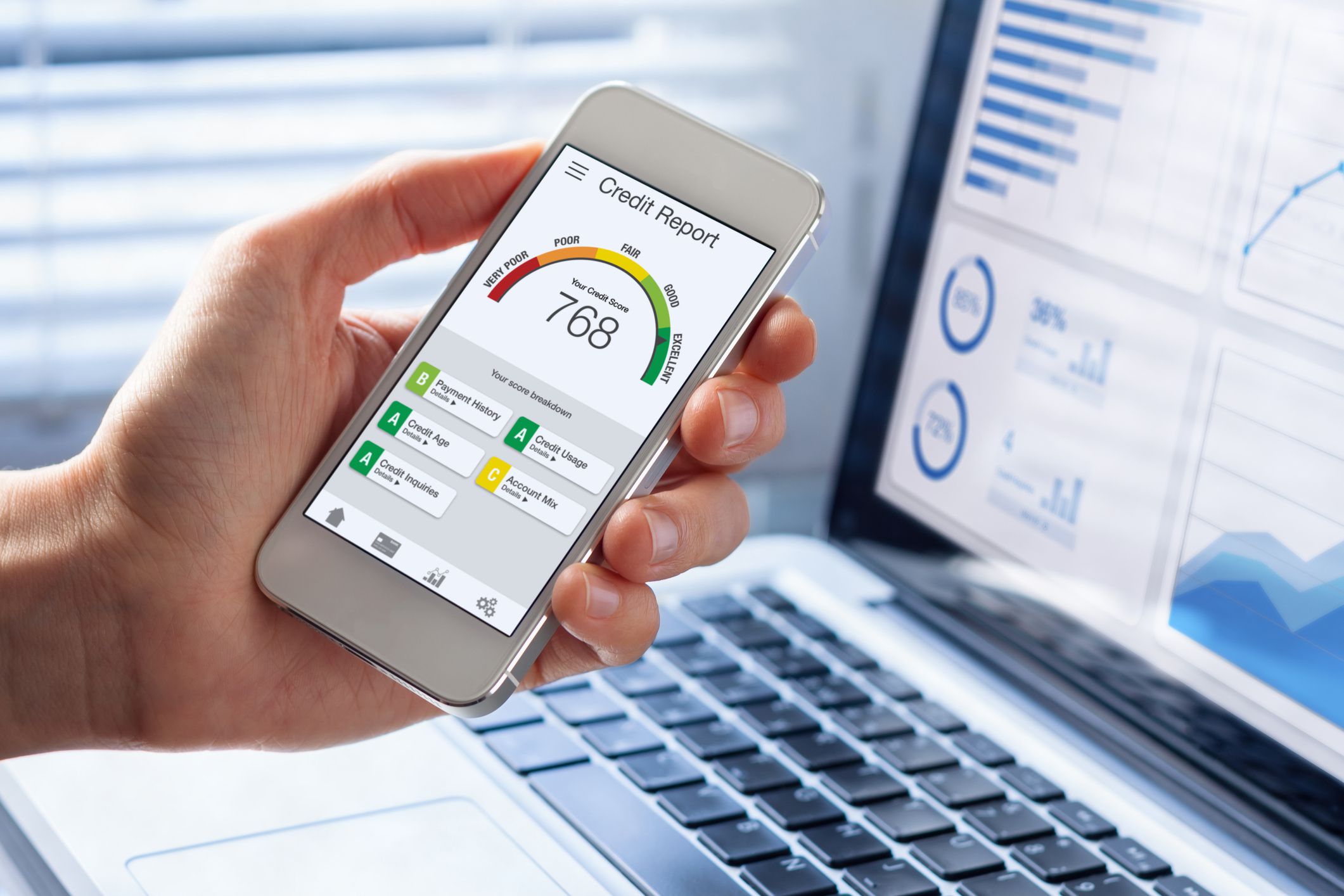
A credit score is a three digit number ranging from 300 to 850 that is an indicator of your credit behavior. Your score is calculated based on your credit history from all three credit bureaus — Experian, Equifax, and TransUnion — and is based on how lenders may perceive your risk as a borrower.
What exactly does that mean? By reviewing your past use of credit, your score reveals if you are more or less likely to pay back your loans on time. If you are more likely to repay your debts in a timely manner, the less risky you are.
The higher your credit score, the more creditworthy you are in the eyes of lenders.
NicoElNino/istockphoto

Several factors can affect your credit score, such as your payment history, the number of loan or credit applications submitted, and the age of your accounts you hold. There are also different scoring models, such as FICO vs. VantageScore. Each weighs factors differently to arrive at a credit score.
Meaning, there may be some differences in your credit score.
Lenders may look at one credit score or all of them, plus different qualification criteria when deciding whether to approve you for a loan and at what interest rate.
tolgart/istockphoto

Though there are different credit scoring models, most use similar financial behaviors to calculate them.
They’re grouped in the following categories:
- Payment history: This factor is one of the most important factors in your credit score as it assesses whether you’re likely to pay your loan on time. Credit scoring models will look into current and past account activity, including any late or missed payments.
- Amounts owed or available credit: The percentage of the available balance you’re using is your credit utilization. The more you are using available credit in your revolving accounts (like your credit cards and lines of credit), the more it could appear you rely too much on credit. This can make you look like a risky person to whom to lend.
- Age of credit history: The longer your credit history, the more a lender can look into your credit behavior. It’s usually considered good to have a long credit history vs. a very short or recent one.
- Account types: Having a different mix of loans offers more insight into how you handle various accounts. Credit-scoring models may not, however, use this as a major factor when calculating your score.
- New or recent credit: The more recent applications you submit for new loans or credit accounts, the more risky you may appear to be. That’s because it may look like you need to rely on credit; that you are quickly trying to acquire different forms of access to funds.
(There are some exceptions, such as shopping around for mortgages within a short span of time.)
Thai Liang Lim/istockphoto

Understanding the importance of a good credit score and what goes into it can help you protect the one you have. The following are eight suggestions on how to maintain a good credit score.
1. Pay Your Credit Card Bills on Time
Ensuring you’re on top of your bills (not just your credit cards) will help keep a positive payment history in your credit reports. This is the single biggest contributing factor to your credit score at 30% to 40%. Consider setting up automatic payments or regular reminders to ensure you’re paying on time.
damircudic/istockphoto

Your credit utilization is the percentage of the available limit you’re using on your revolving accounts like credit cards. Basically, you don’t want to spend close to or at your credit limit. A good rule of thumb to follow is to now use more than 30% of your overall credit limit.
So if you have one credit card with up to $10,000 as the limit, you want to keep your balance at $3,000 or lower.
JulPo/istockphoto

Even if you don’t use your older credit cards that often, keeping them open means you can maintain your long credit history. Consider charging a small or occasional amount, whether an espresso or gas station fuel-up, to ensure your account stays open. This can reassure prospective lenders that you have been managing credit well for years.
alice-photo/istockphoto

Consider this as you try to keep a good credit score: Go slow. Since credit-scoring models look at the number of times you apply for new credit, only open one when you really need it. Stay strong in the face of offers to get free shipping or 10% off if you sign up for a card that many retailers promote.
Spreading out your applications is a good idea rather than regularly or heavily putting in a lot of card applications. By moving steadily and choosing a credit card and other types of funding carefully, you likely won’t raise red flags, such as that you need to rely heavily on credit.
AndreyPopov/istockphoto

Mistakes can happen, and errors in your credit reports could negatively affect your score. You can get your credit reports for free at AnnualCreditReport.com from all three credit bureaus.
It’s wise to check your credit scores regularly, which won’t impact your score. If you see an error — whether it’s an account you don’t own or a bill marked unpaid that you know you took care of — dispute it as soon as possible.
courtneyk/istockphoto

Making payments in full will help you maintain a positive payment history and lower your credit utilization. Both of these can maintain your creditworthiness and save you money on interest charges.
Liderina/istockphoto

Closing your old credit cards could shorten your credit history. It could also increase your credit utilization because it will lower your available credit limit. Even if you make the same amount in purchases, your credit utilization would go up when your credit score updates.
For example, if you currently have an overall credit limit of $28,000 and you have $7,000 in credit card balances, your credit utilization is 25%. If you close a credit card which had a $7,000 limit, you then lower your total available credit to $21,000 your credit utilization will go up to 33%.
Farknot_Architect/istockphoto

It can be hard to say no to an invitation to try a pricey new restaurant or not tap to buy when scrolling through social media. But when you let your spending get out of hand, you may use your credit cards too much. It can feel like free money in the moment — but you still have to pay it back. If you overextend yourself, you may find it hard to pay your balance on time and risk a late or missed payment.
Instead, spend only what you can afford and try to avoid lifestyle creep (having your spending rise with your pay increases or even beyond them). That can help provide some guardrails for using credit cards responsibly.
andreswd/istockphoto

Trying to establish a credit score can be a challenge since, ironically enough, you need credit to build credit.
If you are in this situation, there are several options to pursue, such as the following:
- Open a secured credit card: A secured credit card is one where you’ll put down a refundable cash deposit that will act as your credit line. You can use this to establish credit and apply for an unsecured credit card. Some issuers will upgrade you once you make consistent on-time payments for a predetermined amount of time.
- Apply for a credit builder loan: These types of loans are specifically geared towards helping you establish and build credit over time. Instead of getting the loan proceeds like a traditional loan, the funds are held in an escrow account until you pay back the loan in full.
- Become an authorized user: You can ask a loved one, like a parent or even a close friend, if they’re willing to add your name on their credit card account. Doing so means the credit account will go in your credit history. Of course, that doesn’t give you access to use their account without restraint. The guardrails can be established between you and the original card holder.
jpm.foto/istockphoto

Maintaining a good credit score (and keeping that score high over time) comes with perks such as increasing the likelihood of getting approved for loans at more favorable terms. You might qualify for lower interest rates, saving you a considerable amount of money over time.
Using a credit card wisely is one of the ways you can build and maintain your credit score. But that’s not all there is to opening a credit: You also likely want one with great perks.
This article originally appeared on SoFi.comand was syndicated by MediaFeed.org.
Financial Tips & Strategies: The tips provided on this website are of a general nature and do not take into account your specific objectives, financial situation, and needs. You should always consider their appropriateness given your own circumstances.
Third-Party Brand Mentions: No brands, products, or companies mentioned are affiliated with SoFi, nor do they endorse or sponsor this article. Third-party trademarks referenced herein are property of their respective owners.
Disclaimer: Many factors affect your credit scores and the interest rates you may receive. SoFi is not a Credit Repair Organization as defined under federal or state law, including the Credit Repair Organizations Act. SoFi does not provide “credit repair” services or advice or assistance regarding “rebuilding” or “improving” your credit record, credit history, or credit rating. For details, see the FTC’s website .
External Websites: The information and analysis provided through hyperlinks to third-party websites, while believed to be accurate, cannot be guaranteed by SoFi. Links are provided for informational purposes and should not be viewed as an endorsement.
DepositPhotos.com
ValentynVolkov/istockphoto
Featured Image Credit: Daniel de la Hoz/istockphoto.