

As the holidays approach, so does the potential for political debates around the dinner table. Your Democrat son-in-law is coming to town, and while you might be armed with your famous turkey recipe, are you prepared for the heated discussions that could follow? To keep the family gathering more “Miracle on 34th Street” and less “Game of Thrones,” here’s a list of 20 things you might want to avoid saying if you’re aiming for peace, love, and a side of understanding this holiday season.
Image Credit: iStock/Dragos Condrea.
1. ‘You Democrats are all the same.’

Sure, lumping people together is always fun, but generalizing an entire political party overlooks the nuances and diversity within the group. By overgeneralizing a diverse group of people, you dismiss the wide range of opinions and beliefs that exist within any political party.
Image Credit: DepositPhotos.com.
2. ‘You’re just a snowflake.’

Why yes, unique and complex, just like a snowflake. How astute. In all seriousness, labeling someone a “snowflake” minimizes their viewpoints and inhibits meaningful dialogue.
Image Credit: ulkas / istockphoto.
3. ‘Fake news!’

Calling everything you disagree with “fake news” is so 2016. Plus, it’s a lazy way to dodge facts that might be inconvenient to your argument.
Image Credit: asiandelight / istockphoto.
4. ‘Businesses create jobs, not the government.’

Apparently, someone forgot to tell the Department of Transportation, public schools, and emergency services. This argument narrows the view of how economies actually function.
Image Credit: DepositPhotos.com.
5. ‘Why should I pay for someone else’s healthcare?’

Because society? Public goods? It’s like asking why you should pay for roads if you never leave your house. The question may not only oversimplify the complex arguments that surround universal healthcare but can also come across as lacking in empathy for those who cannot afford medical treatment.
Image Credit: marchmeena29.
6. ‘Why don’t you just get a job?’

Oh, you mean like picking one off the job tree I have growing in my backyard? How enlightening! But all sarcasm aside, this question trivializes the complicated hurdles people face when looking for work. From economic downturns and outsourcing to educational barriers and systemic discrimination, the job market isn’t a level playing field for everyone. So, telling someone to “just get a job” is more than a little tone-deaf; it ignores the deeper, systemic issues at play.
Image Credit: fizkes/ istockphoto .
7. ‘You must hate America.’

The old “if you don’t agree, you must hate freedom and apple pie” argument. Charming. However, criticizing policy or advocating for societal change is often an act of patriotism, born from a desire to improve the country. Saying someone must “hate America” because they question or challenge the status quo oversimplifies the issue and shuts down any chance of a nuanced discussion. It’s a tactic that aims to silence opposition, rather than foster meaningful dialogue.
Image Credit: stevanovicigor/iStock.
8. ‘You can’t be a feminist if you are not pro-life.’

The ultimate litmus test for feminism, or so some think. But let’s get real. Feminism is a broad movement with room for diverse perspectives, and saying otherwise undermines the very idea of advocating for the rights and voices of all women. Using this line is a quick way to alienate and exclude, rather than to engage in a constructive conversation.
Image Credit: iStock/Adrian Vidal.
9. ‘It’s not about race.’

The classic “colorblind” approach to modern issues. While it might sound enlightened to some, this comment often serves as a dismissal of systemic racism and the specific experiences of marginalized communities. By asserting that it’s not about race, you’re essentially refusing to acknowledge that racial disparities exist in various aspects of life, from employment to criminal justice. It’s a way of sidelining important conversations about race and inequality, rather than facing them head-on.
Image Credit: Depositphotos.com.
10. ‘You just want free stuff.’

So you think advocating for social programs is like loading up at a buffet? This dismissive quip reduces nuanced discussions about social welfare to a caricature of greed. In a serious light, this statement overlooks the core principle that many proponents of such programs are driven by: the pursuit of social equity. The argument isn’t about wanting “free stuff,” but rather, it’s about creating a society where everyone has access to essential services like healthcare, education, and a social safety net.
Image Credit: iStock/gpointstudio.
11. ‘It’s just locker room talk.’

As if locker rooms are magical places where societal norms and respect for others don’t apply. But let’s be honest, this is not an episode of a reality TV show. Labeling something as “locker room talk” trivializes matters that often need serious consideration, like sexism or harassment. The phrase is problematic because it implies that there are environments where it’s acceptable to make demeaning or offensive comments. In reality, dismissing such talk as trivial contributes to a culture that tolerates inappropriate behavior.
Image Credit: iStock/gpointstudio.
12. ‘What about Hillary’s emails?’

Oh, are we back in 2016 again? Shifting the focus to another topic generally comes across as evasive. But this rhetorical trick is a classic example of whataboutism, designed to divert attention away from the matter at hand by bringing up an unrelated or only tangentially related issue. The issue with using this line is that it disrupts meaningful dialogue.
Image Credit: ifeelstock.
13. ‘Why are you against the Second Amendment?’

Oh, so you’ve got a pocket Constitution, too? While this question might seem like a zinger that puts the other person on the defensive, it’s often a misleading oversimplification. When you accuse someone of being “against the Second Amendment,” you’re making a sweeping assumption that their stance on gun control translates to a disdain for the U.S. Constitution. The reality is that many people who advocate for stricter gun regulations do so out of a concern for public safety, not out of an aversion to constitutional rights. Framing their position as fundamentally anti-constitutional can not only be inaccurate but also hampers meaningful dialogue on a complex issue.
Image Credit: Bytmonas/iStock.
14. ‘Climate change is a hoax.’

Ah, you’re a climate skeptic—how 2007 of you! Hold on, let me get my tinfoil hat and join you in denying overwhelming scientific consensus. While proclaiming climate change a hoax might tickle some funny bones, it’s essentially ignoring decades of scientific consensus. Such a statement undermines the gravity of an issue that affects everyone on the planet, Democrat or not. Denying the existence of climate change disregards a multitude of evidence-based studies and the urgent warnings from the scientific community about the need for immediate action. In doing so, you’re not only trivializing an issue that’s crucial to future generations but also putting a damper on any chance for a meaningful conversation about sustainability and environmental responsibility.
Image Credit: DisobeyArt / istockphoto.
15. ‘Just pull yourself up by your bootstraps.’

Oh, the classic American dream rhetoric! While this phrase might sound like an old-school motivational poster, it’s often received as a slap in the face to those who are struggling due to systemic issues. Saying “just pull yourself up by your bootstraps” implies that individual effort is the only factor in achieving success, ignoring the reality of systemic barriers such as racial discrimination, economic inequality, and lack of access to quality education and healthcare. It simplifies complex social issues into a singular, individual responsibility, making it not only condescending but also woefully disconnected from the nuances of modern societal challenges.
Image Credit: enscap67 / istockphoto.
16. ‘The wage gap is a myth.’

Oh, so we’re doing magical thinking now? Declaring the wage gap a “myth” conveniently sweeps under the rug years of data and real-world evidence. The issue here is that this statement minimizes a well-documented and persistent issue. The wage gap isn’t just about men and women doing the same job for different pay; it’s a complex issue influenced by various systemic factors such as occupational segregation, unequal access to career advancement opportunities, and disparities in parental leave policies. Ignoring these factors and labeling the wage gap a “myth” serves only to silence discussions that could lead to meaningful change.
Image Credit: Diy13/iStock.
17. ‘All lives matter, not just Black lives.’
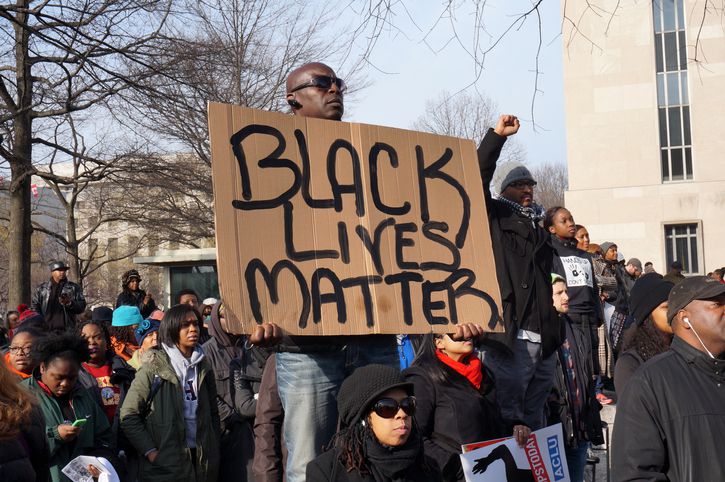
This isn’t a competition of lives but rather an acknowledgment of systemic issues that disproportionately affect Black individuals. Saying this can divert attention from systemic racism and dilute the focus on challenges specific to Black communities.
Image Credit: Coast-to-Coast / istockphoto.
18. ‘Why don’t you move to a socialist country?’

Ah, the crown jewel of dismissive retorts. It’s like telling someone who criticizes their family to go get adopted by another one. Suggesting someone should move to a socialist country assumes that 1) socialist principles can only be found or accepted outside the U.S., and 2) any critique of current systems implies a complete rejection of one’s own country. It’s possible to love your country while advocating for changes you believe would improve it. Rather than providing an easy escape hatch from the conversation, try understanding why someone might advocate for socialist policies, even if you don’t agree.
Image Credit: iStock/BeritK.
19. ‘You’re just too lazy.’

Tossing out the “lazy” card is not just an oversimplification—it’s often a way to conveniently ignore these complexities. Labeling someone as “lazy” minimizes the various barriers and challenges they might be grappling with. It’s an accusation that can halt meaningful dialogue, rather than encouraging a nuanced conversation about the factors contributing to a person’s current situation.
Image Credit: AnnaStills/iStock.
20. ‘Your vote was wasted.’

The classic armchair pundit’s go-to line. You might as well tell them their favorite sports team will never win a championship; it’s equally deflating. But on a more serious note, telling someone their vote was “wasted” directly undermines the bedrock of democratic principles. In a democratic society, each person’s vote is a way to express their political choices and to influence government. Insinuating that someone’s vote is wasted essentially invalidates their participation in the democratic process, which can have long-term negative impacts on voter engagement and the health of the democracy itself.
This article was produced and syndicated by MediaFeed.
Image Credit: hermosawave / istockphoto.
More from MediaFeed

20 things you should never say to your Republican family & friends
- Science says this ‘70s rock hit is the catchiest song of our time
- 20 incredible movies so disturbing we never want to see them again
Like MediaFeed’s content? Be sure to follow us.
Image Credit: iStock/Drazen Zigic.



