Fine art has long been considered a valuable asset, with its beauty and cultural significance driving demand and high prices at auction. However, in recent years, the art world has increasingly recognized the potential of fine art as an impact investment.
Unlike traditional investments that focus solely on financial returns, impact investments aim to generate positive social or environmental outcomes and generate financial returns.
What is Impact Investing?
Impact investing is an investment strategy that aims to produce not only financial returns but also positive social or environmental impact. The purpose of impact investing is to use investment capital to support solutions to social or environmental challenges, such as poverty, climate change and inequality.
In the current market, these investments tend to take the form of private equity or debt instruments, although the asset class is expanding. Impact investors are typically individuals or institutions (e.g. foundations, philanthropic funders or pension fund managers) who are interested in using their capital to create positive social and environmental change and make a profit.
Impact investing is often contrasted with traditional investing, where the focus is on generating financial returns, and social or environmental considerations are either not considered, or are of secondary concern. In contrast, impact investors prioritize both financial returns and positive impact.
The impact of impact investing can be measured using various metrics, such as the United Nations’ Sustainable Development Goals (SDGs), social return on investment (SROI), or environmental impact assessments. The impact measurement helps investors track their investments’ effectiveness and ensure they are meeting their impact goals.
Overall, impact investing is a growing field, with more investors and institutions seeking to use their capital to create positive social and environmental change as well as financial returns.
Financial Returns on Impact Investments
JP Morgan worked with the Global Impact Investing Network (GIIN) to release a report on impact investing as an emerging asset class. Their research found that expectations for financial returns vary greatly among investors.
Some aim for returns that are competitive with or even better than traditional investment benchmarks, while others accept that their impact investments may yield lower returns in order to prioritize a social impact.
JP Morgan found that returns on impact investments in emerging markets tend to outperform their traditional emerging market counterparts, while developed markets are in-line or slightly lagging.
Of course, this focuses on purely short-term financial returns and does not take into account the financial risks of not addressing social and environmental issues over the long term.
Think you can’t afford to invest in art? Think again. Learn more at Masterworks.
Impact Investing in the Arts
Impact investing in the creative economy is gaining popularity as investors seek to use their capital to achieve financial and social returns.
By investing in creative enterprises, impact investors can support the development of the arts, culture and other forms of creative expression while also generating financial returns.
What is the Creative Economy?
The creative economy encompasses a wide range of sectors, from fashion and design to film and music, and is a significant contributor to economic growth and job creation.
According to the US Bureau of Economic Activity, the arts & culture sector accounts for more than $870 billion — 4.2% of the US GDP — as of 2020. The figure fell from 2019 levels due to weakened investment in cultural institutions and entrepreneurship during the COVID-19 pandemic.
The North American Industry Classification System (NAICS) defines the creative economy as:
-
Ethical Fashion: Businesses in the fashion industry that take proactive measures to address labor issues, environmental impact, governance, and cultural heritage preservation are considered to be responsible producers of clothing, shoes, jewelry and accessories.
-
Sustainable Food: Businesses that offer food and beverage products and experiences which actively address and promote awareness of the conservation of resources, preservation of cultural heritage and accessibility to healthy food
-
Social Impact Media: Businesses that utilize communication, storytelling and technology to promote positive social impact on a large scale, amplify underrepresented voices and foster a diverse workforce
-
Other Creative Businesses: Additional businesses in the art, design, culture and heritage industries that operate sustainably, provide high-quality jobs and have a positive social impact in their production and distribution processes.
-
Creative Places: Real estate developments and cultural institutions that provide affordable housing or retail space for creatives or businesses in creative industries such as art museums and theaters.
Social Impacts of the Arts
Upstart Co-Lab, a non-profit organization created by Laura Callanan to promote and support impact investing in the creative economy, released a report on investable opportunities in the creative economy.
This report found that the inclusion of creative industries has a stabilizing effect on communities and regions in many ways — by attracting and cultivating high-quality jobs for social entrepreneurs and artists and by supporting community development and education.
The founders of some of the most successful companies in the Internet era are artists and designers. The intersection of sustainability and the creative sector is already evident in certified B Corporations such as Kickstarter and Etsy.
A B Corporation is a for-profit company that has committed to meeting certain social and environmental standards in addition to its financial goals.
10% of B Corporations in the United States operate in creative industries, creating both social impact and financial returns. This suggests the potential that emerges when the creative economy and sustainability converge.
Examples of Social Impact Investments in the Creative Economy
The potential of the creative economy to involve and inspire more conscientious consumers presents an opportunity to realize the advantages of ethical and sustainable supply chains and the full potential of media to effect positive change.
There are various examples of initiatives that have the potential for impact investing. Likely the most common type of investment in the arts is a direct investment in the production of artwork such as a Broadway musical or a piece of fine art.
Additional examples include:
-
Newark CEDC’s Makers Village: Newark’s economic development branch created the Makers Village, which offers studios and commercial storefronts for a subsidized price to creatives to rent.
-
Community Investment Management (CIM) is an impact investment manager that provides responsible innovation in lending to small businesses and underserved borrowers. CIM invests in non-bank lenders, including online marketplace lending platforms that fund women, BIPOC, and veteran-owned businesses.
-
LISC New York City Inclusive Creative Economy Fund is an impact investment fund that finances affordable workspaces in New York City for creative businesses.
-
Purpose Evergreen Capital GmbH & Co. KGaA (PEC) is a holding company that invests in mature, profitable companies aligned with UN Sustainable Development Goals.
These four impact investment opportunities are examples of institutional impact investing in the creative economy, which has become an increasingly popular source of investment capital over the past decade.
Additionally, cultural institutions are emerging as a potential source of impact investment capital.
Endowments as Impact Investments
Although direct impact investment in arts institutions is a relatively new field, numerous art museums have started to participate in impact investing by utilizing their endowments to invest for social benefit.
The Association of Art Museum Directors and the Black Trustee Alliance for Art Museums partnered with Upstart Co-Lab to conduct a unique survey of impact investing activity in US art museums.
They found that only 1/3 of art museums engage in impact investing compared to almost half of all colleges and universities.
While this number has grown in recent years, there is still massive room for growth. There are numerous examples of how these cultural institutions could invest in social betterment.
-
The Louvre adopted mission-aligned investing by allocating 5% of its endowment toward investments its stated missions including cultural heritage and education.
-
The Field Museum and California Institute of Art, and many others, have divested their endowments from fossil fuels and other investments that don’t align with their values.
-
The Baltimore Walters Art Museum increased its percentage of diversity across endowment fund managers.
Think you can’t afford to invest in art? Think again. Learn more at Masterworks.
Is Fine Art an Impact Investment?
In general, impact investments are investments made with the intention of generating both a financial return and a positive environmental or social impact.
Read More: What is Protest Art?
When it comes to fine art investments, there are a few ways in which an artwork can be considered an impact investment:
-
Artwork that promotes social or environmental causes: Some artwork is specifically created to raise awareness or funds for social or environmental causes. Investing in these artworks can be considered an impact investment, as the investment is directly supporting a cause.
-
Artwork that has historical or cultural significance: Investing in artwork with historical or cultural significance can also be considered an impact investment, as it helps preserve and promote cultural heritage.
-
Artwork that supports artists from underrepresented communities: Investing in artwork created by artists from underrepresented communities can be considered an impact investment, as it supports diversity and promotes social equity.
It’s important to note that not all fine art investments are impact investments. As with any investment, it’s important to research and understand your potential social and financial impacts before making a decision.
How Does Impact Investing in the Arts Work?
There are a few different approaches to impact investing in the creative economy. One is to invest in businesses that have a social or environmental mission, such as a fashion brand that uses sustainable materials or a film studio that prioritizes diverse representation.
Another approach is to invest in funds that focus on the creative economy, allowing investors to support a range of businesses and projects across multiple sectors.
Impact investing in fine art involves using capital to achieve both financial and social returns in the art industry. Here are a few ways to do it:
-
Invest in socially responsible art funds: There are a growing number of art funds that focus on socially responsible investments, such as supporting artists from underrepresented communities or promoting environmental sustainability in the art industry. These funds provide investors with a way to support the arts while also generating financial returns.
-
Support cultural institutions: Arts organizations such as galleries and museums are critical to the development and promotion of artists and their work. Impact investors can support these organizations by providing financing for exhibitions, programs, and acquisitions. This support helps to sustain the art ecosystem and promote the arts as a social and cultural good. In the U.S., endowed museums, performing arts centers and other artistic institutions have more than $58 billion in assets under management.
-
Invest in individual artists: Impact investors can provide financial support to individual artists by commissioning work, purchasing art directly from artists, or providing financing for projects. This type of support helps to promote the career development of artists and supports the creation of new work.
-
Promote art education and accessibility: Impact investors can support art education and accessibility by providing funding for programs that promote art education and make art more accessible to underrepresented communities. This type of support helps to broaden the reach of the arts and promote cultural diversity.
Overall, impact investing in fine art offers an opportunity to support the arts while generating financial returns. By investing in socially responsible art funds, supporting galleries and museums, investing in individual artists, and promoting art education and accessibility, impact investors can make a significant contribution to the development and sustainability of the art industry.
Read More: What Is Platform Earth & How Can Art Help Reverse Climate Change?
Regardless of the approach, impact investing in the creative economy offers an opportunity to support the development of the arts and culture while also generating a financial return. As the creative economy continues to grow in importance, impact investors are well-positioned to make a significant contribution to its success.
Read More: Social Activism in Basquiat’s Work
The Bottom Line
Fine art is emerging as a unique and valuable asset class for impact investment, one that can generate both financial returns and social impact.
By investing in art, impact investors can support artists and creative enterprises, promote cultural preservation and diversity, and drive positive social and environmental outcomes.
As the art world continues to evolve and embrace new technologies, there is an increasing number of opportunities for impact investors to make a difference through their investments.
With the potential to deliver significant social, cultural, and economic benefits, art is indeed a compelling and exciting impact investment opportunity for those looking to make a difference while potentially generating financial returns.
This article originally appeared on MasterWorks.com and was syndicated by MediaFeed.org.
The content is not intended to provide legal, tax, or investment advice. Past performance is not indicative of future performance. Investing involves risk. See important disclosures at masterworks.com/cd
More from MediaFeed:
This art is garbage. Literally

Washed Ashore is hoping to teach people about marine debris and plastic pollution through epic, giant artworks of sea creatures … all of which are made from, you guessed it, ocean garbage.
According to Washed Ashore’s website, the organization works with artists and scientists to educate the public on how consumer habits can cost sea creatures their habits, homes and even their lives. They hope to teach exhibit-goers that “every action counts.” The traveling exhibit has been on display at the U.S. State Department, United Nations, The Smithsonian National Museum’s Ocean Hall and more. You can learn more about Washed Ashore’s mission online.
Check out some of Washed Ashore out-of-this-world, large-scale sculptures and wall pieces below!
WashedAshore.org

This great white shark seems even more, well, great, when you remember it’s made from debris from the ocean!
WashedAshore.org

The detail on this giant penguin named Gertrude is stunning!
WashedAshore.org
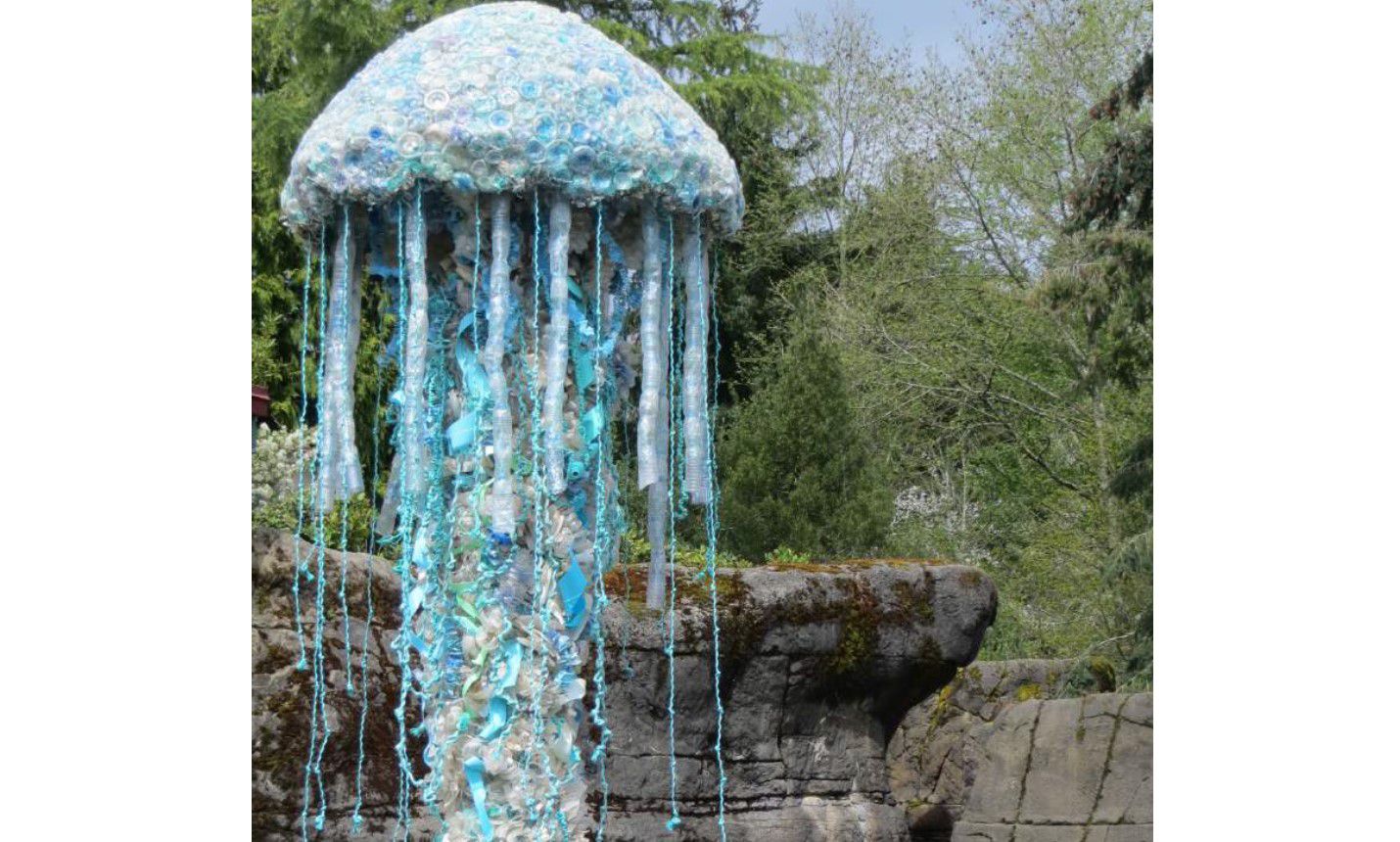
This gigantic jellyfish is larger than life!
WashedAshore.org

This colorful turtle was created against the backdrop of its very own ocean, complete with algae and a jellyfish friend!
WashedAshore.org

The Whale Ribs arch is a popular attraction since visitors can walk through it and marvel and the craftsmanship from both inside and outside the arch.
WashedAshore.org

Priscilla the Parrot is a colorful feat that will surely capture your attention.
WashedAshore.org

SeeMore offers viewers a rather realistic depiction of a sea lion, considering it’s made completely from sea rubbish.
WashedAshore.org
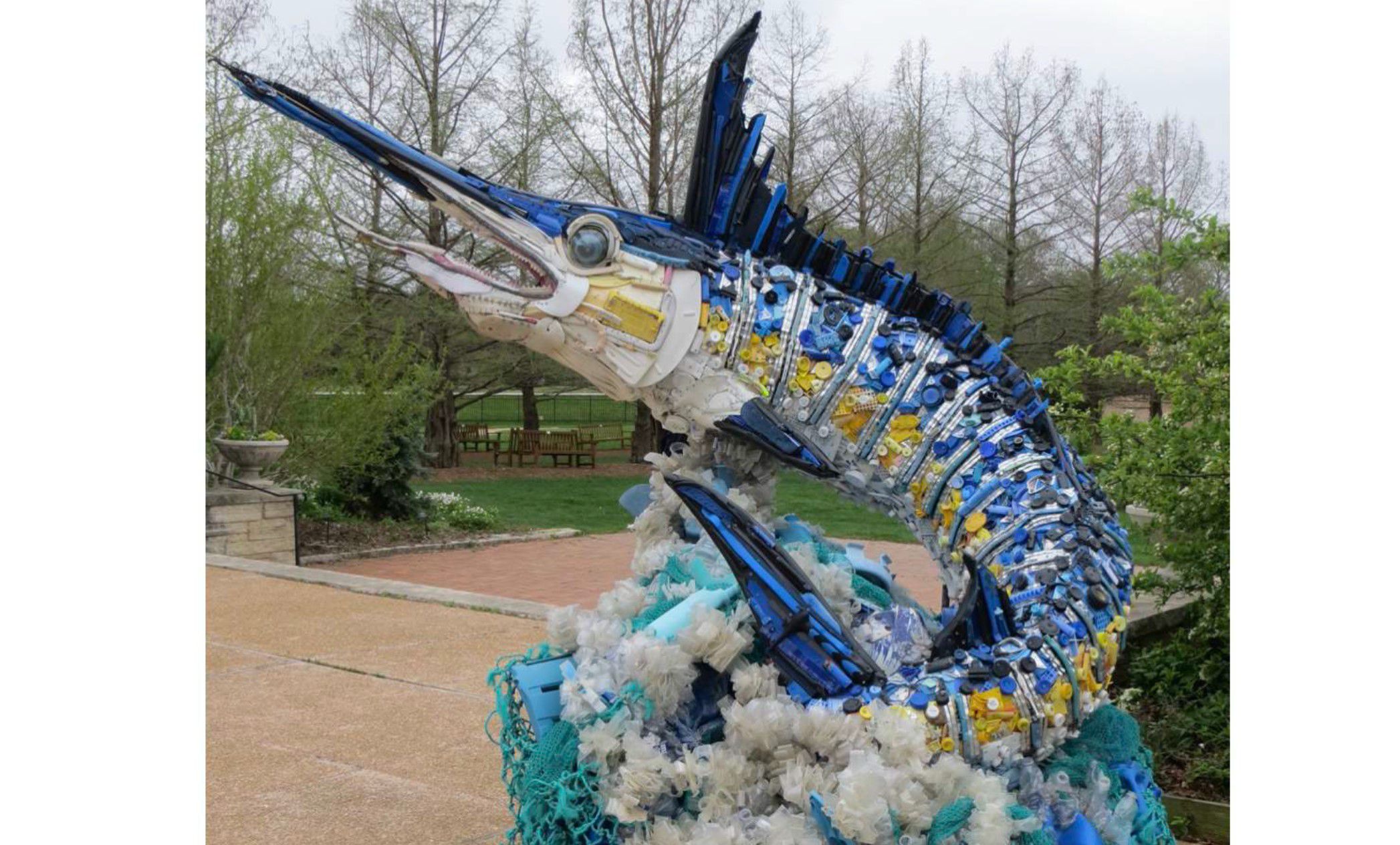
This blue marlin artwork is one of many from Washed Ashore that is sturdy enough to be displayed outside!
WashedAshore.org

The magnificent red octopus truly shows off how garbage can be turned into a work of art.
WashedAshore.org

This giant shark comes with its own patch of sea algae, coral and more!
WashedAshore.org

You almost won’t believe this sturgeon is made from garbage; it looks so realistic and life-like!
WashedAshore.org

This patriotic bald eagle stands tall with its wings outstretched to the sky.
WashedAshore.org
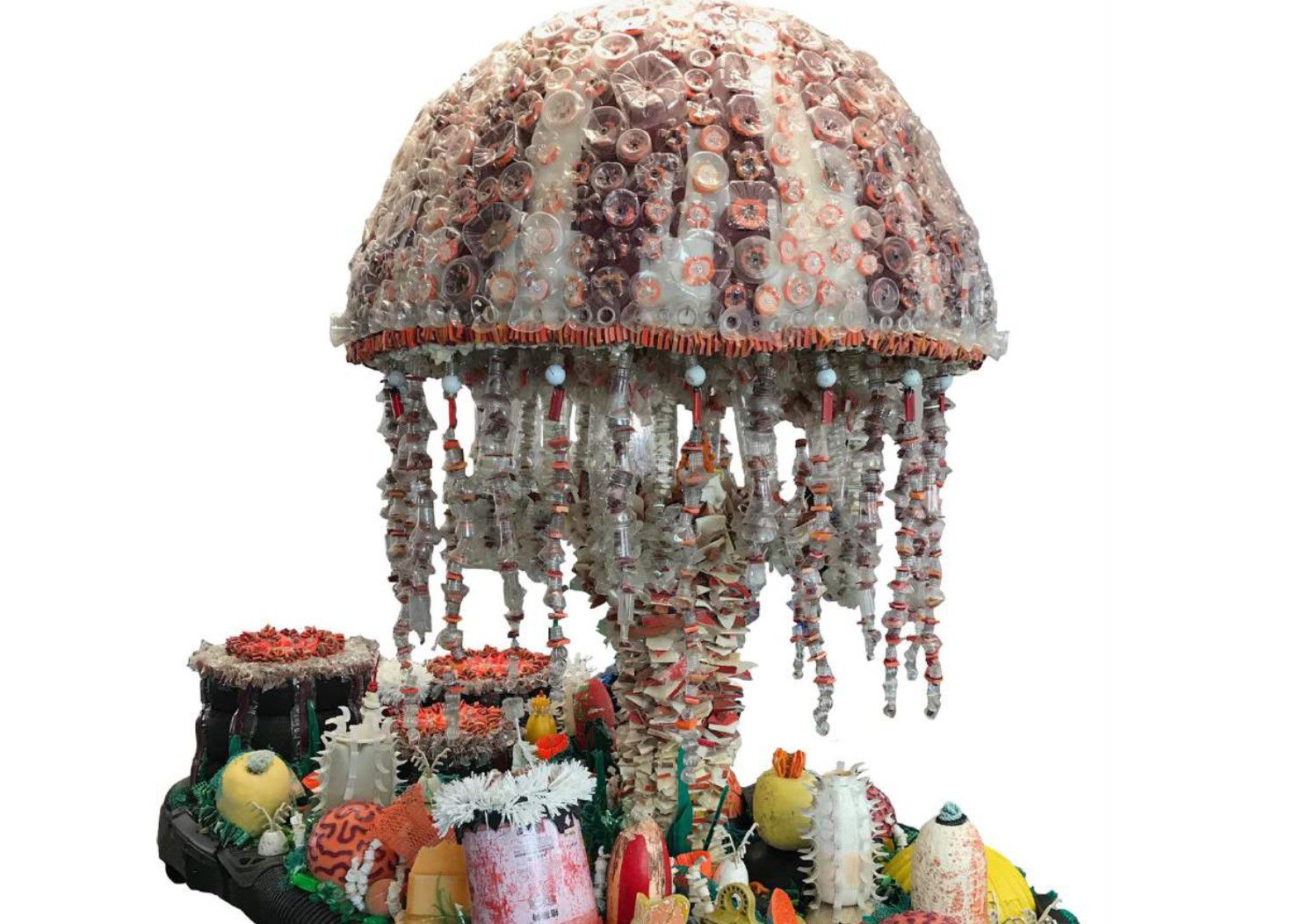
One of many jellyfish made through Washed Ashore, this gumdrop jellyfish stands tall over a bed of colorful sea coral.
WashedAshore.org
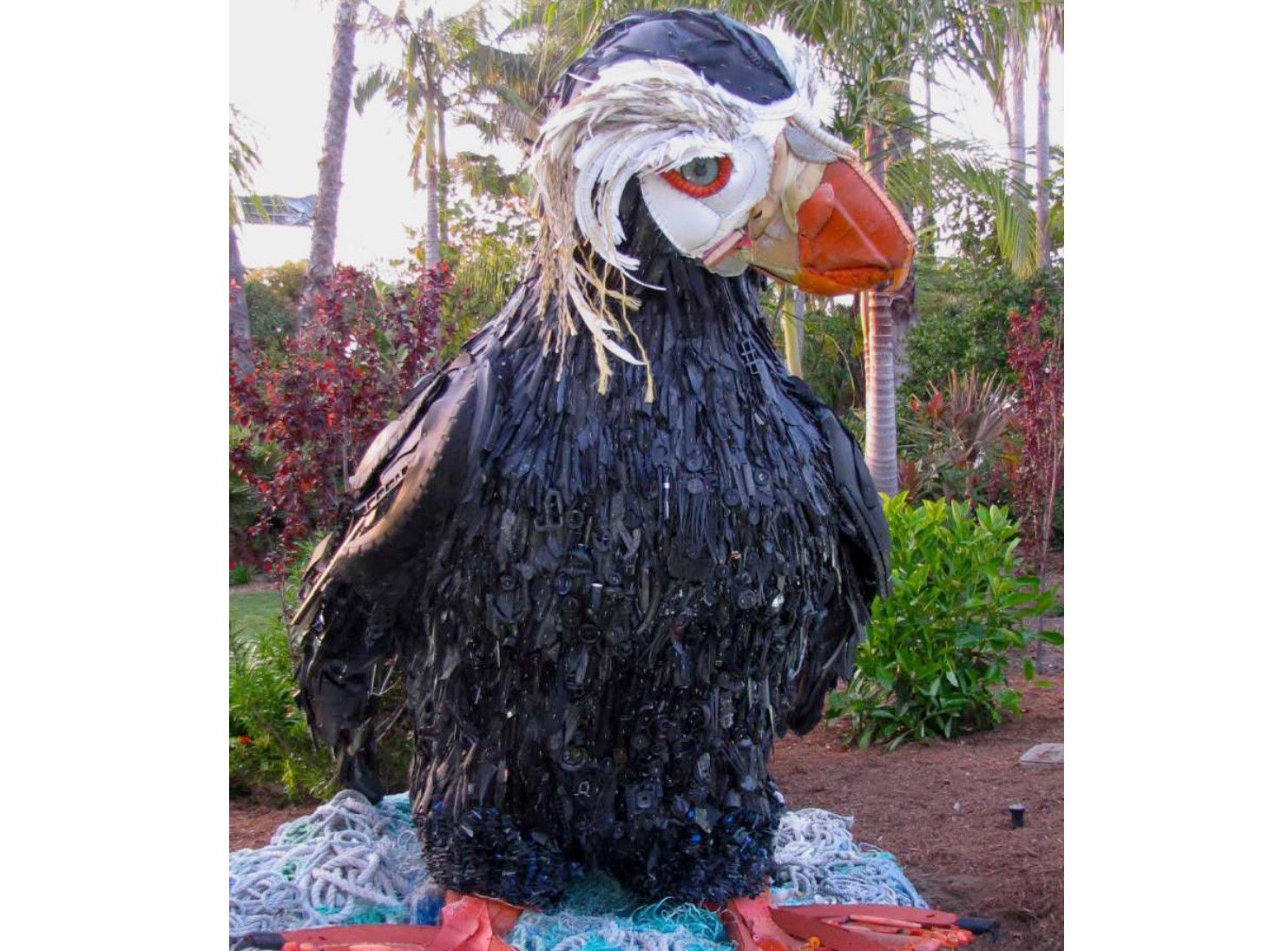
The tufted penguin’s hair truly does look like, well, hair! And its orange eyes, beak and feet stand out against its black coloring.
WashedAshore.org

The blue and orange trigger fish floats atop some algae and rope.
WashedAshore.org
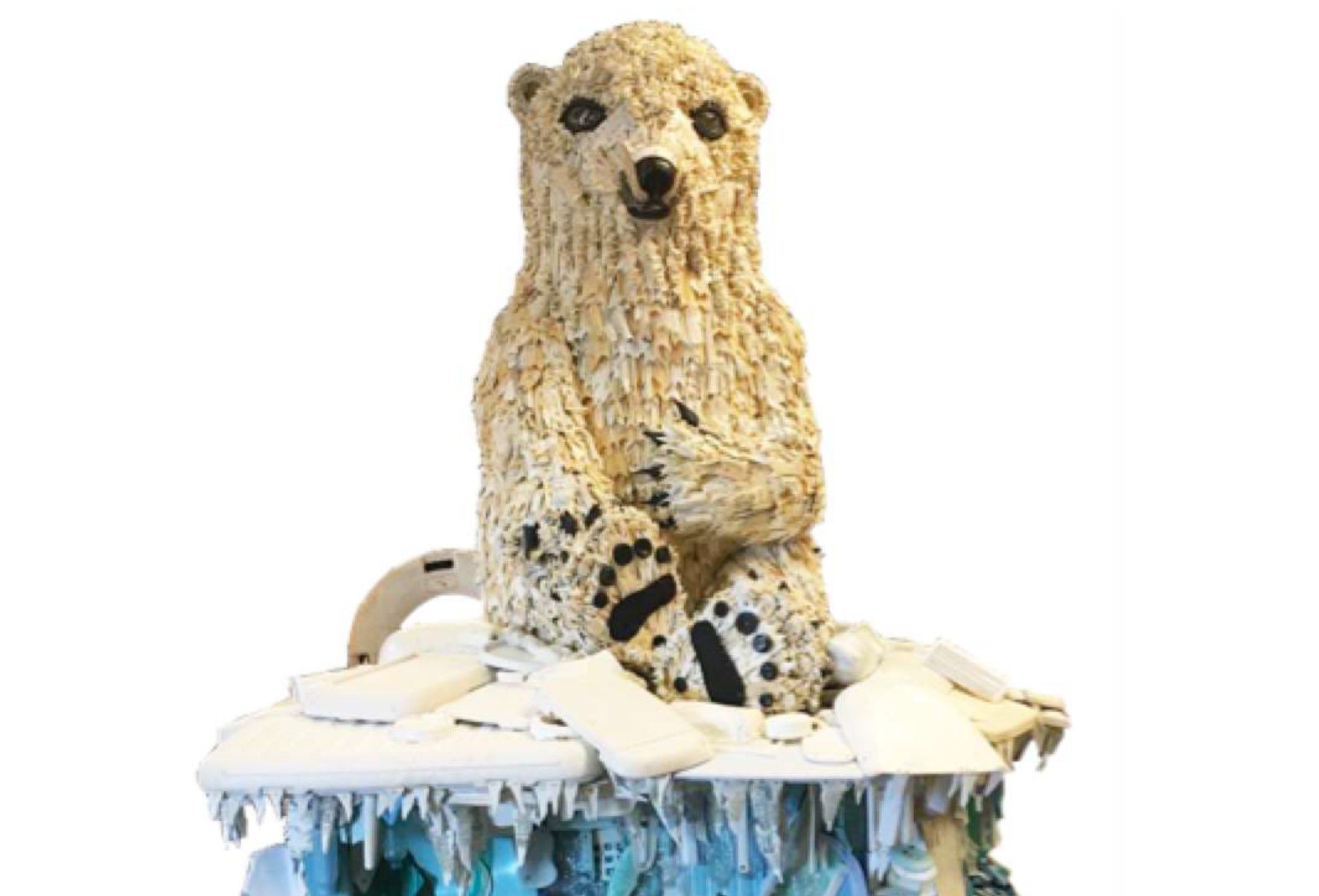
You’ll fall in love with this adorably cute polar bear named Daisy!
WashedAshore.org

This whale tail statue really shows off just how big the whale is!
WashedAshore.org
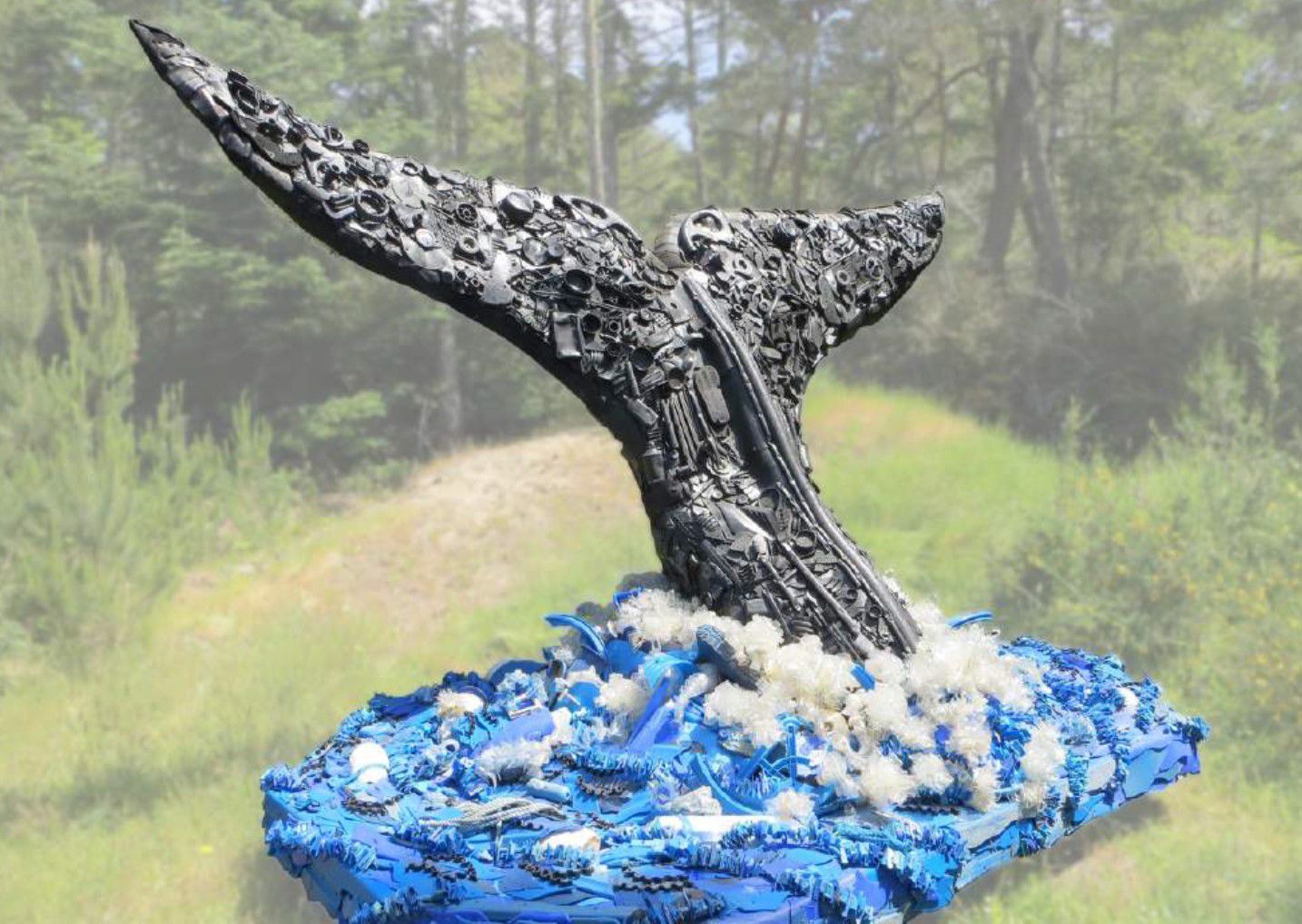
Hugo isn’t the only humpback on display! Meet Grace, who has an equally impressive and artistic tail.
WashedAshore.org

The silvertip shark is showed off through this model made entirely of ocean debris.
WashedAshore.org

This heartwarming depiction of two penguins will almost make you forgot about the fact that they’re made from trash found in the ocean.
WashedAshore.org

Edward “swims” with a jellyfish in this colorful ocean display!
WashedAshore.org
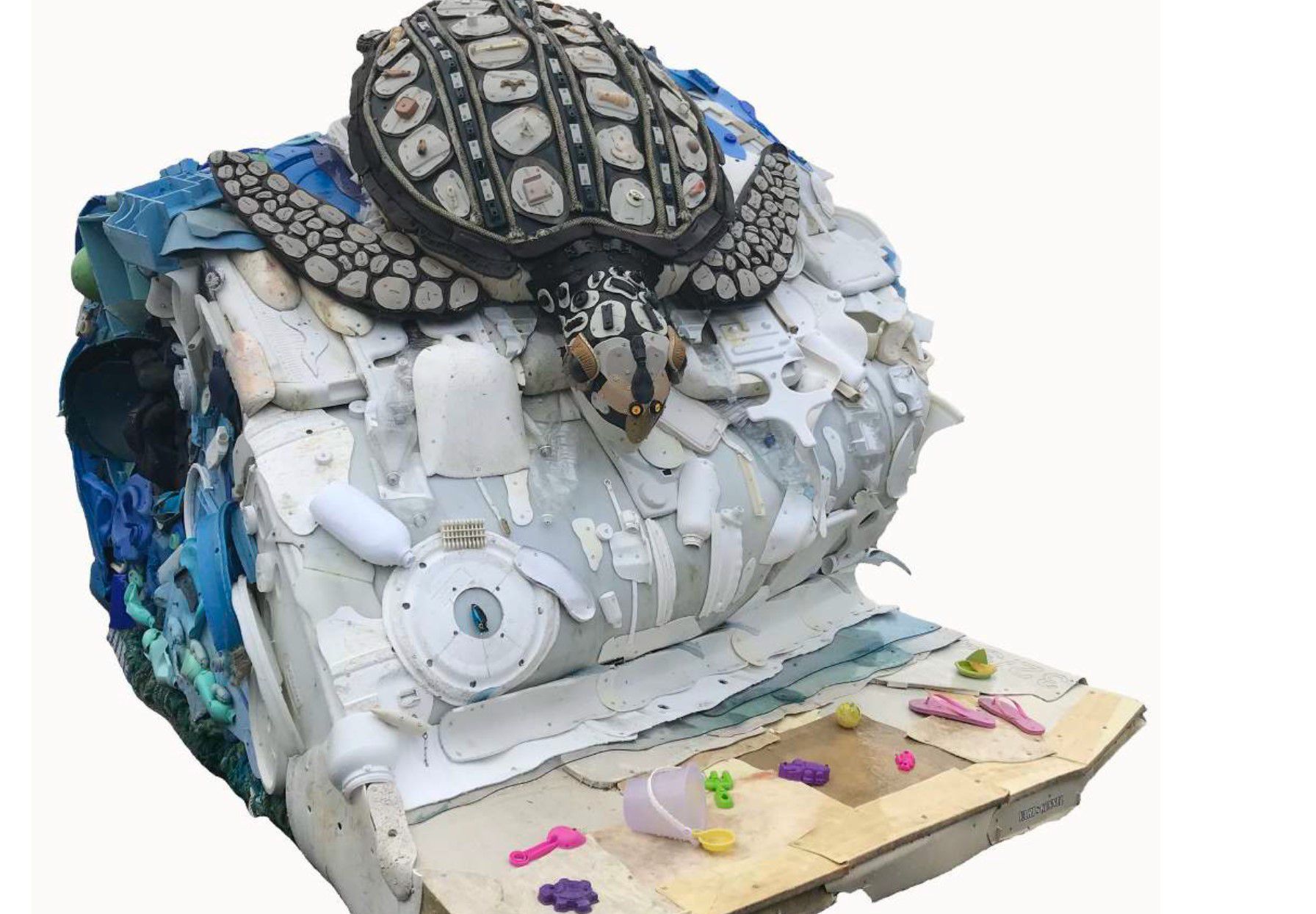
Natasha hopes you think twice about littering as she catches some waves!
WashedAshore.org

With its flippers outstretched, Brody stands tall over visitors.
WashedAshore.org

This happy seal sits on a bed of colorful items found deep beneath the ocean’s surface.
WashedAshore.org

Zorabelle is one of man penguins on display at Washed Ashore’s traveling exhibits.
WashedAshore.org

Finn looks like it’s practically swimming in this extravagant sculpture.
WashedAshore.org

Leo is so tall that we couldn’t even capture its whole body in one photo!
WashedAshore.org

Creamsicle’s tentacles are both impressive and elegant!
WashedAshore.org

Marigold is a colorful jellyfish made with primarily yellow, orange and white debris.
WashedAshore.org

This blackberry jellyfish is another massive sculpture made for Washed Ashore’s traveling exhibits.
WashedAshore.org

This epic salmon swims on a sea of vibrant blue water, complete with white foam on top of the wave it’s swimming on.
WashedAshore.org

This adorable river otter stands on a bed of rock with flowers and algae peeking out of its crevices.
WashedAshore.org

Angus is made out of vibrant yellow debris and floats on top of a bed of algae.
WashedAshore.org
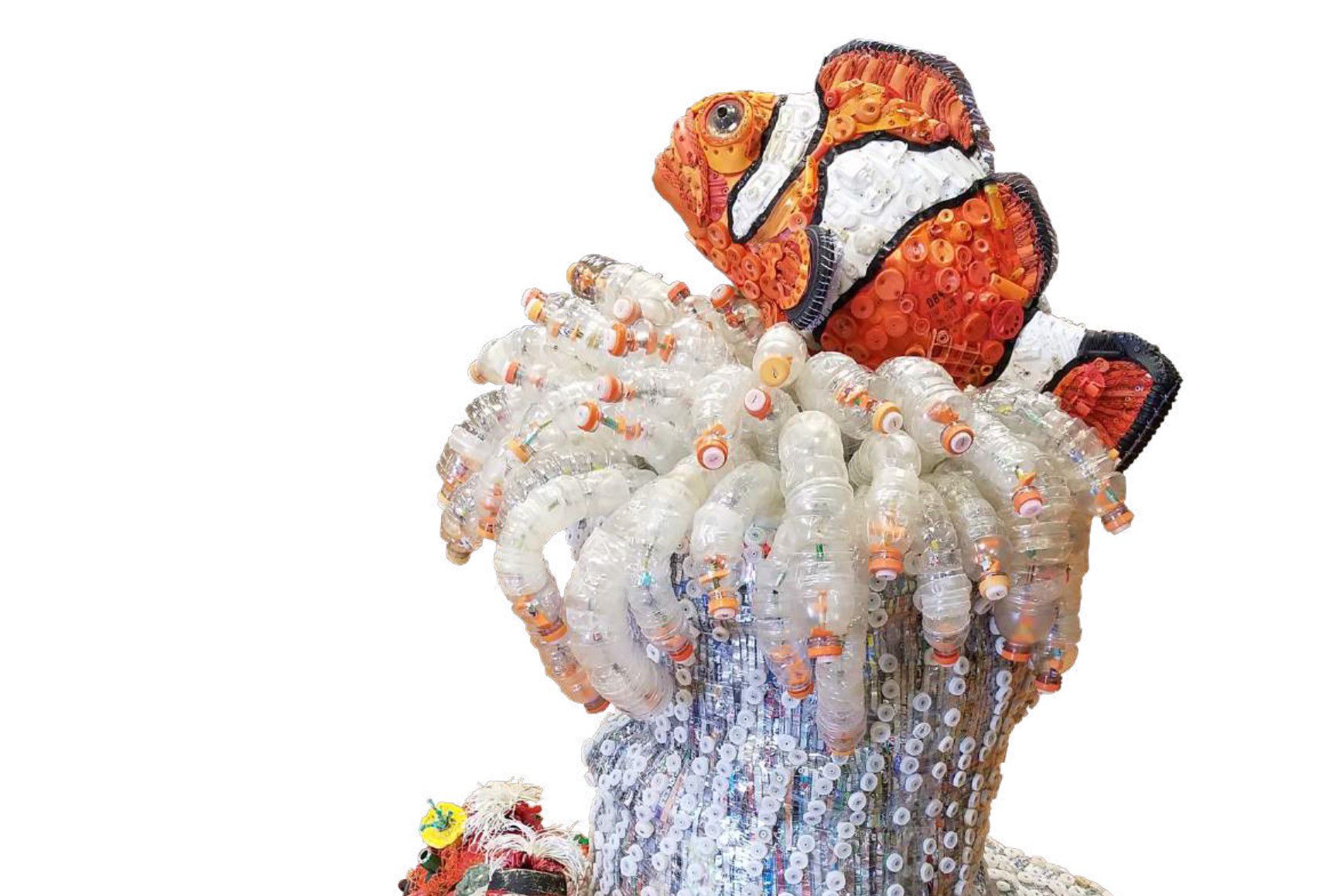
This clownfish stands out against a pastel-colored sea anemone.
WashedAshore.org

Bella the blue angelfish certainly looks angelic on top of this vibrant coral reef!
WashedAshore.org

Flip Flop is one of many artworks designed to be displayed on the walls of Washed Ashore’s exhibit spaces.
WashedAshore.org

Fish Bite is a green and blue artwork displayed on a exhibit space’s wall.
WashedAshore.org

Stella is a green, white and yellow seahorse with features made from various pieces of ocean debris, including brooms, mops and combs.
WashedAshore.org

This patriotic sea star is made out of, you guessed it, pieces of red, white and blue ocean trash.
WashedAshore.org

These incredibly detailed masks almost look like they’re straight out of a museum, but they’re actually straight out of the ocean!
Like what you see? You can learn more about the artwork and where they’re visiting next on WashedAshore.org.
Related:
This article was
produced and syndicated by MediaFeed.org.
WashedAshore.org

shalamov / istockphoto
Featured Image Credit: shironosov / iStock.