When you miss qualifying for a mortgage, you may be wondering if you have any options for buying a home. One avenue you might be researching is how does lease-to-own work?
Lease-to-own, also known as rent-to-own, is a way to begin the process of purchasing a property by renting it first. The main benefit of lease-to-own is that it allows the tenant time to build up credit and savings. It also grants the tenant time to see if the area and neighborhood are a good fit for their needs. We’re here to break it all down for you so you can decide if a lease-to-own agreement makes sense for your situation.
(Learn more at Home Affordability Calculator)
What Is Lease-to-Own?
A lease-to-own is an agreement between a landlord and a tenant that gives the tenant the right to buy the property after a specified amount of time. A portion of the rent paid may accumulate and be used for a down payment in the purchase transaction (the portion of rent held for the buyer is also known as “rent credit”).
Buyers may want to learn more about what is a lease-to-own agreement for a number of reasons, such as an inability to qualify for a traditional mortgage. The lease period allows the buyer to:
- Build their credit
- Save for a larger down payment
- Increase their income
- Try out the neighborhood
How Does Lease-to-Own Work?
The first step in entering into a lease-to-own agreement is to find a lease-to-own property. Since a lease-to-own agreement is a contract directly between a buyer and a seller, buyers need to find sellers who are willing to enter this type of arrangement. It can be difficult, since most sellers prefer a conventional sales arrangement. With lease-to-own, the seller continues to carry the mortgage while collecting rent from the buyer. (After a period of time, the buyer will have the option to purchase and will seek a home mortgage loan of their own to help pay for the property.)
To find a lease-to-own home, try one of these ideas:
- Use a real estate agent. Some agents specialize in rent-to-own programs and may be able to help you negotiate a lease-to-own contract with a seller or point you in the direction of a local program.
- Search a database. Some websites list homes that may be available for lease-to-own. You may be able to find these homes on websites such as HomeFinder.com, ZeroDown.com, or Renttoownlabs.com.
- Find a lease-to-own program. Some homes may be offered as part of a program similar to first-time homebuyer programs. In Home Partners of America or Divvy, for example, you find a home, the organization buys it, and then you sign a one-year lease (which can be renewed). At the end of the lease, the buyer agrees to purchase the property.
- Look for “For Sale By Owner” yard signs or online advertisements. A lease-to-own agreement may be worked out directly with the owner of the property.
Once you’ve found a property, you’ll need to ask for documentation that the seller truly owns the property and is up to date on property taxes and mortgage payments. Sometimes would-be buyers enter an agreement only to find that the house is in foreclosure.
If everything checks out, the buyer and the landlord will sign a Lease Purchase Agreement. A Lease Purchase Agreement is more complex than either a lease or a real estate purchase contract — it’s a contract where the lease agreement is tied to a purchase contract. What that means is once the lease period ends, the buyer agrees to purchase the property for a price set at the beginning of the contract. (Some deals are Lease Option Agreements, in which the buyer has the option to purchase the property but also has the flexibility to walk away; you can hire a real estate attorney to help you create the contract that best suits your needs.)
The buyer puts down a deposit, which can be used to secure the option to purchase the property at a later date.
Later, after the lease period comes to a close, the Purchase Agreement is executed. The buyer must first find financing to buy the property at the previously agreed-upon price. It may also be possible to renew the lease for another year if the buyer doesn’t have the credit or down payment requirements ready.
In the purchase contract, there’s typically a fair amount of rent credit that the buyer can use toward the down payment on the home if they’re able to move forward with financing.
What Is a Lease Purchase Agreement?
Let’s dig deeper into what a lease-purchase agreement actually is. A Lease Purchase Agreement is a real estate contract consisting of two parts: a lease agreement and a purchase contract. In a Lease Purchase Agreement, a buyer leases a property with the intent of purchasing it down the road. At the end of the lease agreement, the buyer must secure funds, usually with a mortgage, to purchase the property.
Lease-to-own agreements are structured contracts that include the following:
- Names of parties
- Beginning and end date
- Option money fee
- Amount of purchase price
- Amount of rent credit (25%-30% of the rent is typical)
- Exclusions/inclusions of personal property (such as a washer and dryer)
Lease Purchase Agreements require the buyer to purchase the property in the future. A breach of one agreement voids the other. In other words, if the buyer breaks the lease agreement (such as by missing rent payments), they may not be able to purchase the property.
How to Structure a Lease Purchase Agreement
Since a Lease Purchase Agreement is complicated, it needs to be structured to delineate terms and responsibilities clearly. Some examples include:
- Determine dates and length of contract. A Lease Purchase Agreement should have clear beginning and end dates and should spell out what should happen at the end of the lease agreement. Some experts recommended a year or less.
- List what the option fee is. The Lease Purchase Agreement will clearly disclose what the fee, if any, is for entering into the Lease Purchase Agreement.
- Determine how the rental agreement will work. You’ll have a lease contract that looks much like any other lease agreement when you’re a renter. Your landlord, the seller, may require a deposit, for example, and have guidelines for how the property is to be used. If the property is a condo, there may be bylaws that govern whether you can be in a lease-to-own agreement with the owner. There could also be restrictions on whether you can rent out an extra room while you are a tenant, or whether you can use the property as an Airbnb.
- Set the future purchase price. A Lease Purchase Agreement will include the home’s future purchase price. Properties can appreciate and renters may want to be sure they’re not going to pay a price that increases every year. Since you are locking in a price, it would be wise to have a home inspection just as you would a home you might purchase outright. After all, if the house has a serious flaw, that could be costly to repair and could affect its value — and in some agreements, the leaseholder is responsible for upkeep.
- Decide on how much of the rent will go towards the purchase price. This is negotiated between the buyer and seller. It is also known as “rent credit.” Sellers should be wary of allowing too much rent credit as this could allow legal issues to creep in.
- Clarify roles on home upkeep. In a lease-to-own situation, it’s less clear what party is responsible for maintenance and repairs. Be sure to spell this out in the contract before you sign. Tenants planning to become owners should be wary of making improvements that could become the property of the landlord.
- Seller should continue paying taxes and insurance. As the seller is still the owner, they should be responsible for taxes and insurance.
Pros and Cons Of a Lease Purchase Agreement
There are some pros and cons to consider if you’re looking at a Lease Purchase Agreement.
Pros
- Provides a path to homeownership for buyers who might not qualify for a mortgage or have a down payment
- Locks in the purchase price with a contract
- Allows the buyer time to build up credit
- Gives a buyer time to increase income
- Helps buyers save for a down payment
- Makes it possible for the buyer to “test out” the neighborhood
- Ability to earn rent credit or rent equity to go toward the down payment
Cons
- Buyer may have higher monthly rent or upfront fees
- Buyer could lose their deposit, option fee, and rent equity if the purchase doesn’t work out
- Buyer may not qualify for a mortgage when the contract is up
- House could be in bad shape
- Seller could be a scammer who doesn’t own the home, is behind on taxes, doesn’t keep the home in good repair, or is in danger of being foreclosed on
The Takeaway
For a lease-to-own situation to make sense, you’ll want to look at the fine print. Consider the fees, interest rate, terms, rental contract, and property condition. If you need to get into a house ASAP and don’t have the right credit score or down payment, then a lease-to-own agreement might make sense. If the terms of a lease-to-own contract are not favorable enough for your situation, see what it takes to get back on track towards qualifying for a mortgage.
*SoFi requires Private Mortgage Insurance (PMI) for conforming home loans with a loan-to-value (LTV) ratio greater than 80%. As little as 3% down payments are for qualifying first-time homebuyers only. 5% minimum applies to other borrowers. Other loan types may require different fees or insurance (e.g., VA funding fee, FHA Mortgage Insurance Premiums, etc.). Loan requirements may vary depending on your down payment amount, and minimum down payment varies by loan type.
This article originally appeared on SoFi.com and was syndicated by MediaFeed.org.
SoFi Loan Products
SoFi loans are originated by SoFi Bank, N.A., NMLS #696891 Opens A New Window.(Member FDIC). For additional product-specific legal and licensing information, see SoFi.com/legal. Equal Housing Lender.
SoFi Mortgages
Terms and conditions apply. Not all products are offered in all states. See SoFi.com/eligibility for more information.
Financial Tips & Strategies: The tips provided on this website are of a general nature and do not take into account your specific objectives, financial situation, and needs. You should always consider their appropriateness given your own circumstances.
Third-Party Brand Mentions: No brands, products, or companies mentioned are affiliated with SoFi, nor do they endorse or sponsor this article. Third-party trademarks referenced herein are property of their respective owners.
Should I get a second mortgage?

For many homeowners who need cash in short order, a second mortgage in the form of a home equity loan or home equity line of credit is a go-to answer.
What’s the point of a second mortgage? It’s a way to fund everything from home improvements to credit card debt payoff, and for some, a HELOC serves as a security blanket.
You can probably think of many things you could use a home equity loan or HELOC for, especially when the rate and terms may be more attractive than those of a cash-out refinance or personal loan.
Just know that you’ll need to have sufficient equity in your home to pull a second mortgage.
marchmeena29/istockphoto
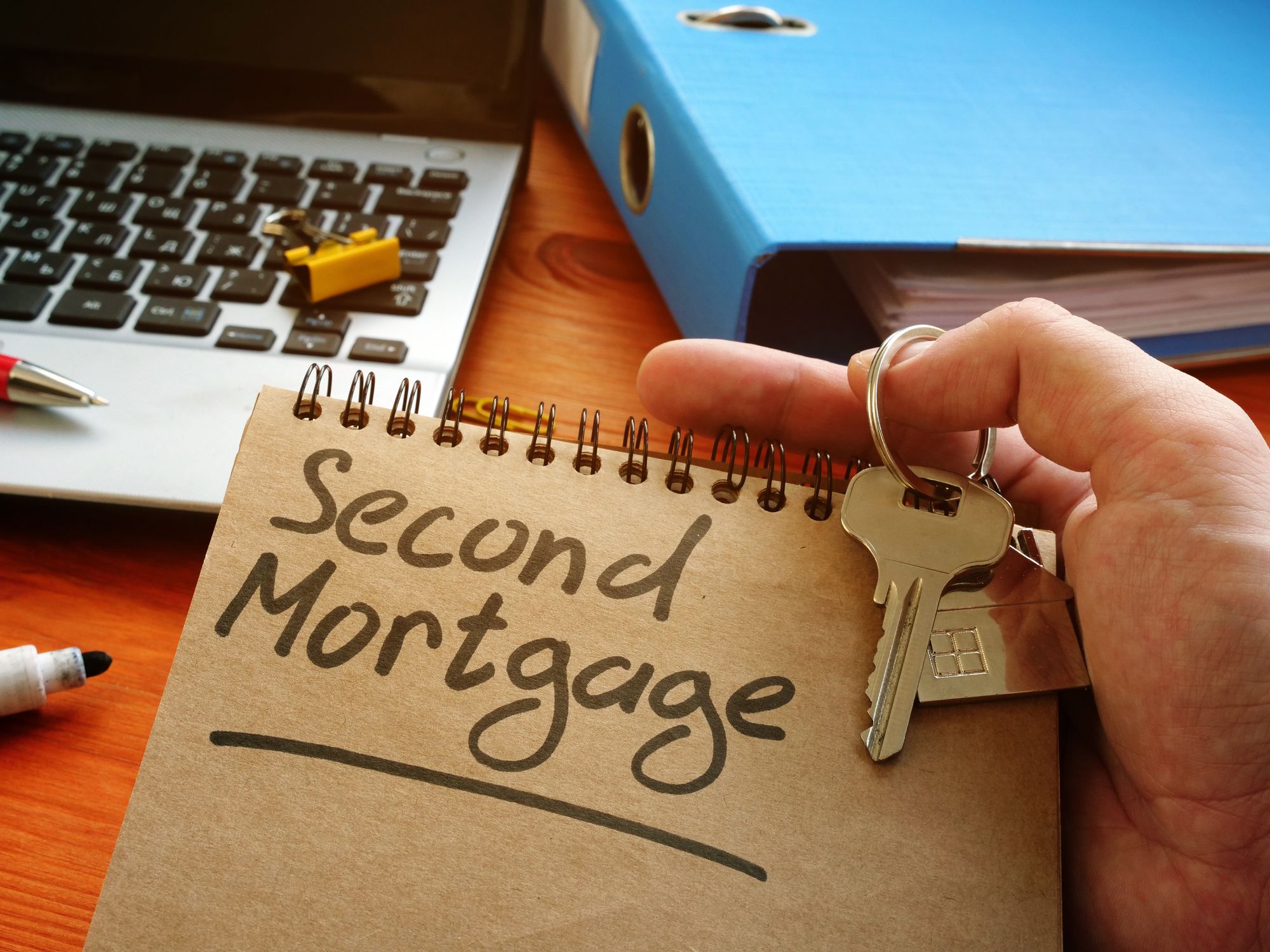
A second mortgage is one typically taken out after your first mortgage. Less commonly, a first and second mortgage may be taken out at the same time in the form of a “piggyback loan.”
Your house serves as collateral.
An “open end” second mortgage is a revolving line of credit that allows you to withdraw money and pay it back as needed, up to an approved limit, over time.
A “closed end” second mortgage is a loan disbursed in a lump sum.
It’s not called a second mortgage just because you probably took it out in that order. The term also refers to the fact that if you can’t make your mortgage payments and your home is sold as a result, the proceeds will go toward paying off your first mortgage and then toward any second mortgage and other liens (if anything is left).
designer491/istockphoto

A home equity line of credit (HELOC) and a home equity loan, the two main types of second mortgages, work differently but have a shared purpose: to allow homeowners to borrow against their home equity without having to refinance their first mortgage.
Rates
HELOCs may have lower starting interest rates than home equity loans, although HELOC rates are usually variable — fluctuating over time.
Home equity loans have fixed interest rates.
In general, the choice between a fixed- vs variable-rate loan has no one universal winner.
Costs
Home equity loans and HELOCs come with closing costs and fees of about 2% to 5% of the loan amount, but if you do your research, you may be able to find a lender that will waive some or all of the closing costs.
Some lenders offer a “no-closing-cost HELOC,” but it will usually come with a higher interest rate.
Ridofranz/istockphoto

Let’s say you buy a house for $400,000. You make a 20% down payment of $80,000 and borrow $320,000. Over time you whittle the balance to $250,000.
You apply for a second mortgage. A new appraisal puts the value of the home at $525,000.
The current market value of your home, minus anything owed, is your home equity. In this case, it’s $275,000.
So how much home equity can you tap? Often 85%, although some lenders allow more.
Assuming borrowing 85% of your equity, that could give you a home equity loan or credit line of nearly $234,000.
After closing on your loan, the lender will file a lien against your property. This second mortgage will have separate monthly payments.
PeopleImages/istockphoto
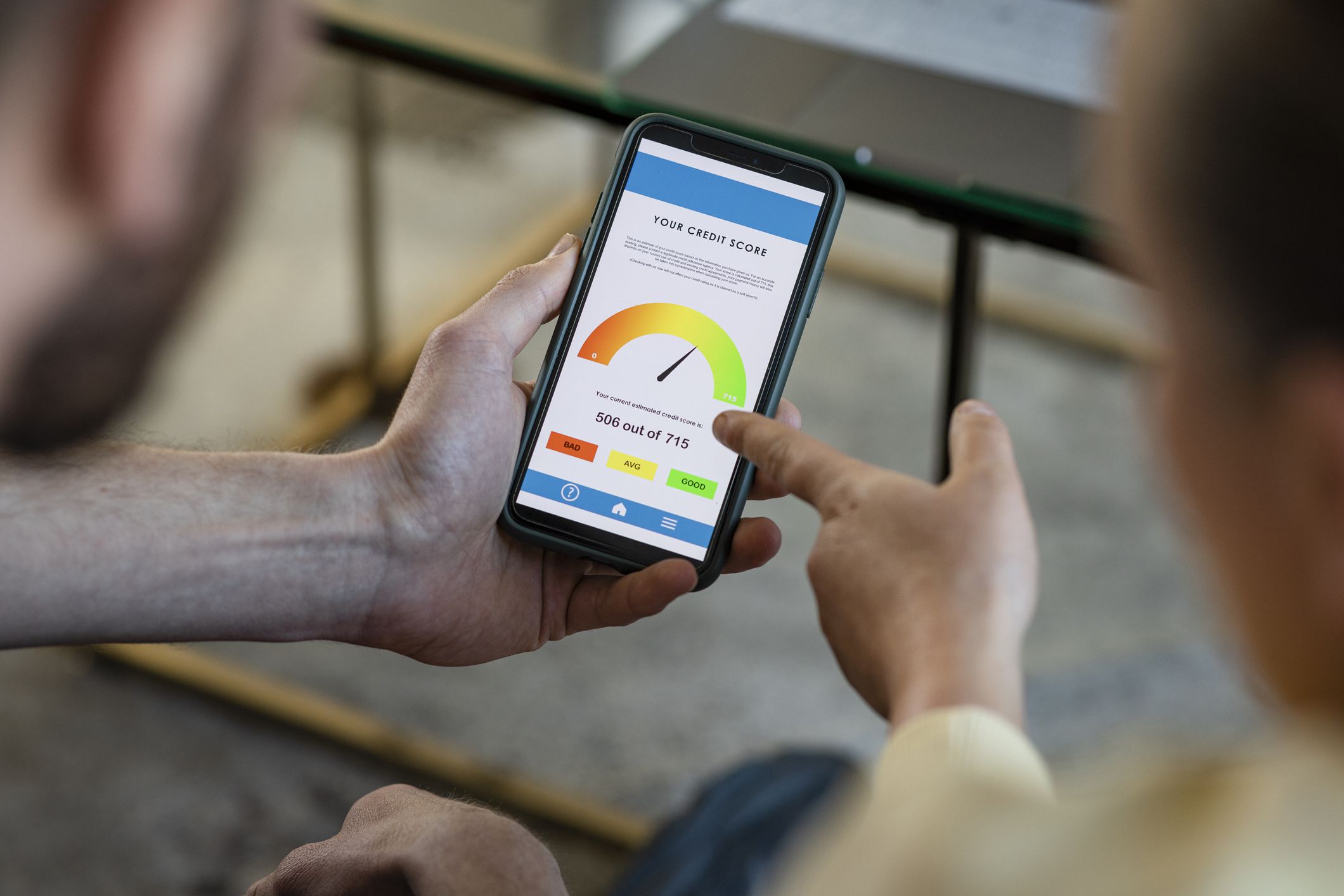
To qualify for a second mortgage, in addition to seeing if you meet a certain home equity threshold, lenders may review your credit score, credit history, employment history, and debt-to-income ratio when determining your rate and loan amount.
Here are details about the two main forms of a second mortgage.
Home Equity Loan
A home equity loan is issued in a lump sum with a fixed interest rate.
Terms may range from five to 30 years.
Home Equity Line of Credit
A HELOC is a revolving line of credit with a maximum borrowing limit.
You can borrow against the credit limit as many times as you want during the draw period, which is often 10 years. The repayment period is usually 20.
Most HELOCs have a variable interest rate. They typically come with yearly and lifetime rate caps.
SolStock/istockphoto
A mortgage refinance involves taking out a home loan that replaces your existing mortgage. Equity-rich homeowners may choose a cash-out refinance, taking out a mortgage for a larger amount than the existing mortgage and receiving the difference in cash.
Taking on a second mortgage leaves your first mortgage intact. It is a separate loan.
To determine your eligibility for refinancing, lenders look at the loan-to-value ratio, in part. Most lenders favor an LTV of 80% or less. (Current loan balance / current appraised value x 100 = LTV)
Even though the rate for a refinance might be lower than that of a home equity loan or HELOC, refinancing means you’re taking out a new loan, so you face mortgage refinancing costs of 2% to 5% of the new loan amount on average.
Homeowners who secured a low mortgage rate will not benefit from a mortgage refinance when the going rate exceeds theirs.
Bill Oxford/istockphoto

Taking out a second mortgage is a big decision, and it can be helpful to know the advantages and potential downsides before diving in.
kate_sept2004/istockphoto

Relatively low interest rate. A second mortgage may come with a lower interest rate than debt not secured by collateral, such as credit cards and personal loans. And when rates are on the rise, a cash-out refinance becomes less appetizing.
Access to money for a big expense. People may take out a second mortgage to get the cash needed to pay for a major expense, from home renovations to medical bills.
Mortgage insurance avoidance via piggyback. A homebuyer may take out a first and second mortgage simultaneously to avoid having to pay private mortgage insurance (PMI).
People generally have to pay PMI when they make a down payment on a conventional loan of less than 20% of the home’s value.
A piggyback loan, or second mortgage, can be issued at the same time as the initial home loan and allow a buyer to meet the 20% threshold and avoid paying PMI.
skynesher/istockphoto

Potential closing costs and fees. Closing costs come with a home equity loan or HELOC, but some lenders will reduce or waive them if you meet certain conditions. With a HELOC, for example, some lenders will skip closing costs if you keep the credit line open for three years. It’s a good idea to scrutinize lender offers for fees and penalties and compare the APR vs. interest rate.
Rates. Second mortgages may have higher interest rates than first mortgage loans. And the adjustable interest rate of a HELOC means the rate you start out with can increase — or decrease — over time, making payments unpredictable and possibly difficult to afford.
Risk. If your monthly payments become unaffordable, there’s a lot on the line with a second mortgage: You could lose your home.
Must qualify. Taking out a second mortgage isn’t a breeze just because you already have a mortgage. You’ll probably have to jump through similar qualifying hoops in terms of home appraisal and documentation.
designer491/istockphoto

Typical uses of second mortgages include the following:
- Paying off high-interest credit card debt
- Financing home improvements
- Making a down payment on a vacation home or investment property
- As a security measure in uncertain times
- For a blow-out wedding (or funeral) with a HELOC chunk
- College costs
Can you use the proceeds for anything? In general, yes, but each lender gets to set its own guidelines. Some lenders, for example, don’t allow second mortgage funds to be used to start a business.
andresr/istockphoto

Does a second mortgage hurt your credit?
Shopping for a second mortgage can cause a small dip in a credit score, but the score will probably rebound within a year if you make on-time mortgage payments.
How much can you borrow on a second mortgage?
Most lenders will allow you to take about 85% of your home’s equity in a second mortgage. Some allow more.
How long does it take to get a second mortgage?
Applying for and obtaining a HELOC or home equity loan takes an average of two to six weeks.
What are alternatives to getting a second mortgage?
A personal loan is one alternative to a second mortgage. A cash-out refinance is another.
Learn More:
This article originally appeared on SoFi.com and was syndicated by MediaFeed.org.
Please understand that this information provided is general in nature and shouldn’t be construed as a recommendation or solicitation of any products offered by SoFi’s affiliates and subsidiaries. In addition, this information is by no means meant to provide investment or financial advice, nor is it intended to serve as the basis for any investment decision or recommendation to buy or sell any asset. Keep in mind that investing involves risk, and past performance of an asset never guarantees future results or returns. It’s important for investors to consider their specific financial needs, goals, and risk profile before making an investment decision.
The information and analysis provided through hyperlinks to third party websites, while believed to be accurate, cannot be guaranteed by SoFi. These links are provided for informational purposes and should not be viewed as an endorsement. No brands or products mentioned are affiliated with SoFi, nor do they endorse or sponsor this content.
Communication of SoFi Wealth LLC an SEC Registered Investment Advisor
SoFi isn’t recommending and is not affiliated with the brands or companies displayed. Brands displayed neither endorse or sponsor this article. Third party trademarks and service marks referenced are property of their respective owners.
Communication of SoFi Wealth LLC an SEC Registered Investment Adviser. Information about SoFi Wealth’s advisory operations, services, and fees is set forth in SoFi Wealth’s current Form ADV Part 2 (Brochure), a copy of which is available upon request and at www.adviserinfo.sec.gov. Liz Young is a Registered Representative of SoFi Securities and Investment Advisor Representative of SoFi Wealth. Her ADV 2B is available at www.sofi.com/legal/adv.
megaflopp/istockphoto

Feverpitched/istockphoto
Featured Image Credit: Drazen_/istockphoto.