
The national unemployment rate in May was 3.4%, the same as in April 2023, edging down from 3.5% in March, proved that the tightest labor market in decades is showing no signs of loosening. In fact, the unemployment rate has been under 4% since December 2022.
Unemployment rates were lower in May than a year earlier in 177 of the 389 metropolitan areas analyzed, higher in 158 areas, and unchanged in 54 areas, said the Bureau of Labor Statistics (BLS), which gathers job data. Record low unemployment rates have been achieved for African Americans, Hispanic Americans, and people with disabilities — and a 70-year jobless low for women. Employment continued to “trend up” in professional and business services, health care, leisure and hospitality, and social assistance.
This very low level of unemployment sounds like a good thing for American workers but it presents challenges too. Economists say that inflation cannot ease significantly while unemployment is this low. For small businesses, the problem can be really acute. Not only is it hard to fill job openings, but salary pressure is intense and if there aren’t enough skilled workers, the business stagnates or slumps.
Image Credit: RgStudio/istockphoto.
Looking At Unemployment Data By City

In this story, we are taking a look at unemployment rate by city to get a feel for the job landscape across America. Using Bureau of Labor Statistics (BLS) data, we have created a list that ranks the jobless statistics for the 50 cities that show the largest populations within their respective states.
In May, Burlington-South Burlington, Vermont, had the lowest unemployment rate at 1.3%. The next lowest rate was in Manchester, New Hampshire, at 1.4%. On our list, the city with the highest unemployment is Las Vegas, Nevada, at 5.6%. Twenty-two large areas had over-the-year unemployment rate decreases, 21 had increases, and 8 had no change. Within this list, many fascinating — and even contradictory — trends are revealed that have bearing on small business owners.
Image Credit: fizkes/istockphoto.
What is the Unemployment Rate and How Is it Calculated?
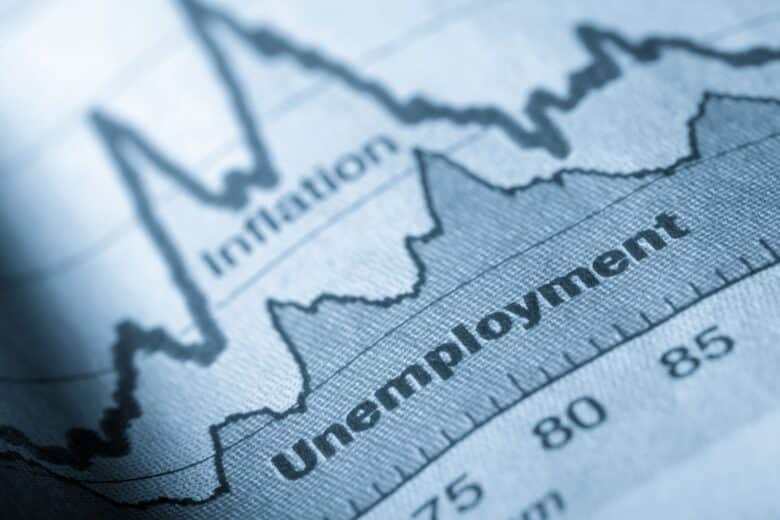
In May 2023, the labor force participation rate for people age 16 and older was 62.6%. That was 0.7 percentage points below its February 2020 level, before the pandemic began. Why doesn’t that align with a 3.4% unemployment average?
The Bureau of Labor Statistics, which falls under the Department of Labor, measures labor market activity, working conditions, price changes, and productivity in the U.S. economy. The unemployment rate for any area is the number of area residents without a job and looking for work divided by the total number of area residents in the labor force.
In other words, the unemployment rate represents the number of unemployed people as a percentage of the labor force (the labor force is the sum of the employed and unemployed).
The key factor is the BLS unemployment rate will not tell you how many people have taken themselves out of the workforce, perhaps becoming so discouraged in their job search that they have given up hope of finding a job. Some economists say that the low unemployment could be due, in part, to a low labor participation rate. What is the labor force participation rate? It’s the percentage of the population that is either working or actively looking for work.
The number of persons employed part time for economic reasons increased by 452,000 to 4.2 million, partially reflecting an increase in the number of persons whose hours were cut due to slack work or business conditions.
(Learn more at Personal Loan Calculator)
Image Credit: JLGutierrez/istockphoto.
50 State Unemployment Rates

As previously noted, we have taken the city with the largest population in each of the 50 states as the city to track within its state, beginning with the city that had the lowest rate of unemployment and moving to the highest. The data from April 2023 was the most recently obtainable from the Bureau of Labor Statistics.
Image Credit: Hispanolistic/istockphoto.
Washington, D.C.

Ranking between the cities of Boston and Jacksonville on the list, the nation’s capital, population 712,000, showed an unemployment rate of 2.3% in April 2023. The Washington region’s rate dropped 0.9 percentage points over the past year.
Image Credit: Milton Rodriguez/istockphoto.
50.) Manchester, New Hampshire

As of May 2023, the state’s 2.1% unemployment rate was the lowest it has been since record-keeping began in New Hampshire. In Manchester, population over 115,000, the jobless rate was 1.1%, making it the lowest of all the cities on our list. Across the state, New Hampshire boasts the most job opportunities in the nation, said the Bureau of Labor Statistics. The good news does create special challenges, however, such as dealing with the size of the workforce, which is smaller in New Hampshire than it was before the start of the Covid-19 pandemic.
Image Credit: DenisTangneyJr/istockphoto.
49.) Burlington, Vermont
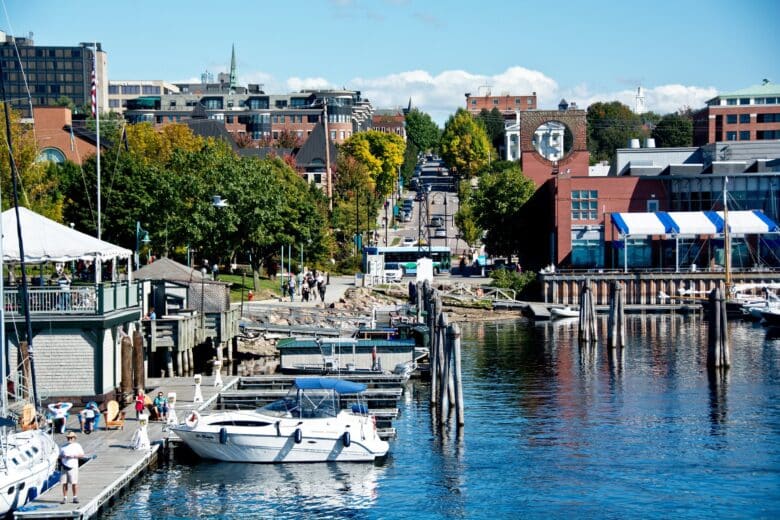
“There are nearly three job openings for every unemployed Vermonter,” according to the Vermont Department of Labor. The jobless rate in Burlington is a startling 1.4%. The city is the industrial, tourist, and financial center of the state, with a population of 44,700. It also has the distinction of being the least populous city in the 50 states to be listed as the most populous city within its state.
Image Credit: Erika J Mitchell/shutterstock.
48.) Huntsville, Alabama

The jobless rate of 1.4% percent in Huntsville makes it one of the country’s lowest. “Alabamians have been finding jobs in record numbers for many months now,” said the state’s governor. A city of rapid growth, Huntsville’s leading sectors are aerospace, defense, information technology, bioscience, and advanced manufacturing. The state’s unemployment rate of 2.2% was a record low for Alabama.
Image Credit: Sean Pavone/istockphoto.
47.) Sioux Falls, South Dakota

South Dakota had the lowest unemployment rate of any state in America at 1.9%. “South Dakota traditionally has a lower unemployment rate than the rest of the country,” explained an economics professor in a recent paper. But the state’s low rate — and the 1.8% jobless rate of its largest city, Sioux Falls — creates a “double-edged sword.” The super-tight labor market means economic growth can be difficult, warned the economist.
Image Credit: DenisTangneyJr/istockphoto.
46.) Portland, Maine

Maine’s unemployment rate hit 2.4% in May, an all-time low since the state started keeping labor records, and Portland’s is even lower at 1.8%. The state’s economic boom was driven mostly by the leisure and hospitality sector, which added the most jobs since the beginning of Covid-19.
Image Credit: Sean Pavone/istockphoto.
45.) Baltimore, Maryland
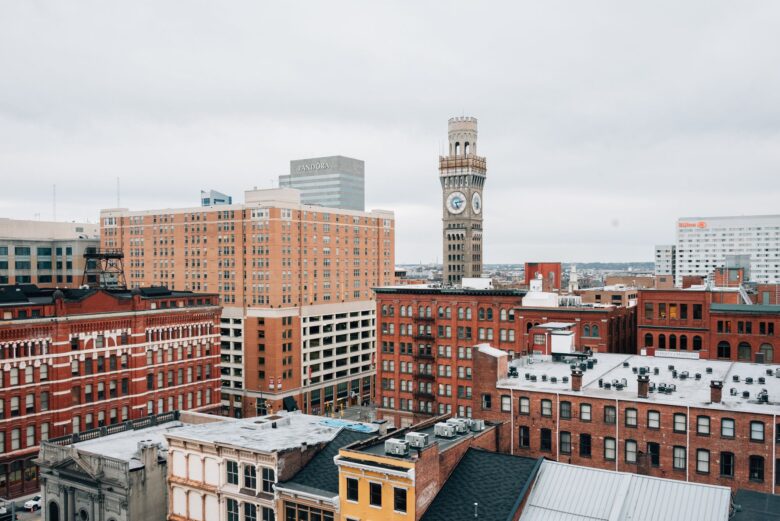
Maryland’s unemployment was 2.5% and its largest city, at a population of 576,000, stood at 1.9%. That’s down from 2.9% a year ago. The Baltimore metro area’s jobless rate ranked second-lowest among big cities in the nation, after that of Alabama’s.
Image Credit: Jon Bilous/istockphoto.
44. Charleston, South Carolina

The jobless rate of 2% in Charleston, population 151,000, helps it return to pre-pandemic status. In April 2019, the city had 2% unemployment, but in April 2020, it soared to 13%. The city’s economic strength is diverse, ranging from aerospace and life sciences to hospitality.
Image Credit: SeanPavonePhoto/istockphoto.
43. Fargo, North Dakota
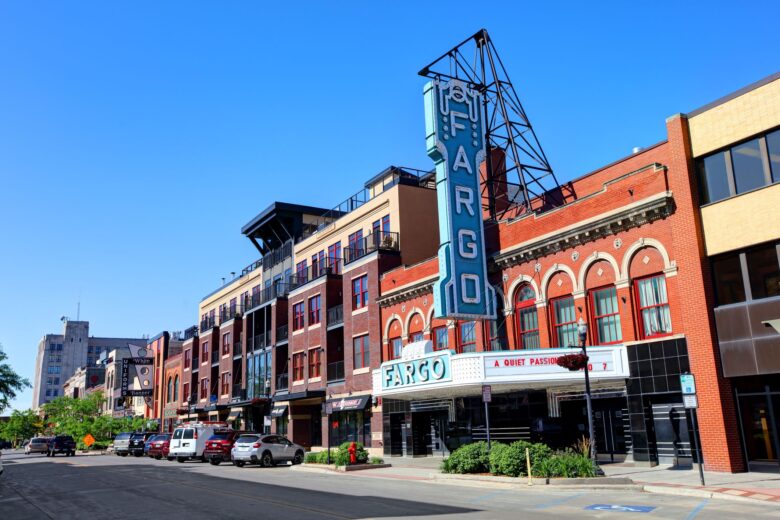
Fargo, population 126,000, has a jobless rate of 2%, although one reason North Dakota has had such a low unemployment rate for a while is because it is the fifth least-populated state in the U.S. Fargo’s economy is based on education, the medical industry, agricultural equipment manufacturing, and services.
Image Credit: DenisTangneyJr/istockphoto.
42.) Omaha, Nebraska

Nebraska had the second lowest unemployment rate in America for May 2023 at 2%. Nebraska’s record low unemployment is believed to be due to the dominance of industries like manufacturing and agriculture, which are less volatile than the energy or hospitality sectors during downturns. Omaha, population 487,000, has a jobless rate of 2%.
Image Credit: Matt Bills/istockphoto.
41.) Detroit, Michigan
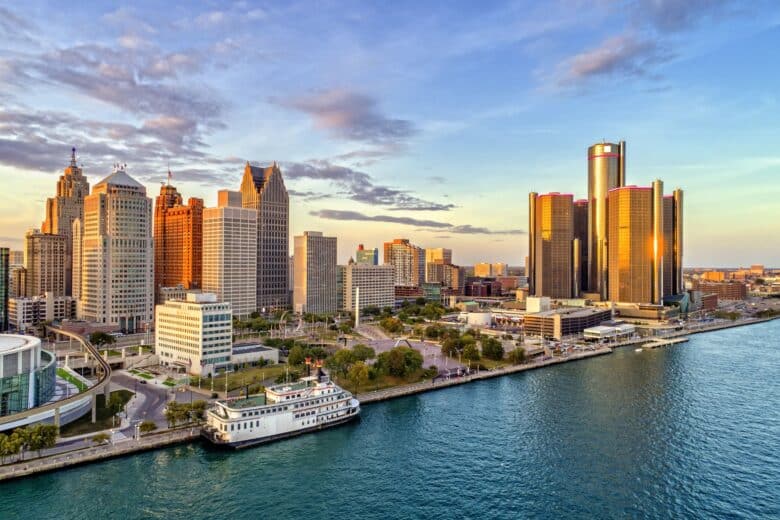
The unemployment rate of 2% in Detroit is quite a feat in a city that went through bankruptcy and experienced a 61% decrease in population from 1950 to 2010, lowering its ranking from the 4th most populous city in America to the 27th. Detroit’s jobless rate was an eye-popping 27% in June 2009. But new development in the city fuels talk of a real comeback post Covid-19.
Image Credit: pawel.gaul/istockphoto.
40.) Nashville, Tennessee
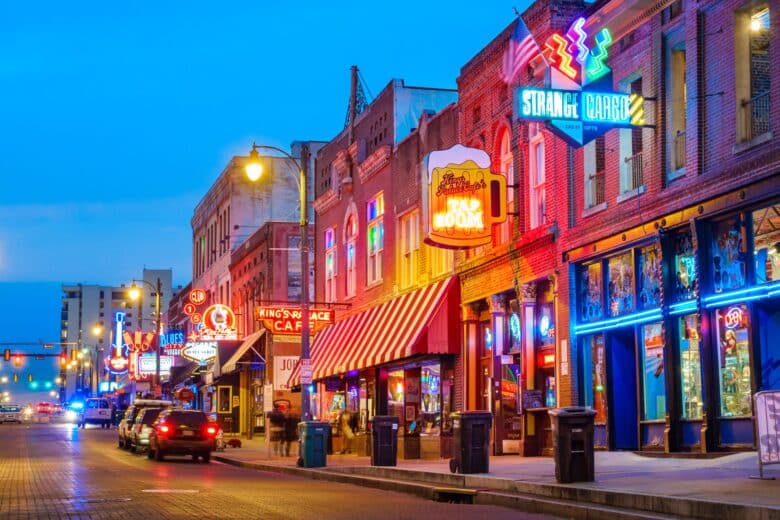
The state of Tennessee has an unemployment rate of 3.3%, but Nashville’s is lower, coming in at 2.1%. The city is famous for music and entertainment, but healthcare and manufacturing are leading sectors as well. The city, population 1.3 million, is one of the fastest growing in America.
Image Credit: benedek/istockphoto.
39.) Oklahoma City, Oklahoma

The largest city in Oklahoma has a jobless rate of 2.1%. Oklahoma City has one of the world’s largest livestock markets, with oil, natural gas, and petroleum products as its largest sectors. As for the state, Oklahoma’s seasonally adjusted unemployment rate declined 0.1 percentage points to 2.9% in May.
Image Credit: Sean Pavone/istockphoto.
38.) Billings, Montana

The largest city in Montana held onto its record low jobless rate of 2.1% in May. Billings has a history of agriculture and energy; more recently, it’s focused on retail. The state’s labor force participation rate was 75.6%, and it was one of 12 states with a record-low unemployment rate in April.
Image Credit: peeterv/istockphoto.
37.) Des Moines, Iowa

Iowa’s seasonally adjusted unemployment rate dropped to 2.7% in May from 2.8% in March while the state’s labor force added 4,300 new workers. The state is recognized for its leading position in the agricultural sector, particularly corn, soybean, pork, and egg production. With a jobless rate of 2.2%, Des Moines was doing even better.
Image Credit: Jacob Boomsma/istockphoto.
36.) Salt Lake City, Utah

The city with the largest population in Utah had a jobless rate in April 2023 of 2.3%, matching that of the state. Known as the “Crossroads of the West,” the city’s major industries are government, trade, transportation, utilities, and professional and business services.
Image Credit: 4kodiak/istockphoto.
35.) Boston, Massachusetts

Boston’s unemployment rate was at 2.3%, compared to 3.1% this time last year. The city is the economic engine and cultural hub of New England, with higher education, health care, and financial services as the major drivers. The state’s April unemployment rate was 3.3%, down 0.2 percentage points from the March estimate of 3.5%.
Image Credit: ivanastar/istockphoto.
34.) Jacksonville, Florida

The largest city in Florida with a population of 954,000, Jacksonville had a jobless rate of 2.3% in April 2023. The Jacksonville area added private sector jobs at a rate of 4.3% over the year, an increase of 29,900 jobs. In April, Florida’s unemployment rate was 2.6% for the fourth consecutive month, which is 0.8 percentage points lower than the national rate. Florida’s statewide unemployment rate has remained lower than the national rate for 30 consecutive months.
Image Credit: peeterv/istockphoto.
33.) Little Rock, Arkansas

The state of Arkansas set a new unemployment rate record low of 2.8% in April 2023. Little Rock, its largest city at 202,000, showed a jobless rate of 2.3%. Healthcare is a leading sector in Little Rock, followed by manufacturing and construction.
Image Credit: pabradyphoto/istockphoto.
32.) Milwaukee, Wisconsin

The state of Wisconsin set a new unemployment rate low of 2.4% in April 2023. Its largest city, Milwaukee, was also 2.4%. The jobless rate had soared to 15.6% in April of 2020. The three sectors that comprise most of Milwaukee’s workforce are service sector industries, manufacturing, and retail trade.
Image Credit: Sean Pavone/istockphoto.
31.) Jackson, Mississippi

With a population of 149,000, Jackson had a jobless rate of 2.4%. It has a lower cost of living average than the U.S. average and major sectors in advanced manufacturing, health care, information technology, and food processing. The state of Mississippi set a new record jobless low that month of 3.4%.
Image Credit: SeanPavonePhoto/istockphoto.
30.) Indianapolis, Indiana
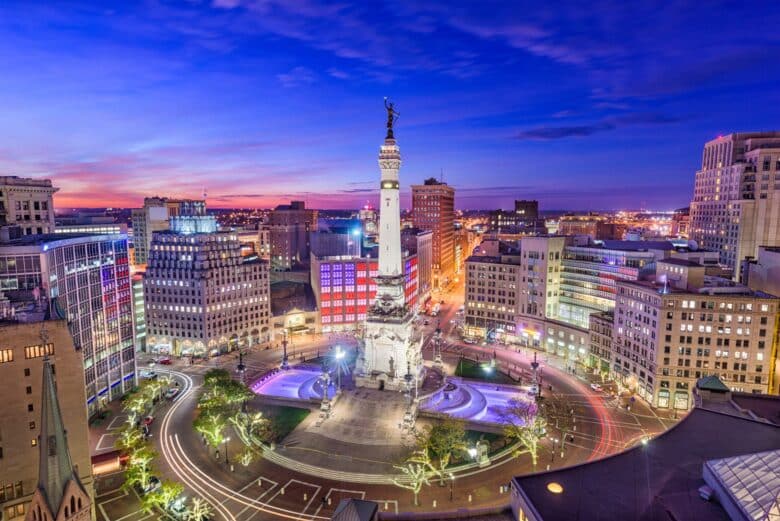
The city of Indianapolis showed an unemployment rate of 2.4% in April. An economist said earlier in 2023 that there were 5 job seekers for every 10 open positions in the state. Central Indiana’s life sciences and healthcare sector generates nearly $84 billion in total economic output.
Image Credit: Sean Pavone/istockphoto.
29.) Boise, Idaho
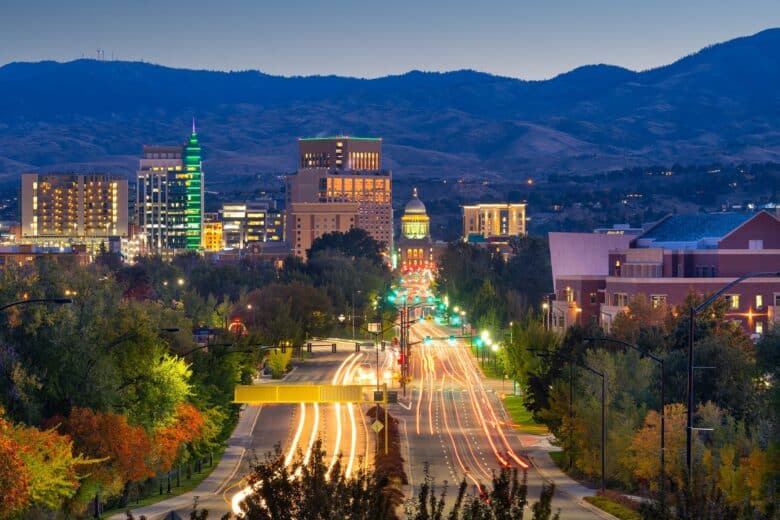
With a population of 237,000, Boise had a jobless rate of 2.4% in April. The major economic drivers in the region include semiconductor and other computer product manufacturing, food product manufacturing, administrative and business support services, and construction.
Image Credit: Sean Pavone/istockphoto.
28.) Denver, Colorado
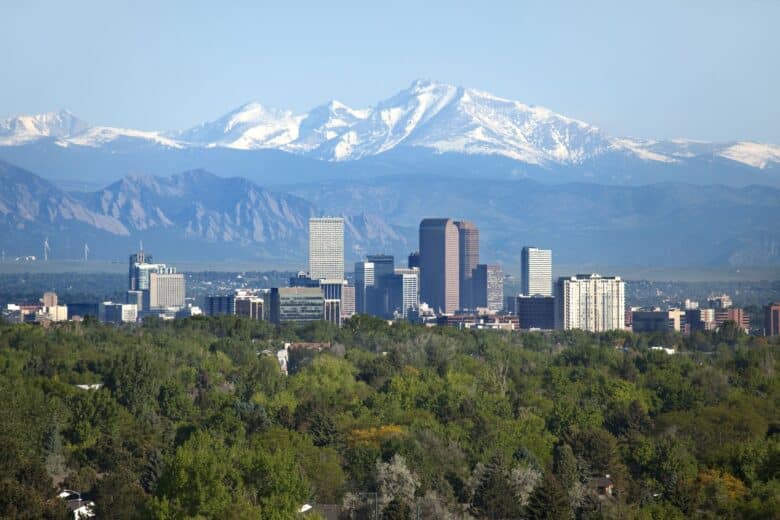
Colorado showed a jobless rate of 2.8% and Denver, its largest city, had a rate of 2.4% in April 2023. Considered a magnet for work-from-home professionals, Denver is a fast-growing city, but one with housing costs that are 36% higher than the national average. Software and financial services are among its hottest industries. Aerospace, digital communications, and food and beverage sectors are also expanding.
Image Credit: milehightraveler/istockphoto.
27.) Providence, Rhode Island

With a population of 189,000, Providence had a jobless rate of 2.6% in April, while the state had an unemployment rate of 3%. About one-third of the city’s economy is based in trade, transportation, utilities, and educational and health services. The four Fortune 500 companies based in Rhode Island are CVS Heath, United Natural Foods, Textron, and Citizens Financial Group.
Image Credit: SeanPavonePhoto/istockphoto.
26.) Kansas City, Missouri

Missouri had a jobless rate of 2.5% in April 2023, and Kansas City, its largest city, had a rate of 2.6%. The unemployment rate in Missouri reached a record high of 11.4% in April of 2020 and a record low of 2.1 in May of 2022. Kansas City is the third largest beef-processing city in America and has strong sectors in health care, tech, retail, and finance.
Image Credit: TriggerPhoto/istockphoto.
25.) Honolulu, Hawaii

With a population of 345,000, Honolulu had an unemployment rate of 2.6% in April. Job gains were seen in professional and business services, trade, transportation and utilities, and private education and health services. Overall, Hawaii had an unemployment rate of 3.3%.
Image Credit: Art Wager/istockphoto.
24.) Virginia Beach, Virginia

Virginia Beach has a jobless rate of 2.7%. Real estate, defense, and tourism are major sectors of the city’s economy. Meanwhile, Virginia’s April unemployment rate decreased to 3.1%. The state’s labor force participation rate rose to 66.2% with employment up by over 25,000.
Image Credit: peeterv/istockphoto.
23.) Minneapolis, Minnesota

With an unemployment rate of 2.7%, Minneapolis is surging. The Twin Cities are expected to continue to thrive throughout 2023, with industries such as healthcare, finance, manufacturing, and technology playing an expanded role.
Image Credit: jimkruger/istockphoto.
22.) Atlanta, Georgia

Georgia’s largest city with a population of 496,000, Atlanta has a jobless rate of 2.7%. The state is also showing record lows in unemployment. The sectors with the most over-the-month job gains included accommodation and food services, health care and social assistance, arts, entertainment, recreation, and management of companies and enterprises.
Image Credit: SeanPavonePhoto/istockphoto.
21.) Columbus, Ohio

Ohio showed an unemployment rate of 3.7% in April 2023, with Columbus at 2.8%. However, job growth could slow as employers struggle to fill openings in such a tight market, Columbus leaders say. The city does a great job of drawing young professionals with diverse sectors, ranging from education and food to defense and steel.
Image Credit: Sean Pavone/istockphoto.
20.) Albuquerque, New Mexico
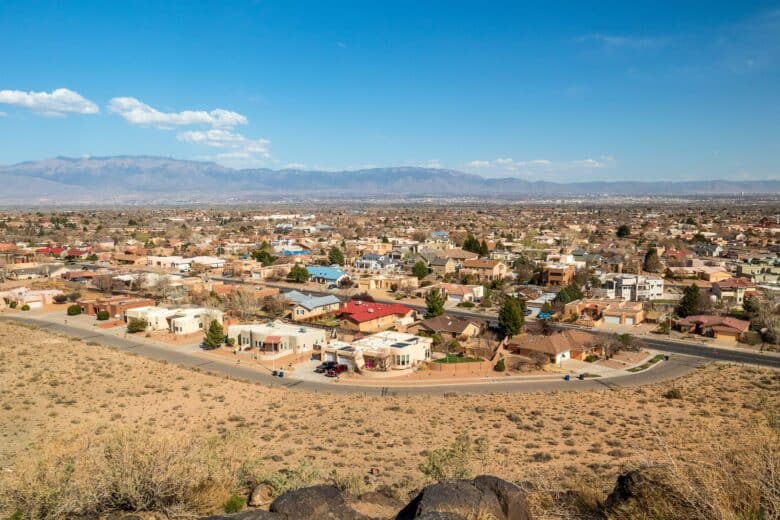
The largest city in New Mexico has a jobless rate of 2.8%, steadily decreasing since its pandemic high of 10%. Albuquerque and the rest of the state are on a growth curve — the top three industries are oil drilling and gas extraction, scientific research and development, and hospitals. Of the 16 states that showed over-the-year unemployment rate decreases, the largest was in New Mexico, said the BLS.
Image Credit: Faina Gurevich/istockphoto.
19.) Louisville, Kentucky
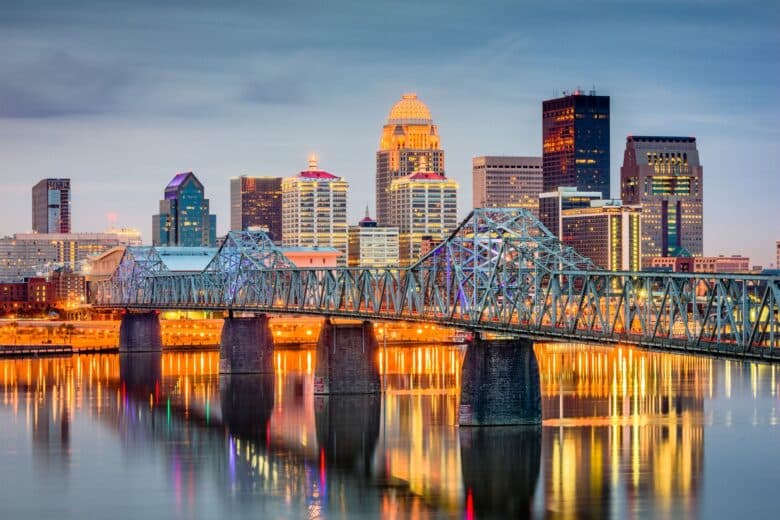
With an unemployment rate of 2.8%, the city is seeing job growth as payrolls have managed to expand. The city, with a population of 628,000, is known for shipping and cargo and, more recently, for major manufacturing, with two Ford plants in the region, and health care.
Image Credit: Sean Pavone/istockphoto.
18.) Portland, Oregon
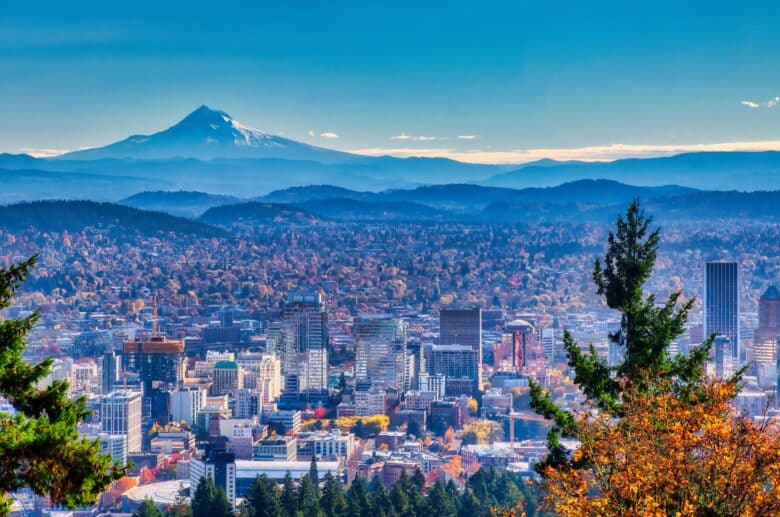
Oregon’s unemployment stands at 4%, but Portland, its largest city, has a jobless rate of 2.9%. This progress could ease the concerns of Portland leaders, who thought that, compared to similarly-sized cities, Portland was lagging behind on financial recovery from Covid-19.
Image Credit: BruceBlock/istockphoto.
17.) Charlotte, North Carolina

With a population of 879,000, Charlotte is home to corporations such as MetLife, NASCAR, Wells Fargo, Bank of America, and Lowe’s. Its unemployment rate is 2.9%, compared with the state’s jobless rate of 3.4%.
Image Credit: Jonathan Ardila /istockphoto.
16.) Phoenix, Arizona

Phoenix, population 1.6 million, has an unemployment rate of 2.9%. One of the fastest-growing cities in America, Phoenix reached a record jobless high of 13.7% in April of 2020 and a record low of 2.5% in April of 1998. In the last 50 years, Phoenix’s economy has been powered by hospitality and leisure, but the city is home to a growing number of high-tech, IT, renewable energy, and bioscience industries.
Image Credit: 4kodiak/istockphoto.
15.) Seattle, Washington
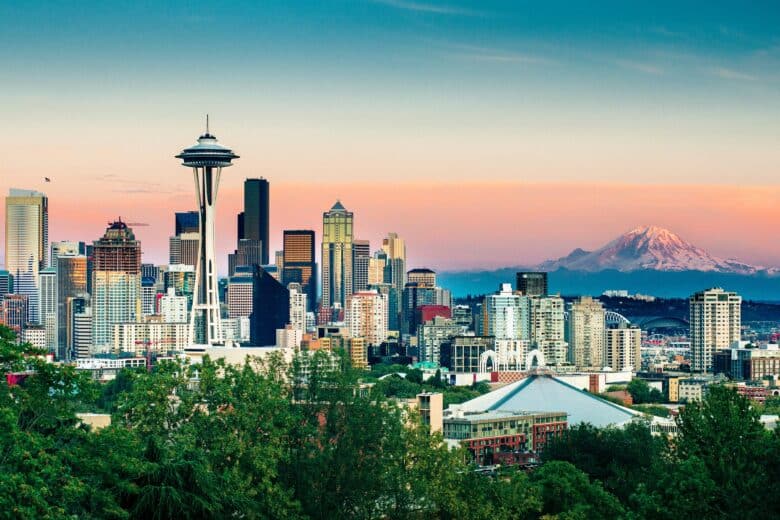
Seattle, population 733,000, stayed below the national unemployment rate with a jobless figure of 3%. Thousands of tech sector layoffs in the Seattle area have had an impact, but the city continues to support innovation.
Image Credit: ferrantraite/istockphoto.
14.) Bridgeport, Connecticut

The unemployment rate in Bridgeport, population 148,000, is 3%. While some fled New York or New Jersey during the pandemic, Connecticut added 66,000 people in 2021. However, Bridgeport struggles, with some 19% of its residents living in poverty.
Image Credit: DenisTangneyJr/istockphoto.
13.) Philadelphia, Pennsylvania

The unemployment rate for Philadelphia dropped to 3.1% in February, marking a significant fall over the past year. This bolsters the region’s ongoing recovery from the pandemic, which hit Philly hard and led to the loss of more than 100,000 jobs in the first two months alone of Covid-19.
Image Credit: Sean Pavone/istockphoto.
12.) Wichita, Kansas
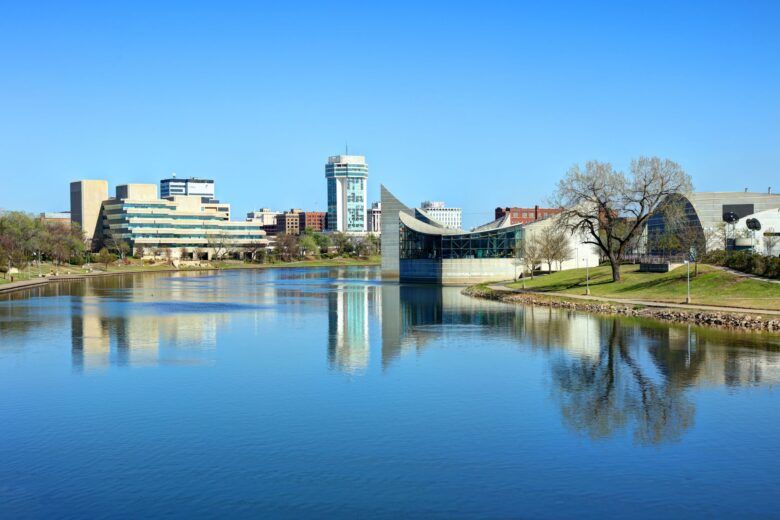
The unemployment rate in Wichita, population 395,000, is 3.1%, which is 0.3 percentage points higher than the state’s rate. As for Kansas, it showed a rate increase in unemployment over the year of +0.5 percentage point. Agriculture, manufacturing, healthcare, and energy drive the Wichita regional economy.
Image Credit: DenisTangneyJr/istockphoto.
11.) Wilmington, Delaware

Located midpoint between Washington, D.C. and New York City, Wilmington is Delaware’s largest city and its economic engine. Wilmington has an unemployment rate of 3.1%. The state itself continues a slow slide in joblessness, reaching a new post-pandemic low in spring 2023.
Image Credit: DenisTangneyJr/istockphoto.
10.) Cheyenne Wyoming

With a jobless rate of 3.2%, Cheyenne’s economy is based on light manufacturing, agriculture, the military and government, tourism, and transportation. Cattle- and sheep-raising continue to thrive throughout the region too.
Image Credit: DenisTangneyJr/istockphoto.
9.) New Orleans, Louisiana

The jobless rate of 3.3% in the Big Easy certainly shows a large decrease since its alarming Covid-19 days of 20% in April 2020 and an April 2021 rate of 9%. As a tourist favorite and a major port on the Gulf Coast, New Orleans is considered an economic and commercial hub, but it struggles with crime, with the Wall Street Journal as the major city with the highest homicide rate in America.
Image Credit: ghornephoto/istockphoto.
8.) Charleston, West Virginia

The city with the largest population in West Virginia has 46,700 people and an unemployment rate of 3.4%, same as the national average. As it is the state capital, Charleston has government jobs as well as those in trade, utilities, education, and medicine. The chemical industry and the manufacturing sector are also significant.
Image Credit: Sean Pavone/istockphoto.
7.) Chicago, Illinois

The unemployment rate of 3.4% in Chicago shows a decrease from 4.3% a year ago. The city and its suburbs is home to 35 Fortune 500 companies, with strengths in manufacturing, printing, insurance, transportation, financial trading, and food processing. However, Illinois has an unemployment rate of 4.2%, one of the states running higher than the nation’s average.
Image Credit: Shelly Bychowski/istockphoto.
6.) Anchorage, Alaska

The city with the largest population in Alaska has a jobless rate of 3.4%. Alaska often shows a relatively high unemployment rate. Over the last 40 years, the average unemployment rate in the United States has been 6.3%, while in Alaska, it has averaged 7.9% since 1976. Therefore, this rate is low for Anchorage.
Image Credit: Jacob Boomsma/istockphoto.
5.) New York, New York

The Big Apple has a jobless rate of 3.7%, which makes it one of five cities on our list with an unemployment rate higher than the national average. However, New York City, with its population topping 8.4 million, is also beginning to show gains in employment three years after the start of Covid-19. After all, New York is estimated to have lost about 2 million jobs in the immediate wake of the pandemic.
Image Credit: TriggerPhoto / istockphoto.
4.) Newark, New Jersey

This year, the unemployment rate in New Jersey hovers at 3.6 percent. This is half as high as in 2021, when the unemployment rate was at 6.6 percent, and a marked decrease from a high of 9.7 percent in 2010. The city of Newark, with a jobless rate of 3.7%, has a population of over 305,000, and some 25% of residents are living in poverty according to U.S. Census data.
Image Credit: Ultima_Gaina/istockphoto.
3.) Houston, Texas

Houston’s unemployment rate at 4% aligns with Texas’ state rate of 4%. As of April, there were more than 158,000 Houstonians unemployed and looking for work, up from 137,000 at this time last year. The region has created over 119,000 jobs over the past 12 months, so the expanding ranks of the unemployed is believed to reflect an increase in the size of the metro workforce rather than layoffs.
Image Credit: Sean Pavone/istockphoto.
2.) Los Angeles, California

The city on our list with the second-highest population in America at 3.9 million has an unemployment rate of 4.2%. The state has struggled since Covid-19. In 2021, California hit the highest state unemployment rate in the country at 6.9%, compared with a nationwide rate of 4.2%. Several factors are believed to contribute, including the state’s slow-to-rebound tourism industry and a mismatch between job skills among those who seek employment and what skills are needed.
Image Credit: ViewApart/istockphoto.
1.) Las Vegas, Nevada
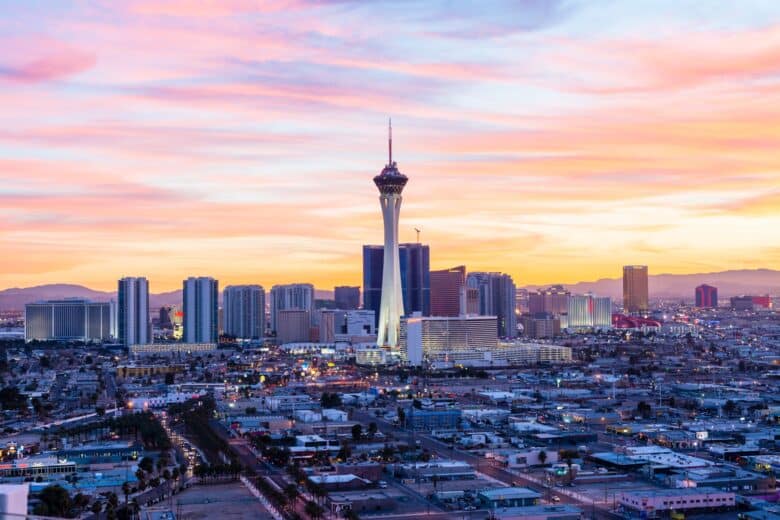
On our list, Nevada has the highest unemployment in the nation at 5.4% for April 2023, and Las Vegas, its largest city, showed a rate of 5%. The state’s labor force is currently over 1.5 million people, which has increased by nearly 63,000 since 2022. Las Vegas shows a lot of turbulence in employment, with a high number of people in the workforce actively looking for jobs while the city shows the lingering effects of the COVID-19 lockdown.
Image Credit: mvp64/istockphoto.
What Factors Affect Unemployment Rate?

Unemployment is a key measure of the health of the American economy and considerable resources are put into analyzing it. There are many different reasons for unemployment. Apart from the common causes found in any economy–a worker leaving for another job or being fired–there is cyclical unemployment and structural unemployment.
Cyclical unemployment is caused by economic downturns or is related to changes in business conditions, As the name indicates, it can be temporary. After a recession ends, unemployment falls.
Structural unemployment is different. It usually means there is a mismatch between the jobs available and the skill levels of the unemployed. Technological changes, a lack of relevant skills, and jobs moving overseas to another country cause structural unemployment.
Structural unemployment can be hard for a society to deal with — it produces permanent disruptions in the economy and obviously a lot of stress among the people who want to work but can’t get a job.
Image Credit: Wikipedia.
How Does a Low Unemployment Rate Affect The Economy?
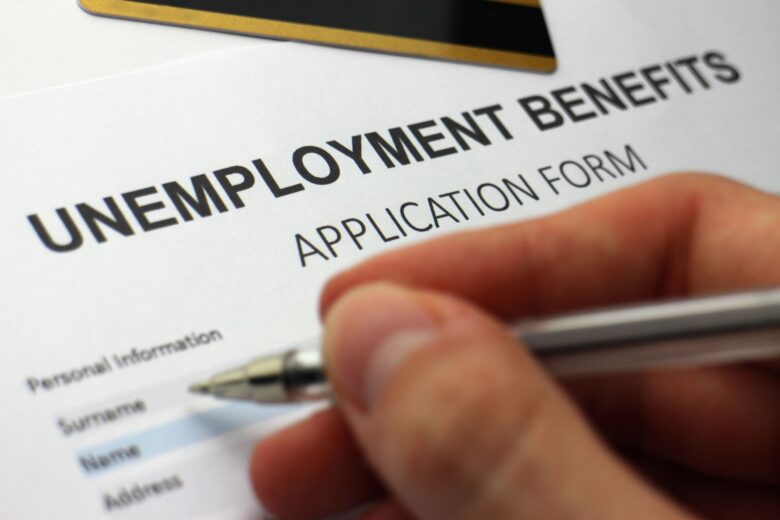
In mid-2023, the problem of high unemployment seems far away indeed. A reasonable unemployment rate is somewhere between 3% and 5%. The current low rate of unemployment means that the economy is producing near its full capacity, maximizing output, and driving wage growth.
However, the labor market can reach a point where each additional job added does not create enough productivity to cover its cost. This causes an output gap, or the “slack,” in the labor market. The economy is in danger of becoming “overheated.”
Image Credit: glegorly/istockphoto.
How Does Unemployment Affect Small Businesses?

When there’s an increasing demand for labor yet the unemployment rate keeps falling, this causes wage inflation. With fewer people available to work, employers have to increase wages to attract and hold on to talent. While that’s pleasant for the workers, some businesses can’t afford to pay a lot more. The money that might go to growing the business has to go toward payroll.
And when there are more jobs than there are people with the necessary skills and experience, this leads to employees feeling overwhelmed and stressed. Small businesses typically have less money to funnel toward training and recruitment. This is a time when small businesses may turn to debt financing, whether it’s seeking a small business loan or looking for investors.
Image Credit: marchmeena29/istockphoto.
The Takeaway

In April 2023, the Bureau of Labor Statistics showed a national unemployment rate of 3.4%, which is slightly lower than the unemployment rate in March. Looking at the cities with the largest population in their respective states, our list showed that Manchester, New Hampshire, had the lower unemployment rate and Las Vegas, Nevada, had the highest. This low jobless rate has various implications for the economy — and for small business owners.
This article originally appeared on SoFi.com and was syndicated by MediaFeed.org.
SoFi receives compensation in the event you obtain a loan, financial product, or service through the Lantern marketplace. This Lantern website is owned by SoFi Lending Corp., a lender licensed by the Department of Financial Protection and Innovation under the California Financing Law, license number 6054612; NMLS number 1121636. (mlsconsumeraccess). This site is NOT owned and operated by SoFi Bank. Loans, financial products, and services may not be available in all states.All rates, fees, and terms are presented without guarantee and are subject to change pursuant to each provider’s discretion. There is no guarantee you will be approved or qualify for the advertised rates, fees, or terms presented. The actual terms you may receive depends on the things like benefits requested, your credit score, usage, history and other factors.*Check your rate: To check the rates and terms you may qualify for, Lantern and/or its network lenders conducts a soft credit pull that will not affect your credit score. However, if you choose a product and continue your application, the lender(s) you choose will request your full credit report from one or more consumer reporting agencies, which is considered a hard credit pull and may affect your credit.All loan terms, including interest rate, and Annual Percentage Rate (APR), and monthly payments shown on this website are from lenders and are estimates based upon the limited information you provided and are for information purposes only. Estimated APR includes all applicable fees as required under the Truth in Lending Act. The actual loan terms you receive, including APR, will depend on the lender you select, their underwriting criteria, and your personal financial factors. The loan terms and rates presented are provided by the lenders and not by SoFi Lending Corp. or Lantern. Please review each lender’s Terms and Conditions for additional details.Many factors affect your credit scores and the interest rates you may receive. SoFi is not a Credit Repair Organization as defined under federal or state law, including the Credit Repair Organizations Act. SoFi does not provide “credit repair” services or advice or assistance regarding “rebuilding” or “improving” your credit record, credit history, or credit rating. For details, see the FTC’s website on credit (consumer.ftc)Financial Tips & Strategies: The tips provided on this website are of a general nature and do not take into account your specific objectives, financial situation, and needs. You should always consider their appropriateness given your own circumstances.¹SoFi’s Insights tool offers users the ability to connect both SoFi accounts and external accounts using Plaid, Inc.’s service. When you use the service to connect an account, you authorize SoFi to obtain account information from any external accounts as set forth in SoFi’s Terms of Use. SoFi assumes no responsibility for the timeliness, accuracy, deletion, non-delivery or failure to store any user data, loss of user data, communications, or personalization settings. You shall confirm the accuracy of Plaid data through sources independent of SoFi. The credit score provided to you is a VantageScore® based on TransUnion® (the “Processing Agent”) data.
Personal LoanSoFi Lending Corp. (“SoFi”) operates this Personal Loan product in cooperation with Engine by MoneyLion. If you submit a loan inquiry, SoFi will deliver your information to Engine by MoneyLion, and Engine by MoneyLion will deliver to its network of lenders/partners to review to determine if you are eligible for pre-qualified or pre-approved offers. The lenders/partners receiving your information will also obtain your credit information from a credit reporting agency. If you meet one or more lender’s and/or partner’s conditions for eligibility, pre-qualified and pre-approved offers from one or more lenders/partners will be presented to you here on the Lantern website. More information about Engine by MoneyLion, the process, and its lenders/partners is described on the loan inquiry form you will reach by visiting our Personal Loans page as well as our Student Loan Refinance page. Click to learn more about Engine’s Licenses and Disclosures, Terms of Service, and Privacy Policy.Personal loan offers provided to customers on Lantern do not exceed 35.99% APR. An example of total amount paid on a personal loan of $10,000 for a term of 36 months at a rate of 10% would be equivalent to $11,616.12 over the 36 month life of the loan.
Student Loan RefinanceSoFi Lending Corp. (“SoFi”) operates this Student Loan Refinance product in cooperation with Engine by MoneyLion. If you submit a loan inquiry, SoFi will deliver your information to Engine by MoneyLion, and Engine by MoneyLion will deliver to its network of lenders/partners to review to determine if you are eligible for pre-qualified or pre-approved offers. The lenders receiving your information will also obtain your credit information from a credit reporting agency. If you meet one or more lender’s and/or partner’s conditions for eligibility, pre-qualified and pre-approved offers from one or more lenders/partners will be presented to you here on the Lantern website. More information about Engine by MoneyLion, the process, and its lenders/partners is described on the loan inquiry form you will reach by visiting our Personal Loans page as well as our Student Loan Refinance page. Click to learn more about Engine’s Licenses and Disclosures, Terms of Service, and Privacy Policy.NOTICE: The debt ceiling legislation passed on June 2, 2023, codifies into law that federal student loan borrowers will be reentering repayment. The US Department of Education or your student loan servicer, or lender if you have FFEL loans, will notify you directly when your payments will resume For more information, please go to hereIf you are a federal student loan borrower considering refinancing, you should take into account the new income-driven payment plan, SAVE, which replaces REPAYE, seeks to make monthly payments more affordable, and offers forgiveness of balances that were originally $12,000 or lower after 120 payments, among other improvements. Also, please note that once you refinance federal student loans you will no longer be eligible for current or future flexible payment options available to federal loan borrowers, including but not limited to income-based repayment plans, such as SAVE, or extended repayment plans.
Auto Loan RefinanceAutomobile refinancing loan information presented on this Lantern website is from Caribou, AUTOPAY, Engine by MoneyLion, and each of Engine’s partners (along with their affiliated companies). Caribou, AUTOPAY, and Engine by MoneyLion pay SoFi compensation for marketing their products and services on the Lantern site. Auto loan refinance information presented on this Lantern site is indicative and subject to you fulfilling the lender’s requirements, including but not limited to: credit standards, loan size, vehicle condition, and odometer reading. Loan rates and terms as presented on this Lantern site are subject to change when you reach the lender and may depend on your creditworthiness, consult with the lender for more details. Additional terms and conditions may apply and all terms may vary by your state of residence.
Secured Lending DisclosureTerms, conditions, state restrictions, and minimum loan amounts apply. Before you apply for a secured loan, we encourage you to carefully consider whether this loan type is the right choice for you. If you can’t make your payments on a secured personal loan, you could end up losing the assets you provided for collateral. Not all applicants will qualify for larger loan amounts or most favorable loan terms. Loan approval and actual loan terms depend on the ability to meet underwriting requirements (including, but not limited to, a responsible credit history, sufficient income after monthly expenses, and availability of collateral) that will vary by lender.
BankingSoFi Lending Corp. (“SoFi”) operates this website in cooperation with Engine by MoneyLion presenting promotions for products and services offered by other banks, lenders, and financial institutions. If you select a promotion above, you will be connected to the website of the company offering the product. The promotions presented on this site are from companies that pay SoFi and Engine by MoneyLion compensation for marketing their products and services. This may affect whether a provider is featured on this site and could affect the order of presentation. Lantern and Engine by MoneyLion do not include all providers in the market or all of their available offerings. Click to learn more about Engine’s Licenses and Disclosures, Terms of Service, and Privacy Policy.
Image Credit: Brothers91/istockphoto.
More from MediaFeed

No degree, no worries: 9 high-paying jobs that don’t require a college degree
Image Credit: Thank you for your assistant/istockphoto.