

If you borrowed student loans to pay for college or graduate school, you might have a long road of debt repayment ahead of you. But you could reach your destination much faster — and end up paying much less, or in some cases nothing at all — once you know how to get out of student loan debt with loan forgiveness or discharge program.
Now just to be clear, you generally can’t “get out of” owing your debt completely, but forgiveness and discharge can excuse you from paying a sizable chunk of it. Many of these programs offer loan cancelation or assistance in exchange for qualifying employment or other eligibility requirements. Others may throw out your entire remaining student loan bill in special circumstances, for example, if your school closed.
If you’re struggling to pay back your student debt, read on to potentially find a program that fits your situation.
From income-driven repayment plans to Public Service Loan Forgiveness, the government offers various ways to wipe away your college debt balance. Read on to learn about how to get out of student loan debt without paying the entire amount yourself.
Image Credit: DepositPhotos.com.
1. Income-driven repayment plans

If you still have a balance at the end of 20 or 25 years on an income-driven repayment plan, it will be forgiven. And at the same time, these plans can decrease your monthly payment, as your regular bill will be capped at a percentage of your discretionary income.
Just keep in mind that stretching your payments over 20 to 25 years may actually end up costing you more in the long run due to interest. And any forgiven amount at the end of the repayment period might be considered taxable income, so you’ll likely have to pay one last bill before saying goodbye to your student loan debt for good.
Image Credit: DepositPhotos.com.
2. Public service loan forgiveness (PSLF)

If you work in public service for 10 years, you could be eligible for thePublic Service Loan Forgiveness (PSLF) program.
To qualify, you must work for 10 years in public service for at least 30 hours per week. You must also must make at least 120 qualifying monthly payments under one of the income-driven repayment plans.
That said, the future of the PSLF program isn’t certain, and it could be phased out in the years to come. What’s more, some PSLF applicants have reported that their applications were denied for unclear reasons.
Although the PSLF program remains in effect for now, the road to getting loan forgiveness hasn’t been as easy as borrowers hoped. In fact, as of last September, more than 41,000 borrowers had applied for forgiveness, but just a tiny fraction — 206 — successfully had their loans discharged.
Image Credit: depositphotos.com.
3. Perkins loan cancellation and discharge

If you have a loan from the now-closed Perkins Loan program, you may be able to get out of paying back student debt if you volunteer in the Peace Corps or AmeriCorps Vista program, serve in the U.S. armed forces in a hostile area, or work in a variety of other professions including teaching, medicine, social service or law enforcement.
Image Credit: iStock.
4. Teacher loan forgiveness

If you’ve been teaching full-time in a low-income school, you might be eligible for Teacher Loan Forgiveness. You could have up to 100% of a Perkins Loan forgiven and up to $17,500 of a Direct Loan or Stafford Loan forgiven.
Image Credit: Depositphotos.
5. Student loan repayment assistance

A sizeable number of states and universities — and even some employers — offer student loan repayment assistance programs (LRAPs) to qualifying borrowers. Many, though not all, of these LRAPs are designed for professionals in certain fields, such as doctors, pharmacists, veterinarians or teachers.
Often, LRAPs offer financial relief after only one to three years of service. Some universities also offer student loan assistance for qualifying alumni, typically in exchange for working at a non-profit in a high-need area for a few years. Check with your college or university for details about these types of programs.
Finally, certain companies offer a student loan benefit to their employees, matching a percentage of their payments each month. Depending on where you live and work, you could potentially qualify for assistance that will help you pay off your student debt.
Image Credit: DepositPhotos.com.
6. Closed school discharge

If your school closes before you can finish your program, then you might be eligible for a Closed School Discharge of your student loan debt. To qualify, you must either be enrolled when the school closes or have withdrawn from the school less than 120 days prior to its closing.
If you did have a chance to finish your program before the school closed, and all you need is the diploma or certificate, you are not eligible for this discharge.
Image Credit: monkeybusinessimages.
7. False certification of student eligibility or unauthorized payment discharge

Did your school make false certifications about your eligibility for the loan, or sign your name on an application or promissory note without your permission? Did they endorse a loan check without your knowledge, then fail to give you the proceeds or put the payment toward your loan?
If you answered yes to any of these questions, find out more about how you may be able to get out of student loan debt through this option. You may be eligible for this discharge.
Image Credit: Depositphotos.
8. Unpaid refund discharge

If you withdraw, the school may owe a refund to the U.S. Department of Education or lender. If the school fails to provide this refund, you may be eligible for a discharge although it will only cover the unpaid refund amount.
Image Credit: DepositPhotos.com.
9. Total and permanent disability discharge (TPD)

Are you a veteran with a service-connected disability? Are you receiving Social Security Disability Insurance or Supplemental Security Income? Is a medical condition preventing you from engaging in any “substantial gainful activity” for the past 60 months or the next 60 months, or expected to result in death?
You may be eligible for Total and Permanent Disability Discharge. Be sure to check out how to get out of student loan debt through this program.
Image Credit: Marcos Mesa Sam Wordley/shutterstock.
10. Death discharge

It’s grim but true, and worth noting. If the borrower dies, the loan is discharged. The same is true of parents who have PLUS loans: If the parent or the student dies, the loan is discharged.
Image Credit: PeopleImages.
11. Discharge in bankruptcy
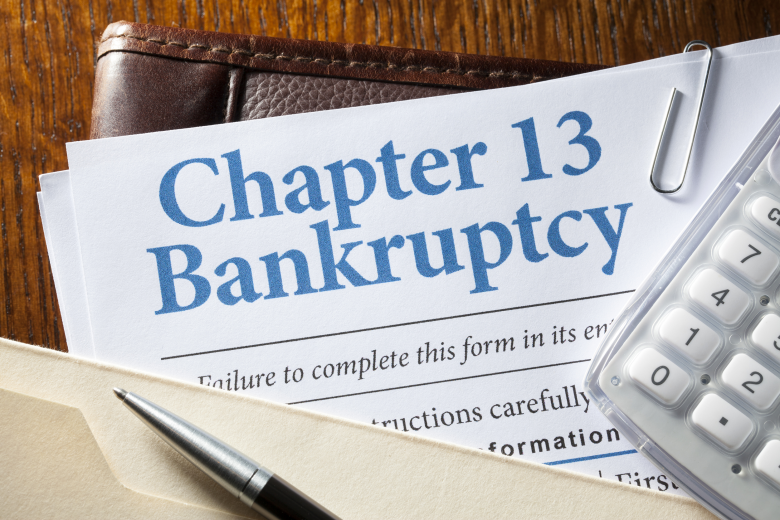
It won’t be easy, but it is possible to have your student loans discharged with Chapter 7 or Chapter 13 bankruptcy. To be considered, you must initiate an adversary proceeding by filing a Complaint to Determine Dischargeability. It is then up to you to prove that paying back your student loans will cause you undue hardship.
That said, bankruptcy should always be a last resort. Exhaust every other option for paying back your debts first, student loans included.
Image Credit: Bill Oxford/istockphoto.
How to avoid paying back student loans through forgiveness or discharge

If you’re struggling with student debt, it might be tempting to walk away from your loans without paying them back. But ignoring your debt will only make a tough situation worse, since going into default comes with a host of bad consequences that could hurt your finances for years to come.
Instead of ignoring your debt, learn legitimate ways for getting out of student debt without paying your entire balance yourself. Forgiveness programs could offer relief, as could student loan assistance offered by your state, university or employer.
And if you have special circumstances, such as a closed school or permanent disability, you may want to apply to certain programs to get your loan discharged. Make sure to read over the details of any forgiveness or discharge program to ensure you’re on track toward meeting all the criteria.
Even if you can’t qualify for any of these options, look for other ways to manage your student loans. For example, there are some relatively easy side hustles out there that can pull in some cash for extra payments to get rid of your debt faster and save money on interest. You can also look into student loan refinancing to see if you could snag a lower interest rate on your debt or trim your monthly payment amount. By researching your options, you could save yourself a good deal of money.
This article originally appeared on StudentLoanHero.com and was syndicated by MediaFeed.org.
Image Credit: BrianAJackson/istockphoto.



