Personal credit scores typically range from a low of 300 to a high of 850. Scores less than 670 may be considered fair if not poor. It’s generally more difficult to qualify for consumer lending products with poor credit, including personal loans. And if you do qualify, you’re likely to be charged high interest rates.

A personal loan for bad credit is designed to help you qualify for funding, while still providing the lender with enough security to make the risk worth it. In addition to charging high interest rates, some personal loans may require you to provide collateral if your credit isn’t strong enough. You may also have to make payments more frequently, such as weekly or biweekly.
Like other personal loans, most bad credit loans are flexible about how you may spend the loan funds. Lenders of online personal loans may offer fast approvals and quick funding times.
Whether you need a personal loan for car repairs, medical bills, or another financial emergency, personal loans can generally be used for personal, family, or household purposes.
Image Credit: AsiaVision/istockphoto.
How to Get a Loan with Bad Credit

There’s no guarantee that you’ll be approved for a personal loan, but you can take certain steps that may bolster your personal loan approval odds.
One is to apply for a personal loan with a cosigner. This allows you to leverage that person’s credit history and income in addition to your own. However, if the loan is approved, your cosigner will also be liable for the loan. Any negative activity, like late payments, could damage your cosigner’s credit as well as yours.
Pledging an asset as collateral and applying for a secured personal loan vs. an unsecured personal loan may also bolster your chances of loan approval. Again, there’s no guarantee that your loan application will be approved even if you use a cosigner or pledge collateral.
Image Credit: AndreyPopov/istockphoto.
Will Taking a Loan with Bad Credit Affect My Credit Score?

Taking out a consumer loan can hurt your credit score if the lender conducts a hard pull inquiry into your credit report. A hard inquiry can cause your credit score to drop by up to 10 points.Your credit score can also plunge if you default on a personal loan, whereas making regular payments without delinquency can help you build credit.
Image Credit: shih-wei/istockphoto.
How to Choose the Best Bad Credit Loan Company
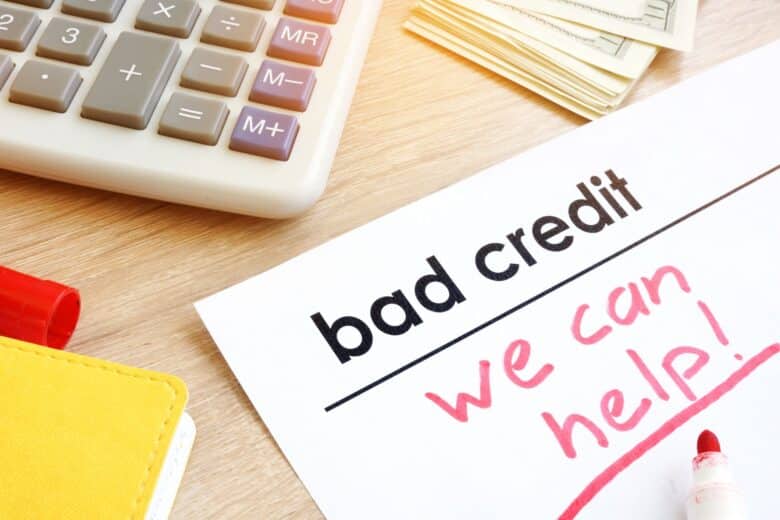
There can be a lot of variation among lenders, so review the terms and conditions of your loan agreement carefully before you sign.
Here are some top factors to consider when choosing a lender for a bad credit loan:
APR and Lender Fees
The annual percentage rate (APR) helps you figure out the total cost of the loan. It includes the interest rate as well as any fees the lender charges, like an origination fee. Compare the APRs on loans you’re considering as well as all of the rates and fees broken down individually so you understand exactly what you’ll be paying.
Monthly Payments
Even if you get approved for a personal loan with bad credit, make sure you can afford the monthly payments. Otherwise, you might damage your credit even more with missed payments and a potential loan default.
Funding Time
Online bad credit loans can have quick funding times. Some even advertise that borrowers can get the loan money within a day or two. If you need cash fast, compare funding times as well as your loan terms before making a decision.
Image Credit: designer491/istockphoto.
Types of Bad Credit Loans

There are a number of types of loans that you may be able to get with poor credit.
- Secured personal loans. Securing a loan means you use some type of personal asset as collateral for the loan. If you default, the lender can then take that asset as repayment for the loan funds. You might be able to borrow more money or nab a lower interest rate with a secured personal loan, since the lender is taking on less of a risk.
- Unsecured personal loans. Also known as a signature loan, an unsecured personal loan doesn’t require any collateral. The lender primarily looks at your creditworthiness to decide on your approval. It may be more difficult to get approved for an unsecured personal loan than for a secured personal loan.
- Payday loans. A payday loan is a type of small personal loan for bad credit that is both risky and expensive. The average APR for a payday loan typically ranges from 261% to 782%, and you usually only have a short period of time to repay the funds, usually between 14 and 60 days. If you can’t pay, you may be able to roll over the loan for another period, but you’ll just be tacking on more interest and costly fees.
Image Credit: VioletaStoimenova/istockphoto.
Types of Bad Credit Loans Cont

- Cash advance. You may be able to get money from an ATM by making a credit card cash advance transaction. Be aware that there might be a lower limit than your full credit limit. Also, cash advances usually have a higher APR than your normal credit card rate. You may also have to pay ATM fees. Interest charges start immediately and your creditor can put your payments toward your lower-interest balance before paying off the more expensive cash advance.
- Bank agreements. Some lenders may offer the following lending products:
- Home equity loans for poor credit. A home equity loan could still be attainable with bad credit, especially if you have substantial equity in your home and enough income to handle the payments. Also known as a second mortgage, a home equity loan uses your property as collateral, so you could potentially qualify even with bad credit.
- HELOCs for poor credit. Like a home equity loan, a home equity line of credit (HELOC) uses a variety of factors to determine eligibility — not just your credit. Your income, current levels of debt, and amount of equity in the property could help you qualify even if your credit score is less than stellar.
- Small business loans for bad credit. If you’re an entrepreneur and need help with your company’s cash flow, there are some options for small business loans for bad credit. Your business may need to meet revenue requirements and be in business for a certain amount of time.
Image Credit: Caiaimage/Chris Ryan/istockphoto.
How to Spot a Bad Credit Loan Scam

Unfortunately, there’s no shortage of fraudsters trying to take advantage of individuals who need financial help. Learning how to spot bad credit loan scams can help prevent you from losing money and becoming a victim of identity fraud. Here are some red flags to watch out for:
“Guaranteed Approval” Loans
There’s no such thing as a guaranteed approval loan. Any lender who claims not to look at your credit history could very well be a scammer. While there are legitimate lenders that specialize in borrowers with bad credit, you should still expect a full application and review.
Advance Fee Loans
Avoid any lender that requires you to pay an upfront fee, especially if it asks for a wire transfer (they are nonrefundable). Lenders may charge an origination fee for the loan, but that will generally be taken out of the loan funds before they’re disbursed. No one should ever ask you to pay anything before you receive any funds.
Image Credit: nensuria/istockphoto.
The Takeaway

Typically, it’s possible to get a personal loan for bad credit. Just be sure to search out lenders with good reputations. And read your loan terms carefully so you know exactly how repayment works, what kind of collateral may be required, and how much all of the fees cost.
Learn More:
This article originally appeared on SoFi.com and was syndicated by MediaFeed.org.
Please understand that this information provided is general in nature and shouldn’t be construed as a recommendation or solicitation of any products offered by SoFi’s affiliates and subsidiaries. In addition, this information is by no means meant to provide investment or financial advice, nor is it intended to serve as the basis for any investment decision or recommendation to buy or sell any asset. Keep in mind that investing involves risk, and past performance of an asset never guarantees future results or returns. It’s important for investors to consider their specific financial needs, goals, and risk profile before making an investment decision.
The information and analysis provided through hyperlinks to third party websites, while believed to be accurate, cannot be guaranteed by SoFi. These links are provided for informational purposes and should not be viewed as an endorsement. No brands or products mentioned are affiliated with SoFi, nor do they endorse or sponsor this content.
Communication of SoFi Wealth LLC an SEC Registered Investment Advisor
SoFi isn’t recommending and is not affiliated with the brands or companies displayed. Brands displayed neither endorse or sponsor this article. Third party trademarks and service marks referenced are property of their respective owners.
Communication of SoFi Wealth LLC an SEC Registered Investment Adviser. Information about SoFi Wealth’s advisory operations, services, and fees is set forth in SoFi Wealth’s current Form ADV Part 2 (Brochure), a copy of which is available upon request and at www.adviserinfo.sec.gov. Liz Young is a Registered Representative of SoFi Securities and Investment Advisor Representative of SoFi Wealth. Her ADV 2B is available at www.sofi.com/legal/adv.
Image Credit: Tempura/istockphoto.
More from MediaFeed

4 ways travel credit cards can really save you big on your next vacation
Image Credit: Prykhodov/istockphoto.