Although Experian is the largest credit bureau in the U.S., TransUnion and Equifax are widely considered to be just as accurate and important. When it comes to credit scores, however, there is a clear winner: FICO® Score is used in 90% of lending decisions.
It’s crucial that consumers understand at least the basics of how credit reports work and credit scores are calculated. After all, a high credit score will get borrowers the best deals on loans and credit cards, potentially saving them many thousands of dollars over a lifetime. Read on to learn how you can build a credit history that lenders will swoon over.
Image Credit: SolStock/istockphoto.
Will My Credit Score Be the Same Across the Board?

In a word, no. Credit scores vary depending on the company providing the score, the data on which the score is based, and the method used to calculate the score.
In an ideal world, all credit bureaus would have the same information. But lenders don’t always report information to every bureau, so there will be variations in your credit file — usually minor — from bureau to bureau.
Image Credit: tolgart/istockphoto.
How Are Credit Scores Calculated?
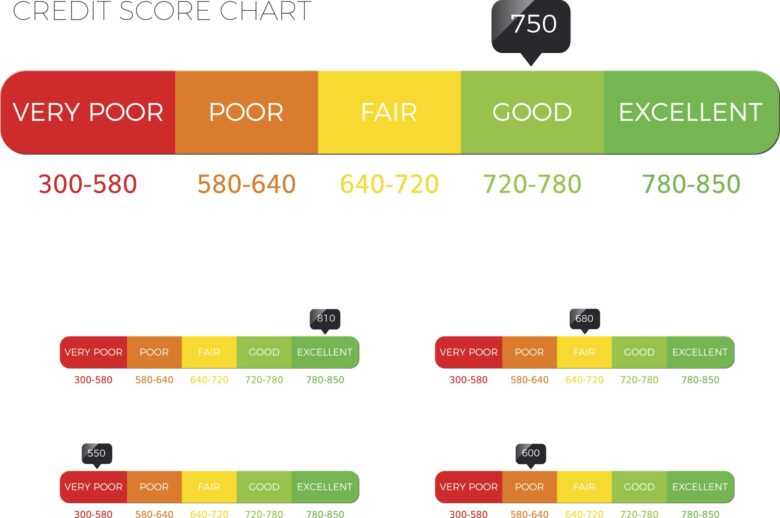
Regardless of the scoring model used, most credit scores are calculated with a similar set of information. This includes information like how many and what types of accounts you have, the length of your credit history, your payment history, and your credit utilization ratio.
Lenders like to see evidence that you have successfully managed a variety of accounts in the past. This can include credit cards, student loans, and mortgages, in addition to other types of debts. As a result, scoring models sometimes include the number of accounts you have and will also note the different types of accounts.
The length of your credit history shows lenders that you have a record of repaying your debts responsibly over time. Scoring models will factor in how recently your accounts have been opened.
Your payment history allows lenders to see how you’ve repaid your debts in the past. It will show details on late or missed payments and bankruptcies. Scoring models typically look at how late your payments were, the amount you owed, and how often you missed payments.
Each scoring model will place a different weight of importance on each factor. As an example, here are the weighting figures for your base FICO Score:

Image Credit: Alexey Bezrodny/istockphoto.
Which Credit Score Matters the Most?
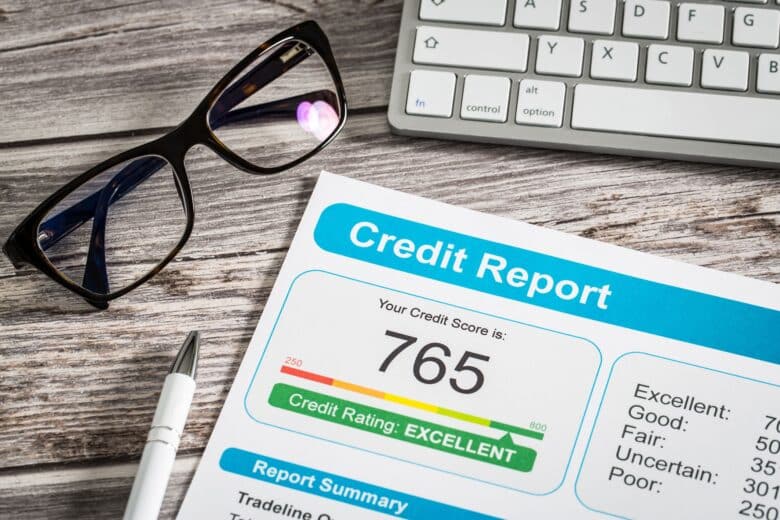
As noted earlier, the credit score that matters the most is your FICO Score, since it’s used in the vast majority of lending decisions. There’s really no way to determine which credit score is most accurate, though, because they all use slightly different scoring models to calculate those precious three digits.
Even within your FICO Score, there’s variation. The most widely used FICO Score is FICO 8. This differs from previous versions in key ways:
- Credit utilization is given greater weight.
- Isolated late payments are given less weight than multiple late payments.
- Accounts gone to collections for amounts less than $100 are ignored.
In addition, FICO can tweak their algorithm depending on the type of loan you’re applying for. If you’re looking to get an auto loan, your industry-specific FICO Score may emphasize your payment history with auto loans and deemphasize your credit card history.
As you can see, slight differences in method can result in different credit scores even given the same source data.
Image Credit: scyther5/istockphoto.
What Are the Largest Three Credit Bureaus?
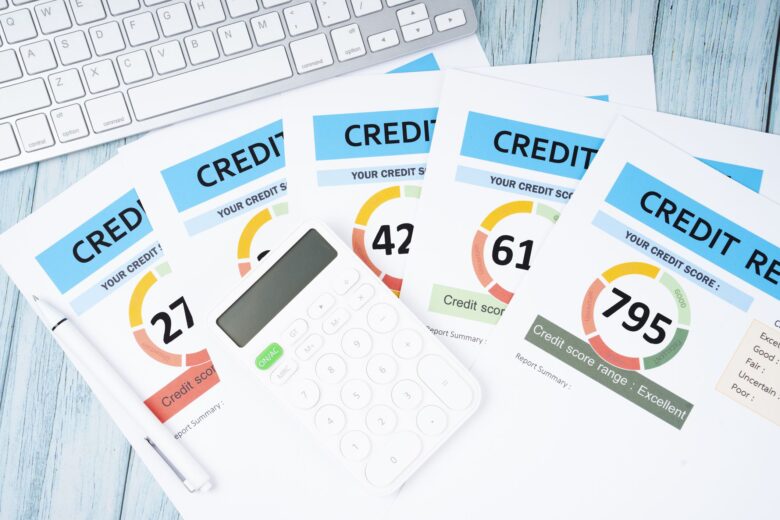
The three major credit bureaus are Experian, Equifax, and TransUnion. These bureaus collect and maintain consumer credit information and then resell it to other businesses in the form of a credit report. While the credit bureaus operate outside of the federal government, the Fair Credit Reporting Act allows the government to oversee and regulate the industry.
It’s worth noting that not all lenders report to the credit bureaus. You may have seen advertisements for loans with no credit check. Because these loans are riskier for the lender, they can justify high-interest rates (as much as 1000%) and faster repayment schedules. Consumers should beware of predatory lenders, especially risky payday loans and other fast-cash loans.
Image Credit: Gam1983/istockphoto.
How To Find Your Credit Score

Your credit history and score play a large role in your personal finances. They can impact everything from taking out a mortgage or renting an apartment to buying a car and refinancing your student loans. Having an idea of what your credit score is can help you determine what your loan may look like and how much you can afford to borrow.
You can request a free copy of your credit report once a year from each of the major credit bureaus at AnnualCreditReport.com. Along with your credit file, you’ll receive a generic credit score. Experian also provides a look at your base FICO score. As an alternative, you may be able to access your FICO Score for free through your bank or credit card company.
Be careful when you pull your free credit reports not to accidentally opt in to an add-on service that will charge you for special tools or credit monitoring.
Image Credit: NicoElNino/istockphoto.
Building Strong Credit

Credit scores aren’t set in stone. They evolve constantly as new financial information comes in, both positive and negative. Here are some strategic steps to consider for those trying to build a positive credit history:
Make Payments on Time
This includes credit card payments, rent, loans, utilities, and any other monthly bills or payments. Lenders often consider past behavior to be a predictor of future behavior and want to avoid lending money to individuals with a history of missed payments.
Pay Down Revolving Credit
Revolving credit refers to credit cards and home equity lines of credit (HELOCs). Lenders generally like to see a credit utilization ratio of 30% or lower. It’s an indicator that the borrower can effectively manage their credit.
A debt consolidation loan is a popular choice for consumers looking to pay down high-interest revolving debt. An unsecured personal loan requires no collateral and offers comparatively low fixed interest rates compared to credit cards. (Variable interest rate loans are also available, but are not as popular in the current climate of rising interest rates.)
Getting approved for a personal loan is fairly straightforward, and you can shop around for the best personal loan interest rates without it affecting your credit score.
Be Selective About New Accounts
Opening a new credit card or applying for a loan generally involves a hard credit inquiry. Too many hard credit inquiries can have a negative impact on the applicant’s score. So while having a diverse mix of credit is a good thing in the eyes of lenders, opening a number of new accounts at once may be counter-productive.
Image Credit: Delmaine Donson/istockphoto.
The Takeaway

All three major credit bureaus — Experian, Equifax, and TransUnion — are more alike than they are different, and any variations in their data are usually minor. Equifax is the largest credit bureau in the U.S., but TransUnion and Equifax are thought to be just as accurate and important. When it comes to credit scores, however, lenders prefer FICO Score by a wide margin.
Learn More:
This article originally appeared on SoFi.com and was syndicated by MediaFeed.org.
Please understand that this information provided is general in nature and shouldn’t be construed as a recommendation or solicitation of any products offered by SoFi’s affiliates and subsidiaries. In addition, this information is by no means meant to provide investment or financial advice, nor is it intended to serve as the basis for any investment decision or recommendation to buy or sell any asset. Keep in mind that investing involves risk, and past performance of an asset never guarantees future results or returns. It’s important for investors to consider their specific financial needs, goals, and risk profile before making an investment decision.
The information and analysis provided through hyperlinks to third party websites, while believed to be accurate, cannot be guaranteed by SoFi. These links are provided for informational purposes and should not be viewed as an endorsement. No brands or products mentioned are affiliated with SoFi, nor do they endorse or sponsor this content.
Communication of SoFi Wealth LLC an SEC Registered Investment Advisor
SoFi isn’t recommending and is not affiliated with the brands or companies displayed. Brands displayed neither endorse or sponsor this article. Third party trademarks and service marks referenced are property of their respective owners.
Communication of SoFi Wealth LLC an SEC Registered Investment Adviser. Information about SoFi Wealth’s advisory operations, services, and fees is set forth in SoFi Wealth’s current Form ADV Part 2 (Brochure), a copy of which is available upon request and at www.adviserinfo.sec.gov. Liz Young is a Registered Representative of SoFi Securities and Investment Advisor Representative of SoFi Wealth. Her ADV 2B is available at www.sofi.com/legal/adv.
Image Credit: milan2099/istockphoto.
More from MediaFeed

How to make the best of your stellar credit score
Image Credit: fizkes/istockphoto.