You’ve seen all those images of perfectly organized pantries full of clear containers with neat labels spaced just so on shelves. Shows like “The Home Edit” and Instagram organizer influencers have popularized this trend of “decanting” food before storing it in your kitchen or pantry.
Decanting may look beautiful, and there are other pros (and some cons) about using storage containers versus keeping food in its original packaging.
The Pros
For one, if you get the right sealed containers, they could potentially keep your food fresh longer versus leaving it in an open bag within a cardboard box.
Furthermore, decanted food is appealing to the eye. Decanting can also keep your pantry more organized since you can immediately see how much food you have in the containers. You can pinpoint items more easily this way as well, as opposed to having a mish-mash of boxes, jars, cans, and bottles tightly packed in your cupboards.
It also turns out that cockroaches in particular like to eat cardboard and the glue used to hold cardboard packaging together. So that cereal you’re keeping in its original box could serve as an extra temptation to the roaches. Lidded containers will keep bugs away from your food.
The Cons
Unless you’re only using glass for all your decanting needs, you’ll be buying a large number of plastic containers to store all your food. Plastic isn’t good for the environment, and buying a bunch of new storage containers can be expensive.
Every time you decant, you also have to take the extra step to open all your packages and pour and organize items, hoping it all fits just right for what storage containers you have. (Some organizers also note that decanting your spices and sauces wastes the most time.)
And if you’re not using something right away, taking an item out of its sealed packaging just to sit in a container could make it go stale more quickly.
How well decanting works depends on how well a container seals. For example, I’ve used those pop-top clear plastic containers before with flour, and the flour eventually worked its way into the seal on the lid, preventing it from completely closing.
I also live in a very humid area and have found decanting doesn’t always work for me unless a container is absolutely airtight. Even then, some of the moist air gets into the container if there’s extra space, making it go stale quicker. Instead, I tend to seal up open packages in zip-close bags with as little air left inside as possible. I do decant cereal, but I try to keep a rotation of moisture-absorbing boxes at the back of my shelves to wick away excess moisture.
If you’re in the market for more decanting food storage containers, here are three sets that have thousands of positive reviews on Amazon.
LEAVES AND TREES Y Stackable Glass Kitchen Canisters Set of 5 ($25.48 on Amazon)
The Leaves and Trees Y glass canisters with bamboo lids have more than 6,000 reviews on Amazon with an average of 4.7 out of 5 stars. The set of five costs $25.48 and comes with two small canisters that could hold items like coffee, salt or sugar. It has two medium containers for nuts, candy and seeds, and one large jar that is a good size for pasta or rice.
Chef’s Path Store 14-Piece Airtight Plastic Food Storage Containers with Lids ($45.99 on Amazon)
The Chef’s Path Store has a 14-piece plastic canister set with airtight lids that snap shut on four sides. The set sells for $45.99 and comes with two extra-large containers, two large containers, four medium containers, four small containers, chalkboard labels with a marker and a measuring spoon set. These storage containers have more than 70,000 ratings with an average 4.7 out of 5 stars.
Rubbermaid 60-Piece Food Storage Containers with Lids, Salad Dressing and Condiment Containers, and Steam Vents ($31.99 on Amazon)
The Rubbermaid 60-Piece Food Storage Containers are great for both your refrigerator and pantry, and some of the lids are vented for microwaving. This 30-container set (with 30 lids) costs $31.99. It includes a 1/2-cup, 1 1/4-cup, 2-cup, 3-cup, 5-cup, 7-cup and 9-cup container, and has 4.7 out of 5 stars among more than 100,000 reviews.
Do you like to decant your food in your kitchen or pantry?
This article originally appeared on SimpleMost and was syndicated by MediaFeed.
More from MediaFeed:
- Inside NASCAR legend Tony Stewart’s luxury hunting preserve
- This is the #1 most-hated fast food chain in America
- 18 best Costco membership benefits
Like MediaFeed’s content? Be sure to follow us.
A chef’s guide to a well-stocked pantry, even on a budget

Lobster tails, shrimp and filet mignon are foods that may come to mind when you think of the perfect gourmet meal. But these items probably won’t make the final cut of your grocery list when you’re on a tight budget.
Thankfully, foodies and amateur chefs don’t need to go broke when trying to cook nutritious and delicious meals. In this article, we share a few food shopping and cooking strategies that can help you step up your game in the kitchen while on a budget.
Depositphotos

When it comes to flavor: “Herbs are our best friend,” said Tiffany Derry, chef, restaurateur and the Season 7 fan favorite on Bravo’s Top Chef. Herbs are an affordable way to elevate the simplest of dishes, but they are often underutilized by people who don’t know how much they can change the taste of a meal.
Derry, based in Dallas, loves the lemony fresh flavor of basil and recommends it to home chefs. Derry also suggests parsley as an inexpensive addition to your herb collection. Yes, parsley can be used for more than just a garnish! Tarragon is another underutilized herb with a citrusy fresh flavor that Derry uses to spice up her dishes.
Earthy sage, spicy garlic and ginger, piney rosemary, sharp oregano, aromatic mint and chives are other herbs you can find in your grocery aisle. A little experimentation with new herbs can take your dishes to the next level without breaking the bank.
Not sure what herb to use in your next dish? The Food Network has a rundown of how different herbs taste and the types of dishes you can use them for. When shopping for herbs, take the time to inspect each one before purchase. Herbs should look fresh and not bruised.
If you have herbs left over after cooking a meal, Derry recommends putting them in the blender with a little bit of oil to make a paste to put away in the fridge. Grinding fresh herbs down helps you avoid food waste and the mixture can be used to jazz up a few more meals. Add a quick spoonful of your herb paste to spice up eggs in the morning or rice at night. You can also dry herbs or freeze them for use later.
Depositphotos
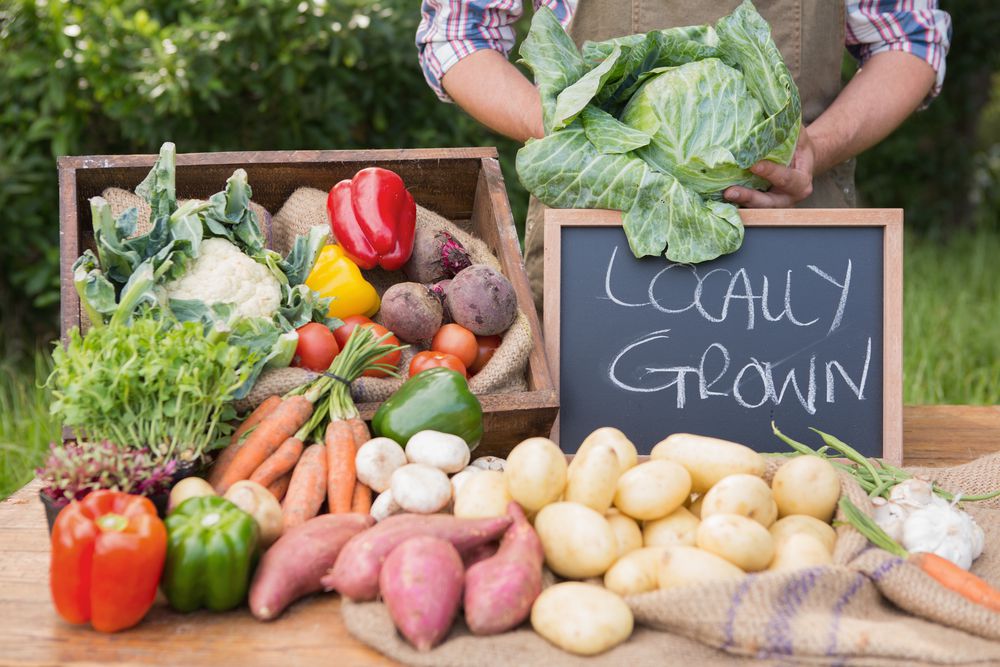
Money spent should be spent on the best possible quality. “Eating foods that aren’t in season are a waste in terms of flavor and nutrition,” said Derry. Whenever you buy local, you’re getting the best price for the best product. Search for markets that source from local farmers and pay closer attention to when local produce is in season. Buy produce that you plan to eat within a week to limit food waste.
For both perishable and non-perishable items, regularly comparison shop stores in your area for cost and overall quality. Look for produce with deep colors and without small holes. Punctures could mean that an insect got to snack on it before you. Smelling fruits can help you choose the best ones. The quality of the ingredients can make or break the taste of the final product.
Depositphotos

Buying whole meats like turkeys and chickens throughout the year (instead of just for special occasions) is another cost-effective way to fill up your fridge. According to Derry, bone-in meats can feed more people and can give you more bang for your buck, especially when you’re looking at fish.
Let’s take a look at the numbers: As of press time, Whole Foods through Amazon Prime Now has boneless, skinless chicken breasts selling for $4.99 per pound. On the other hand, you can get a whole chicken for $1.99 per pound. Even bigger savings are seen with fish. Snapper fillets are selling for $27.99 per pound compared to $12.99 for the whole snapper.
Breaking down your own food may seem intimidating, but it’s something you can master with practice. There are many video guides online that can show you how to cut fish and poultry step-by-step. Bon Appétit magazine, for instance, has several how-to guides including how to fillet whole fish, how to carve ham and how to butcher a chicken.
The beauty of getting whole meats is the versatility, according to Derry. You can cook many different meals with your meats and your assortment of herbs without going over budget. One night you could have roast fish, the next you could make fish tacos and the leftover fish bones could be used for a fish stock. “The idea is that one thing can be turned into three [meals],” said Derry.
Depositphotos

Besides stocking the right ingredients, cooking techniques will take you far. Making delicious food doesn’t require a lot of money, said Derry. Much of it is perfecting the cooking skills for each type of dish.
“A sauté is a sauté, no matter what type of food you’re making,” according to Derry. Sautéing is cooking on high heat with a bit of oil and shaking the pan so the food doesn’t stick to the bottom. Grilling is also high heat method that brings out the flavor. “Anything can be delicious as long as you season it properly and cook it properly. I can make a pack of Ramen noodles taste amazing!” Derry said. You take the noodles, throw out the seasoning packet and put together your own broth. Add a poached egg to elevate the dish.
Besides sautéing and grilling, there’s baking, broiling, pan-frying and deep frying. There’s also boiling, poaching, steaming. Experiment with different techniques when cooking vegetables and meats with your new herbs and spices. When in doubt, look for a tutorial on how to do each style of cooking step-by-step.
Depositphotos

Buying high-ticket grocery items isn’t necessary to cook gourmet. Put a few herbs on your list and purchase other quality ingredients that are within your budget. After stocking the pantry, roll up your sleeves and cook up your own new (and delicious) meals.
This article originally appeared on MagnifyMoney.com and was syndicated by MediaFeed.org.
Depositphotos
Featured Image Credit: Depositphotos.com.