
There are several ways to obtain the citizenship of a country. As well as simply being born there or being the descendent of one of its citizens, nations allow permits through marriage, adoption or naturalization – the latter of which is based on an application-related executive decision. Until the outbreak of the Ukraine war, additional “citizenship by investment” (CBI) programs were also offered in the three EU member states of Cyprus, Malta and Bulgaria. These are more commonly known as “golden passports.” By investing a certain amount of money, it becomes possible to obtain citizenship without the bureaucratic hurdles.
Related: How to move to Europe with pets
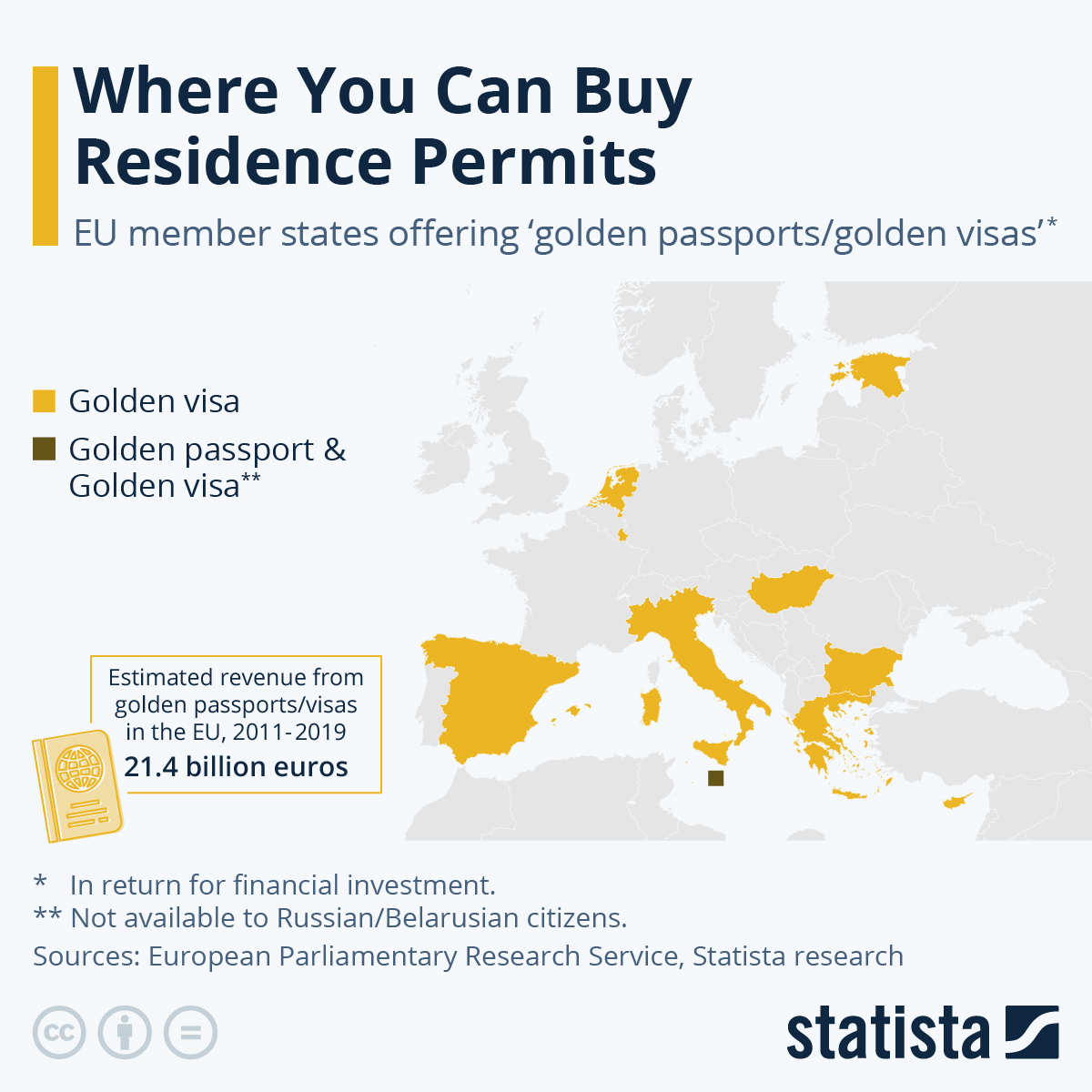
Bulgaria and Cyprus have now abolished this method of granting citizenship, while Malta refuses to grant such passports specifically to Russians and Belarusians. However, “Golden visas”, i.e. residence permits granted in exchange for investments in the economy, still exist in several other EU countries, as our chart shows.
Especially in Southern Europe, so-called “residency by investment” (RBI) programs are fairly common. While this practice was recently abolished in Portugal and Ireland, Spain, Greece, Cyprus and Malta, among others, still grant residency rights in exchange for economic investments. According to a 2019 study by the EU Commission, more than 130,000 people were either naturalized or granted residence rights under CBI and RBI between 2011 and 2019, which had generated a conservatively estimated total revenue of €21.4 billion for the countries.
Both practices have come under fire from officials. As early as 2014, the EU spoke out against such programs, arguing, among other things, that they run counter to anti-discrimination requirements and could potentially encourage corruption and money laundering. In Portugal, for example, the RBI program, which has now been abolished, is considered to have fueled the real estate crisis.
Worldwide, the first CBI programs were launched in the 1980s on a few Caribbean islands, and some of them are still active there today. European non-EU countries that offer CBI include Montenegro and Turkey.
 You will find more infographics at Statista
More from MediaFeed:
- The funny & sometimes tragic real names of celebrities
- 25 American customs that make you look like a jerk abroad
- 39 surprising things you may not know about cannabis
Like MediaFeed’s content? Be sure to follow us.
This article originally appeared on Statista and was syndicated by MediaFeed.
Top 10 places for expats to live in Spain in 2023

It’s not hard to find many amazing places to live in Spain. In fact, with Spain being so diverse in terms of the lifestyle it offers, the choices are almost unlimited. You could opt for a cosmopolitan city, a peaceful coastal town, a fun party island, or a historic village in the countryside.
Expats of various nationalities make up around 13% of the whole Spanish population. If you’re thinking about moving to Spain and joining the thousands of expats currently retired, working or studying in the country, then take a look at our list of some of the best places to live in Spain right now.
Gatsi / istockphoto

Best for retirement
Several factors, including ease of accessibility and the presence of a large expat community, make Cadiz a great spot to live in Spain. It also offers a reasonable cost of living and an authentic, laidback charming lifestyle without the tourist crowds of the Mediterranean. The people from Cádiz are very friendly and always excited that foreigners want to live in their town.
Depositphotos.com

Best for families
Depositphotos.com

- Best for coastal living
- Population: 75,000
- Average home price: 4,000 € per square meter
- Average rent: 1,300 € for a 1-bedroom apartment
Fuengirola is a great Spanish town to live in as an expat. It’s located on the seafront and connected via train with the Malaga airport. Fuengirola has a handful of lovely beaches where you can relax over the weekend or after a long day of work. It also offers everything an expat is typically looking for, including safe communal areas, gorgeous weather, plenty of large supermarkets, and a few big shopping centers. It’s an affordable and lively town with an unassuming reputation that belies its undeniable charm.
Depositphotos.com

- Best for quiet living
- Population: 350,000
- Average home price: 3,780 € per square meter
- Average rent: 900 € for a 1-bedroom apartment
Northern Spain is often overlooked by expats, but there are some real gems along the Atlantic Coast, including Bilbao. Bilbao may be one of the more expensive cities in Spain, and its industrial past is still apparent, but it features some beautiful architecture, delicious cuisine, including local pintxos, a lovely coffee shop scene and exciting Basque culture. It’s a city built against a beautiful backdrop of lush green mountains and featuring world-class beaches often swamped with surfers.
Depositphotos.com

- Best for a relaxed lifestyle
- Population: 690,000
- Average home price: 3,200 €per square meter
- Average rent: 640 € for a 1-bedroom apartment
If you’re thinking about living in the Andalucia region, Seville is a great option. It’s the region’s capital city. From its Moorish architecture to the riverfront, Seville is seen as the most romanticized city in Spain. Even though it’s the fourth major city in Spain, Seville maintains its small-town feel. In fact, living in Seville means you get the perks of both worlds: the fast pace of a metropolis and the charm of a small town. The city also has reliable transportation, a relaxed lifestyle, and a very reasonable cost of living.
Depositphotos.com

- Best for socializing
- Population: 230,000
- Average home price: 3,400 € per square meter
- Average rent: 560 € for a 1-bedroom apartment
Granada is Spain’s hidden gem and one of the best places to live in. It is located in the foothills of the Sierra Nevada mountain range. Granada is less cosmopolitan than other destinations in Spain but has its own special charms. Its stunning cobbled streets and beautiful open areas are all walkable and there’s plenty to explore.
Granada is an affordable and sociable city. Any day of the week, you’ll find people socializing in the bars and restaurants of the city. There is also a well-connected expat community in the city, so you’re likely to meet like-minded people from your home country.
Depositphotos.com

- Best for seeing old-city charm
- Population: 580,000
- Average home price: 3,500 € per square meter
- Average rent: 700 € for a 1-bedroom apartment
With its great weather all year round and relaxed lifestyle, everyone from families, couples, students and pensioners are attracted to this city in the south. It’s an old city, founded in 770 BC, but she wears her age well, with urban landscapes that embrace millennia of history and culture. Living in Malaga is also relatively cheap in comparison to other Spanish cities.
Depositphotos.com
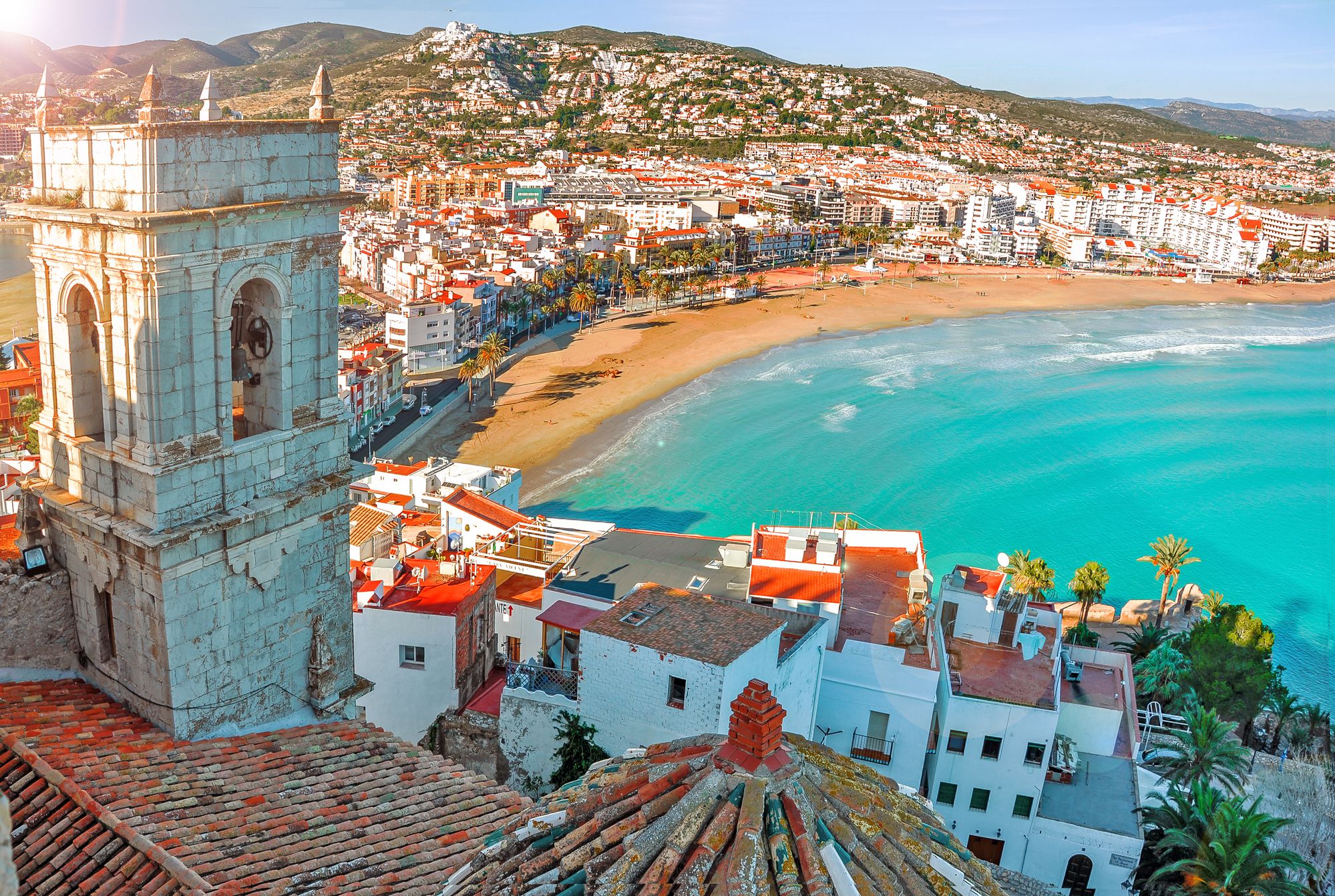
- Best for experiencing food
- Population: 790,000
- Average home: 3,200 € per square meter
- Average rent: 770 € for a 1-bedroom apartment
For food lovers, Valencia is one of the best cities in Spain. As the original creators of paella, the citizens of Valencia set the bar very high with their amazing culinary talents. It’s a large city but not so large that it feels overwhelming, and it offers a noticeably more relaxed lifestyle for residents.
Valencia is located in the Mediterranean and enjoys a lower cost of living compared to other cities. It also offers a good quality lifestyle and great healthcare facilities.
Depositphotos.com

- Best for finding exciting career opportunities
- Population: 3.4 million
- Average home price: 5,300 € per square meter
- Average rent: 1,000 € for a 1-bedroom apartment
Located in the heart of Spain, Madrid is the country’s capital. It’s also a bustling, cultural, social and economic hub. Madrid has a lot to offer expats, whether you’re looking for a new setting, new job opportunities or to make new friends. It is an incredibly dynamic city, meaning it has something for everyone. Each neighborhood brings something different, like the vibrant, bustling area of La Latina and Lavapíes, the trendy district of Malasaña, the artsy streets of Las Letras and the high-end area of Salamanca.
Madrid is Spain’s second most expensive city. Daily expenses, however, are, more or less, the same as in most other Spanish cities. The cost of property is also largely cheaper outside of the city centre, so, many expats living in Spain decide to settle further from the centre.
basiczto / istockphoto

- Best for experiencing culture
- Population: 1.6 million
- Average home price: 4,800 € per square meter
- Average rent: 1,000 € for a 1-bedroom apartment
Barcelona is Spain’s second-biggest city and one of the safest and best places to live in the world. If you’re thinking about moving to Spain, Barcelona is an excellent option. It offers amazing weather, plenty of art museums, delicious cuisine, and a buzzing nightlife. Its main appeal, however, is its unrivalled architecture. Most of Antoni Gaudí’s buildings are in Barcelona, including the magnetic Sagrada Família and the extraordinary Park Guell. The city is also one of the top spots for digital nomads and entrepreneurs.
It’s important to keep in mind that Barcelona is the most expensive city in Spain. Property prices and the general cost of living are high. However, the living standard in the city is excellent, with clean streets and safe public areas.
DepositPhotos.com

If you’re thinking about moving to Spain from the US, one of the first things to consider is where you want to settle. Where you live can make a huge difference in all aspects of your life. This is why it’s important to choose the best place for you. Be sure to consider the options on our list and see which city or town best suits your needs.
Methodology
- Source for population data: Wikipedia
- Source for home and rent prices: Numbeo
- Numbers may be rounded
This article originally appeared on MyDolceCasa.com and was syndicated by MediaFeed.org.
RossHelen/iStock

DepositPhotos.com
Featured Image Credit: SHansche / istockphoto.



