California Common is a wholly American style with a unique history and flavor and now it is known by one brewery’s modern interpretation of it.
Although the history of California Common is shrouded in mystery (like most beer styles), there is one beer that is the pioneer of the modern style, Anchor Steam in San Francisco.
History of steam beer
Beer slaked the thirst of the tens of thousands flocking to seek their fortune in California during the Gold Rush. By 1900 there were two dozen breweries in San Francisco making a beer known locally as “steam beer.” Why is it called steam beer? I’ve heard a couple of theories, from the “steam” the keg made when tapped to the steam clouds above breweries cooling their wort in rooftop “conditioning vessels.” It was a beer made with lager yeast — it’s what they had available — but fermented warm and quickly. According to Jeff Alworth in “The Beer Bible,” the process took about a week; for comparison, ale brewing is usually from kettle to bottle in about two weeks.
In the 1960s, Fritz Maytag bought Anchor Brewing, open since the late 19th century. Maytag was determined to turn around the production at the last of the original steam breweries. I heard a delightful story while judging with Randy Mosher during the Great American Beer Festival last year about how the modern “steam beer” came to be: Maytag called up suppliers and bought what they had available — Northern Brewer hops, pale and crystal malts, yeast — and that’s how the modern recipe came together. For information, I recommend the Anchor history book recently released by Dave Burkhardt.
Anchor owns the trademark to “steam beer,” so the Beer Judge Certification Program calls the style “California Common.”
@cali_nostalgia founded in the city in 1896
How California Common is brewed
California Common can be brewed with pale malt and a little crystal; toasted malt plus American hops that don’t produce citrus flavors; and special lager yeast that can be fermented warmer. The BJCP notes that if you use German lager yeast, it can create sulfur-y, off flavors, so be sure to use “California lager” yeast.
Tasting notes and pairing
What will you experience when you drink a California common? The style has fragrant aromas and flavors of mint, dried flowers, toast, and maybe a little caramel. It finishes nice and dry, making it a perfect beer to have with dinner. California Common is a great food beer, as there’s something about the style that harmonizes well with lots of dishes, from tacos to sandwiches to Chinese cuisine to roast chicken to high-end dishes such as duck. Having a six-pack of Anchor Steam in your fridge is always nice, as it’ll work with almost all foods.
Beers to try
Anchor Steam
The original and very easy to find, but it’s best fresh in San Francisco, on tap, while enjoying that famous San Fran microclimate. It’s a requirement that I have at least one at the airport before flying back to the East Coast. There’s nothing better than fresh Anchor Steam.
Toppling Goliath Dorothy’s New World Lager
This Iowa behemoth known for hype IPAs and stouts also makes a California Common, which I learned about just a few years ago. It’s downright drinkable, and more golden and pale than other versions of this beer I have experienced.
Your local brewery
Yes, the cop-out answer, but this style isn’t really brewed in any large capacity except by Anchor Steam and perhaps one or two other breweries. Your local brewery may make one — they are the most reliable place to try unique and interesting styles.
This article originally appeared on The Alcohol Professor and was syndicated by MediaFeed.org.
More from MediaFeed:
- 25 things about adulting your parents really should’ve told you
- The must-visit dive bar in every single state
- What people in their 90s regret the most
Like MediaFeed’s content? Be sure to follow us.
Easy, tasty sheet pan dinners for lazy winter nights
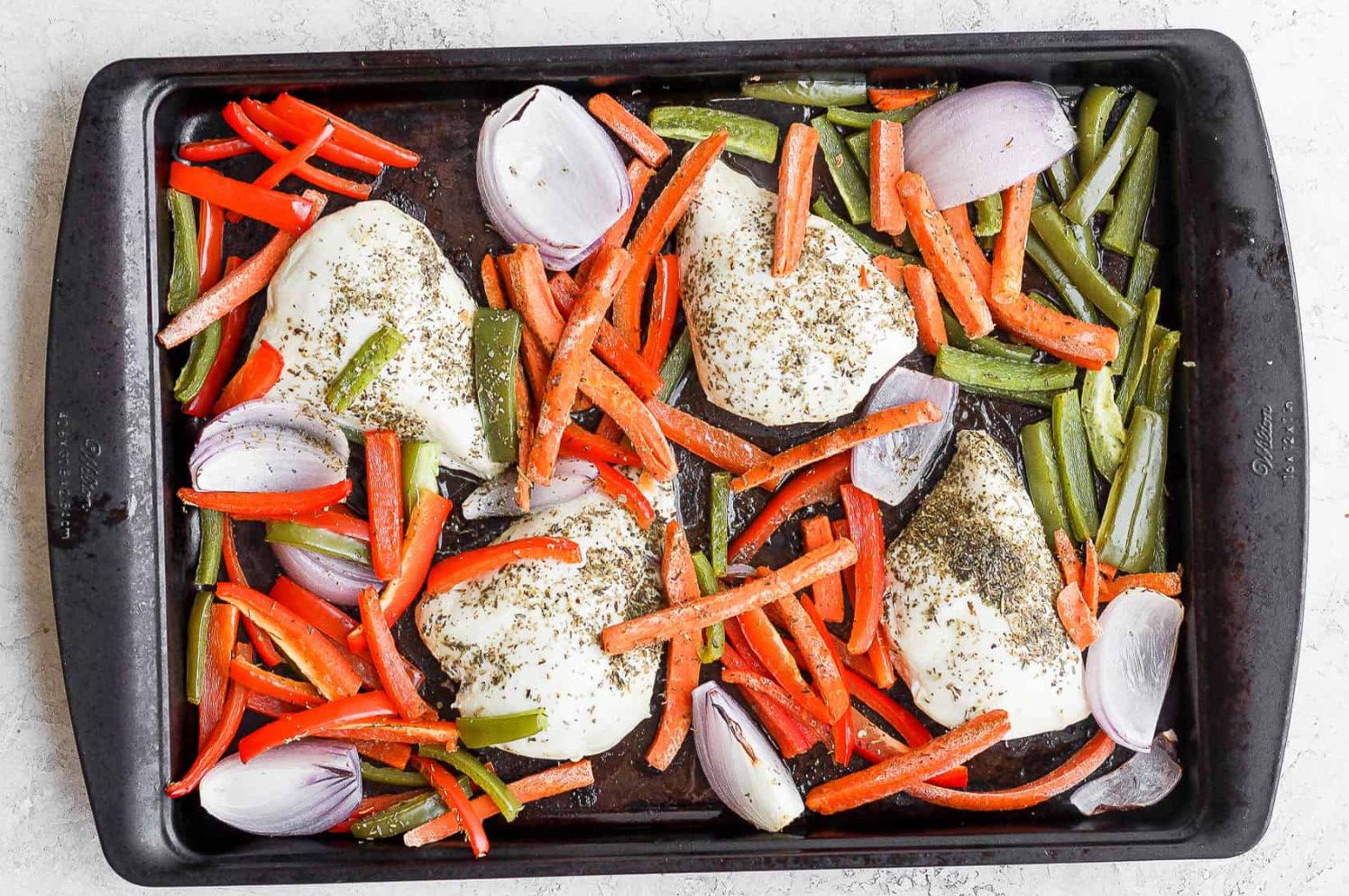
If you’ve ever wondered what a sheet pan meal is or how to make sheet pan meals, this guide will help you and give you great ideas to try. You’ll see that there’s no need for a recipe as long as you keep in mind this simple guide.
A sheet pan meal is a full meal (protein and vegetable or vegetables) cooked together on a sheet pan in a hot oven, typically 425 Fahrenheit. The food combos are endless, but the recipes share a few attributes. They are fairly low fat, come together within an hour and dirty just one pan.
feelgoodfoodie.net

To achieve success with a dinner’s worth of ingredients at high heat, you need a large pan with a rolled edge.
- Technically, sheet pans that fit into home ovens are called half-sheet pans. A true sheet pan (26″ x 18″) is made for the larger professional oven. Baking websites and restaurant supply stores will label what you want as “half sheet pans.”
- Seek out heavy aluminum pans without nonstick coatings. Non-stick coatings will inhibit browning and not last very long when used in high heat
- Make sure your pan has a rolled edge of about 1″ to keep ingredients and juices from spilling all over the oven. (This is one reason rimless cookie sheets do not work.)
- Jelly roll pans (created specifically for rolled cakes) are slightly smaller (about 15″ x 10″) and also work but will not fit as many ingredients.
feelgoodfoodie.net
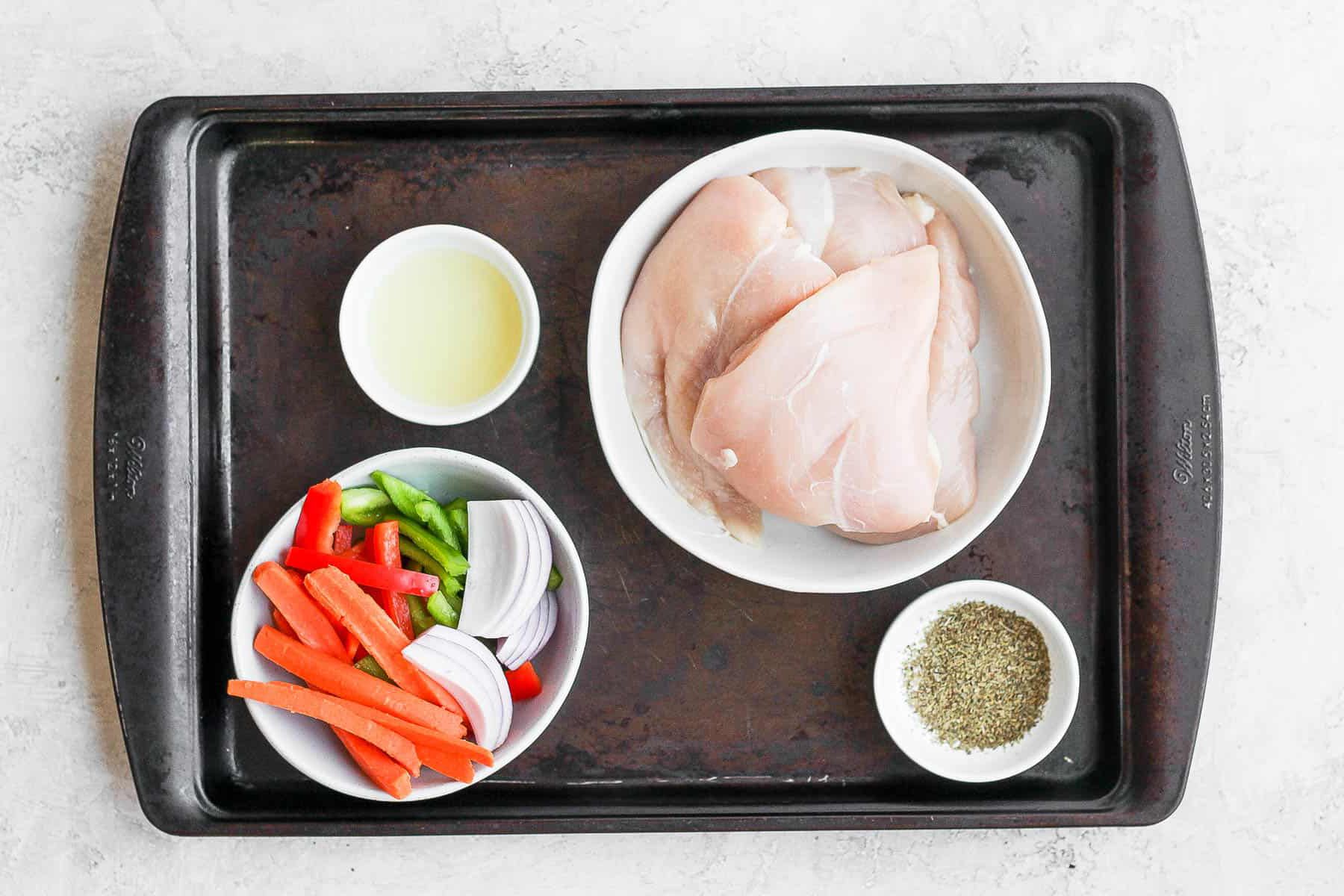
The basic formula is:
- 2 pounds of protein
- 2 -3 cups of chopped vegetables
- 1-2 tablespoons oil (usually olive oil)
feelgoodfoodie.net
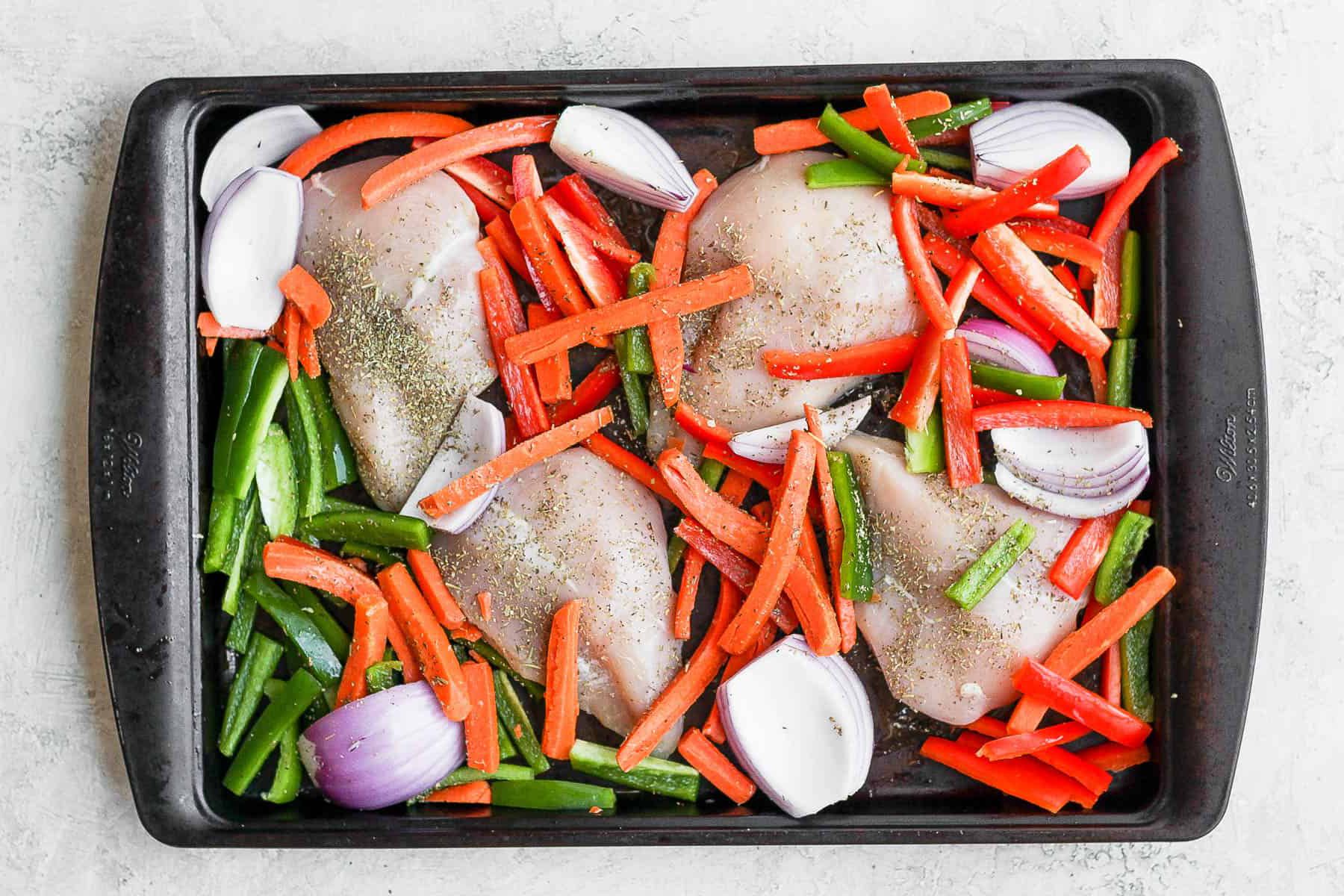
Use up to two pounds of protein per half sheet pan. At 425 Fahrenheit, most proteins cook in 30 minutes or faster. All times are approximate. Bone-in meats take the longest. Fish goes fastest. Shrimp takes less than 10 minutes. Know the doneness temps for your protein and check it often.
- Shrimp: Depending on size, 3-10 minutes
- Salmon and white fish: Depending on thickness 12-25 minutes
- Tofu: 20 minutes
- Lamb chops: 10- 20 minutes, depending on thickness
- Chicken, bone-in or boneless: 20 -30 minutes
- All types of whole sausages: about 25 minutes
feelgoodfoodie.net

Typically, about 2-3 cups of chopped veggies will fill out the pan. Remember, vegetables lose water and shrink when they roast. Same-size pieces make for even cooking. Times given are estimates for a temperature of 425 Fahrenheit and average-sized pieces.
- Root vegetables, like carrots: 30 minutes
- Potatoes: Small pieces and wedges, 25-30 minutes
- Soft squashes, like zucchini: 15-20 minutes
- Hard winter squashes: in pieces, 30 minutes
- Broccoli, cauliflower, Brussels sprouts: 25-30 minutes
- Cabbage: depending on the cut, 15-30 minutes
- Leafy vegetables, like kale: 10-20 minutes
- Cherry tomatoes: 20-25 minutes until bursting
- Onions: cut into wedges or thick slices, about 15-20 minutes
And more! Almost anything can be added to a sheet pan: Try asparagus, eggplant or fennel. And mix companionable veggies, like onion wedges and bell peppers, together!
feelgoodfoodie.net

Count on adding at least two tablespoons of oil (olive oil is the go-to) per sheet pan meal. Add more if your mixture seems dry. If you are starting with a protein, make sure it is well oiled. But remember, it is particularly important to toss and completely coat vegetables in oil.
Deposit Photos

- Cook some sheet pan meals in stages. For instance, delicate morsels should be added once sturdier proteins are partially done. One example: When cooking chicken and mushrooms together, add the mushrooms when the chicken is halfway done.
- Conversely, a quick-cooking protein like shrimp should be added after a dense vegetable like broccoli has been baking for 12 minutes or so.
- Size matters, too. If cooking potatoes with a relatively quick-cooking fish, slice the potatoes very thin.
- For the speediest cooking, consider preheating your sheet pan prior to adding ingredient. Just beware of hot splatters when food hits the pan.
- Placement matters: Some foods cook better apart. For instance, for crispy roast potatoes with chicken, make sure the ingredients are spread out evenly on the pan with the chicken separated from the potatoes
- But for softer potatoes drenched in chicken drippings, place thinly sliced potatoes underneath a piece of skin-on, bone-in chicken.
- For the best roasty- toastiness, give each piece of food its own real estate on the pan. Food needs air circulation to brown, otherwise, it steams and gets soggy.
- For even browning, flip food partway through cooking.
- Food will have browner, more caramelized edges if it is in direct contact with the pan, but cleanup is definitely easier if you line with parchment paper or aluminum foil. Your choice.
- Sauces containing sugar (think BBQ sauces, sweet and sour mixtures or anything with balsamic vinegar) can be added but only in the last few minutes of cooking; otherwise, they will burn.
OksanaKiian / iStock

- Aioli
- Sliced avocado
- Chutney
- Cucumber yogurt sauce
- Herbs
- Lebanese garlic sauce
- Lemon squeeze
- Tahini sauce
margouillatphotos / istockphoto

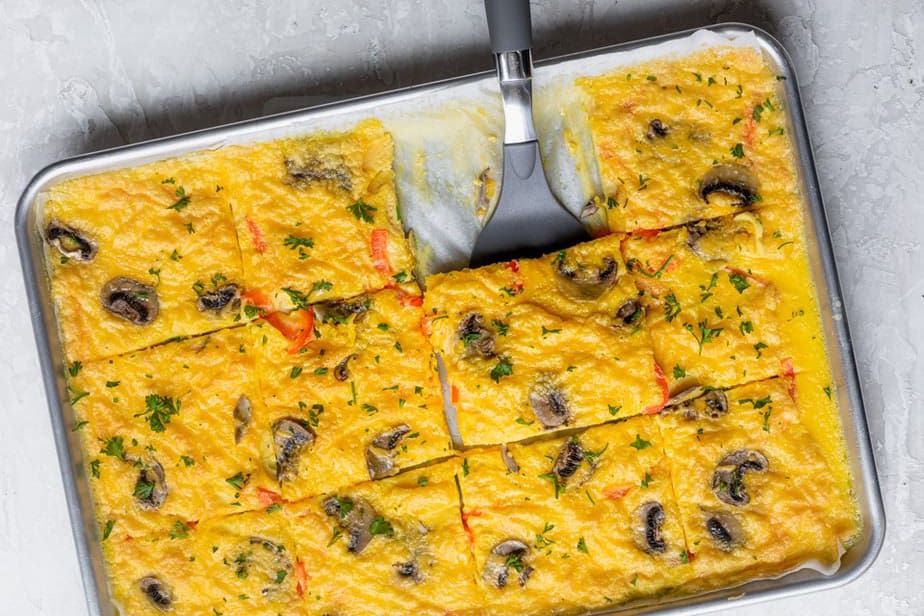
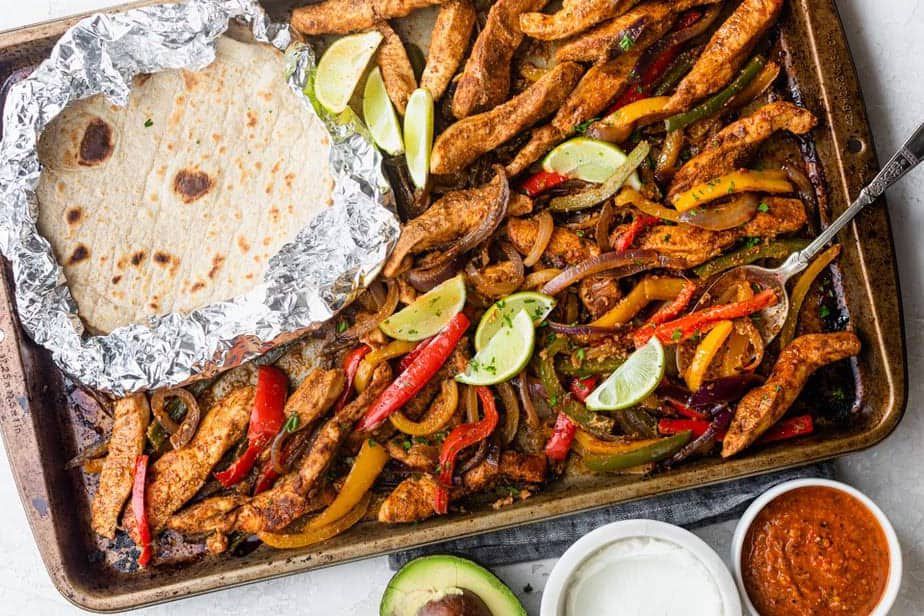
Sheet pan dinners are great for busy weeknights and beginning cooks. Get ideas from the recipes above and others, but feel free to freestyle. They are great fridge-clearers, too. You can start with some of the recipes below.
Angelika Heine / iStock

feelgoodfoodie.net

feelgoodfoodie.net

feelgoodfoodie.net
feelgoodfoodie.net
This article originally appeared on Feelgoodfoodie.net and was syndicated by MediaFeed.org.
feelgoodfoodie.net

whitehorsetavernnewport.com
Featured Image Credit: kokouu.